


Nov 27, 2015 7:06 PM
Updated Feb 10, 2022 10:43 PM
Mark E. Vigil: I was not seeking to break my “keepers,” many of whom could care less about our concerns, but I wanted to achieve a personal victory—a stand I could take on principle.
On June 30, 2009, I decided to express my discontent with the excessively chronic delays plaguing the THU [Transitional Housing Unit] program at Pelican Bay State Prison in order for an inmate to earn his way out of that lock-up. The process had become so backed up with people waiting to leave C12 (SHU) that the waiting list exceeded double digits. Since usually only one person can leave the block at any given time, I gradually realized that it could conceivably take me another year—or more—to see any kind of actual daylight for me alone.
I greatly objected to the way I and most people in the program were led to believe one thing but would find that the reality offered quite a different outcome (in particular, Rule 3378.1 of Title 15 which clearly states that our stay in C12 or the THU program must not exceed one year). The reality for most of us is that that year comes and goes while we remain glued to those bunks in the SHU.
[Editor’s Note: Thank goodness, the Federal government and some state governments are presently working to prohibit that kind of isolation that usually extends well beyond a year (when even one year is too much)—based upon the research that shows the deleterious effects of protracted isolation].
Given the arbitrariness of the promise of being released from solitary confinement after one follows the prescribed steps to achieve that aim, I opted to protest the system’s prolonged delaying tactics by not eating my daily meals. Hunger strikes are a fairly common practice that inmates use against the prison administration to protest whatever grievances they may have. It’s a non-violent means that many use to resolve an issue.
Related stories
I was not seeking to break my “keepers,” many of whom could care less about our concerns, but I wanted to achieve a personal victory—a stand I could take on principle.
Most inmates/convicts don’t really favor using this kind of practice for the reason that it does harm only to themselves but not to their keepers. It seemed obvious to me that no one in his right mind would want to do any harm to themselves—myself included. It was, nevertheless, something I had to consider seriously.
I did not want to do anything that would ruin my chances of continuing my involvement in a program that was offering potentially positive outcomes. I also did not want to be labelled a program failure. Nevertheless, I decided that a hunger strike would be the best way to make my point without getting booted—what I thought would be a thoughtful alternative to any other action I might have pursued,
I was not seeking to break my “keepers,” many of whom could care less about our concerns, but I wanted to achieve a personal victory—a stand I could take on principle.
It is true that my efforts were merely symbolic, but I am not against using symbolic methods to prove my point. I felt this was my best alternative, especially after I had tried the now-defunct 602 process--which is basically a waste of time and effort because the system generally denies the vast majority of our appeals—even when we, unquestionably, are in the right!
Consequently, at the time, a hunger strike seemed the right way to attack the issue without further burying myself in this place of isolation. Initially, I was told by prison staff that my efforts were pointless (even childlike or those of a spoiled child) but as I told them, it’s not they who must sit inside these cells and deal with all the b---s--- that keeps the program running at a snail’s pace. So while I understood their point of view, to me the right thing to do was to take a stand (childlike or not). After all, to do nothing would only net me the same results that I’d already experienced for some 15 months in my hellhole!
There was just too much “nothing” going on within these nightmarish confines. Hell, I had spent the last 18 years of my life fermenting and aging inside this place without doing anything. But each year during this time, I was repeatedly told my only real option was to debrief [Editor’s Note: a step that must be taken to convince prison officials that an inmate has truly reformed and wants to escape from his earlier involvement in gang activity and crime (separating himself--inside and outside of prison--from his previous life of crime in order to evolve into a person who can eventually be given that second chance once parole is approved].
Once I committed to and began that lengthy and rather arduous process, I believed the system should have done its part based upon its own promises—to move me forward in the program which would at length release me into the world I had missed out on for so long—a commitment which I felt I truly deserved. When this did not happen, I chose to do a hunger strike.
On the first day of my strike, the staff reacted in disbelief (as though we aren’t supposed to behave in such a manner), but I reassured them that it was not to be taken personally but merely my way of making it known that I was frustrated with the program.
On the second day, they came to search my cell to see if I or my cellmate (who did not participate in this civil act of disobedience) had any store or canteen in our cell. They even threatened to feed my cellie in the holding cages outside the pod to insure that he not share his food with me, but they opted not to follow through on that tactic when another inmate filed a 602 against that illegal move—they even gave my cellie my dinner tray to get me to eat but I rejected it straight out!
However, on the third day, after coming off the yard, I was finally removed from my cell and placed in a holding cell (minus any personal belongs which would have included my reading and writing materials and hygiene products) and was told I would have to stay there until I decided to end my hunger strike.
That response was another questionable move on the part of the staff because they are not supposed to remove me from my cell to monitor my eating habits (since it is possible for medical staff to simply check my vitals to determine whether I am eating or not). Thus placing me in the cage was merely done as a means to break me and to play the obvious psychological card which, perhaps unfortunately, worked because I ultimately opted not to proceed with the strike out of fear that I might lose my place in the program, an act which would have been counter-productive and not at all close to what I was trying to achieve.
So I returned to my cell (now fully aware of the consequences and extent to which my keepers would go to keep me from bucking the system). However, I promised myself then that I would not rule out another attempt at getting my point across, especially because I believed I was being wronged by their deliberately denying me the rights to which I was entitled from Title 15—the opportunity to exit that notorious and dreaded isolation unit at Pelican Bay called the SHU (Security Housing Unit).
Interestingly enough, during my appeal process, a sergeant was sent down to see me in an attempt to get me to withdraw my appeal, a filing which was meant to move the process forward along an acceptable timeline—he had used every method in the book to persuade me. When he failed at everything he tried, he came right out and threatened me with being labeled a program failure (which was totally inappropriate and rather frightening) because all I was doing was exercising my right to appeal their chronic delays.
Furthermore, when my appeal was finally heard, the sergeant in question was so frustrated by the hearing procedures that he stormed out of the proceedings. It became apparent to me that his sole role in all this was to coerce me into withdrawing my grievance, but he had failed at that. I learned from this that there existed and still exists little room to maneuver within legal channels--measures that take time to put together and that often bare little fruit.
But I also learned that civil disobedience has its place, is worth the while, and can and often does produce meaningful results—lessons for us all.
I am not in the SHU anymore and will never be again!
The above is a small testament which demonstrates the extent of my journey and what it took to arrive at the point where I am today (ready for my Parole Hearing and an eventual parole date).
I did eventually leave the SHU in December of that year and finally made it to the THU where I was put in limbo once again while the Powers-That-Be decided what the fates of those SHU inmates would be.
In 2010, the entire THU program was shut down in Pelican Bay and transferred to Kern Valley State Prison where I would do another 14 months—undertaking a process that would insure prison staff that my change was sincere.
Since that time, I have explored and become an active part in every kind of program that would help me grow. As a result, I can honestly claim that the problems I once faced and even created are no longer and will never again be part of the person I have become. It is because of my ability to recognize my past wrongs and because of my genuine and sincere willingness and eagerness to change, that I am ready for my second chance.
I am a better person now, ready for the world to accept who I am—the new me.
Mark E. Vigil
Juvenile Offender Series
Editor’s Note:
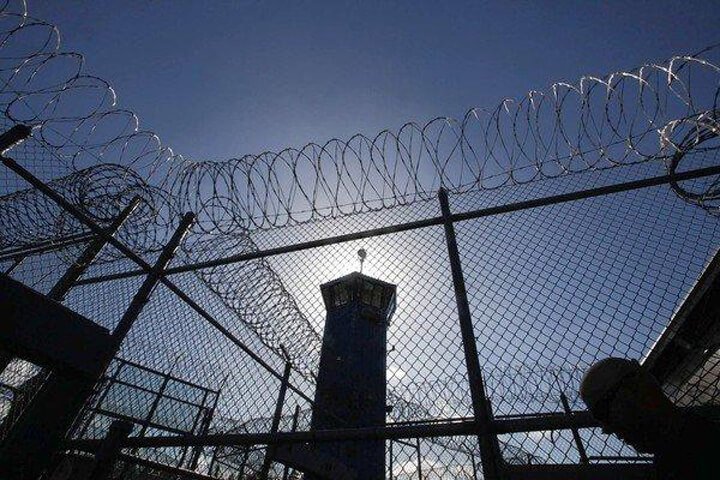
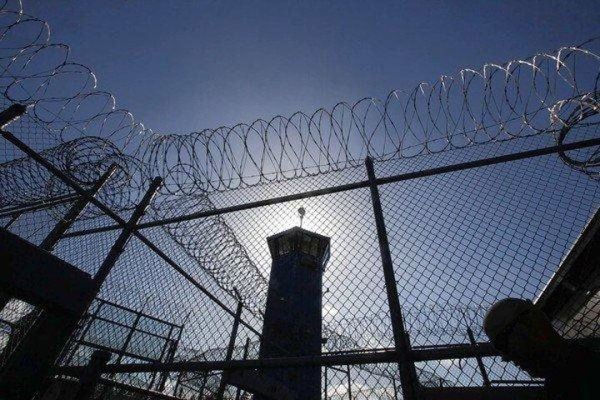
The SHU at Pelican Bay State Prison in Northern California (near the Oregon border) was designed as a super-maximum security prison. It was, in fact, intended “to minimize human interaction. The windowless, 7.6-feet-by-11.6 -feet cells were built to face concrete walls. Doors opened and closed electronically. Correction officers spoke to the inmates through intercoms.”
What were the expected results of such incarceration—a confinement which, at best, was meant only to be used for short periods of time and for only the worst of the worst persons who were too dangerous ever to interact with others (though even for such persons, the use of this kind of facility is questionable). Certainly, the results have been counter-productive.
Due to the SHUs (shall we say) overzealous employment of harsh and heartless tactics, it has caused many formerly sane inmates to suffer from various forms of short- and long-term insanity.
A case was filed in 2012 (now working its way up to the U. S. Supreme Court) to redress the grievances of those who have become victims of the SHU. Some have been left, for as many as 28 years, in solitary confinement, having been further victimized by being denied their rights guaranteed by the Eight Amendment.
Many of those who found themselves in the SHU had been convicted of very serious crimes (which included murder) but there are also many who had simply been identified as gang members (inside or outside of prison), for whom solitary was considered a good thing to keep them separated from the rest of the prison population. Really? What kind of justification is that?!
These are people who cannot receive personal phone calls or even receive simple personal contact (like a hug) by those who have been allowed, during certain designated times, to visit them. Even guards are expected to limit any kind of contact with them—rarely touching or speaking with them.
For those who have been incarcerated in this way, they have lost connection with reality and lose the humanity within themselves. How in the world can we then expect them to reintegrate successfully into society once they are eventually released from their prison walls?
One SHU inmate was observed as speaking to family pictures placed on the walls of his cell, hoping to hold on to a small bit of reality and with the hope of someday being able to hold and hug one of those friends or relatives. Another, who was formerly housed in this dungeon-like hole, has been quoted as saying, “It was . . . a concrete tomb!”
Incidentally and perhaps coincidentally, President Obama is currently advancing ways not only to reduce maximum minimums, particularly for victimless and low-level crimes, but he is also actively pursuing a path to re-integrate former prisoners (in productive ways) into their respective communities.
One way, in particular, is the Ban-the-Box Initiative which would remove the “Have you been convicted of a felony?” question on employment applications. In that way, the formerly incarcerated have the opportunity to demonstrate who they are (offering supportive letters of recommendation along with proof of in-prison training that has often led to certifications and degrees) before the eventual and dreaded background question is asked during a subsequent interview. Statistics have demonstrated that when this process is utilized, the newly released applicants have a much better chance of being hired and becoming valued as an employee of the companies for which they work and, ultimately, as a contributor to (not a detractor from) society.
Editor: Rosemary Jenkins
Comments

Powered by RoundtableAn AI/DeFi-powered Enterprise Media Operating System. Learn more at Roundtable.io.© Roundtable 2026. By using this site you agree to the Terms of Use and Privacy Policy