


Jul 25, 2020 11:00 PM
Updated Feb 10, 2022 10:16 PM
Johnny Townsend: If people don’t want protests against police brutality, they are free to demand police accountability. If people don’t like political unrest, they are free to work for social justice.
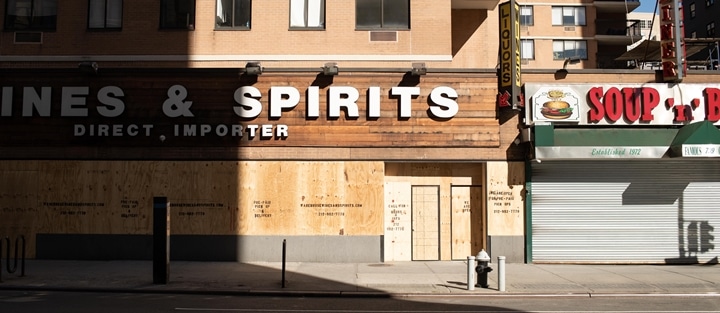
An acquaintance of mine complained that her friend’s small business had been destroyed by all the recent protests for racial justice. Her friend’s store had not been physically damaged. It was simply located in an area where a great deal of protesting took place.
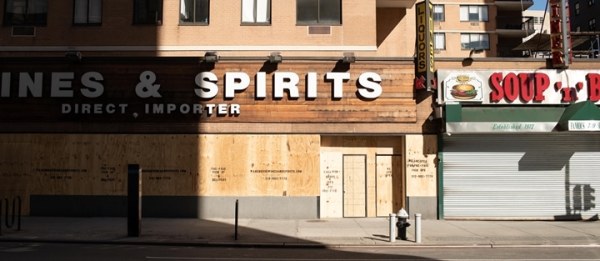
The owner had been forced to board up her windows, and the few customers she’d managed to hang onto during the pandemic disappeared. “Who do these protesters think they’re helping?” my friend asked in disgust. “They’re hurting innocent people!”
A gunman with his weapon aimed at the head of a hostage will warn the police officer approaching, “Take another step and I’ll kill her. Her death will be your fault. You’re killing her.”
Abusers often blame their victims for the abuse. “You made me hit you! This is your fault!”
But the abuser is responsible for abusing. The killer is responsible for killing.
Related stories
If people don’t want protests against police brutality, they are free to demand police accountability. If people don’t like political unrest, they are free to work for social justice.
If people don’t want protests against police brutality, they are free to demand police accountability. If people don’t like political unrest, they are free to work for social justice.
Yes, small businesses are suffering terribly during the pandemic. No debate there. But that’s not the fault of the citizens being legally murdered or those who care about them. When politicians give the ultra-wealthy hundreds of billions of dollars during an economic crisis instead of assisting workers and small businesses, it’s the oppressors who are to blame, no matter how we might personally feel about the targets of the oppression.
Even if you have legitimate reason to hate hornets, if you hit their nest with a stick again and again, you’d be a fool not to expect them to react. And when we’re talking about other human beings facing inhumane treatment at the hands of other humans, it’s intellectually dishonest to pretend we expect anything other than rage.
A Mormon friend of mine becomes defensive any time the subject of race comes up. “Whites didn’t start the slave trade,” he says. “Black people in Africa started selling their own people to whites. Why is that our fault? We just took what we were being offered. Anyone would do that. But we’re the ones who have to take all the blame. If white Americans hadn’t bought their slaves, someone else would.”
He didn’t seem aware that at least ten million Africans were sold to eager enslavers in other countries, far from Africa.
But he was also oblivious to the most glaring problem with his justification. “If a man kidnapped your daughter,” I said, “and sold her into the sex trade, you’d blame the kidnapper, wouldn’t you?”
“Of course. Scumbags like that should be executed.”
“But you’d give a pass to every man who paid your daughter’s captor to rape her? You’d feel that if those particular men didn’t rape her, other men would, so there’d be no point holding the men who did rape your daughter accountable?”
“It’s not the same thing. And I certainly wouldn’t hold the great-great-grandchildren of the rapists accountable.”
“But would you acknowledge that their great-great-grandrapist did do something inexcusable? Would you hold the great-great-grandchildren of the kidnapper responsible to any degree at all for sharing some of the wealth accrued through kidnapping and raping? Wealth that had time to multiply a hundred-fold, a thousand-fold, in all the years since? If it’s OK for the innocent great-great-grandchildren of kidnappers to benefit from crimes they didn’t commit, why is it bad for the great-great-grandchildren of the victims to receive any kind of reparation for those crimes?”
Even working-class white people today still benefit financially from the kidnapping, rape, torture, enslavement, and murder of Africans, whether or not our individual ancestors ever owned slaves. Slave traders and slave owners created a culture that continues to benefit us, whether we want to benefit or not, whether or not we still experience financial struggles.
Our justice system is structurally racist. Our education system, too. So is the film industry, journalism, and healthcare. But the institution causing most of our inequality is capitalism, which can’t function without it. Our many failures cannot be corrected without simultaneously addressing the racism built into almost all of our institutions. Focusing on one at a time is a bit like untying a kidnap victim’s left leg but leaving all other bindings intact. Even if we eventually untie her completely but leave her in a locked room, she’s still not really free.
Remember the three young women kidnapped and imprisoned for years in a house in Cleveland? A fund was established to help them move on from a decade of captivity and rape. By itself, walking out the door of that hellhole wasn’t enough to give them more than the slimmest chance at recovery. They needed financial assistance, even if those funds were provided by people who bore no personal responsibility for the crimes committed. The descendants of African slaves might be content just to be released, only we’ve made sure they can never fully be free. At the very least, reparations must include dismantling the structures that originally caused and still perpetuate their suffering.
Our systems aren’t “broken.” They were designed this way.
In Philadelphia, eleven non-violent men, women, and children were burned to death in their home by the police…for protesting police brutality.
In Louisville, a sleeping woman working on the pandemic’s front line was “legally” shot to death in her own bed.
In a classic horror film, Carol Kane learns to her dismay, “The call is coming from inside the house!”
If my friend’s daughter really were to be kidnapped, how would he feel if at some point, in an attempt to escape, she killed a man who was raping her? Perhaps the man having sex with the kidnapped girl believed he was engaged in a consensual act. Maybe he thought he was innocent.
I’d say no one in their right mind would fault the young woman for killing an “innocent” man in order to save herself, but then, we all know what happened to Cyntoia Brown. And Chrystul Kizer. And Sarah Kruzan. If the “perpetrator” is black, her color is the crime, not the atrocities being committed against her.
It’s possible—indeed unavoidable—to be imperfect and still be the primary victim in an encounter, on either an individual or institutional level. If “both sides” bear some blame, one side can still bear 97% of it. And, as often as not, the violence and looting taking place these past few weeks have been perpetrated by right-wing folks trying to implicate protesters. Sometimes, police officers themselves can be seen breaking store windows. But even when it is the protesters damaging businesses of “innocent” people, they’re still not the real force behind the damage.
Is the kidnapped Abigail Breslin in The Call responsible for the death of a would-be rescuer because she followed 9-1-1 dispatcher Halle Berry’s advice to attract someone’s attention?
White people have found ourselves accessories to both past and present brutality. Perhaps we didn’t ask anyone to inflict that brutality. Yet we also feel affinity for some of those committing it and find ourselves reluctant to “betray” our “family” by reporting the abuse and demanding justice. So we choose to wash our hands of the matter. But walking away from the conflict doesn’t absolve us of guilt. It simply adds “hit and run” to the list of crimes. The only way to change our complicity is to actively work for justice on the part of those wronged. If small business owners are among those being wronged, the solution is to address the cause, not the inescapable consequences of continued oppression.
In the film The Commuter, Vera Farmiga plays a character who coerces a man played by Liam Neeson to find a murder witness so that the witness can be killed. Neeson accepts the initial bribe before understanding the full import of the agreement, but then he changes his mind and resists. Each time he refuses to help, though, another innocent person is murdered. “You did this!” Vera Farmiga says as Liam watches a longtime friend being pushed in front of a bus.
No. The murderers are Vera and the other criminals she works for. Is Liam partly responsible? Yes, he is. He broke “the rules.” But no matter what Liam does, Vera and the bad guys are still going to keep killing people. They should be the focus of any animosity. They set everything in motion. They created the structure that ensures all the continued human devastation.
To some extent, even the officer who knocked out the teeth of a Chicago woman, whose only “inappropriate behavior” was shouting at a different officer beating a protester, isn’t the real culprit. It’s the system that ensures these kinds of abuses will happen again and again no matter how much officials say they’ll “try harder” to train their officers to “behave better.”
When a police chief in Asheville admits his officers made a mistake by destroying a medical station set up to treat protesters, he misses the larger problem, the structural one.
When we yell at protesters fighting for their financial and physical survival, we’re targeting the wrong party. More importantly, doing so won’t solve the underlying problems, and certainly won't address the issues of the folks struggling to keep their businesses afloat.
The institution oppressing both people of color and small businesses is pro-corporate capitalism, which always favors those who have already accumulated wealth on the backs of others. The protester we insist on scapegoating is simply a 911 dispatcher trying to organize emergency assistance to prevent others from being kidnapped, raped, and murdered.

Johnny Townsend
Comments

Powered by RoundtableAn AI/DeFi-powered Enterprise Media Operating System. Learn more at Roundtable.io.© Roundtable 2026. By using this site you agree to the Terms of Use and Privacy Policy