


Moment of Silence
Jan 28, 2024 4:41 PM
While we may not have much power to impact state or federal policy, we can push back when friends, family, and coworkers make biased or otherwise damaging comments.
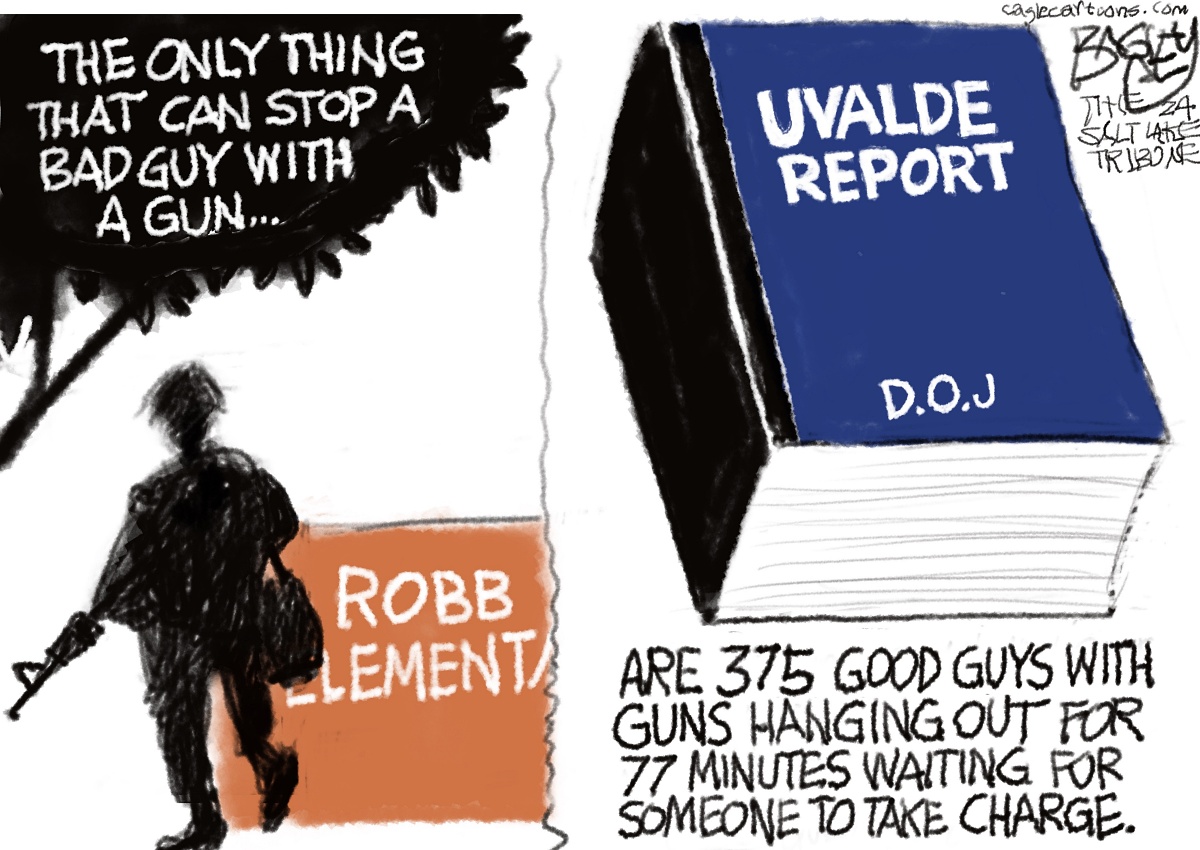
Recently, I emailed a gay friend in Canada about a report that had just come out evaluating the police response to the school shooting in Uvalde, Texas that left nineteen children and two teachers dead. It was clear even at the time of the shooting that the response was poor, but the report analyzed just how astonishingly poor it was.
377 officers from various forces were on the scene, many for 77 minutes before confronting the gunman. We’ll never know how many of the injured could have been saved if they hadn’t been allowed to bleed out. Some officers were heard on bodycam admitting they were afraid to go into the classroom because the shooter had an assault weapon. Well before finally doing their job, one officer shouted into a classroom where many children had already been killed, asking, “Is anyone in there?”
A young girl called out, “Yes!” certainly hoping she was about to be rescued.
The officers continued to work up their courage to go in. Meanwhile, the shooter, who’d also heard the girl, was now able to locate and kill her.
Related stories
But she wasn’t. The officers continued to work up their courage to go in. Meanwhile, the shooter, who’d also heard the girl, was now able to locate and kill her.
My friend’s response to the report?
“When you want to ‘Defund the Police,’ this is what you get.”
I was flabbergasted. I knew he was friends with some MAGA Canadians (yes, there are way too many Trump supporters up there), and I’ve tried to gently correct him when he’s made misogynistic comments in the past. Even gay men who’ve faced years of discrimination are often biased against people who aren’t like them.
My friend’s comment warranted another gentle correction. His words couldn’t stand unchallenged, yet letting him know just how thoroughly awful I thought his view was wouldn’t likely help, either.
I emailed back:
“It’s fascinating the way different people can see the same information and interpret it so differently. When I see 377 officers refusing to save the kids because they were afraid of the gunman, I don’t see an underfunded police force. I see a police force that spends lots and lots of money on officers who are fine with harassing people of color but who don’t do the job the public believes they’re supposed to do—protect them. This was Texas, after all. There was zero defunding of any police department in that state. And those officers weren’t afraid of being accused of police brutality if they shot the gunman. They were afraid of being shot by an AR-15. But we don’t need to agree on that point.”
I then concluded by making some positive comments about another topic he’d mentioned in his previous email.
Did my correction make a difference? I rather doubt it. But it’s still important, I think, not to let these types of statements go unchallenged. I’ve done far too much of that in my life already and now understand that remaining silent isn’t a neutral act. It’s not diplomacy or discretion. It’s not tact. It’s complicity.
Has a friend or family member said something dismissive about the way a rape victim was dressed? Have they said something disparaging about Latinos? About workers struggling to pay their student loans? It’s almost impossible for everyone in our circle (or ourselves) to have reached a level of “enlightenment” about every oppressed or marginalized group. And it can feel like an overwhelming task to correct misconceptions and question biases every time we hear an inappropriate comment.
But what’s the alternative?
And how useful is silence?
I don’t know about you, but I don’t feel particularly powerful. Marches and rallies and protests “bring attention” to a problem. They “put pressure” on government officials, but they are rarely enough to counteract the pressure from oligarchs.
When I receive fundraising emails from progressive or even socialist politicians pointing out that their opponent has corporate donations in the tens of millions, I can’t help but think donating $20 to the better candidate will have little useful impact.
Will my vote even count if there’s no paper trail? If losers outright lie about the results?
But I do donate $20. I do participate in rallies and protests. I do vote.
While we may not have much power to impact state or federal policy, we can push back when friends, family, and coworkers make biased or otherwise damaging comments.
We don’t need to be obnoxious. But we can be firm. And even if we’re not good at speaking under pressure, we can set boundaries and enforce them. “You will not say that kind of thing around me.” That alone sends an important message.
At a recent tribute to a local labor activist, another labor leader said, “Let’s not offer a moment of silence in Kirk’s honor but a moment of noise.” We spent the next minute chanting labor slogans.
Unless the aliens from A Quiet Place have invaded our neighborhood, silence is rarely useful. Let’s instead use our voices, and amplify the voices of the marginalized, to challenge injustice and bias whenever we encounter it.
Comments

Powered by RoundtableAn AI/DeFi-powered Enterprise Media Operating System. Learn more at Roundtable.io.© Roundtable 2026. By using this site you agree to the Terms of Use and Privacy Policy