


Jun 4, 2026 9:55 PM
Updated Jun 4, 2026 10:04 PM
Even after years of arrests and public attacks, he still believed persuasion was possible and that audiences could grapple with uncomfortable truths.
In recent months, comedians and late-night hosts including Jimmy Kimmel and Stephen Colbert have again found themselves under political and institutional pressure for jokes some people considered offensive or dangerous. Networks have been urged to punish them. Regulators have hinted at consequences. Public campaigns have demanded action.
This is not the first time a comedian provoked outrage by mocking public figures connected to a national tragedy.
I have seen this before.
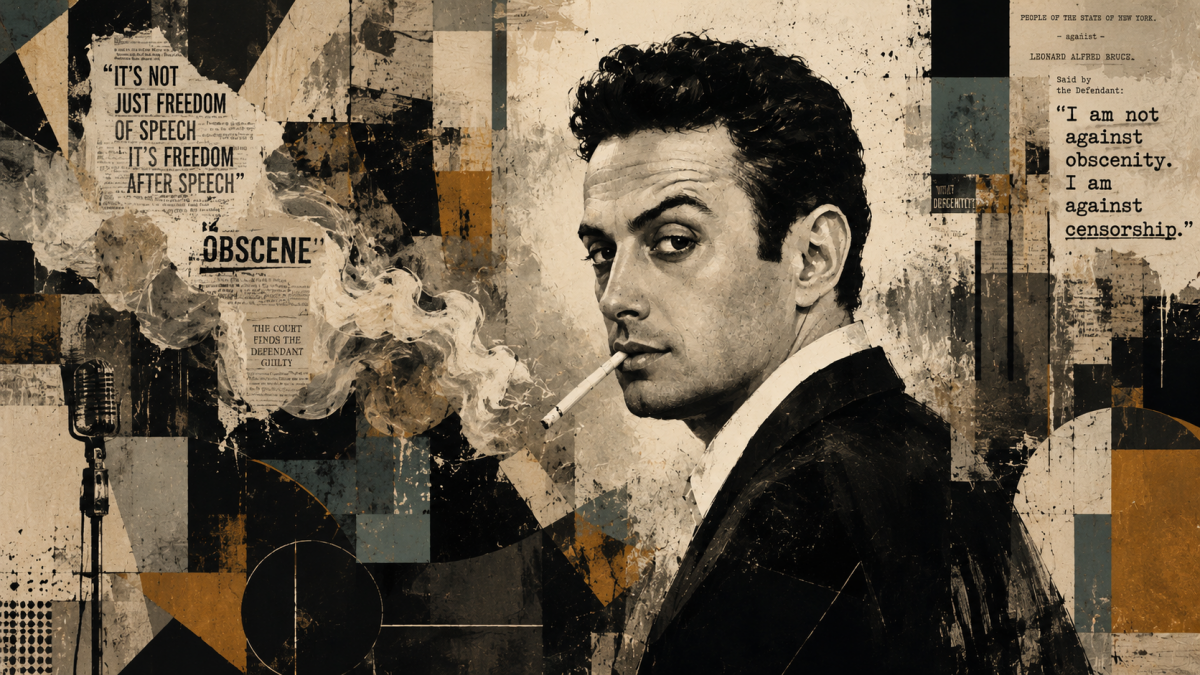
The last time it happened on this scale, the comedian was Lenny Bruce.
Related stories
More than sixty years ago, I served as co-counsel for Bruce during his obscenity trial in New York. By then, he had already been arrested multiple times, was overwhelmed by legal fees, and was slowly losing the ability to work.
The case was supposedly about profanity.
It was really about fear.
Lenny Bruce frightened people not because he used dirty words, but because he challenged authority, mocked public figures, attacked hypocrisy, and ignored the unwritten rules about what could and could not be said in public.
When I first met Bruce, he possessed a softness and fragility that people who knew only his public persona often missed. He was bright, funny, intense, and capable of extraordinary kindness. There was also a growing bewilderment about what was happening around him. He could move from comedy to politics to philosophy in a matter of seconds.
Even after years of arrests and public attacks, he still believed persuasion was possible and that audiences could grapple with uncomfortable truths.
I watched the prosecutions slowly consume his ability to perform, earn a living, and function normally—not because of profanity alone, but because powerful institutions wanted him silenced.
One routine especially enraged audiences after President John F. Kennedy's assassination. Bruce mocked the public narrative surrounding Jackie Kennedy's reaction in the limousine after the shooting, suggesting that in a moment of terror she reacted like any human being might. Many people considered the material unforgivable.
Unlike today's late-night hosts, Bruce's routines were not protected by cultural acceptance or institutional insulation. He was arrested, prosecuted, and financially destroyed.
But the real issue was never vulgarity.
It was the belief that certain people should be beyond ridicule or criticism.
Bruce refused to treat public figures, political myths, or national grief as untouchable. What authorities feared was not obscenity alone. It was a loss of control.
Former CIA agent and prosecution witness Herbert S. Ruhe later acknowledged: "We picked him out of all the performers. I knew he was not obscene."
That statement captured the truth of the case.
Bruce was singled out not because of language alone, but because authorities believed he had become dangerous.
At his 1964 trial, Bruce became desperate to explain that context mattered. At one point he pleaded with the judges:
"Let me tell you what the show is about."
I have never forgotten that sentence.
What Bruce was trying to explain is as relevant now as it was then. Comedy cannot be judged as a simple list of forbidden words. Meaning depends on context, intent, audience, and performance.
Battles over free speech are rarely about isolated language alone. They are about who gets to decide what ideas, jokes, criticisms, or forms of expression fall outside acceptable boundaries.
For those who work in comedy, television, film, streaming media, and the performing arts—industries that help define Los Angeles and influence culture far beyond it—these questions are not theoretical. Creative work often depends on the ability to challenge assumptions, satirize authority, and explore ideas that some audiences find offensive, unsettling, or disruptive.
The lesson of the Bruce case is not that every joke succeeds or deserves applause. It is that creative expression cannot remain free if public pressure becomes a substitute for open debate.
Today the pressures are often less direct than criminal prosecution, but they can still be powerful. Corporations fear backlash. Politicians pressure networks. Regulators hint at consequences.
The methods change.
The impulse does not.
Today's comedians are not being hauled into court the way Bruce was. But efforts to pressure networks, studios, publishers, universities, or other institutions into disciplining people whose work crosses political or cultural lines reflect something familiar: the belief that certain speech becomes too dangerous to tolerate.
One lesson of the Lenny Bruce case is that censorship rarely announces itself honestly. It usually presents itself as decency, responsibility, public protection, or concern for social harm.
Every generation believes its restrictions are justified.
Every generation believes its targets are uniquely dangerous.
Every generation believes this time is different.
The legal principles still matter because they are often the only barrier between public outrage and official punishment. First Amendment protections exist precisely because societies repeatedly convince themselves that suppressing certain speech is necessary for the greater good.
Even longstanding protections surrounding speech, obscenity, satire, and public criticism are now being questioned again in legal and political circles. Recent efforts to redefine what constitutes harmful or unprotected expression—whether through obscenity standards, age-verification laws, political pressure, or institutional intimidation—reflect a broader willingness to narrow the space in which artists, comedians, writers, performers, filmmakers, and journalists can speak freely.
The technologies are different from the nightclub stages of the 1960s.
The underlying questions are not.
Who decides what speech is too offensive, dangerous, or disruptive to tolerate?
Years after Bruce died, a member of the prosecution team said:
"We used the law to kill him."
That statement was about more than one comedian.
It was about what happens when societies decide that certain voices are too offensive, too disruptive, or too unsettling to deserve full protection.
Many writers, comedians, filmmakers, performers, and artists who came later benefited from freedoms Bruce fought for at enormous personal cost. His legacy is less about obscenity than about the freedom to challenge power, test limits, and force uncomfortable public conversations.
The danger begins when we defend free speech only selectively—protecting speech we like while finding reasons to punish speech we fear or dislike.
That was true in 1964.
It is still true today.
The people who prosecuted Lenny Bruce believed they were protecting society.
They were wrong.
If we defend speech only when it reassures or comforts us, we eventually lose the freedom to confront what unsettles us.
Comments

Powered by RoundtableAn AI/DeFi-powered Enterprise Media Operating System. Learn more at Roundtable.io.© Roundtable 2026. By using this site you agree to the Terms of Use and Privacy Policy