


Jun 29, 2024 3:20 AM
Updated Jul 1, 2024 2:23 AM
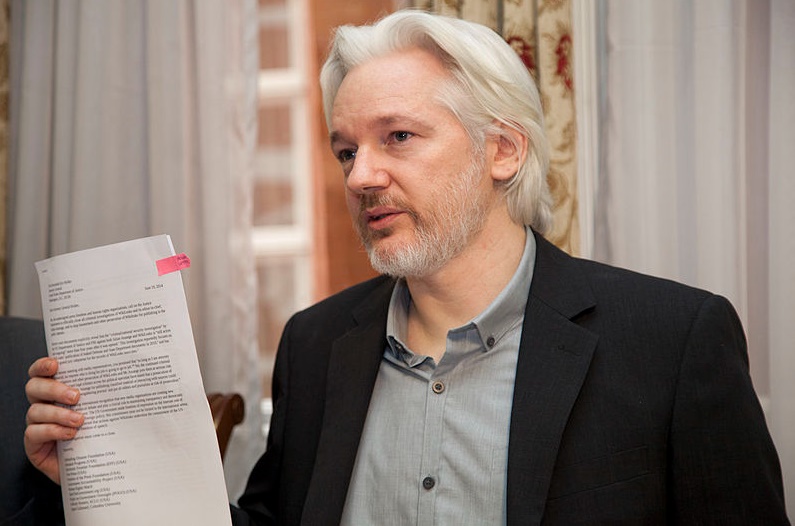
Julian Assange is finally free. This article contains a chronological list of events that led Assange to where he is today.
Longtime friend and contributor to the LA Progressive, Vinnie De Stefano, worked closely with the Assange Defense effort. He began as a volunteer, but his efforts were significant enough that they resulted in Vinnie being offered a paid leadership position early on. We believe that they couldn't have chosen better.
We sat down with Vinnie the day after Julian Assange was set free. Of course, he was elated, as were we, but Vinnie said he had mixed feelings. He said he held nothing against Assange for deciding to plead guilty in exchange for getting a sentence that is essentially "time served," allowing Assange to walk free, especially when you consider the brutality of Assange's experience. Nils Melzer, the United Nations Special Rapporteur on Torture, famously criticized the United States, the U.K., Ecuador, and Sweden over their treatment of Julian Assange.
On the day Assange was released, his American attorney, Barry J. Pollack said, "He has suffered tremendously in his fight for free speech, for freedom of the press, and to ensure that the American public and the world get truthful and important newsworthy information. We firmly believe that Mr. Assange never should have been charged under the Espionage Act and engaged in the exercise that journalists engage in every day, and we are thankful that they do."
So, for humanitarian reasons, everyone who supported Assange wanted him to be released, even if he had to plead guilty to get that outcome. But this doesn't bode well for independent media. This outcome, as welcome as it is, does nothing to advance the cause of free speech. And that's what this piece is about.
Related stories
What happened to Julian Assange offers insight into how vulnerable independent media is in this country. A look at the timeline of events that led to his loss of freedom sheds light on the lack of evidence the United States had and helps to explain why Barack Obama and Erick Holder refrained from prosecuting Julian Assange. So let's take a look at the timeline of events.
July 1971: Assange is born in Townsville, Australia, to parents involved in theatre. As a teenager, he gains a reputation as a computer programmer, and in 1995 is fined for computer hacking but avoids prison on the condition he does not offend again.
October 2006: Establishes WikiLeaks, creating an internet-based “dead letter-drop” for leakers of classified or sensitive information and a place for newsworthy information to be released and made available to publications around the world. WikiLeaks becomes an award-winning multi-national media organization and associated library.
2006–2010: WikiLeaks serves as an internet-based portal for leakers and whistleblowers to share information they believe is in the public interest and a source for reporters from both independent media and corporate media.
DURING THE OBAMA ADMINISTRATION
April 5, 2010: WikiLeaks releases leaked video entitled “Collateral Murder,” showing footage shot from a U.S. helicopter while conducting an air strike that killed civilians in Baghdad, including two Reuters news staff.
May 27, 2010: Chelsea Manning is arrested for violations associated with WikiLeaks.
July 25, 2010: WikiLeaks releases over 91,000 documents, mostly secret U.S. military reports about the Afghanistan war.
August 2010: Julian Assange visits Sweden. During his visit, he became the subject of sexual assault allegations from two women. He was questioned, the case was initially closed, and he alleges he was told he could leave the country. (See page below for details of the assault charges)
September 2010: According to Swedish authorities, Assange was questioned by police, and while the investigation was still underway, he left Sweden for the United Kingdom. Swedish prosecutors say Assange fled after his lawyers were alerted their client was to be arrested the same day. Assange later claimed he was “set up,” suggesting the accusations were part of a U.S. conspiracy to destroy WikiLeaks. His lawyer, Mark Stephens, called the alleged victims “honey pots”. (A honeypot or honey trap is espionage language used to describe an operational practice involving the use of a covert agent (usually female), to create a sexual or romantic relationship to compromise a (usually male) target.)
October 2010: WikiLeaks releases 400,000 classified military files chronicling the Iraq war. The next month, it releases thousands of U.S. diplomatic cables, including candid views of foreign leaders and blunt assessments of security threats.
November 2010: Attorney General Eric Holder announces “an active, ongoing criminal investigation” into WikiLeaks.
November 18, 2010: A Swedish court reopens the August rape allegation case and orders Assange’s arrest for the rape allegations. A warrant for his arrest was first issued in August, but it was dropped within 24 hours when prosecutors said the accusations against him lacked substance. The case has now been reopened. He is arrested in Britain but released on bail.
December 2010: Julian Assange is chosen by readers of Time Magazine to be the Readers’ Choice for TIME’s Person of the Year 2010
December 8, 2010: Julian Assange gives himself up to British police and is taken to an extradition hearing. He is remanded into custody pending another hearing.
December 16, 2010: Assange is granted bail by the High Court and is freed after his supporters pay £240,000 in cash and sureties.
February 2011: London’s Westminster Magistrates Court orders Assange’s extradition to Sweden. He appeals.
June 14, 2012: The British Supreme Court rejects Assange’s final appeal and five days later he takes refuge in Ecuador’s embassy in London and seeks political asylum. Ecuador grants in August 2012.
June 25, 2012: Julian Assange writes a letter to the Ecuadorian President, Rafael Correa, providing supporting information for his application for asylum.
August 2012: Ecuador grants Assange asylum.
November 2013: The Obama Department of Justice declines to pursue charges against Assange for publishing classified documents due to what officials described as the “New York Times” problem: how could the government prosecute Assange without prosecuting news organizations that also published classified material? Le Monde, El País, Der Spiegel, The Guardian, The New York Times and others had published a wide array of articles based on what they received from WikiLeaks.
July 27, 2016: On the campaign trail, Trump, referring to Hillary Clinton’s email, publicly announces, “Russia, if you’re listening, I hope you’re able to find the 30,000 emails that are missing”.
July 27, 2016: According to a comprehensive indictment by Special Counsel Robert Mueller, which the DOJ released on April 18, 2019, Russian government hackers launched an attack against the email accounts of staff members in Clinton's personal office. According to the investigative report, Russia hacked the emails and, at some point, made them available to WikiLeaks.
October 2016: WikiLeaks releases a trove of Hillary Clinton emails. Others publish Clinton's emails as well.
November 2016: Julian Assange is again (also happened in 2010) the number one choice in a Time Magazine online poll of who readers think should be TIME’s Person of the Year in 2016.
November 2016: Trump declares, “I love Wikileaks.”
January 17, 2017: Before leaving office, President Obama commutes Chelsea Manning’s sentence to 7 years. Originally arrested on May 27, 2010, she was sentenced to serve 35 years for Violating the Espionage Act, stealing government property, violating the Computer Fraud and Abuse Act and multiple counts of disobeying orders. Chelsea Manning will go home in a few months.
DURING THE TRUMP ADMINISTRATION
January 20, 2017: Donald Trump is sworn in as the 45th president of the United States.
April 13, 2017: Mike Pompeo, who was in charge of the CIA at the time, called WikiLeaks "a non-state hostile intelligence service frequently assisted by state actors like Russia."
May 17, 2017: Chelsea Manning is released from Leavenworth Federal Penitentiary after her sentence was commuted by Barack Obama.
May 19, 2017: Swedish prosecutors discontinue their investigation of Assange, saying it is impossible to proceed while Assange is in the Ecuadorean embassy. Although the statute of limitations for the crimes they were investigating does not run out until 2020, the Swedish authorities drop the charges.
December 12, 2017: Julian Assange is granted Ecuadorian citizenship. The Ecuadorian Foreign Minister Maria Fernanda Espinosa called the measure “one more ring of protection” for Assange, who had been holed up at the Ecuadorian Embassy in London since 2012 in an effort to avoid a Swedish arrest warrant on rape allegations – a charge he always denied. Sweden dropped the charges in May 2017, but Assange remained the subject of a UK arrest warrant.
March 6, 2018: After Trump comes into office, the grand jury in the Eastern District of Virginia (Alexandria) indicts Julian Assange on one count of conspiracy to commit computer intrusion or hacking. The alleged conspiracy is based on a conversation Assange had with Manning via text on or about March 8, 2010, allegedly offering to help Manning find a password. There is neither evidence nor a charge of actual hacking. To expand the statute of limitations for violating the Computer Fraud and Abuse Act (CFAA) from the normal five years to the necessary eight in this case, given the indictment's date of March 2018, the Justice Department is charging Assange under a statute that labels his alleged hacking an "act of terrorism."
April 2018: Civil lawsuit filed by the Democratic National Committee against the Russian Federation, the Trump Campaign, WikiLeaks, Julian Assange, and others alleging they conspired to hack into the DNC email system and publish embarrassing information which allegedly contributed to Hillary Clinton losing the 2016 presidential election to Donald Trump.
February 2019: Chelsea Manning subpoenaed to testify before a grand jury in a US government case against Julian Assange. Manning refuses to testify.
March 2019: Ecuador, the country that granted Assange political asylum and refuge in its embassy, receives a $4.2 billion loan from the International Monetary Fund, to which the U.S. is the largest contributor.
March 22, 2019: Attorney General William Barr receives the Mueller Investigation report, officially titled “Report On The Investigation Into Russian Interference In The 2016 Presidential Election.” The investigation makes no claim that Julian Assange hacked Hillary Clinton's emails, as was reported by a host of reporters. Some claim that Russia carried out the only hacking that the investigation found at Trump's request.
April 2019: Former Ecuadoran Minister of Foreign Affairs, Ricardo Patiño, publicly claims that Ecuador agreed with U.S. Vice President Mike Pence to expel Assange from the Ecuadoran embassy in London in exchange for a "miserable loan from the International Monetary Fund."
April 11, 2019: Assange is dragged out of the Ecuadorian embassy and arrested by London’s Metropolitan Police after Ecuador revokes his political asylum for several reasons, including not cleaning up after his cat. He’s arrested for skipping bail back in 2012 and found guilty of breaching the Bail Act.
April 11, 2019: Two hours after his arrest, the Metropolitan Police announce that Assange was “further arrested” on behalf of the United States. Even though the Obama Administration abandoned the effort in 2013, the Trump DOJ alleges Assange assisted an army private in attempting to hack the Defense Department.
May 1, 2019: He is sentenced to 50 weeks in prison by a British court for skipping bail back in June 2012. He completes the sentence but remains jailed pending U.S. extradition hearings. (The US does not formally ask for extradition until June 11, 2019.)
May 13, 2019: Swedish prosecutors reopen the investigation they closed in 2017 and say they will seek Assange’s extradition to Sweden.
May 23, 2019: United States Justice Department announces 17 new charges lodged against Assange, including an unprecedented charge of publishing classified material. In a superseding indictment, a grand jury in Alexandria, VA, accused Assange of inducing Chelsea Manning to send him classified documents. The 17 counts were tacked on to the single count for which he was indicted on March 6, 2018.
June 11, 2019: The U.S. Justice Department formally asks Britain to extradite Assange to the United States to face charges that he conspired to hack U.S. government computers and violated an espionage law.
July 2019: US District Judge John G. Koeltl issues an 81-page opinion upholding Assange’s 1st amendment rights and characterizing WikiLeaks as an “international news organization”. The judge accepted the DNC’s allegations that Assange “solicited stolen documents” and then “coordinated” to “publish the stolen documents at times helpful to the Trump Campaign.”
The ruling relied principally on the Pentagon Papers decision, New York Times Co. v. United States, 403 U.S. 713 (1971), and Bartnicki v. Vopper, 632 US 514 (2001), which held the publication of a stolen recording by a defendant who knew or had reason to know the recording was obtained illegally was protected by the First Amendment.
Nov. 19, 2019: Swedish prosecutors drop their rape investigation, saying the evidence is not strong enough to bring charges, in part because of the passage of time.
Feb. 21, 2020: A London court begins the first part of extradition hearings which are adjourned after a week. The hearings are supposed to resume in May but are delayed until September because of the COVID-19 pandemic.
Jan. 4, 2021: UK Judge Vanessa Baraitser concludes it would be “oppressive” to extradite him to the United States because of his frail mental health, saying there was a real risk he would take his own life.
DURING THE BIDEN ADMINISTRATION
February 9, 2021: Biden Justice Department announces its intent to seek extradition of Julian Assange from the United Kingdom to face hacking conspiracy charges in the United States.
June 2021: Key witness in Department of Justice case against Julian Assange admits to fabricating key accusations in the indictment against Assange.
September 29, 2021: Michael Isikoff, Zach Dorfman, and Sean D. Naylor published an investigative report on Yahoo News that revealed a conversation between senior CIA officials and the Trump administration exploring the idea of murdering Assange and going so far as to request "sketches" or "options" for how to kill him.
Oct 27 & 28, 2021: Two-day hearing in London Court, the United States appeals the January decision by Judge Vanessa Braitser refusing to extradite Assange
March 14, 2022: Assange denied permission to appeal against U. S. extradition request.
March 23, 2022: Julian Assange marries longtime partner Stella Moris in Belmarsh Prison
June 17, 2022: The Home Secretary of the United Kingdom, Priti Patel, who was appointed Secretary of State for the Home Department in July 2019, approved the U.S. government's request to extradite Julian Assange. Assange’s legal team will appeal the decision.
May 2023: Australian Prime Minister Anthony Albanese says the U.S. government should cease efforts to prosecute Assange, saying, "Enough is enough" and that he is concerned about Assange's mental health.
February 2024: British High Court judges rule Assange can appeal his extradition to the United States based on arguments about whether he will receive free-speech protections or be at a disadvantage because he is not a U.S. citizen. Assange's lawyers launch a final legal bid to stop his extradition at the High Court - a higher judicial authority for England and Wales.
May 2024: The High Court rules Assange can bring a new appeal against extradition to the US.
June 19, 2024: Assange signs a plea agreement with the United States and the High Court grants him bail. The plea agreement is a promise exchanged for a promise. A promise to plead guilty in exchange for a promise of freedom. Bail is granted to allow Assange to travel to finalize the plea agreement in U.S. jurisdiction.
June 24, 2024: Assange pleads guilty to a single felony count of conspiring to unlawfully obtain classified information and is sentenced to time served. Assange is released from prison on bail and boards a flight to a US territory in the Pacific to formalize the plea deal. The U.S.
June 25, 2024 – Julian Assange formally pleads guilty to one count of breaching the Espionage Act and in return is allowed to walk free and return to his home in Australia
Initial Assault Offenses Alleged Against Julian Assange
- Unlawful Coercion: On August 13-14, 2010, in the home of the injured party [AA] in Stockholm, Assange, by using violence, forced the injured party to endure his restricting her freedom of movement. The violence consisted of a firm hold of the injured party’s arms and a forceful spreading of her legs while lying on top of her, with his body weight preventing her from moving or shifting.
- Sexual Molestation: On August 13–14, 2010, in the home of the injured party [AA] in Stockholm, Assange deliberately molested the injured party by acting in a manner designed to violate her sexual integrity. Assange, who was aware that it was the expressed wish of the injured party and a prerequisite of sexual intercourse that a condom be used, consummated unprotected sexual intercourse with her without her knowledge.
- Sexual Molestation: On August 18, 2010 or on any of the days before or after that date, in the home of the injured party [AA] in Stockholm, Assange deliberately molested the injured party by acting in a manner designed to violate her sexual integrity, i.e. lying next to her and pressing his naked, erect penis to her body.
- Rape: On August 17, 2010, in the home of the injured party [SW] in Enköping, Assange deliberately consummated sexual intercourse with her by improperly exploiting that she, due to sleep, was in a helpless state. It is an aggravating circumstance that Assange, who was aware that it was the expressed wish of the injured party and a prerequisite of sexual intercourse that a condom be used, still consummated unprotected sexual intercourse with her. The sexual act was designed to violate the injured party’s sexual integrity.
Other Points Supporting Julian Assange's Innocence
- The Electronic Frontier Foundation’s Cindy Cohn stated that the case “seems to be a clear attempt to punish Assange for publishing information that the government did not want published, and not merely arising from a single failed attempt at cracking a [computer] password,” which had been the original allegation. She concluded that even if the government’s case ultimately was confined to charges of illegal computer hacking, “we think that neither journalists nor the rest of us should be breathing a sigh of relief.”
- The U.S. government has never successfully prosecuted anyone other than a government employee for disseminating unlawfully leaked classified information, according to University of Chicago Law Professor Geoffrey Stone, even though the Espionage Act has long been on the books.
- Even though government officials have been extremely furious about the revelations of classified intelligence information, journalists regularly publish classified material, yet the government has chosen not to prosecute a journalist.
- The content used as the basis for charging Julian Assange was also published by the following well-established publications, which is why the Obama Administration chose not to prosecute Assange. They called their reasoning, "The New York Times Problem":
Comments

Powered by RoundtableAn AI/DeFi-powered Enterprise Media Operating System. Learn more at Roundtable.io.© Roundtable 2026. By using this site you agree to the Terms of Use and Privacy Policy