


Mar 31, 2026 6:18 PM
Updated Mar 31, 2026 8:11 PM
How California’s judicial system limits voter power before ballots are ever cast
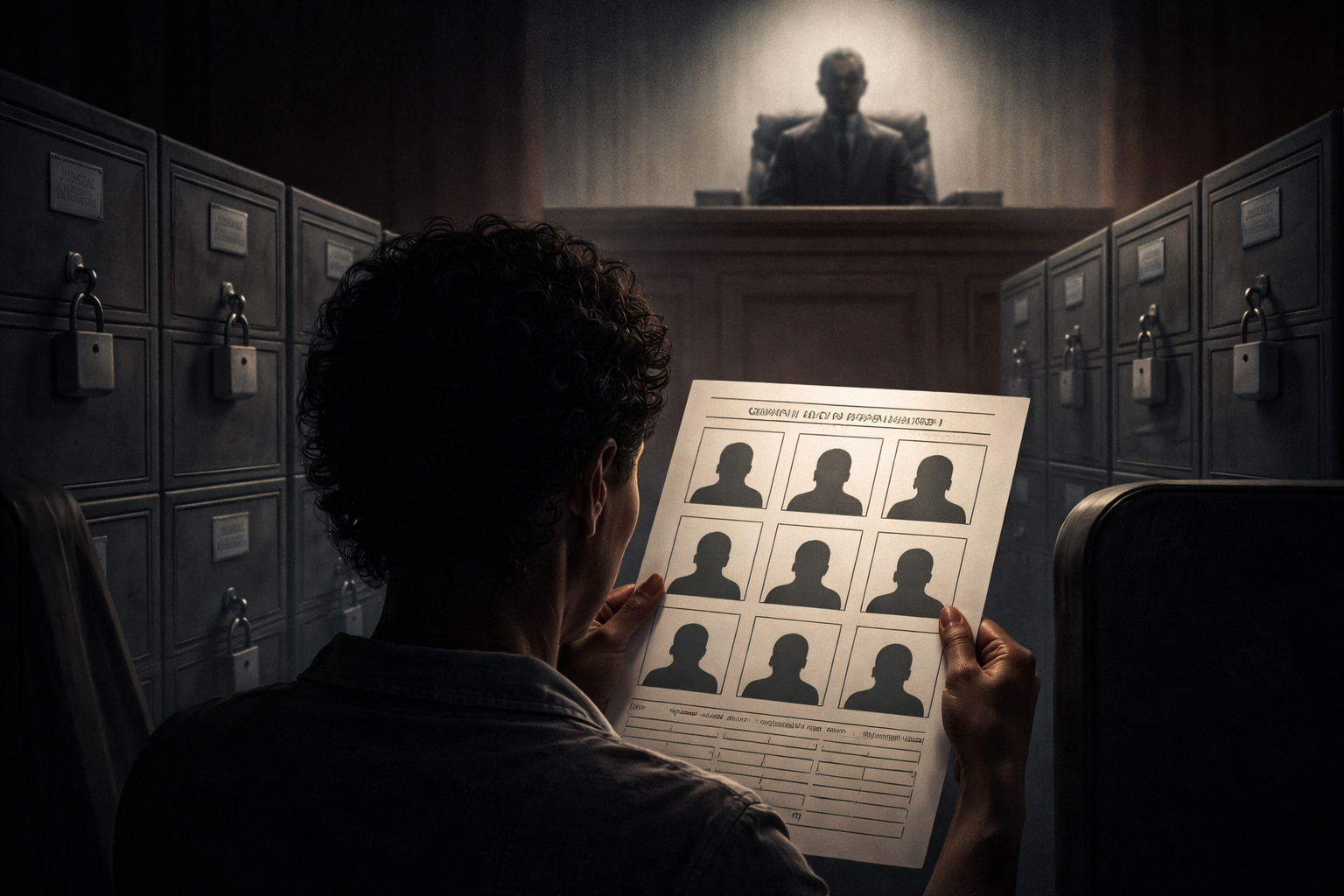
Every election cycle, Californians are handed a ballot and told: choose your judges. And every cycle, most of us face the same reality:
We don’t know who these people are.
No meaningful biography.
No clear record of what they’ve done.
No accessible explanation of how they’ve used power.
Just a name—and the expectation that we make a decision that could shape someone’s freedom, housing, or family.
That’s not democracy. That’s guesswork.
Related stories
And when voters are forced to guess, the system doesn’t become neutral—it defaults to incumbency, insider networks, and name recognition.
Power stays where it already is.
The System at Work: Selection First, Information Last
California’s judicial system limits voter power in two distinct ways:
First, it moves the real decision upstream—into appointments.
Then, when voters are finally invited in, it withholds the information needed to make a meaningful choice.
Appointments Shape the Bench Before Voters Ever See It
In Los Angeles County, the number of Superior Court Judges established by law is 429. When judicial commissioners are included in that count, the number of actual judicial officers on the bench in L.A. County is over 580. Not a trivial number when one considers that the vast majority of Superior Court judges in California (80%-90%)—especially in Los Angeles—first reach the bench through gubernatorial appointment. Vacancies are frequent, and appointments are routine.
By the time a judge appears before voters, most are already:
- Sitting on the bench
- Benefiting from incumbency
- Embedded in the legal system
And if no one runs against them—which is common—their name may not even appear on the ballot.
The election exists. The choice often does not.
The Information Gap: What Voters Don’t Usually Get
Even when there is a race, voters are generally given almost nothing to work with.
Typically:
- A name
- A ballot designation (often vague or strategic)
- Maybe a short statement buried in a voter guide
What’s missing is what actually matters.
There is no standardized, required disclosure of:
- Full legal career history (prosecutor, public defender, civil, corporate)
- Types of cases handled and years in each role
- Patterns in decision-making
- Reversal rates (for sitting judges)
- Complaints, discipline, or documented bias
- Sentencing or bail trends
And yet, much of this information already exists.
The State Bar’s evaluation process gathers it.
Courts track outcomes.
Legal communities know reputations.
But it is not organized, standardized, and delivered to the public.
So voters are asked to decide—without being equipped to decide.
More than a decade ago, LA Progressive launched its Judging the Judges series to confront a simple problem: voters were being asked to make decisions with almost no information. Working with limited resources, we gathered what we could and put it in front of the public. That early effort helped open the space. Today, we are joined by organizations like LA Forward, La Defensa, and Knock LA, collectively providing far more visibility into judicial races than existed 15 years ago.
But let’s be clear: while the information gap has narrowed, it has not been closed. Voters are still navigating a system designed to keep them in the dark—and we still have a long way to go.
The Human Consequence: When Voters Guess, the System Locks In
In Los Angeles County—the largest trial court system in the country—this isn’t abstract.
There are 58 counties in California and in each, judges decide:
- Who goes home and who stays in jail
- Who keeps their housing and who is evicted
- Who retains custody of their children
- Who gets a second chance—and who doesn’t
The L.A. County Superior Court is the largest. It spans 36 courthouses across the county. It is consists of roughly 583 judicial officers and 4,800 employees who operate nearly 600 courtrooms, managing an annual budget exceeding $1 billion. It has the decision making power to make or break peoples lives.
And yet the communities most impacted by these decisions are the least likely to have meaningful information about who is making them.
So what happens during election season?
People skip judicial races.
Or default to incumbents.
Or rely on slate mailers and insider cues.
And the system reproduces itself. What does that mean? Here is one example, when Los Angeles Public Defender Holly Hancock successfully campaigned and won a judicial seat on the Los Angeles Superior Court, that was the first time in the history of the court that a public defender campaigned and won a judicial election!
When the bench is shaped primarily by prosecutors, the system tends to reflect prosecutorial logic.
When public defenders gain ground, different experiences—and different questions—enter the room.
But voters rarely connect those outcomes to the choices they were never fully equipped to make.
They are told they participated.
They are not told how little control they actually have.
Outcomes like this don't happen because voters are indifferent—they happen because the system never gave the voters what they needed to act. Which means, an invisible system decides:
- Bail decisions
- Sentencing patterns
- Treatment of defendants in courtrooms
- Whether a judge sees a person as a case file—or as a human being
What a Democratic Judiciary Would Actually Require
If Los Angeles were serious about democracy in its courts, it would start with a simple principle:
No voter should be asked to choose a judge without being given a clear, standardized, and accessible record of who that person is and how they’ve used power.
Here’s what that would look like:
1. Mandatory Judicial Candidate Profiles (No Exceptions)
Every candidate—appointed or elected—would have a standardized, publicly available profile including:
- Full legal career history
- Types of cases handled and years in each role
- Areas of specialization
- Record of complaints or disciplinary actions
- Community involvement
For sitting judges:
- Sentencing and bail patterns
- Reversal rates
- Substantiated complaints
- Courtroom conduct evaluations
This would not be optional. It would be required—and distributed directly to voters.
2. Judicial Report Cards Delivered to Every Voter
Before every election, voters would receive a plain-language report card:
- Performance ratings from independent review bodies
- Data on decisions and outcomes
- Context explaining what those numbers mean
No legal jargon. No buried documents. Just usable information.
3. Real Elections—Not Formalities
If a judge is on the ballot, voters should have a real choice.
That means:
- Ending invisible elections where unopposed judges don’t appear
- Creating structural pathways for challengers
- Ensuring contests are visible and competitive
4. Public Financing for Judicial Challengers
Right now, incumbency is a wall.
A democratic system would:
- Publicly fund qualified challengers
- Limit contributions from those who appear in court
- Reduce the influence of insider networks
5. Community Voice in Judicial Selection
Before appointment, the process would include:
- Community representatives—not just legal insiders
- Public input or hearings
- Transparency about how candidates are chosen
If the public is trusted to live under judicial decisions, it should be trusted to help shape who makes them.
How Change Actually Happens: Moving Power Upstream
None of this changes on its own.
And it won’t change because people simply “pay more attention" or are better informed.
It changes when people target the points where decisions are actually made.
1. Change State Law
The California Legislature can require:
- Mandatory judicial profiles
- Public report cards
- Greater transparency in evaluations
- Ballot visibility for all judges
What this means in practice:
Call legislators. Demand specific reforms. Show up when these bills are heard. This is where most proposals quietly die—or pass.
2. Use the Ballot Initiative Process
Some of the biggest constraints are constitutional.
That means voters themselves can:
- Require competitive elections
- Redesign retention elections
- Mandate public participation in selection
But this requires scale—hundreds of thousands of signatures and serious organizing.
3. Focus on the Governor—Because That’s Where Selection Happens
Right now, the Governor is the single most powerful actor in shaping the bench.
That means:
- Every gubernatorial election is indirectly a judicial election
- Public pressure can shape who gets appointed
Demand transparency. Track appointment patterns. Push for candidates from outside the usual pipelines.
4. Build Local Pressure in Los Angeles
Los Angeles is not just another jurisdiction—it’s the largest trial court system in the country.
That makes it a proving ground.
Readers can:
- Support organizations like LA Defensa that track judicial candidates
- Push local media to publish judicial profiles and report cards
- Attend candidate forums and demand real answers
- Treat judicial races as consequential—not invisible
- Share the LA Progressive Judging the Judges series
The Bottom Line
In this case, democracy doesn’t fail because people don’t participate.
It fails when people are asked to participate without being equipped to do so.
Right now, California’s judicial selection/election system does two things at once:
- It makes the real decisions upstream, through appointments
- It withholds information voters would need downstream to make informed decisions
That combination keeps the system running as is.
And “running as is” is not neutral.
In Los Angeles County, Black residents are less than 10% of the population but often more than a quarter of those in jail. Latino residents—about half the county—also make up a disproportionate share behind bars. Black men, in particular, are overrepresented at every stage: stop, arrest, charging, detention, and sentencing.
That doesn’t happen by accident.
It happens through a chain of decisions—policing, prosecution, bail, and sentencing. And judges sit at one of the most powerful points in that chain, deciding who walks free and who disappears into the system.
So when the public is locked out of judicial selection, when information is withheld, and when elections offer no real choice, the outcomes we see are not just tolerated—they are produced.
“Keeping the system running as is” means accepting a pipeline that moves the same people, from the same communities, into the same outcomes—over and over again.
And calling that neutrality doesn’t make it true.
It just makes it harder to change.
If we want a democratic judiciary in Los Angeles, the solution isn’t complicated:
Give the public real information.
Give the public a real choice.
And move the public upstream—into the decision, not just the approval.
Until then, judicial elections will remain what they are today:
A decision made elsewhere, with voters asked to bless it at the end.
Keep your eyes open for the LA Progressive extended coverage on this topic and watch these websites:
Comments

Powered by RoundtableAn AI/DeFi-powered Enterprise Media Operating System. Learn more at Roundtable.io.© Roundtable 2026. By using this site you agree to the Terms of Use and Privacy Policy