


Jun 23, 2025 11:02 PM
Like Hoover, Trump is less of an ideologue than an egotist. This does not mean that either man is oblivious to ideas, just that ego and whatever nourishes it comes first.
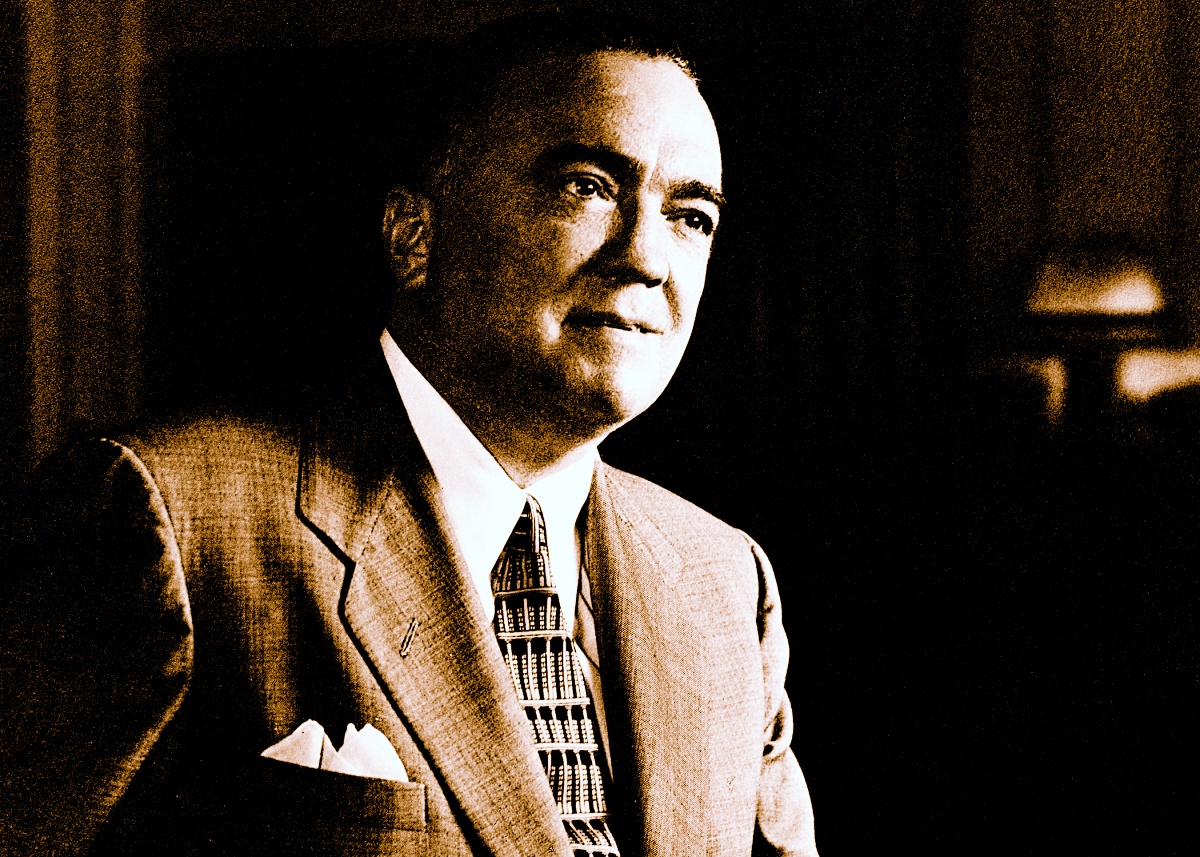
Observing developments during Donald Trump’s second presidential term, many observers believe his authoritarian policies are unprecedented in U.S. history. When comparisons are made, the name of Sen. Joe McCarthy is often mentioned, but, of course, he was not a president. Yet, another Trump precursor that is usually not indicated—but should be—is J. Edgar Hoover (hereafter often JEH). He served as FBI director from 1924 until his death in 1972—the formal title Federal Bureau of Investigation (FBI) came only in 1935.
As Beverly Gage points out in her Pulitzer-Prize-Winning G-Man: J. Edgar Hoover and the Making of the American Century (2022), “He was the most influential federal appointee of the twentieth century, a confidant, counselor, and adversary to eight U.S. presidents. He also embodied conservative values ranging from anticommunism to white supremacy to a crusading and politicized interpretation of Christianity.” (Although Gage’s work is sufficiently critical of Hoover, she also strives for objectivity.)
It is true that Trump does not so much embody “conservative values” as exploit them for his own purposes, but his affinity for “white supremacy” and interpreting and using Christianity, especially Fundamentalism, for his own purposes are certainly present.
Regarding communism and anticommunism, Gage writes that Hoover viewed “communists and racial minorities” as the greatest threats to his FBI leadership. Unlike in Hoover’s day—or that of Sen. Joe McCarthy—the communist USSR no longer exists, but that does not prevent Trump from labeling many of his political enemies as “communists.” For example, a hundred days into his second term he stated, “We cannot allow a handful of communist radical-left judges to obstruct the enforcement of our laws.” And earlier he referred to his prime opponent, Kamala Harris, as “Comrade Kamala.” One of his chief advisors, Stephen Miller, recently uttered communist four times while denouncing Democratic policies on transgender, diversity and immigration issues.
Related stories
Yet, like JEH, Trump is less of an ideologue than an egotist. This does not mean that either man is oblivious to ideas—e.g., Hoover’s anticommunism and Trump’s fondness for U. S. tariffs—just that ego and whatever nourishes it comes first. Gage describes Hoover as someone who sometimes took “enlightened positions” and allied with “unlikely bedfellows”—e.g., “During the 1940s, he faced down white Southern opposition in order to investigate racial lynchings, convinced that the FBI’s legitimacy was at stake. In the 1950s, he quietly helped to destroy Senator Joseph McCarthy, whom he viewed as...a loose-cannon threat to the anticommunist cause.” And although “he initiated famously vicious campaigns against civil rights and New Left activists, including King...to a lesser degree, he also went after the Ku Klux Klan and white supremacist groups, viewing them as dangerous vigilantes.” As Gage sums up, “Above all, Hoover sought to protect his own autonomy and acclaim, judging each new circumstance by what it would or would not do for his career and his Bureau.”
Gage’s biography devotes a chapter to JEH’s college years (1913-1917) at George Washington U., in his hometown of D.C. Perhaps most importantly, it discusses the fraternity he belonged to (and became chapter president of during his senior year), Kappa Alpha, and its influence on him. “With Kappa Alpha, Hoover gained entrée to Washington’s political elite, hobnobbing with the fraternity’s network of conservative Southerners in Congress. He also received an explicit education in segregationist politics and the cultural defense of white supremacy...At his college and fraternity, he found the social world and racial values that would define much of his adult life.”
In 1920, already working for the FBI, Hoover participated in manufacturing “the Big Red Scare,” which arrested more than 6,000 suspected communists and anarchists and deported about 500 non-U. S. citizens. In 1923 he played a major role in sending Marcus Garvey to a federal “penitentiary for two years, followed by deportation to Jamaica.” As Gage notes, “It was also his first experience of success against a high-profile Black leader. The Garvey case fit easily with what Hoover had been taught by Kappa Alpha’s leadership: that Black men were dangerous, a force to be controlled by dedicated white knights.”
The following year, 1924, Hoover became head of the FBI. The twenties were a time of three Republican presidents, Harding, Coolidge, and Herbert Hoover (no relation to JEH), of prohibition, and conservative policies.
The same month that JEH took over the FBI, the Immigration Act of 1924 was enacted. As I indicated in an earlier essay, “Congress passed the Immigration Act, containing an Asian Exclusion Act, almost banning Asian immigrants, and a National Origins Act, limiting European immigrants but favoring those from northern Europe. As Jill Lepore has written, the purpose of the new law ‘was to end immigration from Asia and to curb the admission of southern and eastern Europeans, deemed less worthy than immigrants from other parts of Europe.’ Reflecting such sentiments was Indiana Republican Fred S. Purnell, who said, ‘There is little or no similarity between the clear-thinking, self-governing stocks that sired the American people and this stream of irresponsible and broken wreckage that is pouring into the lifeblood of America the social and political diseases of the Old World.’” In that same decade the Ku Klux Klan was a potent force, with perhaps 4-5 million members nationally. Thus, JEH became FBI director in a decade in which many U. S. citizens shared his views.
His growing prominence under the progressive President Franklin Roosevelt (FDR) may seem surprising considering that Gage quotes a reporter that claimed that Hoover had “always been obsessed with a complex against liberals and advanced thinkers,” but Hoover’s political adroitness and other factors were crucial. One of these considerations was that the early 1930s was a period of gangster prominence, and the FBI was credited in mid 1934 of killing the most notorious of them—John Dillinger.
Like Trump later, JEH depicted himself as hard on criminals. Reminding us of Trump’s words about some immigrants—"The Democrats say, 'Please don't call them animals. They're humans.' I said, 'No, they're not humans, they're not humans, they're animals'"—in mid 1935 Hoover, who once characterized political radicals as animals, now called criminals vicious animals and (according to Gage), their “sympathizers feminized weaklings or deluded eggheads.” Prison warden (of Sing Sing) Lewis Lawes thought that Hoover’s approach revealed a basic lack of empathy. Hoover’ss reference to defense attorneys as “shyster lawyers” and “legal vermin,” and parole advocates as “sob sisters,” and “convict lovers” displayed a similar lack. (Unlike most recent presidents, Hoover and Trump have also been capital-punishment enthusiasts.)
Prior to 1941, as the Great Depression wound down, and Hitler’s threat to Europe increased, the U. S. faced increasing challenges from the Left (e.g., some intellectuals sympathy for communism) and the Right (Charles Lindbergh's “America First” movement). Hoover gathered and passed on information to FDR about critics of his policies. Partly for these reasons, Gage writes that the “FBI expanded dramatically in 1940, building on widespread concern about a ‘fifth column’ of spies and Nazi sympathizers within the United States.” And its expansion continued after the Pearl Harbor attack of December 1941: “During the remaining World War II, the FBI more than quadrupled in size and took on a vast range of new duties, including investigations of home-front espionage and sabotage. Hoover’s celebrity increased accordingly.”
Yet, as before, Hoover remained more concerned with his own status and that of the FBI than with any ideological predisposition. Thus, Gage could quote a source that wrote that “during World War II, he opposed Japanese internment on grounds that it was unconstitutional and likely to disrupt the FBI’s home-front policing.”
JEH’s relations with President Truman were more adversarial than with FDR—Truman’s empowering of the CIA rather than expanding the FBI’s activities was one major Hoover grudge. But Hoover’s relations were warm with some members of Congress, especially with the House Committee on Un-American Activities (HUAC), which shared his fierce anti-communism. Although friendly with HUAC, his opposition to Sen. Joe McCarthy’s tactics are revealed by Gage’s statement that Hoover thought “ it was better to see professors, librarians, and defense workers quietly eased out of their jobs on the FBI’s say-so than to endure risky episodes of public accusation and spectacle...By April 1951, the Bureau was regularly notifying governors and university presidents about left-leaning faculty, administrators, and staff employed in state university systems.”
Also a strong advocate of a conservative Christianity, Hoover was mutual admirer (as was the younger Donald Trump) of the popular Protestant preacher Norman Vincent Peale—Hoover also admired strong anti-communist Catholic leaders such as Bishop Fulton Sheen and Cardinal Francis Spellman.
With the accession of Eisenhower to the presidency, Hoover’s clout increased. As Gage writes, “From his first months in office, Eisenhower championed Hoover as a symbol of the new Republican administration.” The mutual admiration and friendship of Hoover and the new president’s vice president, Richard Nixon, who had been a HUAC member, also helped. And both Eisenhower and JEH were tremendously popular throughout the country. As Gage writes, “By the end of 1954, Hoover was the nation’s unchallenged anticommunist authority, his combination of good-government bromides and conservative political zeal more popular than ever. (In the 1952 election Eisenhower had carried 39 out of 48 states.) During Eisenhower’s second term, Hoover effectively weakened the U. S. Communist Party and witnessed the publication of his bestselling Masters of Deceit: Communism in America and How to Fight It.
The election of John Kennedy (JFK) as president over Hoover’s friend Nixon in 1960 was a bitter defeat for JEH, and it was made worse by the selection of the brash and younger Bobby Kennedy as Attorney Journal, and thus Hoover’s direct boss.
Also making JEH’s job more difficult was the outburst of civil rights activities that characterized the 1960s. Plus the fact that the administration of JFK—and after his assassination in Nov. 1963, that of Hoover’s good friend Lyndon Johnson (LBJ)—generally backed these activities.
Although opposed to open defiance of federal law, Hoover was at best a reluctant enforcer of such laws when they supported civil-rights activism. The main reason? Gage’s title of one of her chapters about Hoover, “Patron Saint of the Far Right (1961–1962),” hints at why. In that section she writes about a person for whom the FBI director had a special “soft spot”—right-wing editor William F. Buckley Jr.—who, like JEH, specially disliked “eggheads, pinks, fellow travelers, and dupes.”
Among civil-rights activists, “the most dangerous Negro” (following Martin Luther King’s famous August 1963 “I have a Dream” speech) was (according to Hoover and the FBI) MLK himself. In December 1963, with LBJ now president, an FBI meeting “discussed how to use wiretaps, bugs, press leaks, photographs, gossip-spreading, physical surveillance, tax inquiries, anonymous letters, and other counterintelligence techniques against King.” A month later, after listening to a tape that depicted MLK’s adulterous ways, Gage states that Hoover deployed “a racial epithet that said far more about Hoover’s own moral failings than about King’s.”
Yet, then and by February 1965, Hoover was still much more popular in the country than MLK—a Harris poll of the latter date suggested that by about a 3 to 1 margin U. S. citizens were more favorable to the FBI director than to MLK.
One of Hoover’s main concerns by this time was the “new Left.” After the Students for a Democratic Society (SDS) protested against U. S. escalation of the Vietnam War he told Johnson that they “were dupes of the Communist Party.” As late as just before King’s assassination in 1967 Hoover also still believed that MLK was “an instrument in the hands of subversive forces seeking to undermine our nation.”
With the election of Richard Nixon in 1968, JEH was delighted. As Gage writes, “their friendship had continued not just unscathed but strengthened by the trials of the Kennedy and Johnson years.” By the time of Hoover’s death in early May 1972, his popularity was beginning to decline, and Nixon was struggling with how to force the old man (now in his mid 70s) to retire until his dead body was discovered at his home.
Although Hoover was in many ways a precursor of Donald Trump—their shared belief in white supremacy, their appeal to many conservatives, their hostility to leftist values, and (perhaps most importantly), as Gage wrote about Hoover, the “judging each new circumstance by what it would or would not do for his career”—there are, of course, substantial differences between the two men. One of the most significant is their demeanor. Trump is much more a flamboyant, “in-your-face,” type of personality. And whereas Gage often hints (but never outright states) that JEH was a homosexual, references to Trump and sex more often quote his remark about where he could grab women without fear of retribution.
Yet, such differences do not negate their similarities—nor their appeal to certain segments of the U. S. public. According to Gage, a Harris poll in 1970—when Hoover’s appeal had started to decline—found that his “strongest support” came from “working- and middle-class whites, residents of the South and Midwest, with incomes under fifteen thousand dollars and a high school education or less. His favorable ratings were falling precipitously among “younger adults, Easterners and persons with a college background.”
Yet earlier, as we have seen, he was even more popular. From the 1920s through the early 1960s, Hoover’s anticommunism and anti-crime stands gained the support of most citizens. And although today we honor MLK’s birthday as a national holiday—whereas JEH receives little honor—before King’s 1968 assassination Hoover was the more acclaimed figure.
Comments

Powered by RoundtableAn AI/DeFi-powered Enterprise Media Operating System. Learn more at Roundtable.io.© Roundtable 2026. By using this site you agree to the Terms of Use and Privacy Policy