
Original License Attribution-ShareAlike (CC BY-SA 2.0)


Aug 6, 2023 7:00 AM
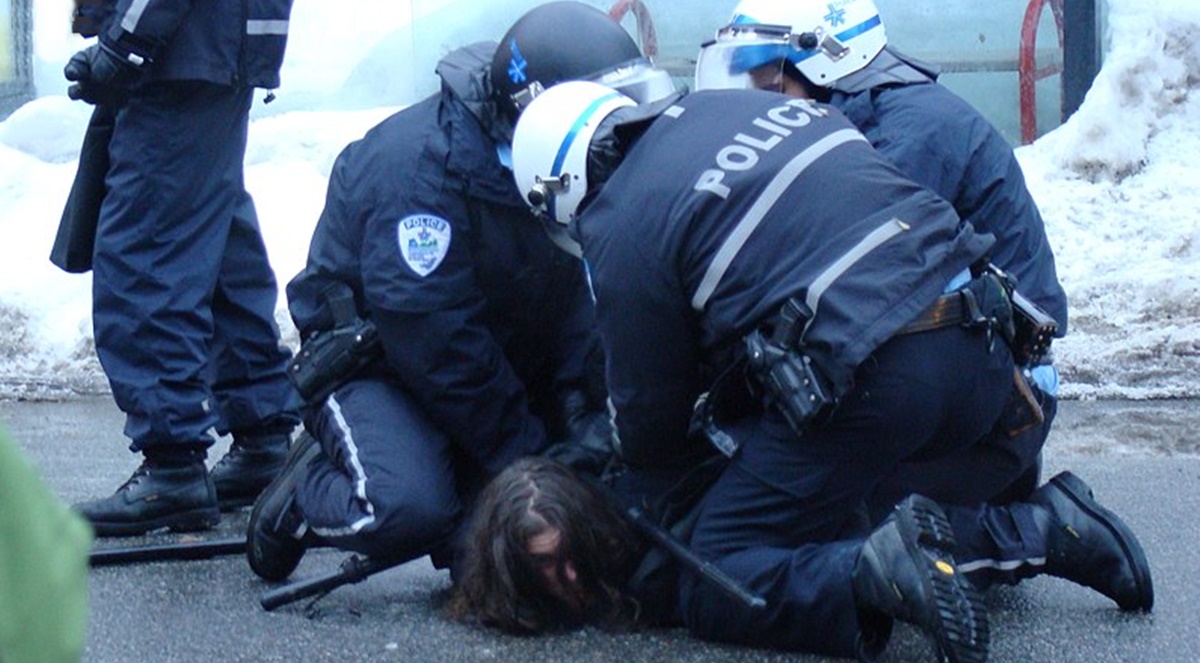
The more officers get away with using excessive force, the more brutal they become.
In the July 6th edition of the Dallas Morning News, there is a piece by Miles Moffeit, Ari Sen and Dana Chiueh titled “Deadly Trajectory: How Dallas Police Failed to Stop officer Christopher Hess’ Decadelong Streak of Violence.” What these staff writers uncovered is what you will have come to expect if you have been following the subject of the excessive use of force by American police officers. They report that officer Hess was investigated 22 times and was fired after a wrongful shooting resulting in a death and that he was disciplined for eight minor allegations out of 42 instances. Their findings show that history records that the more officers get away with using excessive force, “the more brutal they become.” Truth be told, every major police department has officers like Hess.
On June 16th this year the DOJ published a 90-page investigative report on the Minneapolis Police Department that found that the MPD has routinely engaged in conduct which deprives citizens of their Constitutional rights which includes the use of excessive force, racial profiling, and the racial abuse of minorities. Not surprisingly this report has a lot in common with the Ferguson, Missouri DOJ Report of March 15th, 2015. Eight years and despite myriad calls for police reform, excessive violence continues. Both reports can be found online.
Police officers in cities with a high population density, routinely experience situations in which the use of force is called for. What is not common public knowledge but should be apparent to the management of any major police department is that frequently engaging in this kind of conflict causes physiological changes in the limbic system of the officers. [i] Their amygdala is likely to grow larger as they become hypersensitive to insults of any kind and some of them will become ticking time bombs, blowing up at the slightest provocation. [ii] YouTube has many examples. In addition, it is also not well known by the public that some officers will get hooked on adrenaline (becoming adrenaline junkies), so to speak, and that often unbeknownst to themselves, they will escalate violence to get the chemical rush they have become accustomed to receiving, and because these incidents occur at a slot-machine level of frequency, they begin to constantly crave excitement. [iii]
The more officers get away with using excessive force, the more brutal they become.
Related stories
Now, these officers have gradually experienced bodily changes while likely being unaware that anything of what I have described is happening to them. We are quick to blame these officers for their conduct, but the real fault is with their management because what happens to these officers from simply doing their job should not still be an open secret and any major police department that is still unaware of how this biological and neurological change happens, must be from a lack of interest because the information is readily available for anyone who is interested.
I was a police officer in Dallas, Texas for a little over four years in the 1960s and I know what this feels like, and although I didn’t explode, I did feel increasingly stressed, and I witnessed many officers who did go ballistic at the slightest provocation. I did eventually feel overly aggressive during confrontations but early on I learned to let my uniform absorb acts that amounted to insult or disrespect.
For more than half a century I have been reflecting about my police experience and in 2020, after having spent a decade studying human biology and neuroscience, I published Blue Bias: An Ex-Cop Turned Philosopher Examines the Learning and Resolve Necessary to End Hidden Prejudice in Policing. If most police departments embraced the applicable science about how our minds work under stressful conflict, I believe the calls for police reform would fade away.
It is worth repeating ad nauseum, that unless police management is obsessed with reducing the excessive use of force by their officers, this behavior will continue to escalate, simply because it is driven by human biology and just doing the job increases the biological intensity of changes that lead to violent conduct.
Now, apply this to an officer with twenty years’ service without senior management being aware of the science and the two DOJ Reports mentioned above will speak for themselves.
My experience in the Dallas Police Department began with over-the-top enthusiasm and after four years I experienced what is generally called burnout. I was not knowingly abusive, but I had indeed reached a point of being hypersensitive to having my authority challenged, meaning for me it was time to leave. In hindsight even though I wasn’t consciously abusive, the way we policed in those days was overly aggressive.
[i] Robert M. Sapolsky, Behave: The Biology of Humans at Our Best and Worst (New York: Penguin Press, 2017), 30-34, 59-62, 73, 125, 143, 144, 193, 454, 518, 531, 545, and 610. This book is a terrific reference work.
[ii] R. Douglas Fields, Why We Snap: Understanding the Rage Circuit in Your Brain (New York: Dutton, 2015), This is an outstanding book for police officers because it shows clearly how our brains work when we are conditioned by continuous stressful conflict.
[iii] R. Douglas Fields, Why We Snap: Understanding the Rage Circuit in Your Brain (New York: Dutton, 2015), 200.
Comments

Powered by RoundtableAn AI/DeFi-powered Enterprise Media Operating System. Learn more at Roundtable.io.© Roundtable 2026. By using this site you agree to the Terms of Use and Privacy Policy