


Death by Incarceration
Feb 16, 2024 9:20 PM
The biggest myth about people who have caused harm is that we have no remorse.
Currently, there have been approximately 100 people released to society who were formerly sentenced to life without parole (LWOP). They are euphemistically referred to as L-wops. They were condemned to die in prison, deemed incorrigible in their early youth (18–25 years of age) by politicians and judges. Yet behaviorists say most people can transform and mature in 10–15 years, particularly if offered a robust rehabilitation program. Lester Polk indisputably proves this assertion.
Polk was 18 years old when he was sentenced to die a slow death in 1990. His friends and family hoped that he would be commuted alongside the dozens that governors Jerry Brown and Gavin Newsom recognized as rehabilitated. As a decades-long friend and hopeful observer, I scratch my head in disillusioned wonder. In spite of Polk's grave harm, the victim's family wife, an extraordinary woman, participated in a victim-offender dialogue with Polk over a decade ago. They have been "friends" since. They pray together, hope together, and heal together.
Some may find it interesting that I state that they heal together. After all, there's the victim(s) and the perpetrator, right? Yet, when we talk about public safety, it is important that people understand the common reason most men, women, and children find themselves at odds with the law: trauma. According to the Compassion Prison Project, a California-based nonprofit that brings awareness to adverse childhood experiences (ACE), 95% of all incarcerated people have a high ACE score. Thus goes the proverb: hurt people, hurt others!
When we talk about public safety, it is important that people understand the common reason most men, women, and children find themselves at odds with the law: trauma.
Related stories
After reading Bessel van der Kolk's The Body Keeps the Score, trauma is easy to explain: A young boy gets neglected, abused, and/or bullied. He is angry. He turns his hurt on society and, perhaps, joins a gang; he eventually robs a man exiting a grocery store.
Naturally, the robbery victim turns his hurt on the boy and wants the boy to suffer to the maximum extent of the law. (No one ever thought to intervene in the child's life, not even the system.) The boy gets life, and the boy's friends and family are hurting. Some of them turn to substance abuse, cutting themselves, or some other form of self-harm. Rather than project their harm on others, they internalize it. That's the contagion of trauma.
Everyone is hurting; no one is healing. And that's what's so fascinating about Polk and (Vic’s wife), his friend. They followed the Christian-biblical philosophy of forgiveness, which brings healing. The amazing thing here is that healed people tend to heal others. Healing can be contagious, too!
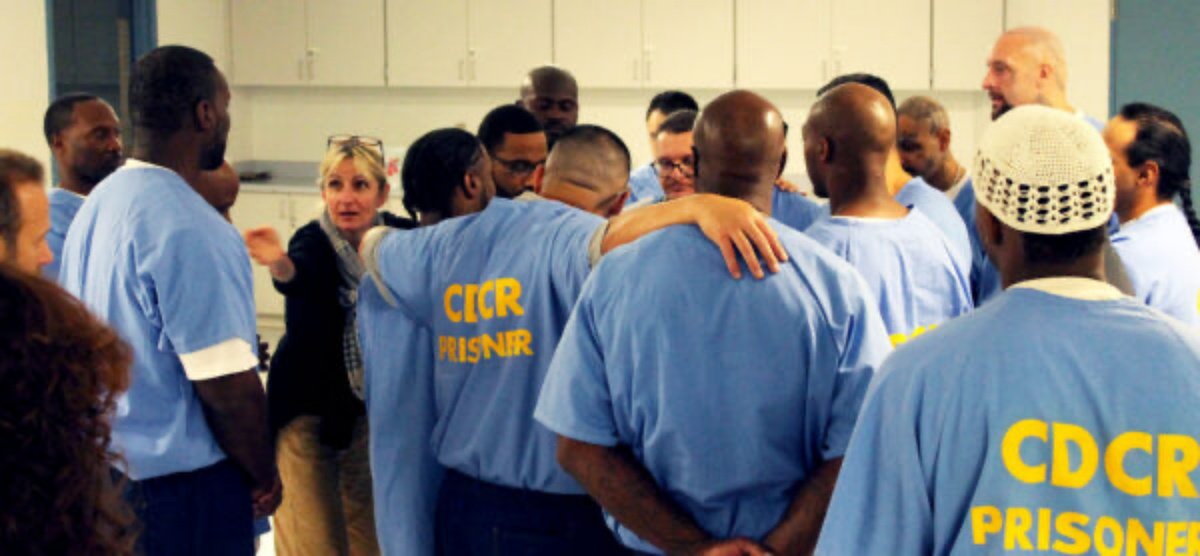
Polk heals by teaching classes. In 2013, he taught his first writing class. He followed that with victim orientation, a 12-week instruction on remorse letters, letters of apology, personal insight, and the impact of one's harm. The biggest myth about people who have caused harm is that we have no remorse. However, with true transformation, one can't help but regret past decisions, develop empathy, and desire to make amends.
Polk expresses his apology by educating himself so that he can better instruct others. He has become a certified peer mentor, a Christian counselor, a victim-survivor advocate, and has raised money for charities such as the American Cancer Society and Wounded Vets, to name a few. He has also vowed to never hurt another human being.
With California listed as hosting one of the most violent prison systems nation-wide, Polk's three decades of disciplinary-free existence speak for themselves and are indeed extraordinary. What is shameful is that Polk's extra-ordinary is not recognized, like thousands of other L-wops fated to die in prison; no matter their growth and rehabilitative strides, by law, people suffering the sentence of LWOP are never reviewed.
We are literally thrown away!
Polk is a humble man. He has been giving back long before there was any hope for a rare commutation or other such review. So, I hope for him, along with his victim, his family, and other supporters, that he is some day recognized. For now, society itself loses out on one extraordinary man. (600 words)
Comments

Powered by RoundtableAn AI/DeFi-powered Enterprise Media Operating System. Learn more at Roundtable.io.© Roundtable 2026. By using this site you agree to the Terms of Use and Privacy Policy