



Surveillance Camera
Dec 4, 2023 1:00 PM
Updated Dec 4, 2023 7:39 PM
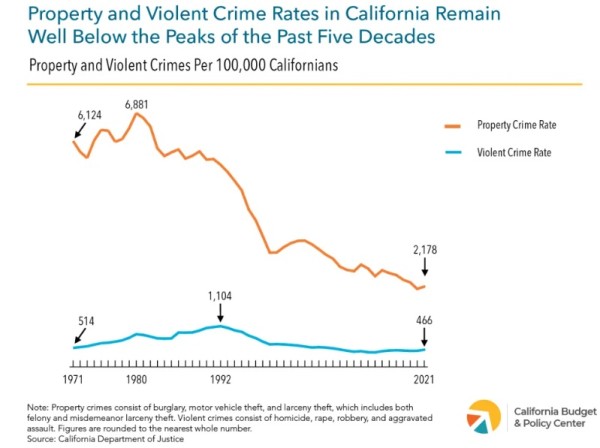
Riverside County has increased surveillance of its citizens by claiming the usual “violent crimes” rationalization even though violent crimes are down
In case you missed it, a couple of weeks ago the Riverside County Board of Supervisors approved a new contract for automatic license plate recognition (ALPR) cameras.
The contract will more than double the existing number of cameras—increasing the number ALPR’s from about 210 to 538.
By the way, the cameras, contracted through the manufacturer, Flock Safety (Flock), have been in operation in Riverside County for about three years.
Of course, the Riverside County Sheriff’s Department justified the need for these additional cameras by claiming the usual “violent crimes” rationalization even though violent crimes are down across the nation and in Riverside County the violent crime rate in 2021 was 296.1 per 100K compared to 307.4 per 100K in 2019. But then again, I ask rhetorically, when does reality matter when it comes to funding the police?
Related stories
13.6% Of Children are Food Insecure
This is just one more example of how we truly live in an Orwellian world and our officials are willing to pay top (taxpayer) dollars to make sure “big brother is always watching.” The $6.9 million dollars it’s costing for this added intrusion in our lives could certainly be better spent in a county where 9.1% of its families live in poverty, 13.6% of its children live in households that are food insecure, and its homeless population grew 12% over 2022, according to this year’s Point in Time count.
So what do we get instead for $6.9 million dollars? Flock Safety’s technology captures still images of every vehicle that passes by a particular camera and the information is stored in a database for 30 days. However, the database also stores the color, make and model of each vehicle as determined by “artificial intelligence.”
Why should we be concerned? I’ll admit license plate readers have been around for a while so this is not necessarily breaking news. What is important to note about Flock and its license plate readers, however, is that “Flock is the first to create a nationwide mass-surveillance system out of its customers’ cameras,” the ACLU noted about the use of Flock by law enforcement across the nation.
Flock also allows private camera owners to create their own “hot lists.” These hot lists, the ACLU explained, can generate alarms when one of the license plates listed is spotted. Flock runs all plates against state police watchlists, the FBI’s primary criminal database, and the National Crime Information Center (NCIC)...Flock is reportedly building a massive camera network that captures every movement whether around the community or across the nation. That data of our movements is then available to be searched by any law enforcement agency contracted with Flock.
Agencies who use Flock are not automatically enrolled in any sharing between agencies. All sharing is opt-in on both sides, and agencies can revoke sharing capabilities anytime. Moreover, private customers, like neighborhoods, are never able to access data from any cameras besides their own.
Compared to other ALPR technology providers that take pictures of license plates, check them against a local hot list and then discard the data if there was not a match, Flock is reportedly building a massive camera network that captures every movement whether around the community or across the nation. That data of our movements is then available to be searched by any law enforcement agency contracted with Flock.
Using Surveillance Disproportionately in Black and Brown Communities
Certainly ALPR technology has its benefits especially in relation to AMBER Alerts, stolen cars, even for toll collection as noted by the ACLU. It is also important that the technology be deployed and used fairly and not just become one more tool the Sheriff Departments will leverage to over-police Black and brown people by deploying these license plate readers disproportionately in minority and low income communities. Residents should demand transparency regarding where they are currently deployed as well as the county’s plans for future deployment.
In March 2022 the ACLU issued a white paper about how Flock is building a new AI-Driven mass-surveillance system. It is important to educate ourselves on this issue.
Flock is making inroads across the county and recognizing that it is virtually impossible to stop a tsunami, there are still some things the community can push for to maintain some guardrails for privacy.
We can begin by demanding the Riverside County Board of Supervisors and the Sheriff’s Department follow the guidelines by the state.
In late October, CA Governor Gavin Newsom noted in a press release, “[T]he majority of California law enforcement agencies collect and use images captured by ALPR cameras, but few have appropriate usage and privacy policies in place.
California law governs the collection, storage, sharing, and use of such data. Senate Bill 34 sets requirements to protect data collected through an ALPR system. This includes limiting with whom this information may be shared. Also, Senate Bill 54, known as the Values Act, provides strict guidelines in the use of these databases to ensure information shared for immigration enforcement purposes is limited to the fullest extent possible in alignment with federal law.
Maybe we’ve already slid too far down the slippery slope of mass surveillance. Even so, it is never too late to ensure that the Riverside County Board of Supervisors and the Riverside County Sheriff’s Department are in compliance with the guidelines established under Senate Bills 34 and 54. We must let officials know that we are watching and demand transparency and accountability.
Of course this is just my opinion. I’m keeping it real.
Comments

Powered by RoundtableAn AI/DeFi-powered Enterprise Media Operating System. Learn more at Roundtable.io.© Roundtable 2026. By using this site you agree to the Terms of Use and Privacy Policy