
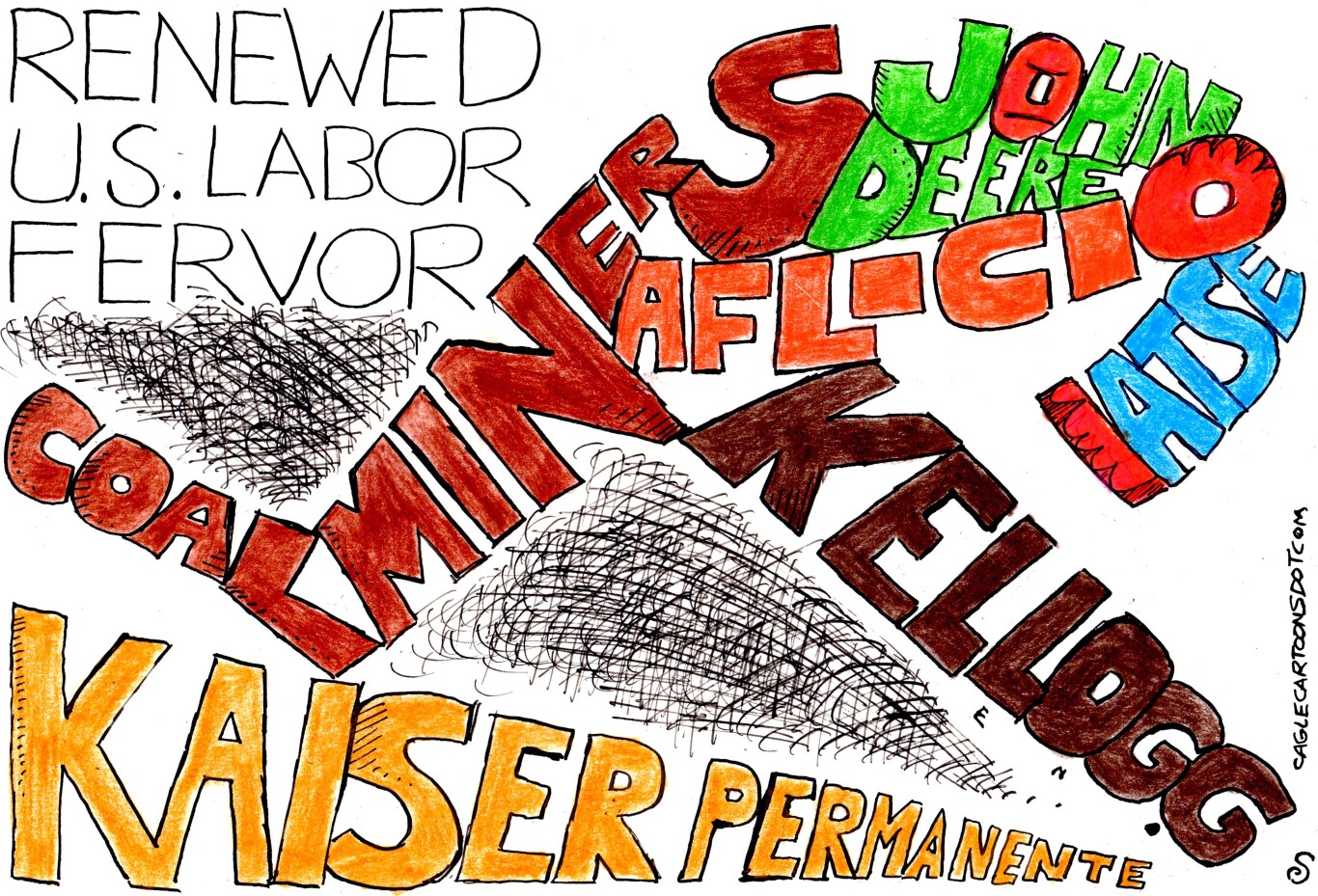


Having a Union Job
Nov 4, 2023 1:00 PM
Union jobs are good jobs. Job seekers should want them. So, if you want a good job, this article is for you.
I recently spoke with LinkedIn News columnist Brandi Fowler to help her with a column about union jobs. She asked me a smart, important question: why should young people want a job where they will be represented by a union? I advocate for unions, union organizing, worker power, and the public policies that promote them, but I have never advised job seekers about union jobs. I should have. Union jobs are good jobs. Job seekers should want them.
So, if you want a good job, this article is for you. But I also want to read your thoughts about why you think readers should want union jobs. Will you share them in the comments after reading this article?
10 Reasons To Search For a Union Job:
- Voice - Most Americans work in what can only be described as authoritarian workplaces: the boss decides everything with no meaningful input from employees. Worse, the boss can fire or demote you at-will for suggesting an improvement to a business process, objecting to an incompetent supervisor, or offering almost any idea or criticism. Unions protect you against retaliation. They also provide a channel for your ideas: collective bargaining. You and your co-workers know a great deal about workplace opportunities and problems. Using your voice in decision-making helps your employer and makes you more satisfied and committed to your job.
- Better Wages and Benefits - On average, union members are paid more than their non-union counterparts and they are more likely to receive employee benefits like health insurance, a retirement plan, and paid leave. That’s not true in every union/non-union comparison, but odds are a union job will support a better standard of living for you and your family.
- Transparency - Your union will negotiate a collective bargaining agreement (CBA) with your employer spelling out your workplace’s rules that will be available to you and your co-workers. These rules can range from a pay increase schedule and paid leave requirements to training programs and grievance-handling procedures. No non-union employer will provide any document as detailed as a good union contract. In a union job, you have visibility into the rules governing you, your co-workers, your supervisors and managers, and your employer.
- Protection from Discrimination and Harassment - CBAs almost always contain strict protections against workplace discrimination and harassment that supplement local, state, and federal laws. Unlike anti-discrimination laws, however, you won’t need a lawyer and several years in administrative and judicial proceedings to enforce your contractual rights. Your union will fight to remedy the discrimination or harassment and push for a quick resolution using the CBA’s grievance procedure. If you don’t get a satisfactory result, you can choose to sue on your own.
- Representation - In a union job, you are not alone when problems arise. Your union’s president, business agent, shop steward, grievance chair, or other leader will represent you. Often, they have relationships with the employer’s key managers allowing them to work something out quickly and quietly. But if not, they will be your advisor and representative in the grievance process.
- Fairness - The default rule in the U.S. is employment at will, which means an employer can fire you for a good reason, a bad reason, or no reason, as long as it’s not an illegal reason. That’s not how it work for almost all employees in union jobs. Unionized employers usually must have “just cause” to fire you. If the employer’s decision is not fair, you have a channel to raise your concerns and force your employer to offer evidence. And your union can help.
- Protection from Layoffs - For some of the reasons on this list, union members are less likely to be laid off by their employers when the economy slows down. For example, during the recent pandemic-induced economic recession, “union density” --- the percentage of union members in the overall workforce --- rose measurably. Why? Because non-union workers were laid off from their jobs at much higher rates than union members.
- Democracy - American workplaces are undemocratic. You don’t get to vote for your supervisors, managers, and CEO. In a non-union workplace, you don't get a vote on workplace rules and policies. By contrast, union members elect their union leaders. Most also get a vote on whether to ratify (or not) the collective bargaining agreements their unions negotiate. When things aren’t going well in the union, you can confront your union’s leaders in meetings or privately. If a majority of your fellow members agree, you can vote the leaders out, and even run for union office yourself. Like American democracy, union democracy isn’t perfect, but unions’ power comes from their members. Democracy makes them stronger.
- Shared Interests - Unions are born from their members’ shared interests. The National Labor Relations Board assesses whether workers have a “community of interest” when deciding which workers are eligible to vote on union representation. The focus is on what you and your co-workers have in common, not what might divide you. As a result, most unions are multi-racial, multigenerational, and inclusive organizations. Some unions could certainly do better with respect to diversity, equity, and inclusion, but most understand that inclusion builds unions’ power.
- Skills – Some unions, but not all, negotiate with employers to create skills training programs, sometimes managed as labor-management partnerships. In fact, this can be a great entryway into union jobs. Labor-management apprenticeship programs are among the most effective job skills development programs in the U.S. They create pathways into the middle class.
Make Your Job a Union Job
So, there are my top ten reasons why you should seek out a union job. Please add more in the comments, or elaborate on mine. But let’s also acknowledge a big problem: right now, there aren’t enough union jobs to go around. Only 6.1% of private-sector workers, and only 10.3% of all American workers, are union members. So, if your job search doesn’t turn up a great union job that fits your skills and ambitions, you might have to take matters into your own hands.
Related stories
Organize a union in your workplace. Bargain for the kind of workplace in which you can and want to succeed. As I explained in my Labor Day article, workers around the country in a wide variety of industries are organizing and winning union elections. You can do it too. Start by talking with your co-workers about whether the outcomes listed in this article that make union jobs such good jobs are the kinds of things you want in your workplace.
Comments

Powered by RoundtableAn AI/DeFi-powered Enterprise Media Operating System. Learn more at Roundtable.io.© Roundtable 2026. By using this site you agree to the Terms of Use and Privacy Policy