


Sep 8, 2025 6:10 PM
Updated Sep 10, 2025 2:04 AM
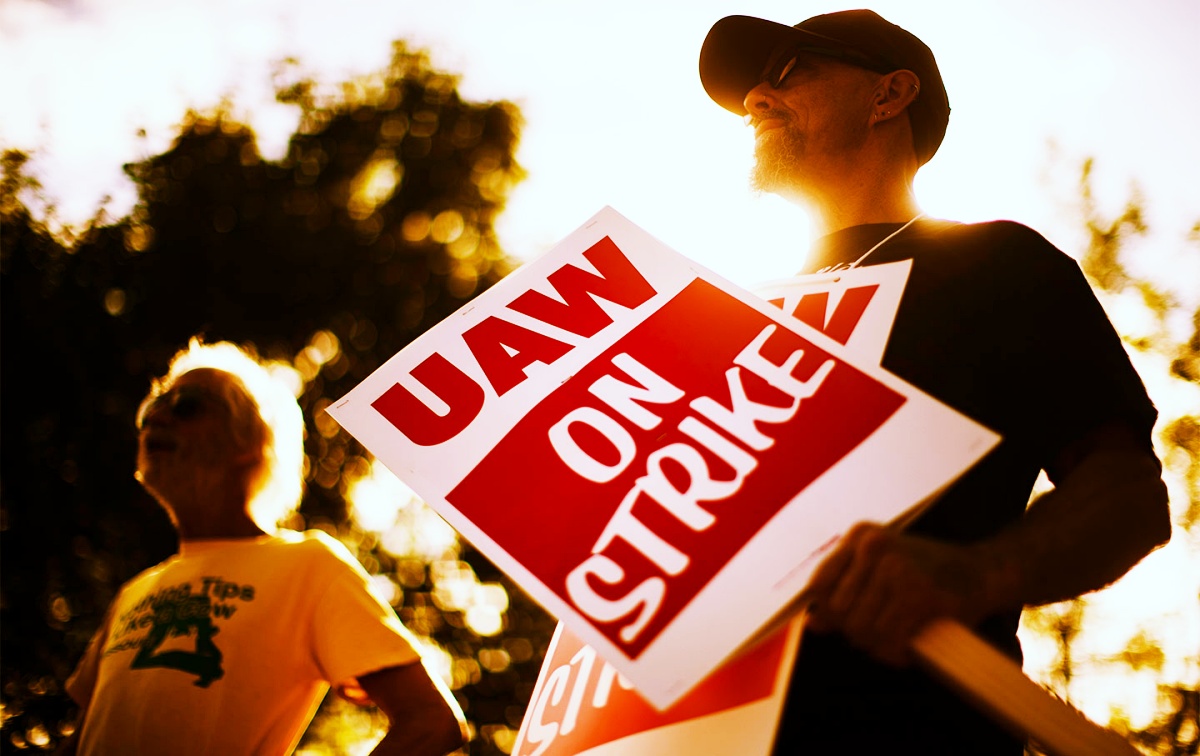
As the Black civil rights movement gathered force in the early 1960s, the UAW didn't just talk the talk; it walked the walk.
As the Black civil rights movement gathered force in the early 1960s, the UAW didn't just talk the talk; it walked the walk. More Videos
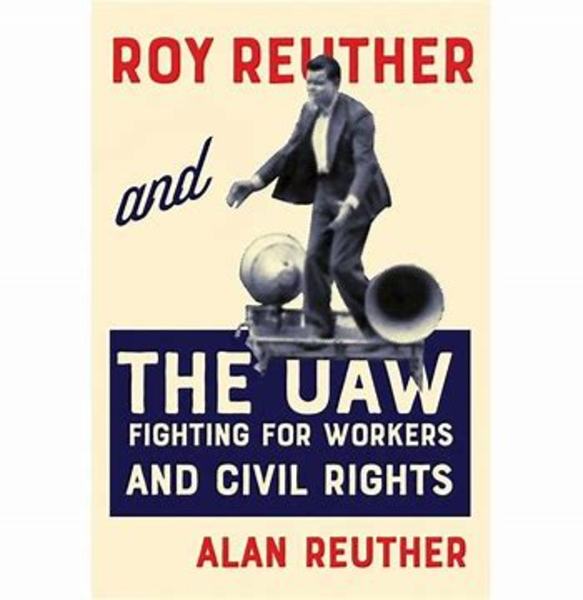
Last week a labor lawyer friend in Boston sent me an inscribed copy of a recently published book by Alan Reuther about his father, labor leader Roy Reuther: Roy Reuther and the UAW: Fighting for Workers and Civil Rights. I was delighted, and I devoured the book in two sittings. It brought back many bittersweet memories and challenged me to think yet again about the labor movement's unfulfilled promise.
My years with the UAW's communications department in Detroit coincided with some of the worst years in that union's storied history. These were the years of unionbusting presidents Ronald Reagan and George H.W. Bush; they were also the years of relentless downward pressure on UAW wages and benefits linked to the rise of more efficient non-union Japanese-owned "transplant" factories (an especially bitter pill for a union that had long campaigned to have the Japanese automakers "build here what you sell here").
During my time as department director, our public relations and publications staff did its best to put a bright spin on the union's 50th anniversary in 1986. But the militant spirit of the great sit-down strikes that had catapulted the UAW into a powerful national force in the space of two years was mostly gone at a union headquarters then hunkered down in defensive mode. During that same year—1986—a powerful dissident movement eventually joined by Victor Reuther was birthed within the UAW to demand a return to more militant tactics, more aggressive organizing, and greater internal democracy. Topping off the year's bad news, the Canadian section of the union split off under leadership of charismatic leader Bob White.
Walter Reuther had been dead for more than a decade by the time I moved to Detroit, but his memory was still invoked with great reverence at Solidarity House. Walter's personal secretary was still working for the union presidents I served; I often enjoyed chewing the fat with her and with the man who had been Walter's bodyguard and who was still serving as bodyguard and driver to the president. The marvelous Brendan Sexton and Millie Jeffrey and Oscar Pascal—genuine labor radicals with deep histories in the UAW—were still around to remind me and others of the once-bright vision of a society transformed in part through the power of organized working people: Black and white and brown together.
Related stories
And about Roy Reuther, the youngest of the three celebrated brothers: Even during his lifetime—a lifetime cut short by a heart attack at age 58, no doubt brought on in part by overwork—Roy remained the "unsung" one among the brilliant Reuthers. But after reading Alan's book, I can say that Roy is the brother I wish I had been able to meet. He was gentler and more down-to-earth than Victor the mouthy ideologue and Walter the flinty strategist. And Roy Reuther was much more than a placeholder in his role as the union's long-serving political director: he was the person primarily responsible for bringing out the critical union vote for JFK and LBJ. He was also the union's direct liaison to Black civil rights leaders and later to the nascent United Farm Workers union (the administrative building at UFW headquarters in Delano, California, is named for Roy Reuther); he was instrumental in pushing through the Voting Rights Act and the creation of Medicaid and Medicare, all in one incredible year (1965).
I also learned from Alan's book that Roy Reuther had been a key player in orchestrating the Flint sit-down campaign against incredible odds in 1936 and 1937: a remarkable example of the power of direct nonviolent action that Martin Luther King, Jr., singled out as the template for effective civil right activism when he addressed the UAW's 25th anniversary gathering in 1961.
The book is chock-full of reminders that the left sector of the 20th century labor movement shared the civil rights movement's dream of restructuring American society to create a genuine multiracial democracy in which wealth and power and dignity are shared by all. At the outset at least, most of the leading lights of industrial unionism were committed socialists, despite CIO head John L. Lewis remaining a died-in-the-wool Republican. The Reuther brothers had grown up in a West Virginia home where Eugene V. Debs was venerated and where antiracism was drilled into them by their parents. Organizers brought American Socialist Party icon Norman Thomas came to Flint to lend his voice and prestige to the campaign that birthed the most socially conscious union of them all.
And as the Black civil rights movement gathered force in the early 1960s, the UAW didn't just talk the talk; it walked the walk. Walter Reuther's role in helping animate and bankroll the March on Washington is still not widely known, and the story is much, much richer than that. Alan Reuther writes about Irving Bluestone and Bill Oliver carrying $160,000 in UAW bail money to Birmingham in 1963, with the money strapped to their legs under their pants. He writes about the tremendous grief and rage that everyone in his famous family felt when Jimmie Lee Jackson, Rev. James Reeb, and Viola Liuzzo were all murdered over the course of three months in early 1965—and how these murders spurred them to step up union support for voting rights.
What the Reuther brothers failed to foresee, however, is how quickly the Right would push back or the role that white racism would play in that reactionary resurgence. By 1966 labor-supported Democrats were already losing ground in the midterm elections, in response to what was widely seen as white fatigue with demonstrations and white resentment of Black advances. By 1968 Richard Nixon had been elected by way of an undisguised racist campaign. Both Nixon and George Wallace picked up significant support from white union members, as would Ronald Reagan twelve years later.
Labor's great visionaries were never quite visionary enough, and their failure of vision and nerve is heartbreaking to recall. Far too beholden to LBJ and others in the Democratic establishment, Walter Reuther betrayed the Mississippi Freedom Democratic Party in 1964 Democratic Convention; for the same reason he continued to back the Vietnam War well past its sell date.
Alan Reuther doesn't sugarcoat these failures. Of all the poignant anecdotes he relates, perhaps most painful is his report of the Passover seder held at Irving and Zelda Bluestone's Detroit house in April of 1967. Roy and Fania Reuther were very close the Bluestones, and although these families were not religiously observant, the shared Passover meal at the Bluestone home was an important annual event. Walter and May Reuther were in attendance, along with their daughter Lisa. According to Alan's account, things began to spin out of control when a young Barry Bluestone and Leslie Woodcock—the college-age children of Walter's closest associates—began challenging him to follow Martin Luther King's example and break with Lyndon Johnson over Vietnam. Walter immediately got his back up, claiming that the domestic advances he was urging Johnson to implement would be abandoned if he broke with Johnson. When young Bluestone retorted that Johnson's Great Society initiative was already coming apart over an immoral war, Walter took another tack, arguing the 1967 Big Three negotiations would suffer if the UAW's membership were to split over the war. At which point Leslie Woodcock jumped in to shout at Walter, "You're telling me that you are unwilling to make a statement that may save fifty thousand or one hundred thousand lives just so you can get fifty more cents in your contract??" According to Alan, who was there to witness it, Walter then tried to claim that that was not what he meant. Too late!
That Passover evening in Detroit ended on a sour note, just as the decade would wind down a sour note with the Detroit and Newark riots later that same year; the murders of King and RFK and the bloody Chicago convention of the next year; further murderous escalation in Southeast Asia throughout this period; and the Kent State shootings along with the plane crash that killed Walter and May Reuther occurring just a week apart in May of 1970.
It remains an open question whether organized labor can ever again become a driver of transformative change, only this time with a wider global solidarity focus. During the Trump era the evisceration of labor rights barely even gets a mention in the daily dumpster fire of terrible news. Unions including Shawn Fain's UAW continue to be riven by internal divisions. Yet there were also deep divisions during the UAW's formative years, and bottom-up worker militancy was building power and winning union recognition even before the enactment of the National Labor Relations Act in 1935.
I still have hope for a transformative labor movement if four conditions are met:
- the unions have to lose the hierarchical structures that mirror corporate culture—that still tend to privilege white men;
- the unions need to show up in solidarity with everyone who is vulnerable to the forward march of the white nationalists, which of course means calling out and containing the white nationalists within their own ranks;
- the unions need to get solidly behind the green energy revolution;
- and last but not least, the unions need to part ways once and for all with winner-take-all capitalism: the biggest challenge of all for organizations that for the most part have been willing from the beginning to serve as capitalism's junior partners.
In a word, labor's leadership needs to recommit to the socialist vision.
None of these changes will come easily, to put it mildly; no bookie would give decent odds that changes this fundamental will ever come about. But then no one would have predicted the sudden rise and reach of the Solidarity movement in Poland during the 1980s. No one ever anticipates the historical ruptures that occasionally turn the tide against the forces of domination and violence.
To quote the opening of labor's great anthem: When the union's inspiration through the workers' blood shall run, there can be no power greater anywhere beneath the sun.
Comments

Powered by RoundtableAn AI/DeFi-powered Enterprise Media Operating System. Learn more at Roundtable.io.© Roundtable 2026. By using this site you agree to the Terms of Use and Privacy Policy