


Nov 21, 2025 2:11 AM
Updated Nov 28, 2025 3:11 AM
How a young Black organizer challenged Amazon’s power and redefined what worker-led activism looks like in America.
Chris Smalls didn’t come into national politics through think tanks, legacy unions, or corporate boardrooms. He came through the loading docks of Amazon’s JFK8 warehouse on Staten Island. And in doing so, he forced the country to confront a truth we’ve tried to ignore: real labor power still lives with the workers best positioned to see how corporate structures exploit, extract, and erase them.
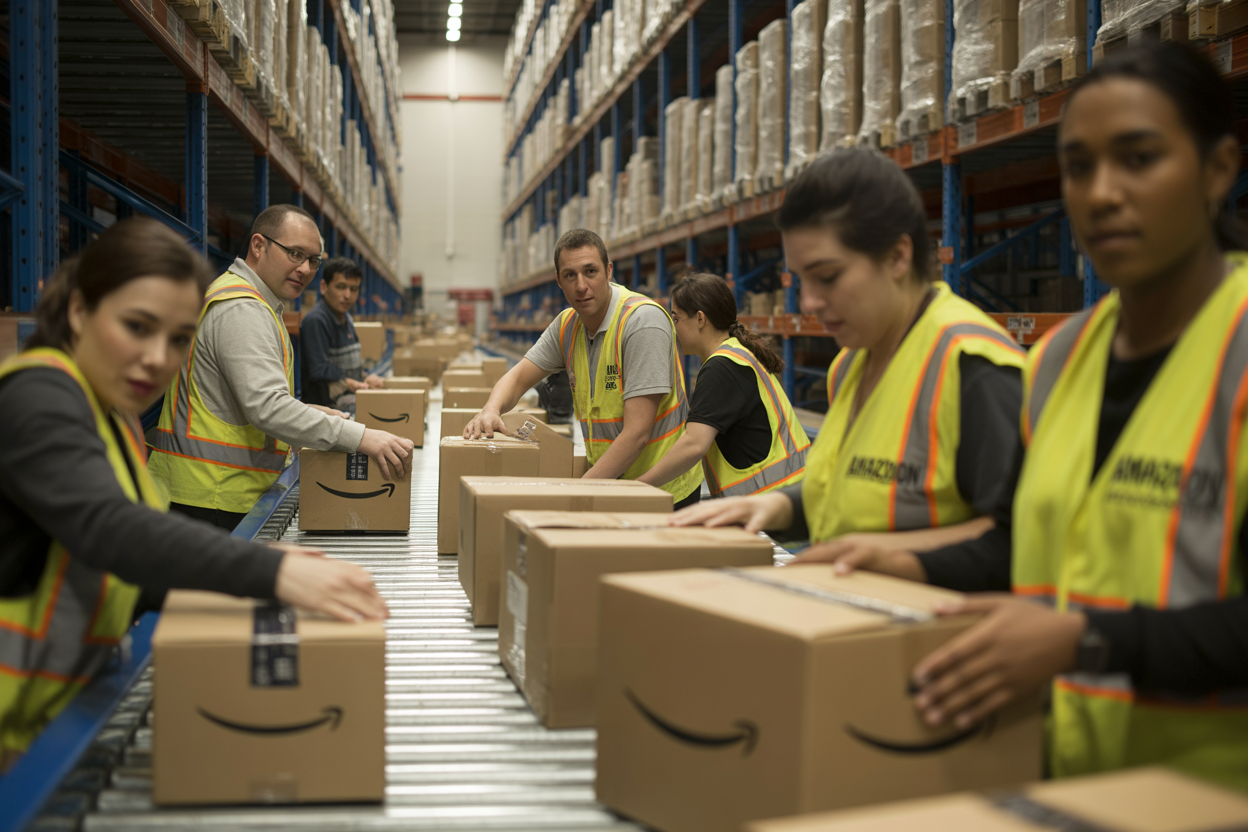
Smalls, a young Black warehouse associate with no formal organizing background, became a lightning rod after the COVID-19 outbreak in 2020 exposed Amazon’s failure to protect its frontline workers. What started as a modest walkout over basic safety conditions—PPE shortages, sick co-workers being told to keep quiet, and a management culture built on fear—turned into one of the most consequential labor battles of the 21st century.
Amazon fired him within hours of the protest. Internal memos later revealed senior executives plotting a strategy to paint Smalls as “not smart or articulate.” That cynical calculation—dripping with classism and racial undertones—only strengthened his credibility among workers who recognized the tactic instantly. They had seen corporations pathologize Black dissent before.
Instead of retreating, Smalls built something new.
Related stories
With a handful of co-workers, most of them Black and brown, he formed the Amazon Labor Union (ALU)—an independent, scrappy, worker-led effort that operated on shoestring resources and a mountain of grit. Their “office” was a tent outside the warehouse. Their strategy was persistent human connection: food, phone calls, solidarity, kindness, and the moral clarity of workers talking to workers.
Against every expectation—and millions spent on union-busting consultants—the ALU won the historic April 2022 vote to unionize JFK8. It was the first successful union election in Amazon’s U.S. history. Corporate America trembled because it understood what that victory symbolized: if workers could organize the most surveilled, turnover-heavy logistics hub in the country, then every warehouse, gig platform, and fulfillment operation was suddenly vulnerable to collective power.
Smalls has since testified before Congress, met with the White House, and become a national voice for the new labor wave. But what makes him especially resonant is his insistence that this movement belongs not to institutions, but to ordinary workers who have been told they don’t matter.
He speaks frankly about race, class, and the lived experience of being both essential and disposable in America’s digital economy. He speaks with the kind of truth-telling that can’t be polished away by HR departments or softened for corporate comfort. And he stands in a long lineage of Black labor organizers who turned exclusion into power—including A. Philip Randolph, Dorothy Lee Bolden, and the Memphis sanitation workers.
Smalls is not just a labor story. He’s a democracy story.
Because when warehouse workers claim a voice inside the most powerful corporation on Earth, they’re doing more than improving conditions—they’re reshaping who gets to participate in American power. They are challenging the decades-long belief that inequality is inevitable, that corporations are untouchable, and that workers—especially young Black workers—should be grateful for whatever crumbs they get.
Smalls reminds us that great social change doesn’t always start in polished halls. Sometimes it starts on a loading dock, in a plastic tent, with a worker who simply refuses to be silent.
If Amazon is the model for 21st-century capitalism, then Chris Smalls is the reminder that 21st-century labor isn’t going quietly.
Comments

Powered by RoundtableAn AI/DeFi-powered Enterprise Media Operating System. Learn more at Roundtable.io.© Roundtable 2026. By using this site you agree to the Terms of Use and Privacy Policy