


Jan 3, 2025 6:34 AM
Updated Feb 17, 2026 2:36 AM
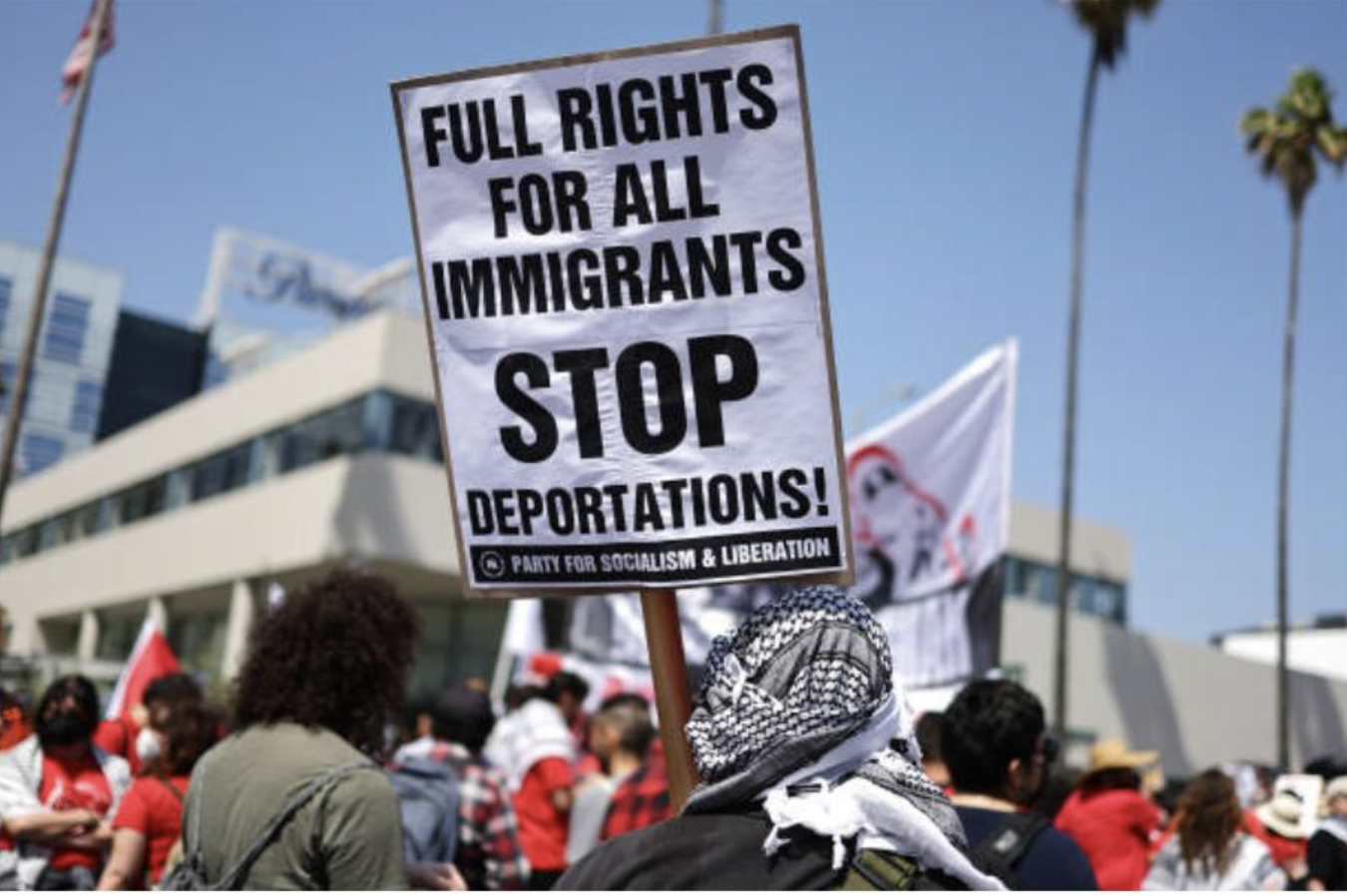
As Donald Trump enters the White House on January 20, immigrants across the nation have been moved from being scared to feeling terrorized.
During my first job after law school, as Director of the Catholic Charities Immigration in Santa Clara in the early 1990s, “la migra” located in Salinas conducted regular sweeps of Story and King Roads in East San Jose. One immigrant had to take a bus to work daily from the intersection, and asked what he might do.
In addition to Know Your Rights information, I suggested that he start carrying a tennis racket. Breaking the stereotype of what an undocumented immigrant looks like, he never had a problem again.
As Donald Trump enters the White House on January 20, immigrants across the nation have been moved from being scared to feeling terrorized.
35 years of local immigrant attacks and protests
This is not the first time in 35 years that immigrants in Santa Clara County have faced panic and anxiety due to scapegoating and policy.
Related stories
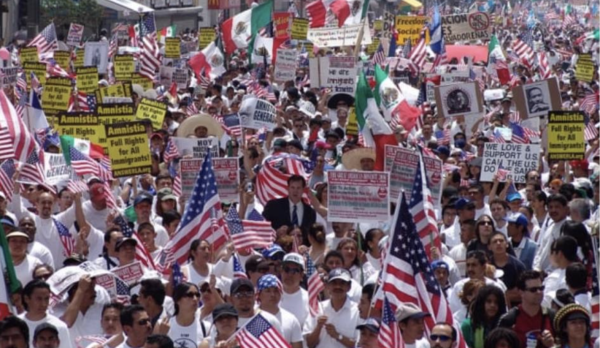
Under Governor Pete Wilson immigrants and activists demonstrated over 10,000 strong at the State Building and beat back the negative effects of Proposition 187, which intended to deny undocumented immigrants access to education and health care. Some say it was the pivotal moment for the rise of the more compassionate Democratic Party.
The so-called 1996 immigration and welfare reforms under Democratic President Bill Clinton led among other things to the loss of food stamps and Supplemental Security Income (SSI) to 51,000 legal immigrants in Santa Clara County. I was charged with inviting all of these disabled, blind and indigent green card holders to free citizenship days throughout the county to re-establish dignity in their lives. What is now the Office of Immigrant Relations and the county’s well-known free Citizenship Days were born.
In response to HR 4439 in 2006, on May Day over 125,000 immigrants and allies participated in the largest march in the history of San Jose. Under the leadership of Newt Gingrich, HR 4439 proposed the deportation of all undocumented immigrants in the United States.
The first Trump presidency targeted all undocumented immigrants, not only criminals or prior deportees. It ended advance parole for DACA recipients, issued preliminary denials to 61% of H1-B applications, instituted the Muslim ban, and tightened public charge regulations. In immigration court, prosecutorial discretion and administrative closure were terminated, continuances were disfavored, and judicial independence was compromised with the requirement of quotas for judges.
Over 200 executive orders and initiatives undermined persons seeking a safe haven in the United States. For example, then Attorney General Sessions overturned Matter of A-B- protecting survivors of domestic violence under well-established asylum law. Many political asylum attorneys gave up their asylum practices under the malicious moving target of asylum law.
We can expect a reiteration and continuation of these prior initiatives.
The announced plans of the incoming President
President-elect Trump has stated he intends to target all undocumented immigrants; end the Temporary Protected Status (TPS) of about 530,000 immigrants fleeing civil wars or environmental disasters from their countries; cease the CBP One App that has 852,000 migrants waiting at the border to seek safe haven; end parole for 500,000+ immigrants fleeing persecution; and terminate the secure locations policy that protects undocumented immigrants at schools, religious institutions, clinics and wedding ceremonies.
The limits of law and reality
President Trump will run up against the limits of law and reality when he takes office.
President Trump will run up against the limits of law and reality when he takes office.
Of the 11 million undocumented immigrants in the United States, over 3.7 million immigrants are in removal proceedings and cannot be deported without due process. The 560,000 young and middle-aged immigrant DACA recipients can remain, for now. Humanitarian parole for 531,000 migrants from Cuba, Haiti, Nicaragua, and Venezuela has still not expired. The 530,000 plus TPS recipients can remain in the U.S. as long as their permission does not expire. About 310,000 immigrants have applied for U visas as the victims of crimes such as domestic violence or aggravated assault and cannot be removed during their lengthy administrative process. Navigating these protections often requires specialized legal support, and in cities like Tulsa, domestic assault attorneys play a vital role in helping victims secure their safety and legal status within the complex U.S. justice system.
It is estimated that there are 1.4 million absconders—immigrants with a prior order of deportation. It will be cat and mouse to find them and also persons with an arrest and a complaint filed against them. ICE has the addresses of both groups if they are still living there.

There are other limits. There are only 41,000 detention beds in the United States; many countries do not accept repatriation flights; and every person under the U.S. Constitution has rights, including the rights to be free from search and seizure and self-incrimination.
Steven Miller’s “turbo-charging” of de-naturalization and Trump’s termination of birthright citizenship are both likely to die on the vine.
Policy vs. loyalty
Perhaps the most difficult aspect of Trump’s “mass deportation” mantra will be the collision of policy and loyalty: policies to deport and loyalty to Donald Trump.
Perhaps the most difficult aspect of Trump’s “mass deportation” mantra will be the collision of policy and loyalty: policies to deport and loyalty to Donald Trump. More H1-Bs? H1-B recipient Elon Musk says yes, and evidently Trump is convinced, but Trump’s “America First” base is not. Massive agricultural sweeps? Agribusiness CEO allies of Trump may not be too interested. (Nor will the average consumer of food, as prices skyrocket.)
Noncitizens constitute 33% of farm labor, 28% of building and grounds maintenance, 26% of construction workers, 16% of food prep and serving, 14% of manufacturing workers, 13% of high-tech workers, 12% of transportation workers, and 9% of healthcare, personal care, and installation and repair workers. The employers of approximately 5% of the U.S. workforce may not be thrilled with “mass deportation”. Most were Trump supporters.
Not to mention that budgets will suffer. Undocumented immigrants pay about $97 billion per year in federal, state, and local taxes, and prop up the social security system for current US-born beneficiaries.
The most devastating policies
The most devastating immigration policies that have created the international and national migrant crises are globalization and deindustrialization.
Corporate-dominated globalization seeks profit at the expense of human development and climate sustainability. If the attempt to keep wages low in the United States is the goal of local corporate leaders, imagine the scale of wages in dependent countries. These countries are subject to meager wages, structural adjustment policies, unequal terms of trade, trade policies, tied loans, foreign policy intervention and military domination. The renowned Mexican author Ruy Mauro Marini calls the basis “super-exploitation”.
In 1993 along with local labor leaders I met with then-Congressman Norm Mineta to convince him to vote against NAFTA, the North American Free Trade Agreement. The Democratic Congressman voted for it anyway.
As a result, an estimated 10 million independent farmers lost their livelihoods in Mexico. They could not compete with the low cost of U.S. corn that flooded Mexico, corn subsidized with billions of U.S. taxpayer money, produced with the highest tech tractors, and suddenly corn crossing the border without tariffs. Talk about an immigration policy! It is estimated that nearly half of the dispossessed may have tried to enter the United States to survive.
In 1980 I was a co-founder of CISPES, the Committee in Support of the People of El Salvador. For over a decade after the assassination of Archbishop Romero (while saying mass) and the massacre of students, workers, women, and human rights activists, the United States provided military aid to the repressive government, during the bloody civil war. I was co-chair of the Labor Committee on El Salvador (LACES) in Santa Clara County, launched in 1980, that fought for human rights in El Salvador for 20 years; the South Bay Labor Council became the first in the nation to oppose U.S. military aid to El Salvador and to call for dismantling the American Institute for Free Labor Development (AIFLD).
Talk about an immigration policy! Now 2.5 million Salvadorans live in the U.S.
Twenty-five years ago as part of the Summit on Immigrant Needs of Santa Clara County I moderated a focus group exploring why immigrants and refugees from 14 nations left their homelands. The conclusion? They concluded that they are all “refugees from the world economy”, a conclusion also reached by the U.S. Council on Churches. Even civil wars have material interests behind them.

NAFTA became the poster child of deindustrialization: the policy of both Republicans and Democrats to lower the cost of labor in automobile, technology, and other industrial corporations by offshoring labor costs. (With technology it has since extended to the service sector.)
De-industrialization, the cause celebre for profit-taking, lies at the heart of the Trump triumph.
De-industrialization, the cause celebre for profit-taking, lies at the heart of the Trump triumph. Disgruntled workers dispossessed of union-level jobs were tricked into believing that the cause of their demise was immigrants, not trade policy and corporate greed.
A healthy national economy provides all its inhabitants with a living wage job with reduced work hours, as well as the time and resources for self and family care, lifelong learning, participatory democratic decision-making, and self-actualization. This is the vision of Human Agenda, which seeks new institutions that are not based on greed but rather on DECKS values of democracy, equity, cooperation, kindness, and sustainability.
As long as we have economies built on profit-making at all costs we will not have the equity, economic democracy, cooperation, and sustainability that the nations of the world need to keep their populations rooted locally. Globalization reproduces inequality and climate crises on a daily basis. Let us not be fooled about the origin of the crisis of migration.
Seeking security and dignity
Attacks on human beings who only seek security, family unity, human development, and dignity tend to fizzle out. Such, I predict, will be the fate of Donald Trump’s “mass deportations”. But not before the immediate policies create insecurity, family separation, less human development, and indignity for hundreds of thousands, if not millions of immigrants.
For now, let’s start carrying those tennis rackets again.
Comments

Powered by RoundtableAn AI/DeFi-powered Enterprise Media Operating System. Learn more at Roundtable.io.© Roundtable 2026. By using this site you agree to the Terms of Use and Privacy Policy