


Jul 7, 2025 3:18 PM
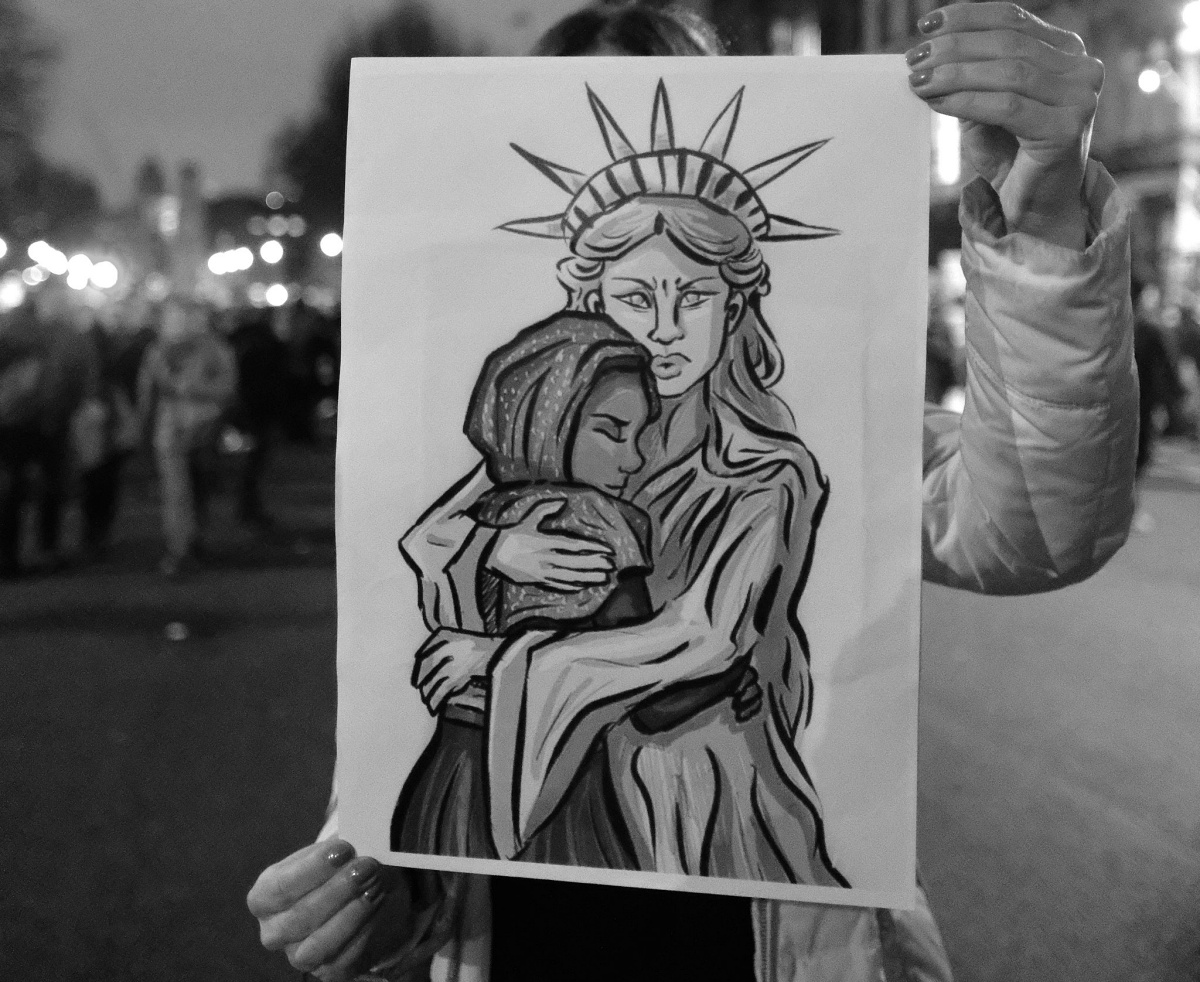
Despite having presidents of both major political parties since the late 1960s, none of them has been as anti-immigrant and anti-refugee as our current second-term president, Donald Trump.
Over our past holiday weekend (July 4th) I watched an older movie, “Sweet Land,” on Amazon Prime. It was about the immigrant experience to the USA, especially about a woman named Inge (Elizabeth Reaser) who arrives to the U.S. in 1920. She is supposed to be the bride of Olaf (Tim Guinee), born in Norway, but now living among many other Norwegians in a farming community in Minnesota, a state that was home to many of them. Inge apparently met Olaf’s parents in Norway, where they still lived, but she was born in Germany and speaks primarily German—and almost no English. And Olaf’s parents arranged for her to come to the U. S. in order to marry their son.
But 1920 is just two years after the end of WWI, and some hostility to Germans remains. Anti-immigrant prejudice was not new to the U. S. In the 1850s there had been the Know Nothings (officially the “American Party”), who wanted to restrict immigration and exclude the foreign-born from holding public office or voting. Shortly after the Civil War, emancipator Frederick Douglass criticized our great fears regarding Chinese immigrants, and instead called for eventually investing them “with all the rights of American citizenship.” In 1894 the Immigration Restriction League was founded by those "convinced that Anglo-Saxon traditions, peoples, and culture were being drowned in a flood of racially inferior foreigners from Southern and Eastern Europe."
But the anti-immigration people remained a minority, and the immigrants kept coming. By 1910 they made up 14.7 percent of the U. S. population—more than the 14.3 percent total of 2023. And those born in Germany provided the greatest percentage. (My own maternal great grandparents were part of that group, and in the early 19th century were born in the same part of Germany (lower Saxony) as the film’s Inge. Some of them settled in Cincinnati and—like Inge who comes to our country lugging a big gramophone with her—were part of the large German immigrant community that helped bring a symphony orchestra to that city.)
But World War I (1914-1918) increased U. S. hostility to Germans—and foreigners and dissenters in general. Both the war’s Espionage Act and Sedition Act reflected this distrust, and they limited free-speech protections. And after the war (in Nov. 1919 and Jan. 1920) the Palmer raids captured and arrested suspected anarchists and communists, deporting some of them from the United States.
Related stories
The film reflects this climate. At one point a clerk says that the “German nationals engage in prostitution, they encouragepolygamy. . . they harbor dangerous political convictions.” And he asks, “Are you aware of the Espionage Act of 1916?” But, he adds, at least “she's not Chinese.” (Film quotes are taken from the filmscript.)
During the remainder of the movie, matters are eventually straightened out. And directed by Ali Selim, himself the son of an Egyptian immigrant father, the film is a beautiful tribute to the contributions that many immigrants made and make to this country.
In 1924, however, in the midst of Republican dominance, Congress passed the Immigration Act, containing an Asian Exclusion Act, almost banning Asian immigrants, and a National Origins Act, limiting European immigrants but favoring those from northern Europe. As Jill Lepore has written, the purpose of the new law “was to end immigration from Asia and to curb the admission of southern and eastern Europeans, deemed less worthy than immigrants from other parts of Europe.”
In the early 1930s and even after Franklin Roosevelt (FDR) came to power in 1933, there was still strong prejudice against the same European immigrants. As the Holocaust Museum notes, “Many who sought a safe haven from persecution during the 1930s and 1940s found their efforts thwarted by the United States’ restrictive immigration quotas and the complicated, demanding requirements for obtaining visas. Public opinion in the United States did not favor increased immigration, resulting in little political pressure to change immigration policies. These policies prioritized economic concerns and national security.” During WW2, such thinking—and wartime fears—prompted FDR to issue a 1942 executive order that removed over 100,000 West-Coast Japanese-American men, women, and children from their homes to so-called "assembly centers." (Despite FDR and Congress’s Japanese fears in 1942, in 1940 and 1941, before Pearl Harbor, the U. S. Emergency Rescue Committee helped more than 2,000 victims of the Nazi regime, many of them prominent Jews, come to the USA.)
FDR’s successor, Harry Truman, had a mixed record on immigration, but then the Republican Dwight Eisenhower, president from early 1953 to early 1961, carried out “Operation Wetback, the biggest mass deportation of undocumented workers in United States history.” It was “designed to root out undocumented Mexicans from American society.” It “used military-style tactics to remove Mexican immigrants—some of them American citizens—from the United States. Though millions of Mexicans had legally entered the country through joint immigration programs in the first half of the 20th century, Operation Wetback was designed to send them back to Mexico.”
Following Eisenhower, both Democratic Presidents Kennedy and Johnson pushed for and signed immigration legislation that lessened the favoring of arrivals from Northern Europe. JFK was himself the great grandson of Irish Immigrants and in 1958 wrote A Nation of Immigrants. In it he stated, “The contribution of immigrants can be seen in every aspect of our national life. We see it in religion, in politics, in business, in the arts, in education, even in athletics and entertainment. There is no part of our nation that has not been touched by our immigrant background. Everywhere immigrants have enriched and strengthened the fabric of American life.’’
Despite having presidents of both major political parties since the late 1960s, none of them has been as anti-immigrant and anti-refugee as our current second-term president, Donald Trump. Already in 2015, while campaigning for the presidency, he had railed against illegal immigrants, declaring that the Mexican government was forcing their most unwanted people into the United States, e.g., “criminals, drug dealers, rapists, etc.” In 2018, as president, he stated, “Haiti? Why do we want people from Haiti [and Africa] here? Why do we want these people from all these shithole countries here?”
Since beginning his second presidential term in January 2025, his rhetoric and actions have been even more hostile. Early in his new term I pointed out some of his anti-immigrant plans in my "Trump, Immigration, and Blustering." On July 4thwhat Trump called his “One Big Beautiful Bill” went into law, along with $150 billion for such uses as a border wall and mass detention. Despite its passage, however, a PBS- NPR Poll of June 23-25 indicated that only 43 percent of people approved of his immigration policies, while 52 percent disapproved.
Among Trump’s plans has been the approval of a new migrant detention center in the Florida Everglades that has been called “Alligator Alcatraz.” Asked “if the idea was for detainees to get eaten by alligators if they try to escape, Trump replied, ‘I guess that's the concept.’”
Not only did a majority of polled U. S. citizens oppose Trump’s immigrant plans, but so too did the late Catholic Pope Francis and the new Pope Leo XIV. Francis referred to Trump’s plan to mass deport undocumented immigrants as a “disgrace.” And the new Pope Leo indicated his support of immigrants by appointing as his first U. S. bishop (in San Diego) the Vietnam-born Michael Pham.
The opposing stances on immigration by Trump and Pope Francis reflect their different approaches to love and hate. In late 2024 Francis wrote that love was the only “reality that can unify all the others,”and that “in loving, we sense that we come to know the purpose and goal of our existence.” On July 3, 2025 in Iowa, Trump said about Congressional Democrats, “I hate them, too. You know that? I really do, I hate them. I cannot stand them.”
Comments

Powered by RoundtableAn AI/DeFi-powered Enterprise Media Operating System. Learn more at Roundtable.io.© Roundtable 2026. By using this site you agree to the Terms of Use and Privacy Policy