


Apr 3, 2024 3:06 AM
Updated Apr 5, 2024 7:10 AM
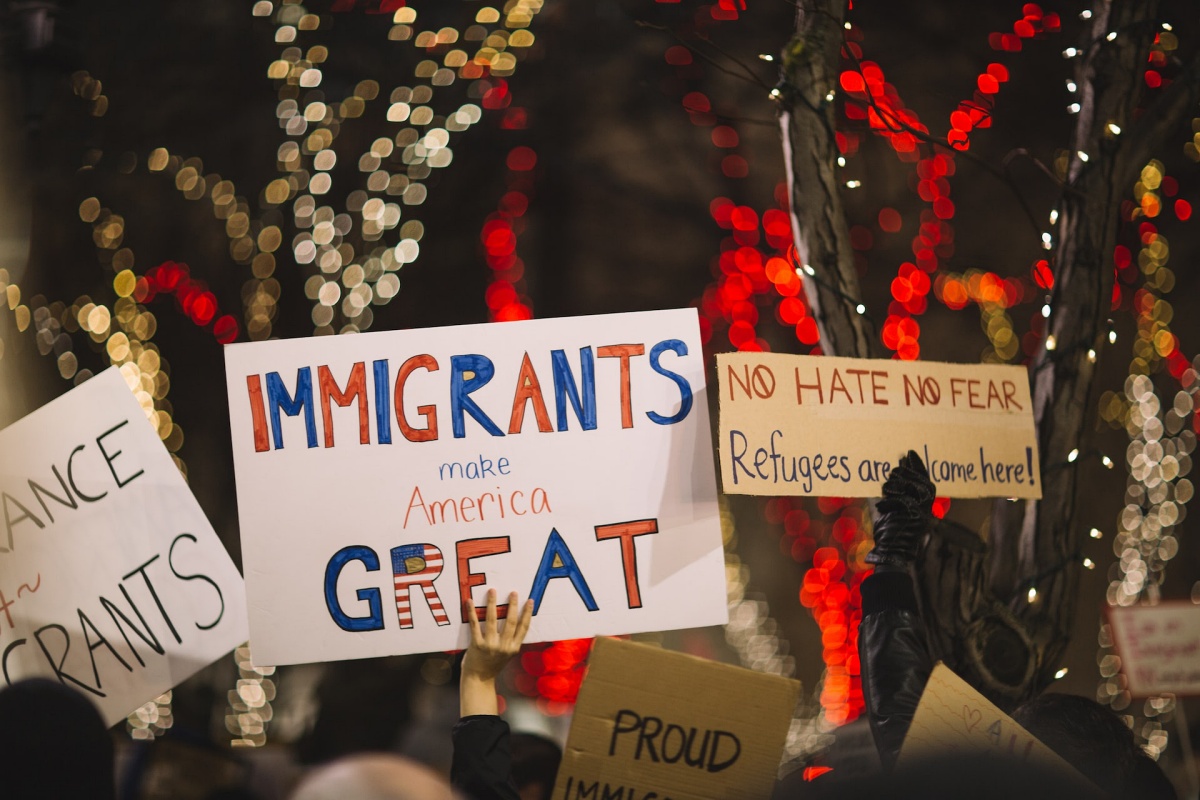
The lives of these six dead or presumed dead migrant workers demonstrate the false mindset that Trump’s 2015 words have created among many of our native-born citizens.
Remember in 2015 when Donald Trump said, “The Mexican Government is forcing their most unwanted people into the United States. They are, in many cases, criminals, drug dealers, rapists, etc.” And then in 2018 when he added, "Haiti? Why do we want people from Haiti [and Africa] here? Why do we want these people from all these shithole countries here? We should have more people from places like Norway." Or just months ago, when he said that immigrants entering the U.S. are “poisoning the blood of our country."
Now it’s springtime 2024, and on 26 March at 1:30 a.m. (EST), a container ship crashed into a support pillar of Baltimore's Francis Scott Key Bridge, sending six Mexican or Central American immigrant workers who were fixing potholes on it into the icy Patapsco River. At the time of this writing, only two of the bodies have been recovered. They are Guatemalan national Dorlian Castillo Cabrera, 26, and Mexican national Alejandro Hernandez Fuentes, 35, both living in the Baltimore area. The other four are presumed dead: Maynor Suazo from Honduras, Jose Lopez from Guatemala, Miguel Luna from El Salvador, and one more Mexican, still (at the time of this writing) unidentified.
The lives of these six dead or presumed dead migrant workers demonstrate the false mindset that Trump’s 2015 words have created among many of our native-born citizens. Many coming across our southern border, he said, are “criminals, drug dealers, rapists, etc.” Closer to the truth would be the following words, “Many are those, like millions of immigrants before them, seeking the American dream and willing to work hard at jobs many native-born citizens do not want in order to achieve it.”
Take, for example, one of the presumed dead, Maynor Suazo Sandoval, age 38, the father of an 18-year-old son and a 6-year-old daughter. In an article entitled “The men who fell from that bridge are the people who build our nation,” The Washington Post (with a byline, “You can’t pray for the workers in Baltimore and also be against their dream to come to America”) told us a little about him. “He was the youngest of eight kids born in the mountains of Honduras before coming to Maryland to work in the construction business 18 years ago. He married and had kids, loved soccer, and called his family in Honduras for every event. . . . He eventually built his own package delivery company, adding to the $19.5 billion in taxes that immigrants in the Washington region contributed to the economy. When his business faltered during the pandemic, he went back into construction, and onto that bridge.” His brother told the Post, “He always told us that you had to triple your effort to get ahead . . . . it didn’t matter what time or where the job was, you had to be where the work was.”
Related stories
An NPR article added that Maynor Suazo “sent money to start a hotel that provided jobs and supported his family. He also helped people from his town by paying for their medicines and doctor's visits, as well as assisting people with disabilities.” Moreover, he helped “his hometown's children” by sponsoring a youth soccer league.
NPR and The Washington Post article referred to earlier mention the dangerous work that immigrants often perform. Although the danger facing law enforcement officers is often recognized, the Post points out that “policing is far behind the occupations of landscaping, roofing, farming, construction, garbage collection, and maintaining the nation’s highways--all jobs widely filled by immigrants.”
In earlier times, most construction workers were native-born U.S. citizens, and my deceased wife, Nancy, and I realized how dangerous those occupations could be. In 1915, her maternal grandfather, at around age 40, died from falling off the roof of a construction site. And around four decades later, my father was seriously injured and hospitalized when a construction-site crane hit him, breaking his leg. Just within the past year, I walked out of my house and saw many Hispanics putting a new roof on my neighbor’s house, and thought, “be careful folks.”
The Post article mentioned above also included farming as one of the occupations more dangerous than policing. And a recent PBS Newshour segment revealed how risky farming was for many of the 800-1000 migrants, most of them undocumented from Central and South America, who have recently settled in Whitewater, Wisconsin. One reporter who has written about the farm-working immigrants noted on the Newshour that “workers are routinely injured. And it's almost a normalized thing . . . that if you haven't been hurt on a farm, then you really haven't worked on one before.”
One of the reasons that the work is dangerous is that it is mostly unregulated. The reporter told Newshour host John Yang that immigrant “workers work 60 to 80 hours a week, kind of on a regular basis. And the shifts are scattered. They might start a shift from 4:00 a.m. to 10:00 am. And then again from noon to two, and then again from 6:00 p.m. to 10:00 pm. And this kind of erratic schedule makes it very difficult to sleep.” She added that much of the work is “pretty heavy, dangerous work,” like “shoveling and scraping cow manure and taking it to a manure lagoon on the site.”
Among her other revelations: Many farmers told her “that their businesses would collapse without immigrant dairy workers.” And “it's routine for farmers to provide housing... And there's very little if any regulation... we've seen the houses on site with black mold in the bathroom ceilings, or, you know, cockroaches... ceilings that are caving in.”
Interviewing some workers directly, one of them told the Newshour that his “boss would address me with insults and lack of respect. He would do this knowing that, as undocumented, we always fear asking for help because of our migrant status.” Another such worker added, “because the fact that we are in this country illegally, there are many things we have to be silent about. I think that the fear all migrants have is to be quiet, even if we for some reason decide to complain that some things are not right. Sometimes it can be about where we live, or how bad the pay is. But we're still migrants. And it's best to... [be] quiet and don't complain.”
All of the above is not to deny that a serious immigrant and refugee crisis threatens the USA and many other countries (e.g., in western Europe) to which sufferers from war, hunger, and/or oppression in poorer countries are fleeing. But viewing such victims as “criminals, drug dealers, rapists, etc.” is not the way to view such unfortunates. Nor is discouraging any meaningful reform, as Trump has done.
One goal of such reform--which reasonable, bipartisan legislation should be able to accomplish--would be to transform more immigrants from undocumented to documented (or as others would phrase it, from illegal to legal.) There is a strong tradition in our country of welcoming the latter. It stretches from Frederick Douglass to John Kennedy and Ronald Reagan. In his 1958 book, A Nation of Immigrants, Kennedy wrote that “everywhere immigrants have enriched and strengthened the fabric of American life.’’ Later, Reagan stated that immigrants were ‘‘one of the most important sources of America’s greatness.”
And followers of Trump, many of them older white Christians, should heed the words of another older, white Christian--Pope Francis. In a 2019 sermon, he said that “wars only affect some regions of the world, yet weapons of war are produced and sold in other regions which are then unwilling to take in the refugees produced by these conflicts. . . . Our response to the challenges posed by contemporary migration can be summed up in four verbs: welcome, protect, promote, and integrate. . . . If we put those four verbs into practice, we will help build the city of God and man. We will promote the integral human development of all people. We will also help the world community to come closer to the goals of sustainable development that it has set for itself and that, lacking such an approach, will prove difficult to achieve.”
Note that most of his words applied to undocumented, as well as documented, immigrants. A year later in his encyclical “Fratelli Tutti: On Fraternity and Social Friendship," he gave examples of steps that could be mostly applied to undocumented immigrants: “increasing and simplifying the granting of visas... opening humanitarian corridors for the most vulnerable refugees; providing suitable and dignified housing; guaranteeing personal security and access to basic services... equitable access to the justice system... freedom of movement and the possibility of employment; protecting minors and ensuring their regular access to education.” Once a government admitted immigrants, the pope thought it should provide paths to “full citizenship” and not just maintain them in some sort of second-class status.
Behind the fear of too many immigrants crossing into our country, many Trump voters fear the loss of its white dominance. Five years ago, however, I asked, whether we wished a “composite nation,” as Frederick Douglass advocated, “one that takes pride in its ethnic and religious diversity and sets an example for other countries who are fearful of immigrants? Or an America afraid of immigrants, especially if not lily white, Christian ones, as Trump and many of his followers desire?” My own opinion? As Franklin Roosevelt said (in another context) in 1933, “The only thing we have to fear is fear itself, nameless unreasoning unjustified terror which paralyzes needed efforts to convert retreat into advance.”
Comments

Powered by RoundtableAn AI/DeFi-powered Enterprise Media Operating System. Learn more at Roundtable.io.© Roundtable 2026. By using this site you agree to the Terms of Use and Privacy Policy