


Apr 9, 2020 9:33 AM
Updated Feb 10, 2022 10:15 PM
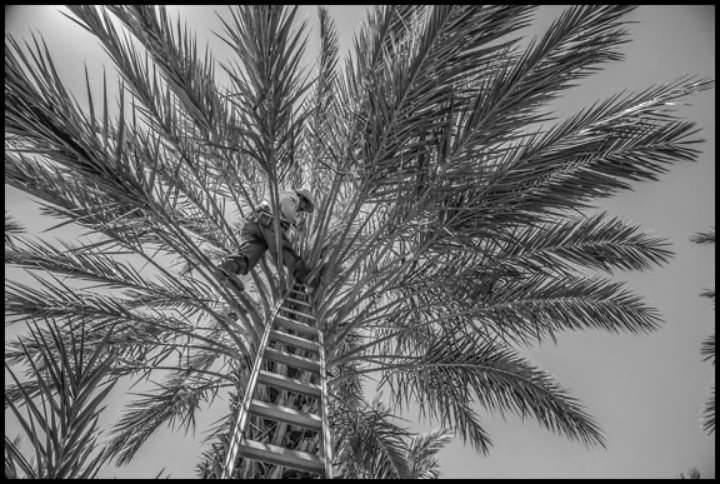
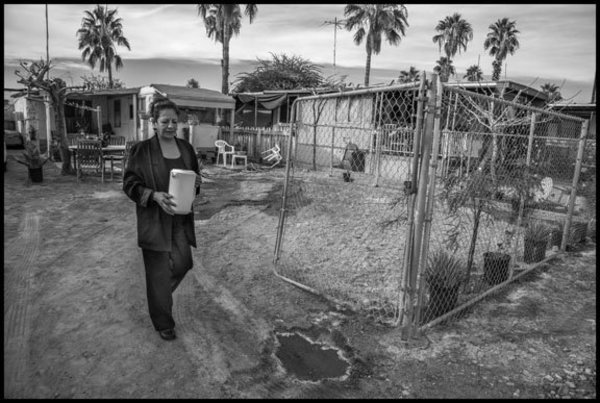
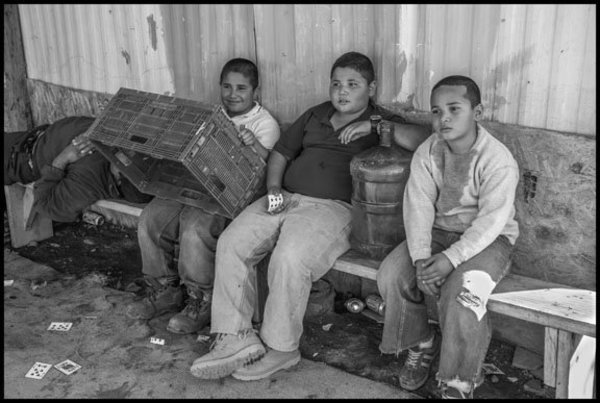
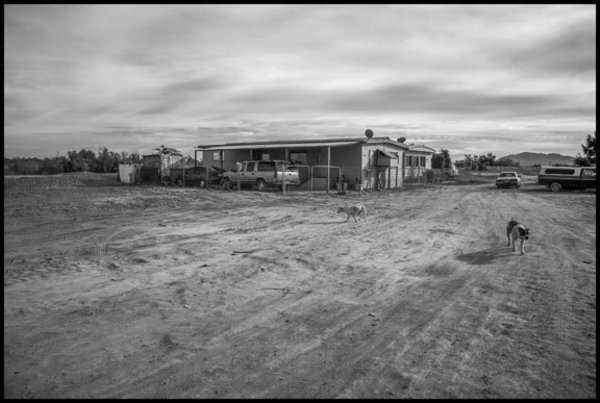
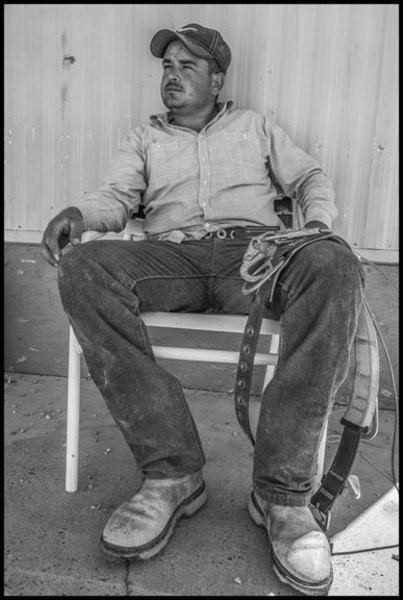
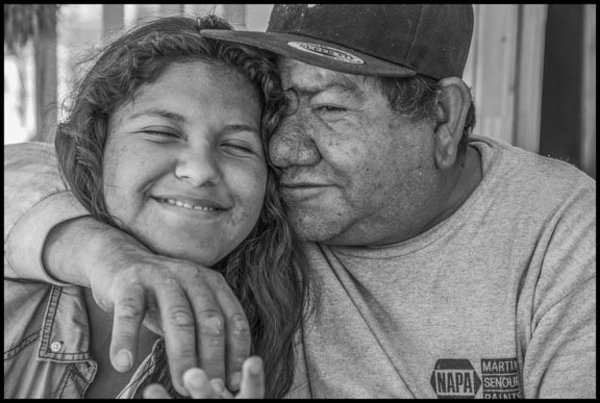
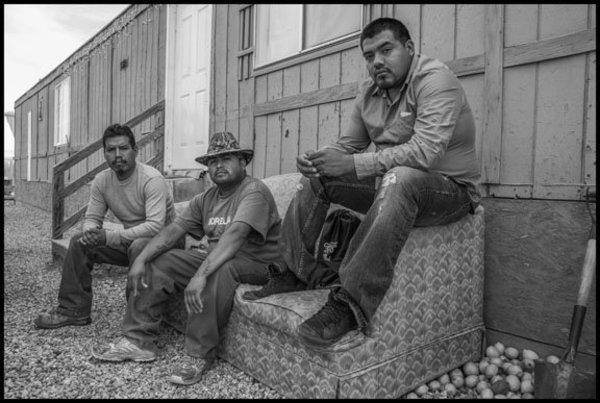
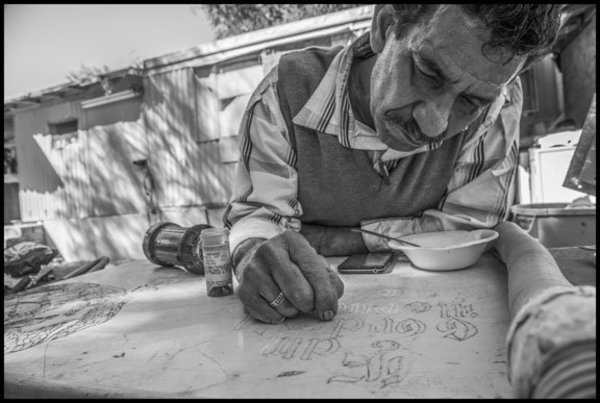
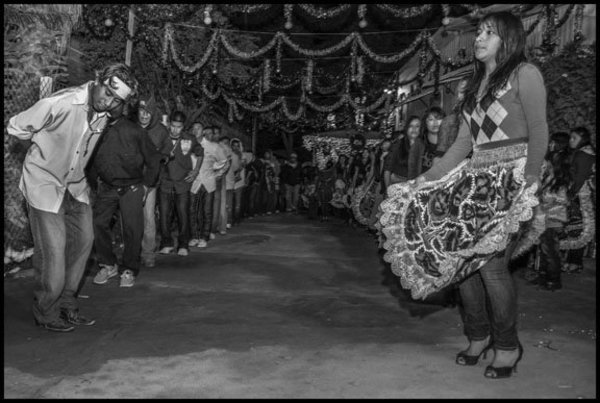
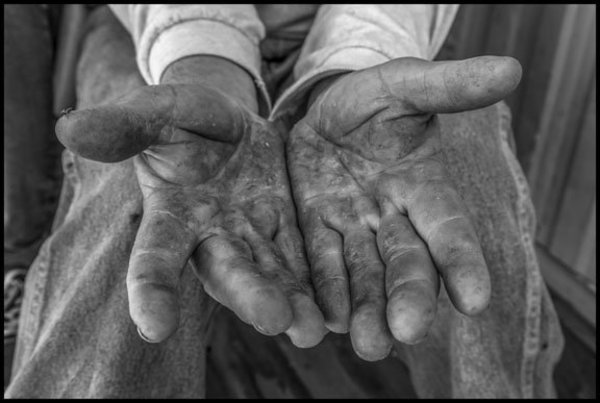
David Bacon: These photographs document the date palm workers, or "palmeros". They are a window into their lives, showing their living conditions and the pain of exploitation.
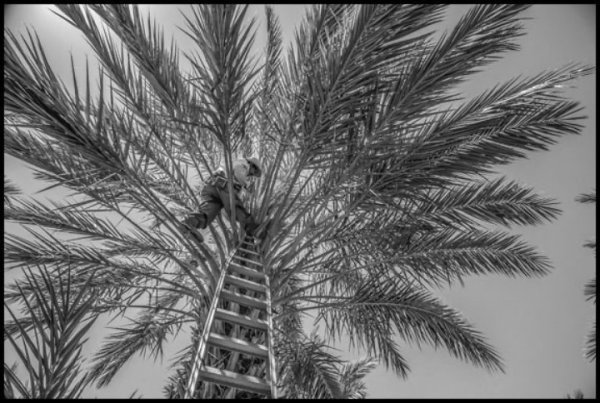
These photographs document the date palm workers, or "palmeros". They are a window into their lives, showing their living conditions and the pain of exploitation. They document families, homes, and the culture of indigenous Purepecha people from the Mexican state of Michoacan - the main indigenous group in the farm labor workforce of the Coachella Valley.
In the Coachella Valley, where the date farms are concentrated, the industry brings in $65 million a year. Despite this, many Coachella farm workers live in trailer parks in colonias, or informal settlements, near the fields under the valley's intense sun. There are not many "palmeros" - perhaps only two hundred. Outside of Arabia, Iraq and North Africa, date palms are only grown here.
The work is dangerous - the palms rise from twenty to sixty feet above the sandy desert floor of the Valley. The photographs show the work process in which workers climb into the trees on ladders, or in more recent years on cherry pickers - mechanical lifts - and then walk around the tree's crown on the palm fronds as they work. In the course of a year, a "palmero" has to go up into the palm trees seven times.
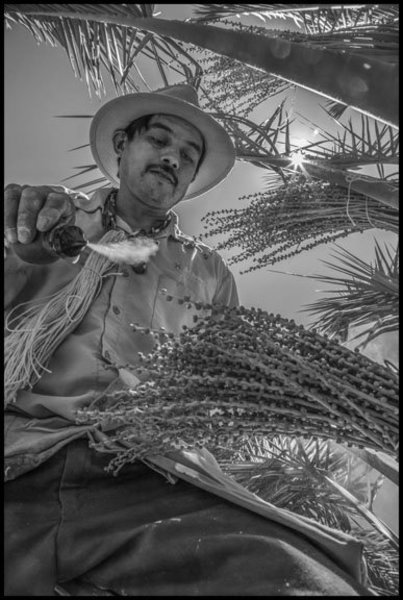
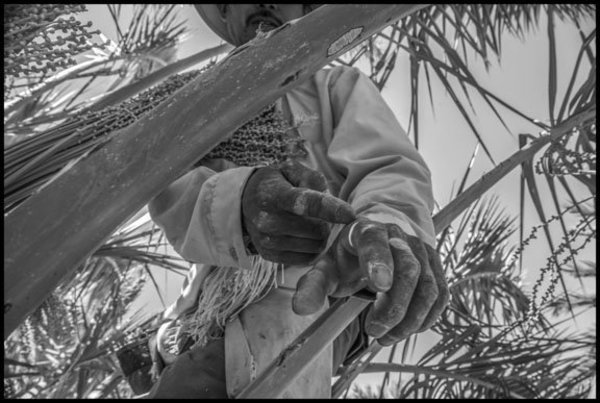
The first operation is depicted here - the pollenization. Date palm trees are dioecious - they come in sexes. The flowers of the male palm produce the pollen. It is the female tree that produces flowers that become the seeds, and which therefore bear the fruit.
Related stories
These photographs are part of a larger body of images and oral histories that I began in Coachella in 1992, and which continues today. The archive of this work is in the Special Collections of the Green Library at Stanford University.
David Bacon
The Reality Check

David Bacon is a California writer and documentary photographer. A former union organizer, today he documents labor, the global economy, war and migration, and the struggle for human rights. His latest book, In the Fields of the North / En los campos del norte (COLEF / UC Press, 2017) includes over 300 photographs and 12 oral histories of farm workers. Other books include The Right to Stay Home (Beacon Press, 2013).and Illegal People (Beacon Press, 2008), which discuss alternatives to forced migration and the criminalization of migrants. Communities Without Borders (Cornell/ILR Press, 2006) includes over 100 photographs and 50 narraatives about transnational migrant communities, and The Children of NAFTA (UC Press, 2004) is an account of worker resistance on the US/Mexico border in the wake of NAFTA.
Comments

Powered by RoundtableAn AI/DeFi-powered Enterprise Media Operating System. Learn more at Roundtable.io.© Roundtable 2026. By using this site you agree to the Terms of Use and Privacy Policy