
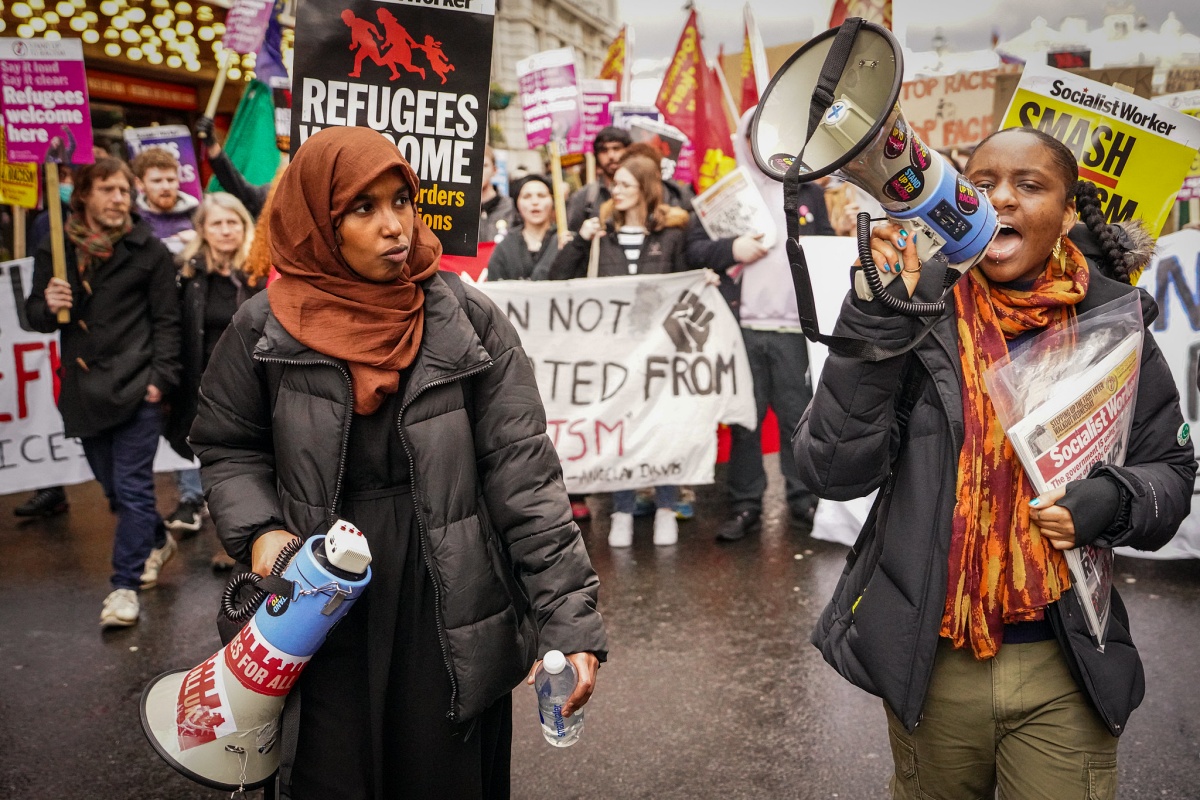
Alisdaire Hickson: Attribution-ShareAlike (CC BY-SA 2.0)


Anti-Immigrant Rhetoric
Oct 24, 2024 7:47 PM
As violence and authoritarianism erode democratic values, the urgency for resistance through critical education and collective action intensifies.
The spread of anti-immigrant hostility in the U.S. has reached alarming levels, fueled by right-wing rhetoric and a lack of resistance from leading Democrats. This normalization of hatred has led to a perilous moment for democracy, as a dangerous, racialized politics rooted in fantasies of "cleansing" gains traction. Recent surveys, such as the October 16 poll by Marquette Law School, reveal that 58% of respondents support mass deportations, reflecting widespread acceptance of such views.
This sentiment is not only confined to opinion polls. Legislative measures aimed at punishing undocumented immigrants have surged, with 233 anti-immigrant bills introduced across the U.S. in 2024—a 77% increase from the previous year. These bills, many of which target Latino communities, focus on tightening border security and criminalizing undocumented individuals. A prominent example is Texas's 2021 Operation Lone Star, a $11.2 billion initiative that militarized the border, installed razor wire, and led to numerous arrests of migrants for minor infractions like trespassing.
Beyond legislative actions, a toxic culture of anti-immigrant sentiment is now spilling violently into public spaces. Donald Trump and J.D. Vance have labeled Mexican immigrants as "rapists," "vermin," and "criminals," reinforcing a dangerous narrative of a politics of disposability—where certain lives are deemed less valuable. Echoing the most chilling aspects of Hitlerian rhetoric, Trump has repeatedly claimed that immigrants are “poisoning the blood” of America and that “in some cases, they are not people.” These accusations are more than inflammatory; they harken back to historical blood libels designed to demonize marginalized groups and justify their persecution, and more alarmingly, their extermination. This violent invocation of “blood and soil” ideology finds a powerful amplifier in social media, where white nationalist rhetoric spreads at alarming speeds, further polarizing society and fueling open hostility against immigrants, people of color, and LGBTQ+ communities.
Trump’s authoritarian admiration for dictators, his pledge to be a “dictator for a day,” his willingness to tear up the Constitution, and his attacks on those he labels as “enemies from within” are not mere rhetoric—they are echoes of a dark history where such nihilism paved the way for state terrorism and mass extermination, culminating in the murder of millions in concentration camps. The threat posed by Trump and his proto-fascist allies is starkly underscored by recent warnings from Retired Gen. Mark A. Milley, former chairman of the Joint Chiefs of Staff, who described Trump as “a total fascist [and] the most dangerous person to this country.” This assessment aligns with the words of former White House Chief of Staff John Kelly, who revealed that Trump had “spoken positively about Adolf Hitler [and] "falls into the general definition of fascist." These statements expose the real danger of Trump’s fascist sympathies and the peril they pose to democracy.
Related stories
Trump's influence has reshaped the political landscape since 2016, using divisive rhetoric that emboldens white nationalist movements. His characterization of Mexican immigrants as "rapists" and "criminals" has lent legitimacy to extremist views that were once confined to the fringes. This toxic discourse has provided a platform for vigilante actions, from border attacks to coordinated harassment of marginalized communities. Trump’s promises of further militarization, his encouragement of police brutality, and his threats against political opponents all illustrate how violence has become a central feature of contemporary politics.
As the lines between violence and politics blur, the role of media in amplifying these messages cannot be overlooked. Far-right figures use digital platforms to spread misinformation and legitimize aggression, while corporate media often fails to adequately challenge these dangerous narratives. This culture of violence aligns with the interests of the arms industry and other profit-driven sectors, creating a new stage of market fundamentalism that prioritizes power and profit over social well-being. This system sees immigrants, people of color, and other marginalized groups as scapegoats for society’s problems, reinforcing a politics of disposability.
Violence is thus not only an outcome of this rhetoric but is embedded in the mechanisms of power, from legislative measures to social media-driven propaganda. These forces are backed by economic interests that thrive on the instability and fear generated by such hatred. As the political climate grows more hostile, even acts of violence like the January 6 Capitol insurrection are reframed as patriotic, revealing the extent to which misinformation has distorted the reality of political conflict in the U.S.
As violence and authoritarianism erode democratic values, the urgency for resistance through critical education and collective action intensifies. Those committed to democracy—educators, parents, young people, and others—must counter narratives of hate by promoting the common good, critical literacy, civic values, and mass democratic engagement. However, in a world dominated by profit and power, these efforts face significant challenges. The convergence of media, corporate interests, and right-wing ideology systematically undermines truth and social responsibility. Yet, reclaiming education's power to cultivate a critically aware citizenry offers hope, making critical thought essential to envision a future where democracy triumphs over violence.
This normalization of violence finds a global echo in other parts of the world. In Israel, for example, the recent use of booby-trapped devices in Lebanon and Syria illustrates how militarized technology is used to maintain dominance, inflicting suffering with little accountability. The selective empathy for white victims, as seen in the Western response to Ukraine versus the plight of Palestinians, underscores the racial hierarchies underpinning global power structures. War and violence become tools for reinforcing these racial, ethnic, and religious hierarchies, as they are increasingly normalized in political discourse.
As anti-immigrant hostility and violent rhetoric spread in many parts of the world, the risk of fascists and ultra-nationalist ideologies taking root in other democratic nations grows. No country is immune to the influence of xenophobic narratives, especially with the rise of right-wing populism and increasing anti-immigrant sentiments across different regions. The recent surge in far-right activism and political movements that echo similar trends globally poses a significant threat to the inclusive values that underpin democratic societies. If left unchallenged, these developments could erode the democratic fabric, normalizing a culture of exclusion, intolerance, and disposability. Democracies must act decisively to safeguard their diverse and multicultural foundations, ensuring that hate-fueled rhetoric does not take hold and promoting a political culture that values empathy, diversity, compassion, and social justice. The lessons from countries where such ideologies have gained traction—Italy, India, Israel, Hungary, and Argentina, among others—serve as a stark reminder of what can unfold when these threats are left unchecked.
Comments

Powered by RoundtableAn AI/DeFi-powered Enterprise Media Operating System. Learn more at Roundtable.io.© Roundtable 2026. By using this site you agree to the Terms of Use and Privacy Policy