


Feb 13, 2026 10:13 PM
Updated Feb 14, 2026 4:23 PM
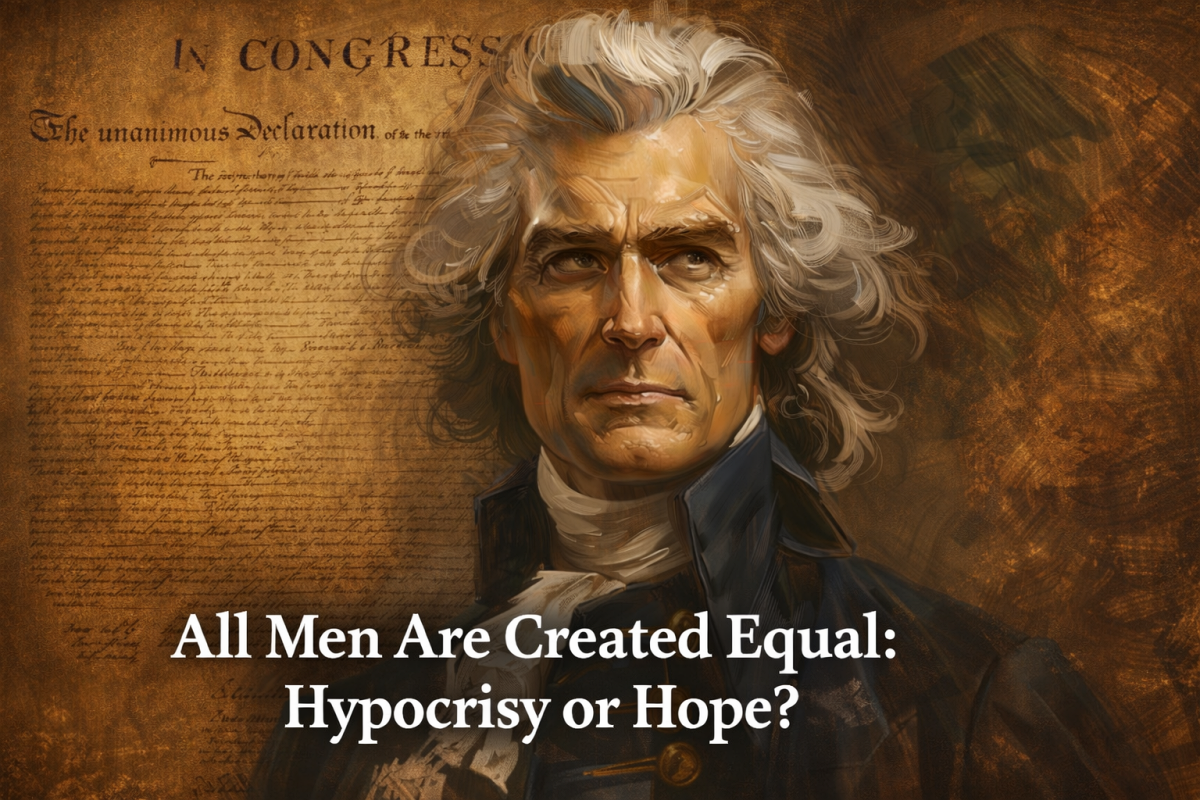
We can affirm that Jefferson's enunciation of universal and inalienable rights was, in fact, a significant breakthrough for humanity and at the same time point without hesitation to the very mixed motives of the men of property who gathered in Philadelphia 250 years ago.
In detailing the grievances of the American colonists, Thomas Jefferson wanted people throughout the world to understand that George III was a bad, bad monarch - utterly unworthy of continued allegiance. Jefferson compiled a long list of monarchial outrages. He specifies "cutting off our Trade with all parts of the world," and he ends his lengthy catalogue of royal abominations with this final burst of indignation:
He has excited domestic insurrections amongst us and has endeavored to bring on the inhabitants of our frontiers the merciless Indian Savages, whose known rule of warfare is an undistinguished destruction of all ages, sexes and conditions.
I am calling this piece "Other Declarations" because my study of colonial history has led me to pay close attention to some pre-1776 documents that bear quite directly on the motivations and aspirations of Mr. Jefferson and the other disgruntled colonists who came to Philadelphia in the summer of 1776, resolving to break from the Mother Country.
How is it that the colonists were so incensed at George III for exposing "inhabitants of our frontiers" to "merciless Indian Savages"? The answer isn't hard to find. In 1763, at the conclusion of the Seven Years War (a.k.a., the French and Indian War), the king issued a royal proclamation that established an "Indian Reserve" west of the Appalachian Mountains and that prohibited white colonists from spilling over those mountains in order to steal Indian lands. Needless to say, white colonists from Daniel Boone (who laid down a road through the Cumberland Gap in 1775) to George Washington (who laid lustful eyes on the Ohio Valley during his early years as a surveyor) ignored the king's decree. They kept on pushing boundaries and making claims. The Indians naturally retaliated in defense of their lands and livelihoods. Jefferson, however, makes it seem like the Indians are the aggressors, conveniently forgetting that the "frontiers" are those established by invasive and greed-driven white settlers.
Related stories
Let us then treat the king's 1763 proclamation as Other Declaration
#1. Other Declaration #2 comes from the same period, and its author is Stephen Hopkins, Rhode Island's sole Founding Father. This also has to do with end of the Seven Years War. Specifically, it has to do with the crown's determination to enforce the law against illegal molasses smuggling by sending customs enforcement cruisers into Narragansett Bay. The importation of untaxed molasses from the sugar islands of Britain's enemies—mainly France—had become the Rhode Island colony's economic lifeline by the middle of the 18th century. They distilled the smuggled molasses into extra-potent "guinea rum" at an industrial scale. The rum was then used to purchase human beings on the coast of Africa. The captives were in turn transported in chains to the sugar islands, there to be sold in return for still more molasses. This was the notorious Triangle Trade, which should more properly be called the Human Trafficking Trade. The Rhode Islanders loved to brag about their great success in this sordid business, claiming to have pioneered the use of rum as currency in Africa (not true, but they perfected it). By 1775 Rhode Island-based slaving voyages accounted for two-thirds of the entire North American slave trade. The Rhode Island traders were universally known as "rum men" on the African coast.
When, in 1763, the king and parliament made it clear they intended to crack down on such arrant lawlessness (15/16 of the molasses processed in R.I. was illegally sourced), Hopkins drafted a sharply worded "Remonstrance to the Lords of Trade" that was approved by the colonial assembly and sent to London. Hopkins then followed up with a widely circulated incendiary pamphlet ("The Rights of the Colonies Examined") making the same two arguments:
- we need the money from the rum trade in order to buy your finished goods, so leave us alone; and
- we refuse to be made "slaves" to the already-rich sugar planters sitting in parliament who want to cut off our illicit molasses supply.
Taken together, we can treat the Stephen Hopkins eruptions as Other Declaration #2. When Jefferson lambastes King George for "cutting off our Trade," it is this interference with the Triangle Trade that he has in mind. You needn't take my word for it. Looking back on the American Revolution from the perspective of 1818, President John Adams wrote: "I know not why we should blush to confess" the central importance of molasses in driving the colonists to separate from the crown.
Other Declaration #3 arrived a bit later, in 1772. It consisted of a provocative legal decision issued in London. The decision's official name was Somerset v. Stewart, but it was also referred to as the Mansfield Judgment because it was issued by Lord Mansfield of the Court of the King's Bench. Why are the American colonists so provoked by this? Because Lord Mansfield declared that slavery was impermissible on British soil, i.e. anywhere within the British Isles. Immediately the colonists were thinking, Will they also tell us we can't have slaves? We can't let that happen!!
There is one more declaration that shadows Jefferson's Declaration, and in 1776 this would have been most concerning of all to the Americans.
The document in question—let us call it Other Declaration #4--is what was known as Dunmore's Proclamation, as it was issued in November of 1775 by John Murray, the 4th Earl of Dunmore, who was then serving as royal governor of Virginia.
Through this proclamation, Dunmore declared martial law in the Virginia Colony. But far worse (in the colonists' minds): he promised freedom to "indented servants, negroes, or others" who would join him in putting down all rebellious British subjects. The colonists were thinking, Oh my God: armed negroes! We can't allow that!! When Thomas Jefferson, a prominent Virginia slave owner, blasted George III for exciting "domestic insurrections," he was referencing Dunmore's direct call for enslaved people to take up arms against their so-called "masters."
We can see, then, how four antecedent declarations played into creation of the famous one penned by Mr. Jefferson.
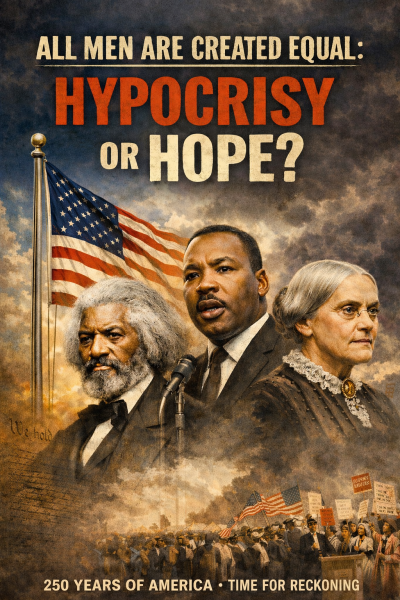
I want to be clear that I am not among those who believe the Declaration of Independence was only about preserving slavery and slavery-related wealth while also providing cover for the taking of valuable Indian lands. I view 1776 as a "both and" situation. That is, I believe we can affirm that Jefferson's enunciation of universal and inalienable rights was, in fact, a significant breakthrough for humanity and at the same time point without hesitation to the very mixed motives of the men of property who gathered in Philadelphia 250 years ago. They wanted to be free and equal themselves while still profiting from the unfreedom and dispossession of others. It took a long time, but eventually those others and their allies were able to turn Jefferson's words against the enslaver class that Jefferson himself represented. Still later, committed 20th century freedom fighters would turn Jefferson's words against Jim Crow segregationists who clung to the idea that only white men are created equal. In 1963 Martin Luther King, Jr. referred to the Founders' words as a "promissory note" that was long past due to be cashed in.
The question now, however, is whether the "promissory note" theory of change still stands up: whether documents and mechanisms created by 18th century property owners in part to preserve their human property can do anything more than maybe give us some leverage for resisting a total autocratic takeover.
Suppose they do help save us from the abyss.
Then what? Should we stop there? By the end of his life Dr. King himself recognized that something more than simply beating back legal segregation and white terrorism would be required. He came out against a white American imperialism and militarism whose roots go all the way back to the colonial militias created to fight Indians and subdue slave rebellions. He also came out as a democratic socialist. He concluded that the subtler racism infecting Northern liberals was even more poisonous that the blatant racism of the South. Most importantly, he called for a "radical revolution of values" in a nation rapidly approaching spiritual death.
So yes, let freedom ring! Be grateful for the high rhetoric of the founding generation. It might even help save us from immediate destruction. But don't be fooled into thinking that "returning to normal" will suffice at this point. That "normal" was never good enough here, and it was catastrophic for most of the world's people. We must begin again.
Comments

Powered by RoundtableAn AI/DeFi-powered Enterprise Media Operating System. Learn more at Roundtable.io.© Roundtable 2026. By using this site you agree to the Terms of Use and Privacy Policy