


Feb 20, 2026 8:00 AM
Updated Feb 21, 2026 5:21 PM
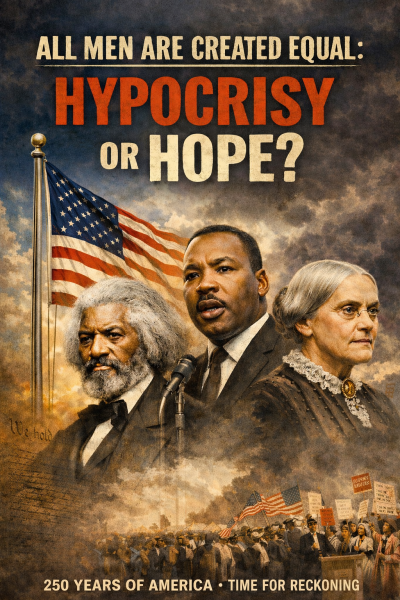
A long conservative reaction that started in the 1970s and reached its apotheosis with Trump’s second presidency seeks to roll back most of the expansion of equality in the course of our history since 1776.
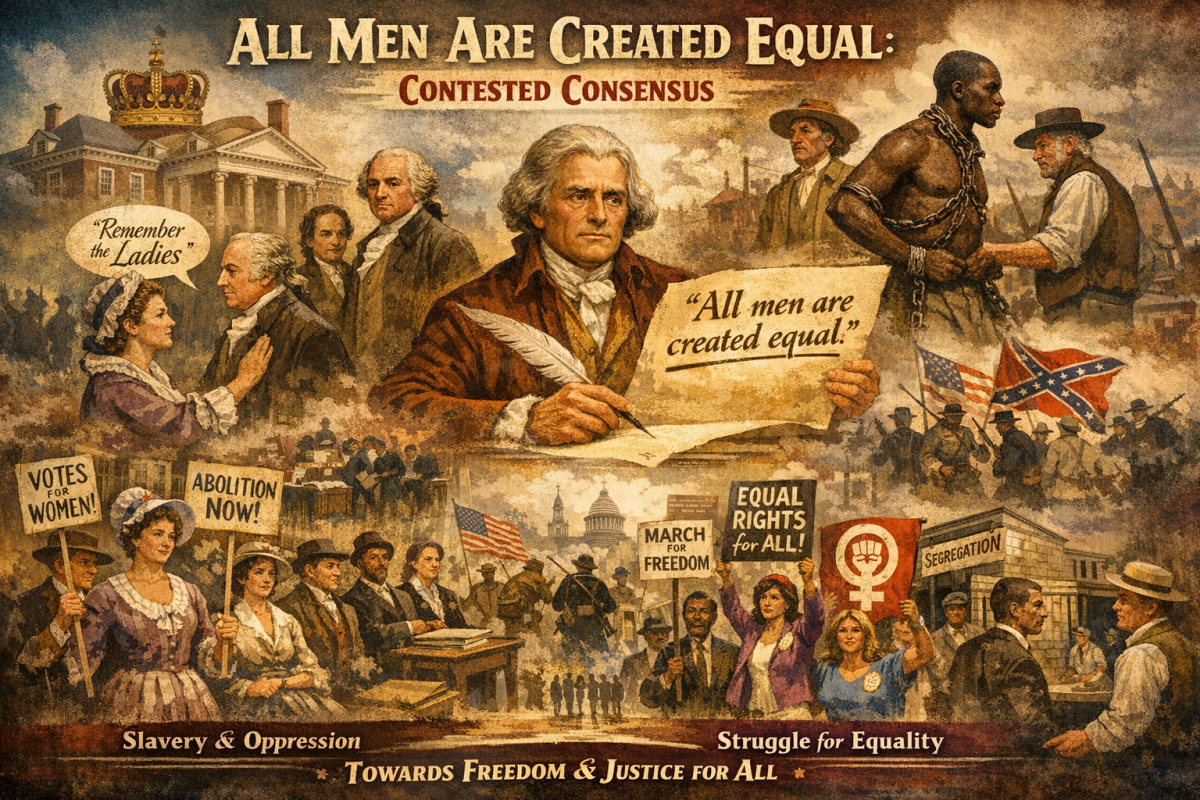
“All men are created equal.” When Thomas Jefferson wrote those words in he summer of 1776, he both meant what he said, and didn’t. He meant that the White, propertied men who led the thirteen colonies had no distinctions of rank or privilege between them, unlike the British government and ruling class, which had many such distinctions. America was not to have kings or nobility.
Although “men” conventionally referred to all humans, female as well as male, of all races, Jefferson did not mean to include women or Blacks, and certainly not his own slaves. Abigail Adams urged her husband, John, to “remember the ladies;” neither he nor other leaders of the thirteen colonies did so. Under the laws of those times, women were kept in an inferior position: married women could not own property, or even have custody of their own children. Men assumed that women lacked the mental and emotional capacity to engage in public affairs.
In 1776, all the colonies still permitted slavery, and it was the foundation of the economies of the Southern colonies. About half the delegates to the Continental Congresses, the Congress of the Articles Of Confederation, and the Constitutional Convention of 1787, were enslavers. Whites, including White women, considered Blacks intellectually and morally inferior to Whites, and thus not fit to vote or to hold any position of responsibility, even if they were free. Slaves had no rights at all. Many Whites thought slavery was the appropriate status for Blacks.
What Jefferson thought about Blacks and slaves is not clear. He expressed reservations about slavery, but the only slaves he ever freed were children of his enslaved mistress, Sally Hemings.
Related stories
White men without property were not included in what Jefferson meant by equality. In most of the colonies, such men could not vote.
Those excluded from the proclamation of equality fought back. Gradually, unpropertied men gained the franchise in all states, culminating in the Jacksonian 1830s.
Abolitionists fought tirelessly to end slavery; most Northern states had abolished slavery by 1830. Free Blacks could vote in most Northern states by 1840.
An organized feminist movement emerged in the 1840s and 1850s. The women who led it were often also prominent abolitionists.
By the time the Civil War broke out in 1861, universal suffrage for White males had been achieved, along with suffrage for free Black males in the North. Strong abolitionist and feminist movements were active.
But the Southern enslavers who touched off the War were determined to deny that “All men are created equal.” The Confederacy rested on the proposition that Blacks are inherently inferior to Whites, and that slavery is thus their proper status.
The confederate defeat in 1865 led to Reconstruction, a determined program to make Southern society and polity more egalitarian, abolishing slavery and assuring the freedmen the rights of citizens, including the right to vote and the right to hold property.
Reconstruction faced the defiance of the Southern elites, and the North tired of enforcing it. Southern Blacks, from the late 1870s to the 1950s, were disenfranchised and segregated. Only the organized Civil Rights movement, Supreme Court decisions, and legislation passed in the 1960s ended the long purgatory of American Blacks.
The Feminists, meanwhile, after playing second fiddle to the Abolitionists, came into their own in the late 19th century. Against determined conservative opposition, the 19th Amendment to the Constitution granted women’s suffrage in 1919.
By the 1970s, then, “All men are created equal” achieved something approaching its full meaning. Its culmination would have been the Equal Rights Amendment, passed by Congress and sent to the states in 1972, whose substantive clause read: “Equality of rights under the law shall not be denied or abridged by the United States or by any State on account of sex.”
But conservative opposition in subsequent years prevented the amendment from being ratified. A long conservative reaction that started in the 1970s and reached its apotheosis with Trump’s second presidency seeks to roll back most of the expansion of equality in the course of our history since 1776. When White men again rule, they think America will be great again.
Comments

Powered by RoundtableAn AI/DeFi-powered Enterprise Media Operating System. Learn more at Roundtable.io.© Roundtable 2026. By using this site you agree to the Terms of Use and Privacy Policy