


Oct 6, 2023 1:00 PM
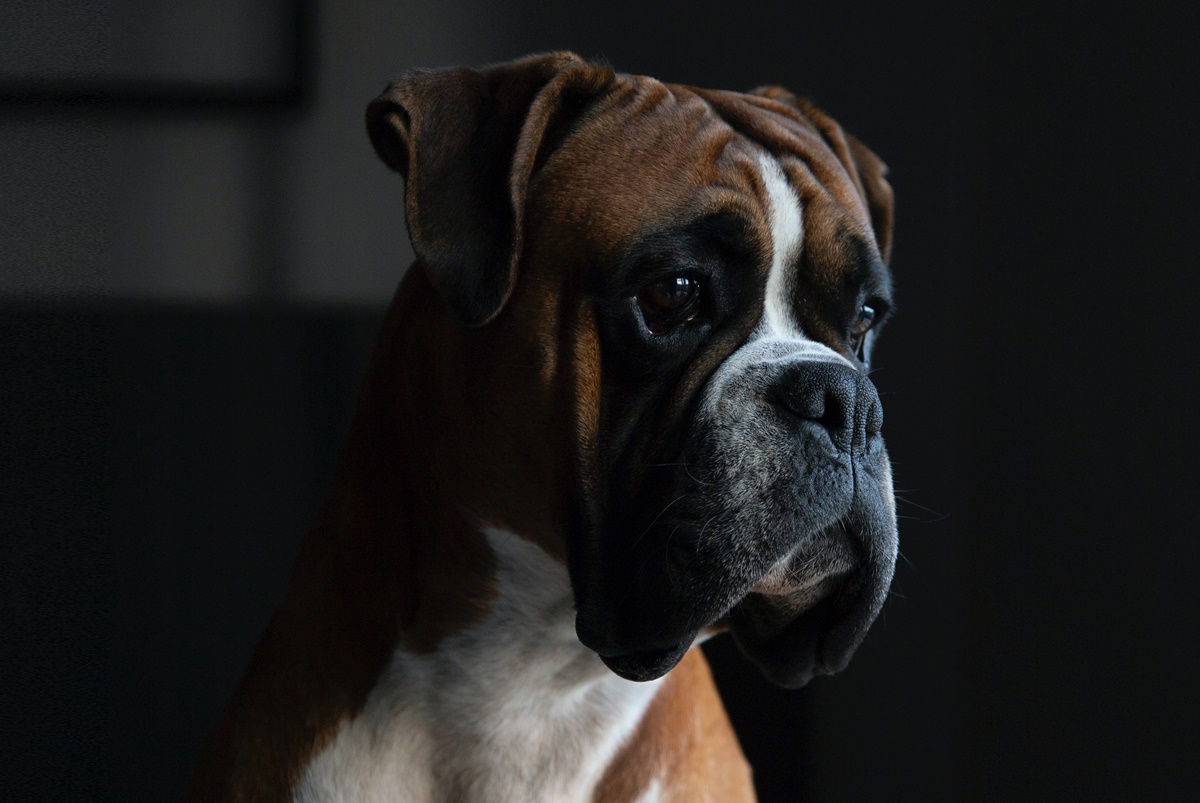
Donald Trump is the only American president since 1901 who has not had a pet dog while in the White House.
Donald Trump is the only American president since 1901 who has not had a pet dog while in the White House. Dog lovers might wonder whether a canine companion might have had a salutary effect on Trump’s presidency.
The unconditional affection and loyalty that many dogs provide is known to be very beneficial in alleviating the twin maladies of stress and loneliness; could such a dog have made Trump a better president?
There is no question that Trump suffers from feelings of loneliness. How else can you explain his obsession with crowd size and his hunger to falsely inflate the size of his own crowds? Being in a mutually trusting relationship with a canine pal could have taught Trump that in relationships, often quality matters more than sheer quantity. He could have learned that when loyalty extends both ways, it can have beneficial, dopamine-induced feelings of contentment. These feelings could have inspired Trump to become more empathetic, and thus a better president.
With regard to dealing with stress, give Trump his props. This twice-impeached and four times indicted President already is quite good at handling stressful situations. A lesser man might have suffered a stroke or a heart attack if subjected to the kinds of "unfair" attacks that Trump has had to put up with. But there is always room for improvement, and let’s look at his specific techniques for dealing with stress, and then see if having a dog could have made him even better at it.
Related stories
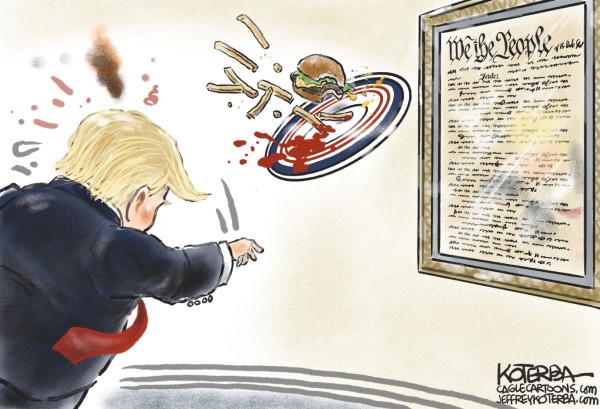
Trump’s primary technique for handling vexing situations is quick retaliation. When faced with unpleasant developments, Trump knows instinctively that just sitting on his anger is not constructive and could lead to long-term psychological problems. One of his coping tools is first to own his anger by some simple action, such as throwing ketchup against the wall. Then, with a head and heart free of unhelpful emotions, he can rationally figure out how to retaliate. In the case of a minor betrayal by a former ally, often the appropriate remedy is merely verbal abuse punctuated with a derisive nickname. For example, when Governor Ron DeSantis, who Trump had helped get elected, turned against him, Trump retaliated by referring to DeSantis as Meatball Ron. But then, perhaps, realizing his insult of DeSantis needed more intellectual gravitas, Trump decided to cut to the core of DeSantis’s character failings and came up with the much more impressive nickname of DeSanctimonious.
However, in dealing with subordinates who refuse to carry out a direct order, either because of a sudden pang of conscience or because what Trump wants them to do is illegal and could land them in prison, Trump knew that such disloyalty must be harshly punished.
For example, when Mike Pence refused to take illegal steps to block the peaceful transfer of presidential power, Trump would not passively accept that and just sit on his anger; instead, in his inflammatory January 6 address to the already riled-up crowd, Trump accused Pence of lacking the courage to do what was right, and intimated that Pence needed to be taught a lesson. Much to Trump’s credit as a respecter of democratic principles, he did not dictate what Pence’s punishment should be, but instead left it up to the will of the people in the mob chanting “Hang Mike Pence” to determine an appropriate sentencing.
Let’s review our analysis so far. Having a dog would help alleviate Trump’s feelings of loneliness. Although Trump is already quite good at handling stress, does his methodology rely too much on retaliation? Could having a dog soften his approach and made him a more empathetic and better president? These questions can’t be answered in a vacuum, so we need to consider the main options for getting a canine companion, namely, a rescue dog and a dog from a breeder.
For an owner, a huge advantage of a rescue dog is that the dog will usually view its adoption as an enormous upgrade and will shower the new owner with loyalty and affection. While this is generally true, there are risks that come with a rescue adoption. New research on dog and owner bonding has indicated that not only do dogs pick up personality traits from their owners but it may work both ways—owners can start assuming some of their dog’s emotional sensibilities. In rescue-dog adoption, because there is a confidentiality policy regarding information about the previous owner, the new owner might be unaware of some dangerous traits that the dog has previously picked up. To understand the possible danger this poses, we need look no further than Trump’s recent post wishing American Jews a happy Rosh Hashanah.
Although Trump’s Happy Jewish New Year post was mostly a warm-hearted gesture, it was also an accusation. Trump accused liberal American Jews of having voted to “destroy America and Israel” and he added, “Let’s hope that you have learned from your mistakes and make better choices going forward. Happy New year.” This was a clever message because it played into two anti-Semitic tropes, namely, that Jews are a danger to America because of a primary allegiance to Israel, and also because of their alleged complicity in an unforgivable act committed almost 2000 years ago. Then, Trump singled out the subclass of liberal American Jews as being the ultimate threat because in addition to being Jews, they were liberals and therefore part of the pernicious deep state.
Trump’s post reveals the risk of his adopting a rescue dog. What if the previous owners were liberal Jews and the dog had picked up some of their proclivities, and then passed these dangerous ways of relating to social injustices on to Trump? This could have had created enormous inner conflict for Trump, thus making him so at war with himself that he might have become completely unhinged.
Now, let’s consider the option of getting a dog from a breeder. Although this is probably the safer route, it is not foolproof. For example, I have a friend who got a male Black Lab from a breeder. Almost immediately, the dog not only greatly preferred his wife to him, but even worse, would get up and walk away whenever he approached the dog to try to pet it. My friend was convinced that the dog had unresolved Oedipal issues. The situation was completely hopeless because the dog psychologists that my friend consulted either didn’t recognize that complex in dogs, or if they did, they didn’t yet have the tools to treat it. Imagine the havoc it would create if Trump bought a dog that not only greatly preferred Melania, but in addition had unresolved Oedipal issues
In conclusion, while I have not given a definite answer to whether having a dog would have made Trump a better president, I hope that I have shed light on some of the complexities in analyzing that question. Also, my apologies to animal rights activists for focusing solely on a dog’s effect on Trump’s Presidency. In the interests of balance and fair play, a future article should address the possible effect of such an adoption on the dog.
Comments

Powered by RoundtableAn AI/DeFi-powered Enterprise Media Operating System. Learn more at Roundtable.io.© Roundtable 2026. By using this site you agree to the Terms of Use and Privacy Policy