
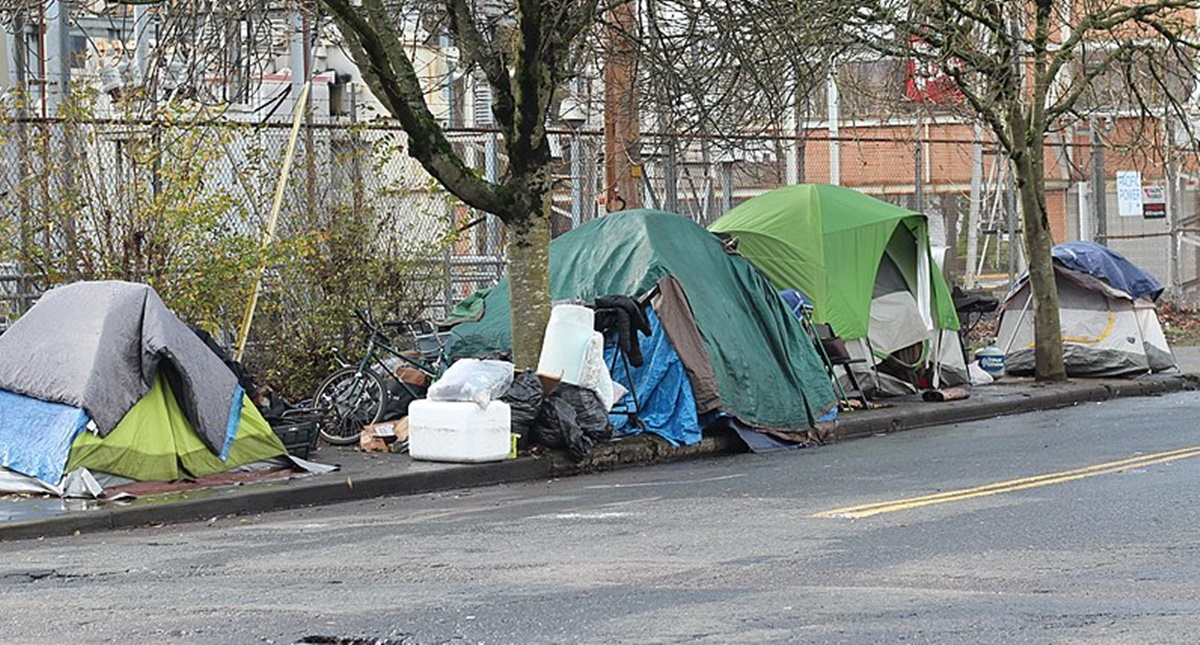


Homeless Encampment
Nov 8, 2023 2:00 PM
“Housing is a Right, Not a Privilege", should be both a starting point and fundamental tenet to guide a discussion on how best to meet the housing needs of our citizens.
A person reading about California’s housing crisis in the mainstream media might be forgiven for concluding that the heart of the issue involves a life-and-death struggle between anti-housing NIMBYs and their pro-housing counterpart, YIMBYs. Unfortunately, the absence of any nuance in such a formulation makes it harder to understand the complexities of the issue and bring groups with differing interests together in forging a solution to an existential problem.
NIMBY is a catch-all pejorative applied to residents opposed to the building of almost anything in their neighborhoods, from new commercial developments to multi-family housing projects. “Not In My Back Yard” implies that those residents aren’t opposed to the same developments and projects outside their neighborhood, and thus are motivated by narrow self-interest that rejects the concept of societal good. Furthermore, the common NIMBY concern over traffic and parking problems and the pressure on inadequate infrastructure may mask a deep-seated animus toward newcomers to their neighborhoods, especially if those newcomers are non-white.
YIMBY - Yes In My Backyard - Thwarts NIMBY
In contrast, YIMBY (Yes In My Back Yard) is an organized movement that started in San Francisco and now has chapters throughout California and across the United States. Its primary focus is political, advocating for laws and ordinances that will thwart NIMBY resistance and encourage the construction of badly-needed housing. This, according to a YIMBY vision statement, is the path to a brilliant new future. “We fight for more housing because we want to reduce poverty, end homelessness, eliminate racial segregation, create jobs, and stop climate change.”
Ambitious, indeed. But realistic? Here in Los Angeles, affordable housing advocates like to point out that renters make up more than sixty per cent of the population and therefore politicians are obligated to give their concerns the weight they deserve. In the real world, homeowners have traditionally wielded more influence in the political arena by virtue of being more reliable voters and the source of money for political campaigns. Given the typically low turnout in municipal elections, for example, an organized cadre of renters even in homeowner-majority districts could effect the outcome of an election. But this has seldom happened. And renters are never going to be a major source of campaign donations, which means that political candidates will continue to play close attention to what the so-called NIMBYs want.
Related stories
But what do NIMBYs want? My wife and I have been homeowners for more than thirty years, and we spent several of those years joined with our neighbors in fighting a huge mixed-use development on the main commercial street in our community. We went to meetings, wrote letters, made phone calls, and ultimately stopped the development. The project included 280 housing units, and yes, we were accused by the developer, some housing advocates and other project supporters of NIMBYism.
Did this mean my wife and I were insensitive to the needs of those less fortunate than ourselves, that we were even guilty of racism? The 280 housing units were to be market-rate apartments, with 10 percent affordable to low-income renters for 15 years. The developer eventually agreed to raise that term to 25 years, but I believed—and still believe—that such inclusionary covenants are at best band-aids, and at worst, promote the construction of housing that is ultimately out of financial reach for those in most need of it. In addition, that project would have meant the demise of a neighborhood shopping center with businesses that served middle and working class residents, including those in an adjacent Black and Latino neighborhood. A supermarket, a pharmacy, a discount clothing store, and a dental clinic serving low-income patients would be displaced by restaurants, boutiques, and other businesses catering to an affluent clientele.
I scrolled through the California YIMBY website but didn’t see the word “gentrification” anywhere. However, the word “inclusive” does appear, in statements of purpose that embrace inclusion as a benefit of removing barriers to building more housing. The vision, clearly, is one of communities where people of different ages, race, and economic status can live and thrive together. But is that vision compatible with gentrification as we know it?
NIMBY Gentrification
My Los Angeles community of some 35,000 was long one of the most diverse in the city. It has also been a hotbed of gentrification, with commercial streets becoming popular destinations, with restaurants, yoga studios, clothing boutiques, and businesses appealing to those with plenty of disposable income. The concurrent demand for housing has pushed home prices and rents to some of the city’s highest levels. The typical two or three bedroom houses occupied by middle-class families have been steadily disappearing, bought by developers who tear them down and build “McMansions” that hit the market for $3 million and upwards. Other homeowners are building the recently legalized ADUs (Accessory Dwelling Units) touted in some quarters as a major answer to the housing shortage.
It’s impossible to avoid the conclusion that this progression has made the community less, not more, inclusive. One signifier of this can be found in the 2020 census, which showed a population decline by of eight percent since 2010. Not only do bigger, more luxurious houses tend to be occupied by smaller families, but another phenomenon has gone hand in hand with this movement from a middle-class community to an enclave for the well-to-do. And that is the destruction of affordable housing.
In Los Angeles County, 27,000 units of rent-controlled housing have been taken off the market in the past twenty years
Less than a block away from my house, the occupants of five rent-controlled bungalows were evicted, the buildings torn down, and three large, two-story houses built in their place. I have no idea where those residents are now, but the houses are occupied by people who could afford the nearly $3 million asking prices. And less than a block from that development, work is almost complete on seven two-story houses that replaced a group of small, rent-controlled apartments. Speculation about the asking price for these houses varies, but it’s certain to be at least $2 million.
Two examples don’t prove a point in a city with almost 4 million inhabitants. But statistics from the Los Angeles Department of Housing and Community Development show that some 27,000 units of rent-controlled housing have been taken off the market in the past twenty years. And because the tenants of those units were legally evicted through California’s Ellis Act, which prohibits the city from interfering with a landlord’s right to leave the rental business, it’s safe to assume that almost all those units were either torn down to make way for single-family houses or converted to market-rate condominiums.
Although YIMBY mission statements include advocacy for publicly-subsidized housing, almost all the recent changes in housing laws—eliminating single-family zoning, allowing ADUs, streamlining the permitting process for builders and developers—are designed to appeal to the private development interests that have been busy using the 1985 Ellis Act to destroy affordable housing. Rather than lay the blame for the shortage of such housing on an amorphous entity called NIMBYs, perhaps we should take a hard look at our reliance on private enterprise, with its market-driven decisions, to fulfill society’s housing needs.
In the late 1990’s and early 2000’s, I worked for a non-profit housing corporation. In the lobby of the office, a poster on the wall read, “Housing is a Right, Not a Privilege.” I think we’d be better served by using that as both a starting point and fundamental tenet to guide a discussion on how best to meet the housing needs of our citizens.
Comments

Powered by RoundtableAn AI/DeFi-powered Enterprise Media Operating System. Learn more at Roundtable.io.© Roundtable 2026. By using this site you agree to the Terms of Use and Privacy Policy