


Oct 24, 2024 7:00 AM
Updated Oct 26, 2024 6:05 PM
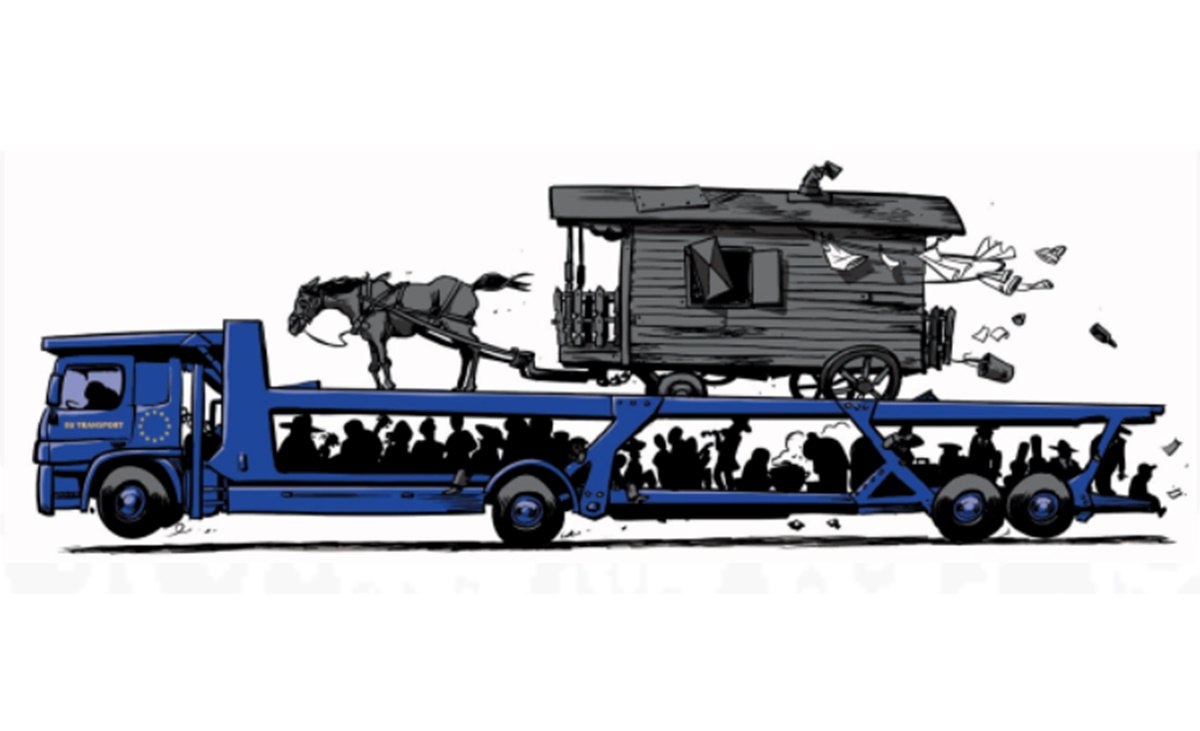
Donald Trump claims that deporting millions of undocumented people would reduce the housing shortage. This engenders images of hapless families packed into cattle cars.
Housing costs have become a major problem. Average people are increasingly priced out of the market for houses. Renting has also become more expensive in many cities.
Donald Trump claims that deporting millions of undocumented people would reduce the housing shortage. But images of hapless families packed into cattle cars look more like Stalinist Russia than the America I want to live in.
Also, deportation might backfire. Many undocumented people work in the construction industry and deporting them could decrease the housing supply, driving up prices still more.
Kamala Harris says we need three million more housing units. The federal government's leverage is limited here since most laws preventing more housing from being built---zoning and the like—are state and local. But federal incentives to reform state and local laws could help.
Related stories
Building additional housing could make economic sense. Prices reflect the balance between supply and demand. When demand exceeds supply, prices will go up. Building more houses and apartments could push housing costs down, exactly what we need.
However, it is hard to know exactly how many new housing units we need to build, and of course each new house or apartment will cost money, either for buyers and renters or, if there is a subsidy, for taxpayers. One reason for the current lack of low priced housing is that construction costs have become so high that without a subsidy, no one can afford to build it.
But do we really need a lot of additional housing? Electric utility companies are finding ways to expand the capacity of the existing grid, reducing the need to build new grid. These measures are much cheaper than building brand new routes and avoid the need for the multiple government permissions new construction requires.
A similar approach, using existing housing more efficiently, would be cheaper than building new housing. The most obvious opportunity would be to encourage people with spare bedrooms to find people people to share their home.
I have seen estimates that in my home state of Oregon alone there are one and a half million spare bedrooms, and in the U.S. as many as 137 million spare rooms.
Filling up even some of these rooms would reduce the amount of new building required.
The obstacles to housesharing are not trivial, but the benefits of sharing would be considerable, both to society at large and to the people who do it. Sharing would immediately reduce the net cost of housing for those who decided to share empty bedrooms, since it would provide them with additional income or reduced expenses. It could also provide companionship, something that lonely people might greatly appreciate.
To some extent, house-sharing is already going on, but this is probably largely by people who already knew each other, often family members. The big problems come when people with whom housing might be shared are not already known and who might come with emotional or economic baggage. How can people figure out who is safe to share housing with and who is not?
There are also problems with what can be done if it turns out that someone with whom we are sharing a house turns out to not fit in well with us.
The government could set up organizations to vet prospective tenants for safety, certify house owners as responsible, and suggest the terms on which they would share living accommodations. Or private enterprise could offer this service.
It might also be possible to encourage housesharing by simplifying or eliminating the need to pay taxes on what someone pays to share our housing.
Increasing the supply of housing by additional construction and room-sharing might reduce the number of homeless people by driving costs down. But it would not "solve" the problem. Homelessness is a complex problem, and intensive casework with the large variety of homeless people will certainly be needed, no matter how much housing is available.
Comments

Powered by RoundtableAn AI/DeFi-powered Enterprise Media Operating System. Learn more at Roundtable.io.© Roundtable 2026. By using this site you agree to the Terms of Use and Privacy Policy