
Robert Couse-Baker • Attribution (CC BY 2.0) • Flickr


Costa Hawkins
Aug 16, 2024 9:03 PM
Updated Aug 16, 2024 9:05 PM
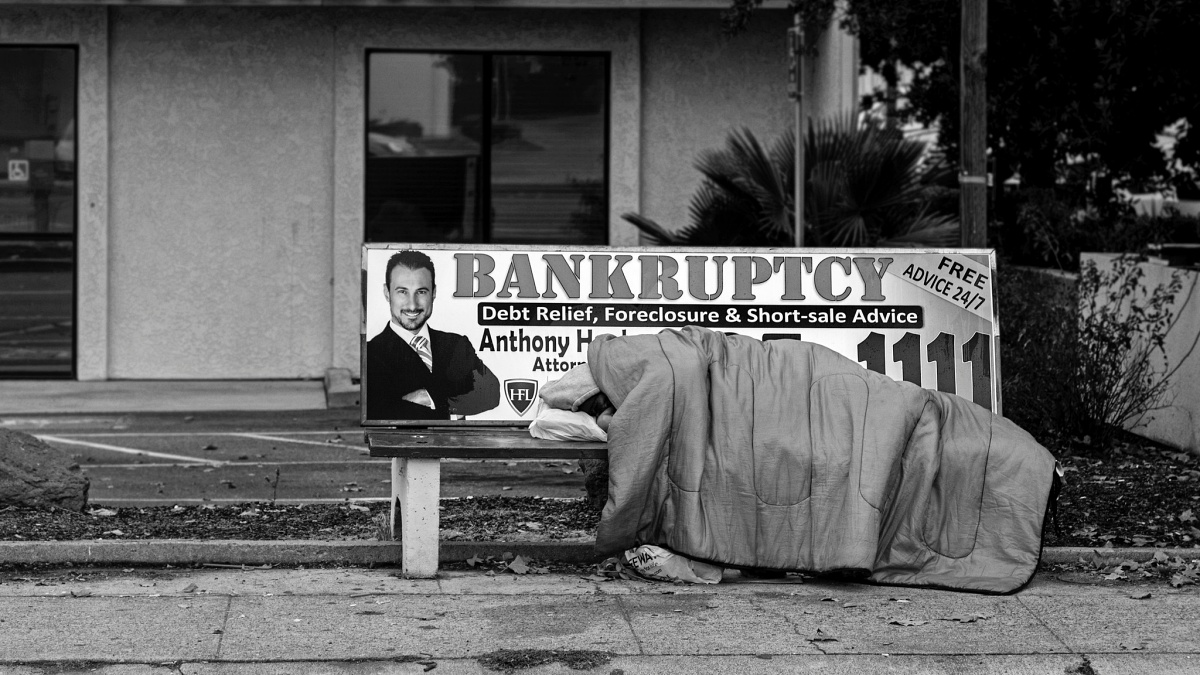
The major cause of the increasing homelessness in California is unfettered Landlord Greed, encouraged and protected by Costa Hawkins.
California voters will soon be receiving their Voter Guides and mail in ballots. The final day for voting on candidates and propositions will be November 5th of this year. This essay explains what Proposition 33 is, and why it is important for the overburdened renters in our state.
Costa Hawkins
In 1995 a group of corporate landlords, in response to the successes of rent control laws in several California cities, like Santa Monica, Berkely, San Francisco, and Los Angeles, had their agents in Sacramento, named Jim Costa and Phil Hawkins, push a self-serving law through the legislature. It was signed by the highly conservative Republican Governor, Pete Wilson.
The law was designed to diminish the power of local governments to enact rent regulations. For example, under this law, residential apartment buildings constructed after 1995 could not be subjected to rent control. And in those localities that already had rent regulations, whenever an apartment became vacant, the landlord could not be stopped from raising the rent on the empty unit to the level of the “prevailing market rent.” That usually means “what the market will bear,” or whatever the landlord can get away with. These two provisions, among others, in the law put a wrap around the power of Santa Monicans, and folks in other rent controlled cities, to regulate rents. Rents now can only be regulated in old buildings, built before 1995, and the rent for new vacancies in all buildings cannot be capped.
The Rent Inflation-Homelessness Spiral
As might be expected, this law, California Civil Code, section 1954.50 et seq, has enabled Rent Inflation to skyrocket in California by unleashing the landlord’s insatiable lust for profit. As I will show, that law has also been a major factor in causing the rise of homelessness in the state since 1995.
Related stories
The 1990 census found that California had a homeless population of 49,081. More homeless than any other state at the time.
In a report to Congress about homelessness in the states, the Department of Housing and Urban Development (HUD) estimated that more than 181,399 people were experiencing homelessness in California in January 2023. Again, more homeless than any other state. Thus, in the 33 years from 1990 to 2023, the homeless population in California soared by 132,318 souls. That is, an average of over 4000 tenants per year are displaced by the Costa Hawkins homeless making machine.
Here’s how it works:
Every year, new apartment buildings are being built because speculators know that their rents will not be regulated – no matter what California city they build in. When the new buildings open up, some of the tenants in older buildings move in to the new ones, if they can afford to do so. Since there is no rent increase limit on vacant apartments, even if they are in rent controlled cities, the landlords can now raise the rent on the just vacated units to whatever they can get.
Landlords outside of rent controlled cities see how much more some other landlords are squeezing out of their new tenants. They declare those rents to be the new “market rate,” and raise their rents. Some of those tenants who were already “rent burdened,” i.e., paying more than 30% of their income on rent, can’t pay the new “market rate.” Some may have already cut to the bone their budgets on medications, food, vacations, or clothes, just so they could pay the former rent. If they have children, the budget for the kids likely can’t be cut anymore.
But the landlord only sees the profits to be made by charging the market rate. It’s his right to do so. If a tenant can’t pay the market rent, then they must move or be evicted. That’s the law.
Once ousted, those tenants have to find an affordable place to live, even if smaller or otherwise less desirable. Some of them will have to move further away from work, school, and friends. Some of those tenants may have been living on the threshold of homelessness. They may have been way over burdened by rent, living paycheck to pay check. Perhaps they had recently suffered a loss of income because of reduced hours at work, or an illness that cost them their job. Some will try to avoid homelessness by moving in with friends or relatives. Although this often results in the “guest” feeling guilty, and sometimes conflicts arise. Inevitably, however, some of those tenants who just can’t pay a hefty rent increase will have nowhere to go. For them, it’s the street, a car, a trailer, or, if lucky, a shelter.
More than two-thirds of the homeless people in California are unsheltered (meaning they sleep in tents, either on the streets or in encampments, or in a vehicle). Despite the state’s efforts to combat homelessness (discussed below) the HUD report notes that this “two-thirds” unsheltered is the highest percentage of any state in the United States. While California has about 12% of the US population, nearly half of all unsheltered homeless humans in the whole US live in this state.
As mentioned above, since Costa Hawkins passed, in 1995, homelessness in California has steadily increased on average by over 4000 persons per year. Last year’s homeless are added on to those from the year before. This year’s homeless will be added on to them. The law that allows landlords to cause homelessness by raising rents to unaffordable levels for vulnerable tenants, also functions to keep an increasing number of homeless in that condition. If the rents on vacant apartments, including first and last month rent, security deposit, application fee, etc., are too much for an ousted person to pay, even if he or she is a senior on a fixed income, or a person among the “working poor,” then they must enter into, and endure, homelessness.
With rent increases driving tenants out of their apartments and into homelessness every year, and rents on vacancies blocking their exist from that condition, the total homeless population will continue to grow steadily. As long as Costa Hawkins is the law in California, this Rent Inflation-Homelessness Spiral will continue Ad Infinitum, Ad Nauseam.
The Tenant Protection Act
In the California government, the left hand doesn’t seem to know what the right hand is doing. For example, in 2019 the state enacted the “Tenant Protection Act.” It capped rent increases at 5% plus another 5% if inflation got that high. In short, the law creates the appearance of allowing landlords no more than a yearly rent increase of 10%. But appearances can be deceptive. That Act is restricted by Costa Hawkins. Only tenants living in buildings built before 1995 get that state protection. For tenants living in buildings built after that date, the Rent Inflation-Homelessness Spiral can keep spinning.
But that’s not all. In a cruel irony, this state’s “rent control” law continues the punishment Costa Hawkins imposed on cities that had passed rent control ordinances. While Costa Hawkins proclaims that it only frees buildings from rent regulation if they were built after 1995, that’s not the case for those nervy places that have their own rent regulations. Costa Hawkins roles back the date for buildings to the year the city enacted its rent regulations. For example, in Santa Monica the cut off year is 1979. Buildings built after that date become free of rent regulations. Costa Hawkins cuts out an extra 16 years of buildings for rent control freedom in that city. Statewide, this punishment results in hundreds of more buildings to feed the Rent Inflation-Homelessness Spiral. Some “Protection”!
What’s Being Done?
What, if anything, is the state government doing about its homeless population?
Interagency Council on Homelessness reported to the State Assembly on exactly that question. This agency is tasked with overseeing the state’s homelessness strategy. It’s also responsible for both passing out funds to the numerous organizations and agencies involved, and for assessing the success of state programs.
Some Assembly members were shocked to learn that, between 2018 and 2021, the state had spent $9.6 billion to alleviate homelessness. Some of the funds went to providing assistance and other services to the homeless, such as shelters and food. About 571,000 people were served during that period.
But our elected officials received an even greater shock when they were informed that, while all that money was being spent, most of the homeless did not receive housing; indeed, the number of homeless in this state actually increased during the period audited. In other words, as a result of spending nearly Ten Billion Dollars to reduce homelessness, the number increased!
One reason the report gave for this abject failure is the chaos and duplication among the nine state agencies, hundreds of county and municipal governments, and the numerous nonprofits and charitable organizations that all drink from the trough. Each was doing its own thing, with no central coordination.
But the report omitted to mention another reason why the state has failed so badly. Nothing was done about the Costa Hawkins homeless making machine. In fact, Costa Hawkins is producing more homeless each year than the state or local governments can keep up with.
I guess the bureaucrats delivering this report to the state legislature lacked the guts to tell the elected officials that THEY were the major part of the problem. The law they made is producing the homeless, and keeping the homeless in that condition. No matter how much tax payer money is thrown at the problem for appearance sake, nothing will reduce the ever increasing number of homeless as long as Costa Hawkins is as untouched as a cow in India.
Life on the Threshold of Homelessness
The Costa Hawkins Rent Inflation-Homelessness Spiral doesn’t just make life miserable for the homeless. Homelessness is just the visible harm to society. Far less visible is the gut wrenching anxiety felt by those tenants who live on the threshold of homelessness, and worry about when they will be next.
Even before any Notice of Eviction, or any threats by the landlord, there are tenants who feel themselves to be within the threshold of homelessness. Maybe they are living pay check to pay check. Maybe they have just lost a job, or have become seriously ill, are pregnant, or are already heavily rent burdened. Pregnancy is often a condition prior to eviction.
Researchers from Drexel University, and some participating state agencies, conducted a study of normally housed people in the US, between 2021 and 2022, who worried about eviction. These were not folks who had received an Eviction Notice, but who feared that they were likely to face eviction sometime within the near future. The study found that “the perceived risk of eviction is associated with [sever stress and other] elevated mental health problems.” Indeed, compared with a control group that felt secure, “the odds of depression, anxiety, and prescription medication use in the at-risk eviction group were significantly higher than in the reference group.” The study also found that during the COVID pandemic, in those states that put out a temporary eviction ban, such “state-level eviction moratoria was associated with a reduction in emotional distress.”
80% of stressed renters say they have had to cut back on food, transportation, and health care costs. Of those folks, another 80% feel pressure to move, but haven’t “because of a lack of affordable options in the housing market.”
These distressing pressures and mental health pathologies are a direct result of the unfettered power Costa Hawkins gives to landlords to raise rents. Rent regulations would make apartment life a little more secure, rents a little more stabilized, and life a little less stressful.
The Social Harms of Bad Law
Historians understand that the 1920’s law prohibiting the sale and use of alcoholic beverages, that is, the 18th Amendment to the US Constitution, and the Volsted Act, had the terrible and unintended consequence of growing organized crime. This included Chicago’s Al Capone and the Five Families that constituted the Mafi in NYC. Singed by their own poor judgment, Congress and the states repealed that law with the 21st Amendment, albeit 13 years, and many deaths, later. Prohibition was a harsh lesson about the damage a Bad Law can do to the lives of people.
A “Bad Law” is one that might serve some small special interests, but actually does greater harm to the common good. While only intending to enrich their landlord buddies, the Jim Costa and Phil Hawkins law is currently causing ordinary Californians considerable unintended harms. Those include the increasing number of homeless randomly selected from a subpopulation of human beings who, though housed, are plagued with the kind of worry that can give a person ulcers. In cities, homelessness exacerbates the problems of substance abuse, thefts, robberies, assaults, and sexual violence against both men and women. Fortunately, this socially harmful, Bad Law, will be repealed by Prop 33. Then the Rent Inflation-Homelessness Spiral will be stopped.
Prop 33 Will Repeal Costa Hawkins
Voting “yes” on Prop 33 will result in repealing the Costa Hawkins law. This, in turn, will allow the People of each local community and local government to decide for themselves how to regulate housing in their jurisdiction.
Prop 33 is just 23 words:
"The state may not limit the right of any city, county, or city and county to maintain, enact or expand residential rent control." That repeals Costa Hawkins, and protects local governments from any more state interference in their efforts to regulate rents as they, in conjunction with their communities, deem best for themselves. (Why does it say, “any city, county, or city and county”? Because if it read “any city or county,” that could be construed in court as meaning either/or but not both. So the option for both to enact rent regulations has to be made explicit.)
If, for example, the People want to welcome first time apartment renters to their community, such as newlyweds, students, or retiring seniors, then they will limit the amount of increase a landlord can require on general rent, as well as on newly vacated apartments. The main point here is that the local community should decide on what is best for it, and not have to suffer under the domination of corporate, or other, greedy landlords who think only of increasing their profits even if it is harmful to the rest of the community and society.
In this way, Prop 33 democratizes the process of rent regulation, rather than allowing a small elite monopoly to dominate the process.
Some Pros and Cons for Prop 33
- Prop 33 doesn’t tell any local government what to do. It only removes the obstacles to democratic decision making about local rent regulations. All local governments are free to choose to not have any rent regulations.
- Without Costa Hawkins, the Tenant Protection Act of 2019 will automatically cover every tenant in the state. However, the provision that sunsets the law in 2030, and the extra 5% gift to landlords for inflation, should be repealed by the legislature. The Act should be made permanent. Also, tenants suffer from inflation, too. Why should they suffer an additional 5% to further enrich landlords?
- While the Tenant Protection Act will automatically cover every tenant in the state, the People in their local communities will be free to regulate rents below the Act, but not above it. Local laws cannot restrict or pre-empt state laws.
- Prop 33 will NOT zero-out landlord profits. California law requires that rent regulations must allow landlords to make a reasonable profit from their investments in housing construction and the operation of their rental business. Thus, landlords are guaranteed a reasonable profit.
- Landlords have studies “proving” that rent regulations result in less available housing, as landlords go out of business, and builders stop constructing new apartment buildings. Right! Tobacco companies had lots of studies “proving” that smoking doesn’t cause cancer, too. But, because the law guarantees a profit, they will come.
- Landlords have studies “proving” that homelessness is not caused by budget busting rent hikes, but by mental illness, substance abuse, and wastrel management of the household finances, a broad consensus among social scientists that those things are a minor cause of homelessness, and that unbearable rent increases and shortages of affordable housing are the major cause of the problem.
- Prop 33 may result in landlords paying less income tax to the state of California. This could be true, but that will NOT HURT the state’s economy. More likely, consumer spending will go up. Sales taxes will compensate for less income taxes from landlords.
- Prop 33 will put more money back in the pockets of renters. They will spend this money, mostly in their local economies. Thus, local merchants will have higher incomes, and pay more income tax to the state. That will fully compensate the state for the “lost” revenue from landlords. (Unfortunately, it looks like the landlords got to the state’s Legislative Analyst who only mentions the possible reduction of landlord taxes in the Voter Guide, and not the increase of sales taxes, and income taxes from local merchants.)
Conclusion: Prop 33 is an Intervention
As we have seen, the major cause of the increasing homelessness in California is unfettered Landlord Greed, encouraged and protected by Costa Hawkins. With such an opportunity, they can’t stop themselves from raising rents. The temptation of Ever Greater Wealth overpowers their will and their conscience.
A “YES” vote on Prop 33 will help them to control themselves. They need our help!
Vote “YES” on Prop 33!
Comments

Powered by RoundtableAn AI/DeFi-powered Enterprise Media Operating System. Learn more at Roundtable.io.© Roundtable 2026. By using this site you agree to the Terms of Use and Privacy Policy