


Mar 27, 2025 12:32 AM
Construction codes exist because government is tasked with protecting others from people like me who do stupid things they shouldn’t or stupidly don’t do things they should.
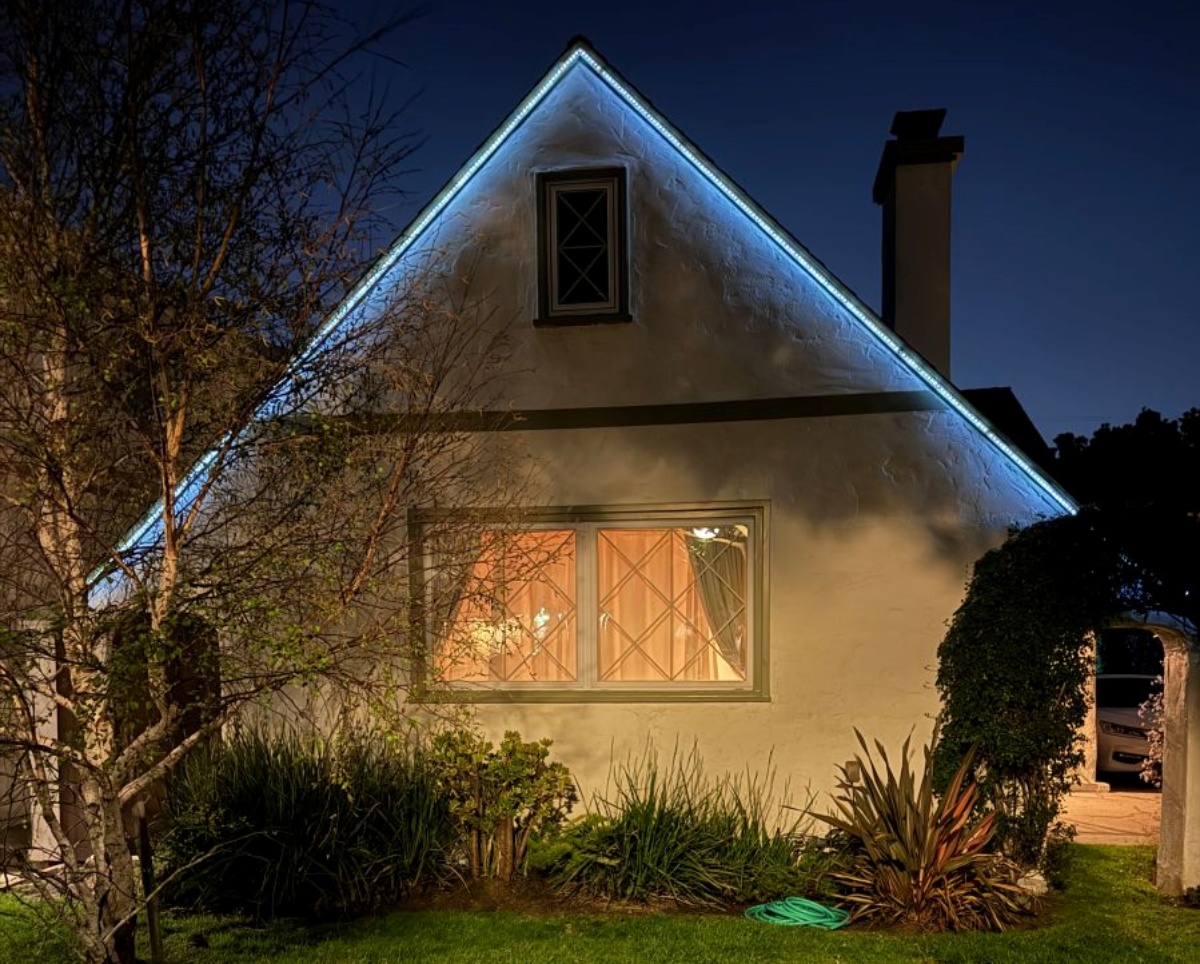
A little over a year before January’s wildfires ravened vast swaths of Los Angeles, I almost torched our house. I had (metaphorically) lit the fuse a few months prior when, one fall evening as it got dark, I looked up at the peaked roof of our small, tract house and imagined it outlined with light, a bit of Disneyland’s Main Street at night. Rather than pay a professional, though, I decided to string the lights myself. I felt qualified, having taken shop in high school.
The next morning, I drove to a big-box hardware store to gather parts: rope lights, plastic clips, wood screws, extension cord, and a timer. After lunch I climbed a ladder, screwed the clips under the eaves, hung the lights from the clips, ran the power cord, and programmed the timer. The complete install took four hours. That evening when the lights snapped on and I saw the house brightly limned, it pegged my smugometer. I had punched my man card.
Several months later we were eating supper when someone pounded on the front door. I opened it to our neighbor Molly yelling, “Your house is burning!” She tugged me to the front where imps of flame were dancing wantonly along trellised climbing roses behind which I’d tucked the electric cord powering the lights. After just a few month’s exposure to the weather, the extension cord’s plastic sheathing had spalled and fallen away. The no-longer-insulated copper wires were short-circuiting, sparks kindling small but hungry flames that rushed along the rose vines toward our house like lit fuses determinedly heading toward barrels of gunpowder. I yanked the plug, ran inside, filled a jelly glass with water, ran outside, and dumped it on the fire. This accomplished little as most of the water from my jelly-glass aerial tanker missed the flames. I ran back inside to reload. It took three more drops from my not-so-super-scooper to extinguish the blaze.
Had Molly not noticed the burning vines, had they not been quickly doused, the desiccated redwood slats, boards, and beams that are our 95-year-old house’s skeleton would have gone up like branches of a parched Christmas tree. Embers and smoke would have at best marred and at worst ignited the closely spaced houses of our neighbors. Half the neighborhood’s century-old cottages could have gone the way of Pacific Palisades and Altadena.
Related stories
This past January’s conflagration was driven by wind and inextinguishable Tesla batteries. My near-immolation of our house was driven by cupidity and stupidity. I’d been both too cheap and too proud (in the biblical “goeth before a fall” sense of haughty) to hire a professional. (A professional would not have used indoor extension cord outdoors.) The next morning, after trimming the blackened vines and tearing out the burned and melted wiring, I hired a contractor to redo my incendiary handiwork.
I thought about this last week after seeing a news report on Boney Island, an elaborate treehouse Rick Polizzi built in his front yard more than two decades ago. A one-time producer on The Simpsons, Polizzi wrestled for years with the Los Angeles Department of Building and Safety (LADBS) over building permits. (Doh! It’s a treehouse!) There’d been no permitting issue at first, but over time the whimsical structure had become a tourist—and therefore traffic—draw. An annoyed neighbor’s complaint to LADBS triggered an inspection that triggered a notice of non-compliance that triggered a long and expensive legal battle; recently ended, its outcome was that Boney Island had either to be brought up to code or brought down. Early in March, a reluctant but litigation-weary Polizzi brought it down.
LADBS ignored Boney Island for its first few years. But once a code complaint is filed, benign neglect is no longer feasible because that filing legally notifies the city of a latent hazard, and once notified, the deep-pocketed city is potentially liable for downstream injuries. So post-complaint, to protect the city—us—LADBS had to look at the treehouse as a habitable structure: If it or part of it fell with someone (a child?) inside, the city—us—would be on the hook; if a horny Bart and Jessica snuck up there one night to spark and in the afterglow sparked a joint that sparked a fire that spread to a nearby house or houses, lawsuits and subsequent damages that the city—we—would have to pay would be epic. (This has implications of concern to Progressives: LA is self-insured, so any public funds used for lawsuit compensation is unavailable for city services.)
Though I reflexively side with anyone fighting LADBS’s petty tyranny, I can’t consider Boney Island outside the context of both my moronically endangering my and my neighbors’ houses and January’s opportunistic urban renewal, which razed more than 11,500 houses, over 20,000 structures. Urban renewal (developers have a genius for euphemism) typically displaces only the powerless, but January’s wilding was atypically class- and color-blind, a helter-skelter indifferent to its victims’ economic and social status.
Construction codes exist because government is tasked with protecting others from people like me who do stupid things they shouldn’t or stupidly don’t do things they should. Codes are reactive; they are written to thwart people who, misguided by ignorance or swayed by arrogance, laziness, or greed, would repeat behaviors known to have harmed, maybe killed, others. When I think of the blaze that I idiotically sparked, and of January’s disastrous wildfires, it seems to me that LADBS and the city made the right call in insisting that Polizzi either remediate or remove his treehouse. (Sorry Rick.)
With the smoke cleared and (most) debris relocated, those who lost homes want to rebuild quickly and at lowest expense. True to its traditions, LADBS is an obstruction. Its policies prolong delays and escalate costs, resulting in at best hardships and at worst hard stops. Before construction can begin, it takes months for the agency to approve plans and issue permits. Once ground is broken, construction can be halted for weeks as inspections are scheduled, carried out, and rescheduled. Further delays stem from different inspectors making contradictory decisions, which causes work to be redone. More delays arise from getting approvals signed off and certificates of occupancy issued.
Beyond delays, building to code raises costs drastically. Permitting itself runs from $70,000 to over $125,000 (another veiled impact of Proposition 13), driving high housing prices even higher. Code-rated building materials’ and systems’ prices are artificially elevated, jacked by fabricated demand pressures and hyped by supply-chain shortages. Recent political battering has further swollen costs: In the past few weeks, bloviating threats of tariffs and counter-tariffs have propelled building-material prices even higher. (This combination—displaced residents scrambling for shelter, short-term rentals limiting long-term rentals, contractors angling to maximize profits, and inflation eroding everyone’s buying power—is an atmosphere ripe for, if not yet rife with, kickbacks and bribery.)
While older structures are generally grandfathered—meaning they don’t have to be updated when building-and-safety codes are—new construction and significant reconstruction must be built to current standards. To speed rehousing and lower costs, displaced residents, abetted by builders, developers, and speculators feeding off their misery, have, with some success, lobbied local and state officials to grease the permitting process and reduce extortionate fees. The more moderate seek to have the process’s sharper edges sanded; the more extreme, envious of indulgent building codes in places like Florida, push for what amounts to retroactive grandfathering. But not having to bring older firetraps up to modern fire-safety standards—grandfathering—was a major contributor to January’s devastation.
Thus a dilemma: How do we navigate the antagonism between private and public interests? People need to be rehoused expeditiously, but should we water down building codes, particularly fire codes, to achieve that? As our climate continues to change, lengthening droughts and climbing temperatures will fuel future firestorms, enabling them to burn more fiercely and frequently. Does it make sense to dilute fire codes so that deficiently shielded homes again feed the flames? The answer is shrouded in smoke.
Comments

Powered by RoundtableAn AI/DeFi-powered Enterprise Media Operating System. Learn more at Roundtable.io.© Roundtable 2026. By using this site you agree to the Terms of Use and Privacy Policy