


May 7, 2023 3:18 PM
Updated May 7, 2023 3:29 PM
We need to create a clear path toward permanent housing and stability to ensure that everyone in our communities thrives
Despite having less than 12% of the United States population, California is home to 30% of its unhoused. California also accounts for 50% of unsheltered people in the U.S., that is folks who live outdoors in parks, under overpasses, on streets, or in their vehicles. California has also seen the largest increase in its homeless population of any state from 2020-22 (6.2%).
To address the housing and homelessness crisis, cities across the state are implementing programs based on Continuum of Care principles—“an integrated system of care that guides and tracks homeless individuals and families through a comprehensive array of housing and services designed to prevent and end homelessness”.
Early this year, Los Angeles Mayor Karen Bass unveiled Inside Safe an initiative meant to move homeless people into hotels and motels while they wait to be placed in permanent housing. This plan is very similar to Governor Newsom’s Project RoomKey and Homekey, which was launched during the pandemic to help slow the spread of COVID among unhoused people, convert old buildings into shelters, create more affordable housing, address student homelessness and prevent people from falling into homelessness in the first place.
Both Project Roomkey and Inside Safe along with similar programs across the state have received widespread criticism from houseless residents, advocates, and housing and harm reduction scholars. Participants in these programs complain about the lack of food, being unable to access life-saving services, being re-located to motels far from their homes, as well as a lack of harm reduction and treatment services. There is also the question of transparency when it comes to how city, state, and federal funds are allocated and what entities get service provider contracts, all while the people remain unhoused.
Related stories
Criminalization, displacement, and coercion, when used to address houselessness, are expensive, ineffective, cruel, and non-lasting.
While many cities across California claim to have a care-first approach to dealing with homelessness, the unhoused residents of these cities and their advocates do not see this model being enacted or the funds going directly towards the care of houselesss persons. Study after study shows that criminalization, displacement, and coercion, when used to address houselessness, are expensive, ineffective, cruel, and non-lasting. What most unhoused people have been asking for are the following no-barrier services: access to clean water, food, waste disposal, electricity, clean restrooms, medical and mental health care, regular accessible harm reduction which includes substance use disorder treatment options, AND permanent sustainable housing.
We need to create a clear path toward permanent housing and stability to ensure that everyone in our communities thrives. A trauma-informed, data-driven, solution-oriented approach to the crisis foundationally would treat each unhoused person with dignity, respect and with the understanding that there is not a one-size-fits-all fix to homelessness.
There is a misconception that unhoused persons are “lazy addicts” who refuse to change their situation. In fact, about 40% of all unhoused people in the U.S. report formal earnings. That number is 53% for those living in shelters or interim housing. These numbers don't cover the number of houseless people working in the informal economy such as recyclers, day laborers, and vendors.
About 30% of people who are chronically homeless have mental health conditions, with little to no access to the care they would need to otherwise lead healthy lives. 50% of those with mental illness have co-occurring substance use problems and are less likely than their housed counterparts to receive care and consideration in our society.
Everyone working or non-working is worthy of care, not just the people who are agreeable, don't use substances, are not struggling with mental illness, or seem to be "trouble cases". Yet over and over, houseless people self-evict or are exited from programs that are in cities other than where they lived, lack basic services such as food, and have punitive rules such as curfews and regular room searches.
There are grave consequences for incessantly displacing and traumatizing our most vulnerable across California based on special enforcement zoning laws and coercive ineffective housing programs. People die, are disappeared aor their houselessness becomes more entrenched, making it even more difficult to support them, and they earn that dreaded label: "service-resistant”.
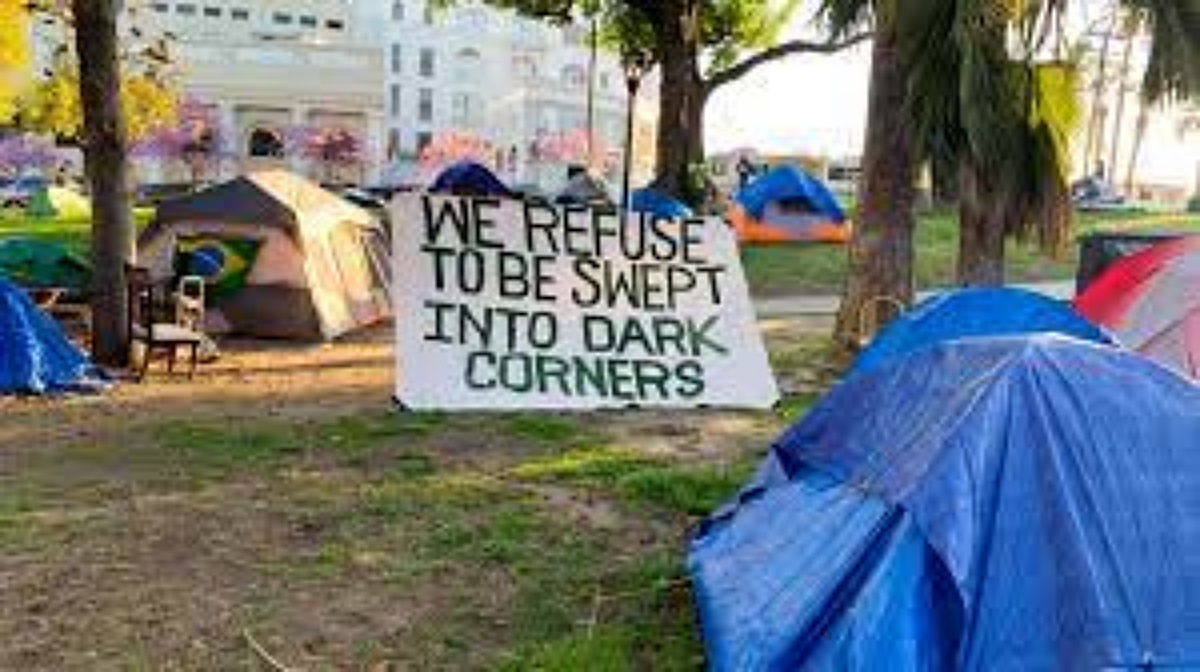
The deepening socio-economic crises, along with the state’s consistently violent response to its unhoused residents, are motivating houseless people across California and their advocates to organize against sweeps, special enforcement zones, and carceral housing programs.
Groups like Unhoused Tenants Against Carceral Housing (UTACH) “demand community self-determination, autonomy, and the same rights as housed tenants in Los Angeles” when it comes to their participation in any of the cities’ housing programs. Mutual Aid groups across the state are meeting immediate needs, building community and power with and among their unhoused and housing-insecure neighbors, and making a case for all housing struggles to be fought together.
And earlier this week, the unsheltered residents of Camp Resolution secured a lease from the city of Sacramento ensuring that they can remain on city-owned land for free until they are connected with permanent housing. Grassroots organizations like Moms for Housing which is a collective of homeless and marginally-housed mothers, are fighting evictions in Oakland through Community Land Trusts with the ultimate goal of “reclaiming housing for their city from speculators and profiteers”.
With the creative and bold organizing of so many groups across the state in tandem with progressive policy-making, California has the opportunity to lead in a compassionate, trauma-informed, research-based way and become a model for other states and jurisdictions on how to address houselessness. This can only happen if California abandons dehumanizing, punitive, non-data-driven models intent on disappearing visible poverty instead of addressing the conditions that produce homelessness.
Organizations to Support
Northern California:
- Norcal Resistance Network: https://norcalresilience.org/12609-2/
- Moms 4 Housing: https://moms4housing.org/
Southern California:
- Aetna Street Solidarity: https://www.instagram.com/aetnastreetsolidarity/
- Africa Town Coalition: https://africatownenterprise.com/
- All Power Free Clinic (APFC)
- Chinatown Community for Equitable Development: https://www.ccedla.org/
- CHPLA (Community Health Project LA): http://www.chpla.org/
- Community Loving: https://communityloving.org/about
- Downtown Crenshaw Rising Mutual Aid: https://www.downtowncrenshaw.com/about?utm_source=MutualAidLA&utm_medium=email
- Fairfax Mutual Aid: https://fxma.org/Home
- Farm2Power: https://www.farm2power.org/
- Free Food Collective: https://opencollective.com/freefoodcollective
- Inner City Struggle: https://innercitylaw.org/
- Jtown Action and Solidarity: https://jtownactionandsolidarity.com/
- Ktown for All: http://ktownforall.org/
- LA Neighbors for Neighbors: https://www.laneighbors4neighbors.org/
- LA Street Care: https://opencollective.com/lastreetcare
- Los Angeles Movement for Advancing Socialism: https://la-mas.org/
- Mar Vista Voice: https://marvistavoice.org/
- Miss Rodgers Neighborhood: https://www.missrodgershood.org/
- Mutual Aid Network LA: mutualaidla.org
- NENO (Northeast Neighborhood Outreach): https://neno-la.org/?utm_source=MutualAidLA&utm_medium=email&utm_campaign=the-mutual-aid-la-dispatch-11-february
- Palms Unhoused Mutual Aid: https://opencollective.com/palms-unhoused-mutual-aid
- Polo's Pantry (Melissa Acedera): https://linktr.ee/polospantry
- Project Dignity: https://www.lbpecc.org/projectdignity?utm_source=MutualAidLA&utm_medium=email
- Resistance Coalition LA: https://www.instagram.com/resistancecoalitionla/?utm_source=MutualAidLA&utm_medium=email&utm_campaign=the-mutual-aid-la-dispatch-10-january
- South Bay Mututal Aid Care Club: https://linktr.ee/sbmutualaidcareclub
- SELAH Neighborhood Homeless Coalition: https://www.selahnhc.org/
- UCLA4ALL: https://twitter.com/ucla4all
- Universal Human Rights Initiative (UHRI): https://www.uhri.ngo/
- Water Drop LA: https://www.waterdropla.org/about
- West Valley Homes Yes!: https://wvhy.org/?utm_source=MutualAidLA&utm_medium=email
Comments

Powered by RoundtableAn AI/DeFi-powered Enterprise Media Operating System. Learn more at Roundtable.io.© Roundtable 2026. By using this site you agree to the Terms of Use and Privacy Policy