


Apr 25, 2024 3:26 PM
A quick review of what happened in 1992 helps us understand how LA’s intractable social problems, such as homelessness, continue to get worse.
LA’s 1992 Civil Disturbance, also called the LA Rebellion, the LA Uprising, and the LA Riots, still casts a long shadow, even though it took place over 30 years ago.
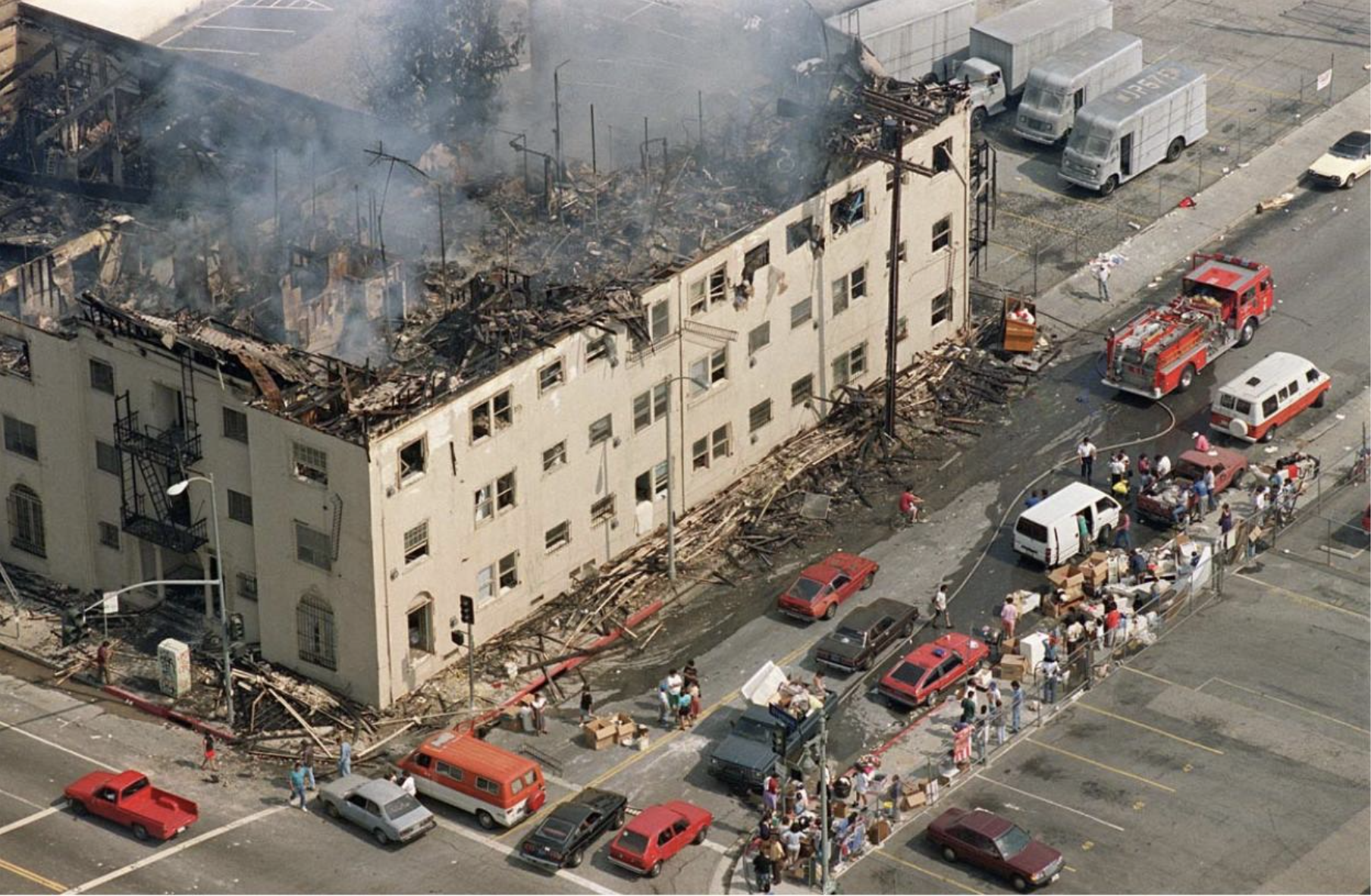
Nearly all of the destroyed buildings, like the one in the photo above, have been cleared and replaced. Nevertheless, the social and economic forces revealed during those three days are still with us. In fact, the Los Angeles Times reported that LA Mayor Karen Bass, “. . .has begun raising money from businesses, philanthropic groups and wealthy individuals to help finance the purchase or lease of residential buildings to house low-income and homeless residents.”
A quick review of what happened in 1992 helps us understand how LA’s intractable social problems, such as homelessness, continue to get worse.
What happened 30 years ago, and why it still resonates:
- The civil disturbance was completely multi-racial. 51% of those arrested were Latino, and 36% were Black. The remainder were Asian and White
- The event was extremely political, with the “No justice, not peace” graffitied throughout the metropolitan area. On the Saturday after the Thursday trial in Simi Valley for the four LAPD officers who beat up Rodney King, downtown LA was filled with protesters. All public buildings and the nearby LA Times offices were heavily damaged.
- LA’s civil disturbance quickly spread to San Francisco, Las Vegas, Atlanta, Tampa, Seattle, Toronto, and Washington, DC.
- The 8000 torched buildings and 58 murders stretched from Simi Valley in the north, Long Beach in the south, Venice in the west, and Pomona in the east. The only larger civil disturbance in American history was New York City’s anti-draft uprising in 1863.
Related stories
Although the Christopher Commission, appointed by then LA Mayor Tom Bradley, issued a stern report that focused on LAPD’s racism and proposed fundamental police reforms, historian Max Felker-Kantor wrote that the Christopher Commission downplayed socio-economic conditions:
“The uprising also occurred within the context of an economic recession that hit African Americans particularly hard. Southern California lost 70,000 manufacturing jobs between 1978 and 182, and another 500,000 jobs during the recession of the late 1980’s and early 1990s. Unemployment rates for blacks in 1992 hovered between 40 to 50 percent, and a poverty rate of over 30 percent.”
Few of those positions returned, and the Covid 19 recession layered on 1.3 million more job losses. According to RAND economist Jason Ward, these developments particularly hurt the Latino and Black communities in Los Angeles.
This brings up to the present, when the most recent homeless count documented shocking increases in homelessness.
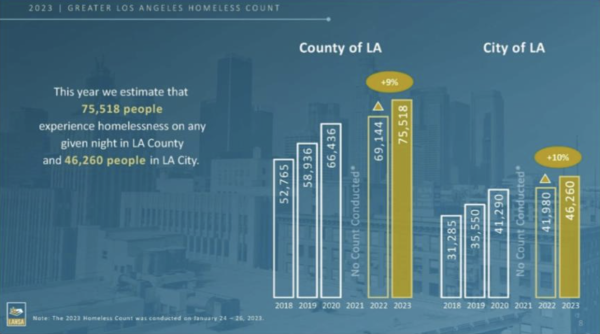
LA’s Mayor, Karen Bass, responded with her recent jeremiad that LA’s wealthiest residents should build housing for the homeless through LA4LA, a new public-private partnership. While philanthropy could ameliorate some of LA’s housing crisis, the jury is still out whether LA’s wealthiest people will respond to Mayor Bass by opening their wallets. According to LA Times reporter Dakota Smith, the Mayor’s critics argue the price of ending homelessness in LA will cost billions, far more than can be raised locally. After all, the rich did not get rich by giving away their fortunes. They also have not refused the unique benefits of the housing crisis, including court-ordered evictions or parcel-specific and neighborhood-wide up-zoning ordinances.
But what about restoring Federal housing programs, proposals I have frequently made in this column? After all, this week the US Congress allocated $95 billion in supplemental military aid to Ukraine ($61 billion), Israel ($26 billion), and Taiwan ($8 billion). Unfortunately, my efforts to find parallel proposals to restore public housing programs came up dry. In fact, this is probably why, out of desperation, Mayor Bass now calls on local philanthropies and the city’s wealthiest residents to pay for low-income housing.
CityWatchLA
Comments

Powered by RoundtableAn AI/DeFi-powered Enterprise Media Operating System. Learn more at Roundtable.io.© Roundtable 2026. By using this site you agree to the Terms of Use and Privacy Policy