
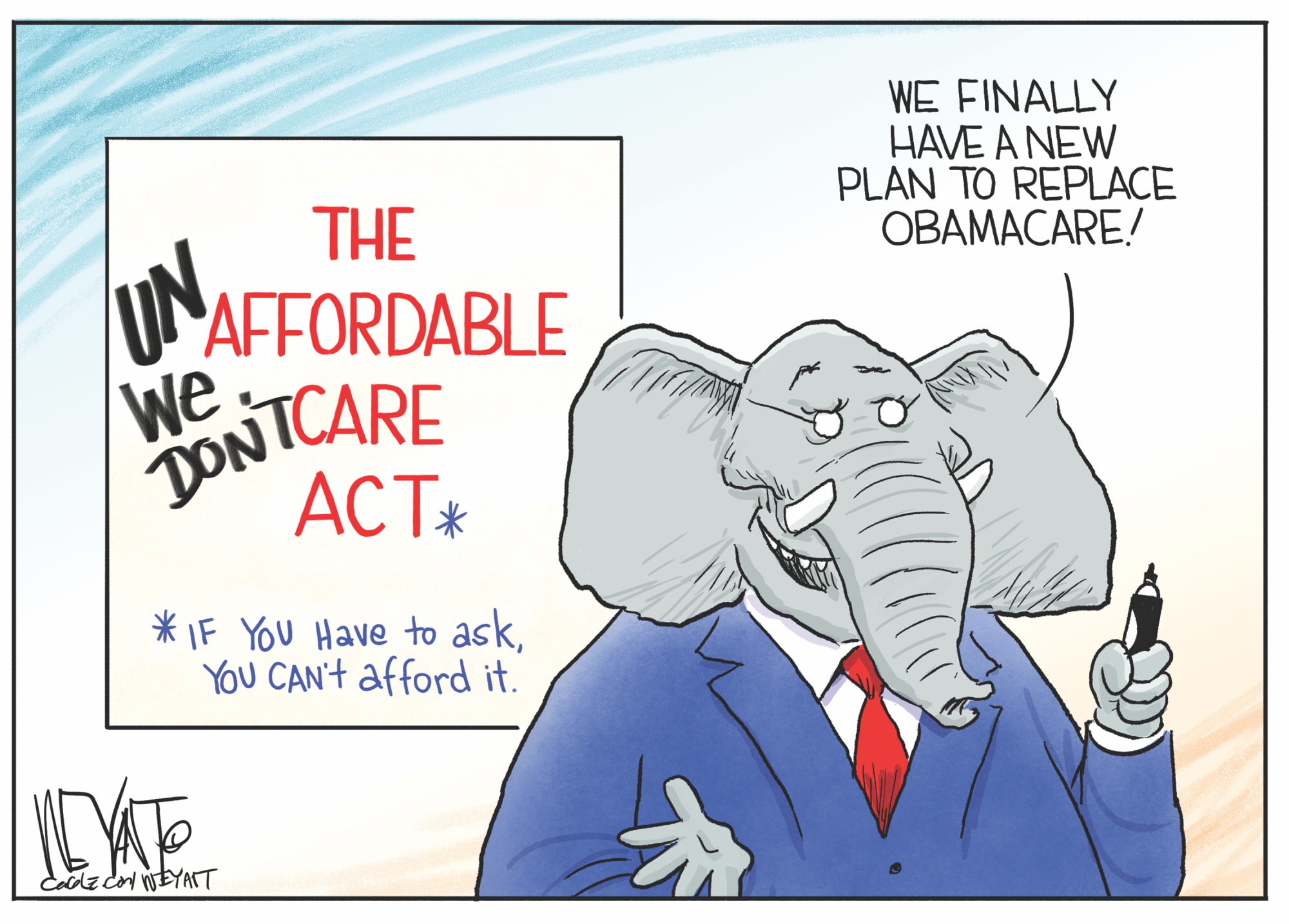
Illustration by Christopher Weyant on CagleCartoons.com


After all, we never know when our own circumstances may change so that we, ourselves, may be considered undeserving.
Mar 24, 2026 3:50 AM
If most vote on benefits to us and those close to us and stop worrying about “undeserving” people, we would all be covered by universal medical insurance.
Do voters always pursue their own interests?
It depends on what they are interested in. If mainly motivated by love of themselves and those close to them, they will support policies that would benefit them. But if motivated by the hatred for other people who would also benefit from such policies, they will oppose those policies.
Many people, for example, believe that a single-payer medical insurance system--- perhaps an improved Medicare For Al - would benefit them. They will therefore support candidates like Bernie Sanders.
But there are also voters who won’t support candidates like Sanders, even though they would personally benefit from Medicare For All. Some may believe claims that this would be “socialistic” and, therefore, bad by definition, without considering its costs and benefits.
Related stories
But other opponents may knowingly forgo personal benefits in order to avoid conferring them on people they consider undeserving. In a society still recuperating from centuries of racial animosity, could minorities and immigrants be examples of those considered undeserving?
Most developed countries with universal medical insurance did not have significant racial or immigrant minorities when it was enacted. This may be no accident.
Voters who oppose a policy that they would benefit from may still be voting in their own interest, given how they see the world around them. But they may be assuming that public policy is like a “zero sum game.”
Social scientists distinguish between three different kinds of “games”: Zero-sum, negative sum, and positive sum.
In zero-sum games anything gained by winners exactly equals losses from other players. The sum of the gains by some and the losses by others exactly equals zero.
Some transactions are indeed zero sum games. If you bet a friend $100 that the stock market will go up tomorrow and the market does not go up, your $100 loss is equal to your friend’s $100 gain.
In negative sum games, losses are greater than anybody’s gains, and all players may lose. A general atomic war where the warring parties destroy each other would be a major example. Prudent people avoid playing such “games.”
In positive sum games, gains are greater than anybody’s losses and indeed everybody may gain. Voluntary transactions in which people exchange or transfer inducements by mutual consent can produce increased satisfaction for all their parties.
If I sell a crate of apples to Mrs. Smith for $50, she values the apples more than she did the money, and I value the money more than I did the apples. Otherwise, one of us would have refused to consent to the deal. After our trade, both of us are more satisfied.
People opposing a policy like Medicare For All may be assuming that the issue represents a zero sum game. They may be assuming that if other people benefit from such insurance, somebody else (namely themselves!) will inherently lose. In a zero sum game, somebody has to lose!
These voters therefore are pursuing their own interest, but in a shortsighted way and based on the false assumption that universal insurance is a zero sum game.
They would do better to heed religious principles like the Golden Rule and “love your neighbor as yourself.” In today’s world, with AI threatening to destroy whole career paths and upend economies, those assuming they will continue to get insurance through their employer may be in for an unpleasant surprise.
No work means no employer-based medical insurance. Perversely, the same “no work, no insurance” principle is about to apply to eligibility for Medicaid, which unemployed people until now have relied on.
Looked at properly, our current example - Medicare For All - is a positive sum game that could increase everyone’s welfare. The huge costs of billing dozens of different insurers, now built in to our medical costs, would be eliminated. Insurance coverage would no longer depend on increasingly unreliable employment.
If most of us would vote strictly on benefits to ourselves and those close to us and stop worrying about “undeserving” people also being covered, we would soon all be covered by universal medical insurance.
After all, we never know when our own circumstances may change so that we, ourselves, may be considered undeserving.
Comments

Powered by RoundtableAn AI/DeFi-powered Enterprise Media Operating System. Learn more at Roundtable.io.© Roundtable 2026. By using this site you agree to the Terms of Use and Privacy Policy