



Aug 5, 2015 5:39 AM
Updated Dec 17, 2025 2:47 AM
Michael T. Hertz: The last time we came close to getting single-payer health insurance we wound up with the hodge-podge called “Obamacare.” When that happened, we learned that Barack Obama was ready to sell us out to the corporations — in this case, the insurance companies. He gave us half a loaf instead of trying for the full one.
One of the biggest hurdles facing Bernie Sanders is the contention that he is a “socialist.” So his call for “single-payer” health insurance is treated by many as a call for government interference. The last time we came close to getting single-payer health insurance we wound up with the hodge-podge called “Obamacare.” When that happened, we learned that Barack Obama was ready to sell us out to the corporations — in this case, the insurance companies. He gave us half a loaf instead of trying for the full one.
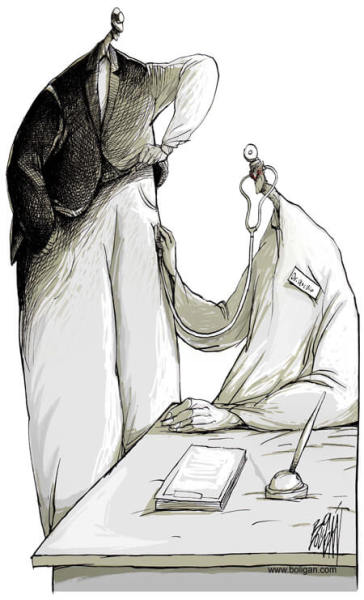
The result? A complicated, profit-driven system that costs more than it should. Anyone who thinks about Obamacare twice knows that. “In 2012, billing and insurance-related administrative costs—bureaucratic paperwork and red tape, essentially—cost the U.S. economy around $471 billion, and 80 percent of that was due to inefficiencies in our multi-payer system.” “This results in higher administrative costs in the United States compared to Canada . . . In the U.S., administrative costs are about 31 percent of health care costs and it’s about 16 percent in Canada.” What could be do with those savings? A lot!
Insurance (whether private or government) is just a means of spreading the costs of a particular service across the people who need it. Life insurance takes the money from those who want it and spreads the risk of death and the resulting financial issues between those who die early and those who die later. The insurance company charges for its costs in administering the system, but we benefit from a system that lessens our family’s personal exposure to the financial risks of an early death.
How about a private single payer?
If we had a private single payer, we get all the advantages of lessened administrative costs, of course. On the other hand, we get price gouging and the unfairness that goes with a private monopoly.
Related stories
In other words, technically the single-payer could be a single, private monopoly that handle all the payments. So, how about that, all you lovers of capitalism? How about a private single payer? We get all the advantages of lessened administrative costs, of course. On the other hand, we get price gouging and the unfairness that goes with a private monopoly.
But — shout those who want private ownership — if the government is the monopoly, it will impose on us all sorts of controls. (Like the controls under Obamacare, only many of those are imposed by the insurers, and probably more than the government.) We need to face it: whatever system we choose, whether that be privately or government run, someone is in control, and the real issue is coming up with a system that works and is fair.
So let me suggest an approach. This isn’t a complete system but maybe it will spark an appropriate conversation and result.
We’ll start off with having a single-payer, government agency. It doesn’t deal with the patients. They are all covered 100%. It deals only with the providers — the doctors and hospitals. And, by the way, it covers all services, including dental, chiropractors, and anything else that is licensed to provide services that improves health, preventative or after the onset of problems. Frankly, I would like to see it cover such things as exercise programs, because exercise is preventative.
What’s the limit on what is covered? The service covered would have to be approved by a group selected by the patients. In other words, a control group of experts would need to determine whether something like “natural healing medicine” should be covered by the insurance program. (We’ll discuss the electoral process below — and with problems like Citizens United confronting us, that’s no small question).
Could people buy extra coverage or pay privately? My own feeling is that they shouldn’t be allowed to. If someone wants to be a doctor, a dentist, a hospital or whatever, they can only accept payment from the single payer. This basically forces the patients and the providers into the same boat, and it means that the wealthy cannot skip around the system for their own benefit but need to cooperate in making it as good as it can be.
Who decides how much money goes into the system? The money comes from general tax revenues, and it is up to the voters (who are, after all, the patients) to decide where the tax money comes from and how much gets devoted to healthcare.
Who gets to decide whether a particular procedure should be provided? This is — again — a tricky problem. Some procedures cost thousands of dollars and may benefit the patient for only a very short time. Other procedures cost relatively little and may benefit many people for a lengthy period of time. If there is — say — $1 trillion annually devoted to healthcare, that is still a finite amount, and a system needs to be in place that determines the priority of procedures and how much is spent on each. (The State of Oregon faces this problem with a “prioritized list” of services provided by Medicaid. It attempts to select which services assists the most people for the least amount and spends its limited resources as best it can.)
Finally, who controls the finances? That is, who determines how much the providers are paid, how hard they have to work, how many patients they need to see, and so on? One way of doing that would be to give every patient (depending on age) a budget, and they could select providers depending on cost, who they wanted, and the like. Of course, this would mean that chronically sick people would be at risk and healthy people would not. Another way would be for the providers to decide how much work needs to be done, how many patients, and so on. But that could lead to system corruption. Probably the best way would be to have a group of patients and providers decide collectively, and the representatives could be selected by a vote of patients and providers separately.
Of course, the question of voting for anything these days runs headlong into the Citizens United quandary. If money can be spent on elections, then the doctors can try to influence who represents the patients. The wealthy doctors can try to overpower the less wealthy doctors. And so on. The voting procedures should be open to all and the information should be provided through the internet with equal access to all.
When you really think about this sort of issue, you can tell that there are thorny problems, particularly about control and communication, that need to be met. But it is possible to have a democratically operated system, so long as those engaged are looking out for the best for everyone rather than their private profit and benefit. If we could work out a system, it would be far more efficient than the present one and it would genuinely spread the benefits of healthcare to all.
Comments

Powered by RoundtableAn AI/DeFi-powered Enterprise Media Operating System. Learn more at Roundtable.io.© Roundtable 2026. By using this site you agree to the Terms of Use and Privacy Policy