


Jun 28, 2018 5:15 PM
Updated Feb 10, 2022 10:54 PM
Skyler Boudreau: Members of Congress are not going to vote contrary to the wishes of an industry that is bankrolling their campaigns.
Painkillers aren’t the only gateway drug destroying our nation. Another is money: After American politicians accept their first corporate bribe from the pharmaceutical industry, they can’t help but fall further down the dark money hole.
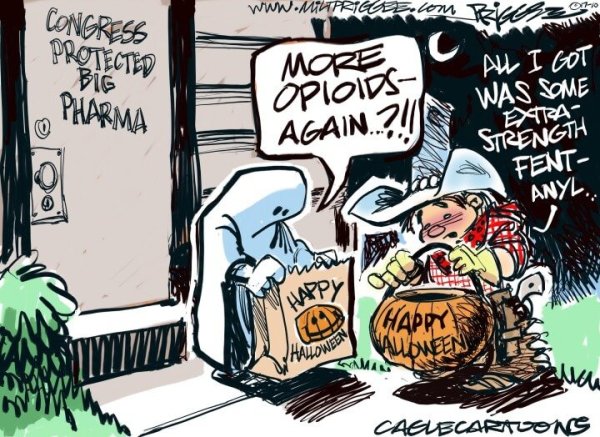
In 2016 alone, pharmaceutical companies spent more than $152 million lobbying the House and Senate. The industry employs about two lobbyists per every member of Congress. That same year, drug companies also gave more than $20 million to political campaigns; the single largest recipient was Speaker of the House Paul Ryan, R-Wis., who received $228,670.
Members of Congress are not going to vote contrary to the wishes of an industry that is bankrolling their campaigns.
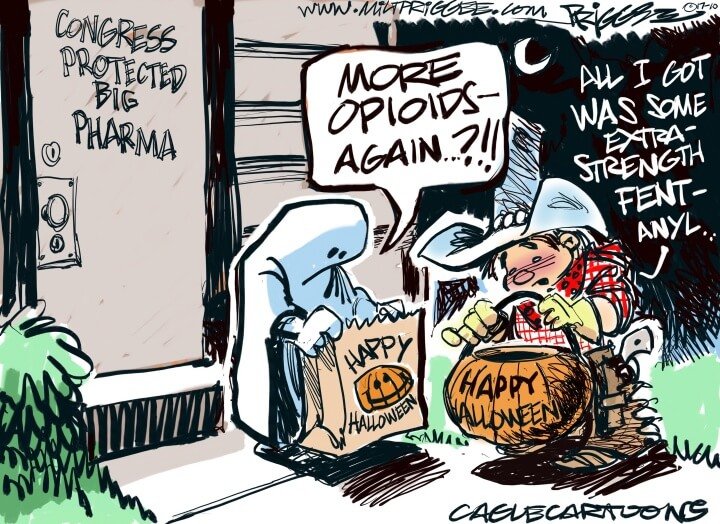
The United States has both legalized and normalized the bribery of politicians. Members of Congress are not going to vote contrary to the wishes of an industry that is bankrolling their campaigns. That is why there has been no congressional action against the drug companies that created the opioid epidemic — which in 2016 led to more than 42,000 U.S. opioid overdoses.
Earlier this year, Senator Bernie Sanders, I-Vt., proposed the Opioid Accountability Act, a bill targeting and punishing the drug manufacturers behind the epidemic. It would create criminal liability for top company executives and penalize drug manufacturers who illegally advertise and distribute an opioid product.
Related stories
As one of the few politicians who does not accept corporate money, Sen. Sanders has no personal interest in these pharmaceutical companies. But in this he stands largely alone. The bill, which has only three Senate cosponsors, all Democrats, has received no action.
In 2007, Purdue Pharma pleaded guilty to misleading the public about the risks of the drug OxyContin and paid $600 million in fines. The company has to date made more than $22 billion from sales of this drug.
Sanders’ bill would fine those who engage in “illegal marketing or distribution practices” 25 percent of their total profits during the period in which this occurred, as well as impose a fine of $7.8 billion to any company liable in contributing to the opioid epidemic. That is 10 percent of the $78.5 billion the Centers for Disease Control and Prevention estimates this crisis costs Americans every year.
As of now, the bill stands before the Senate Finance Committee. In the last two election cycles, the members of this committee have received more than $7 million from pharmaceuticals and health product companies.
To pass bills like the Opioid Accountability Act, the influence of corporate money needs to be removed. It may take a public uprising for this to occur, or a constitutional amendment. According to Article V of the U. S. Constitution, there are only two ways to propose an amendment. The first requires a two-thirds vote of Congress. Since most of Congress has been purchased by corporations using the very money this amendment would prohibit, this will never happen on its own. The second way is by two-thirds of the states passing a resolution calling for a national convention.
Thus far in U.S. history, all amendments have been proposed by Congress. Many of those proposals came after state pressure. The most well-known example is the 17th Amendment. Congress made their proposal only after the country drew close to its own two-thirds majority. By utilizing this strategy again, Americans can demand politicians acknowledge the issue dark money presents. If that doesn’t work, they can use the two-thirds majority to force the convention on their own.
There are currently five states that have called for an Article V convention. The first was Vermont, in 2014. It was followed by California, Illinois, New Jersey, and Rhode Island. In early April, the resolution was also passed in Hawaii’s Senate. It’s now facing the state’s House of Representatives.
Without the pharmaceutical industry’s financing of elections, Sen. Sanders’ Opioid Accountability Act would have a much higher chance of passing and saving the 500, 000 lives the opioid crisis is expected to claim over the next ten years. Perhaps one day, after the significant campaign finance reform a 28th Amendment like this would bring, a similar accountability bill can be introduced, and the U. S. Congress can vote for the lives of their people rather than the money of their donors.

Skyler Boudreau
Comments

Powered by RoundtableAn AI/DeFi-powered Enterprise Media Operating System. Learn more at Roundtable.io.© Roundtable 2026. By using this site you agree to the Terms of Use and Privacy Policy