



Apr 3, 2020 10:00 PM
Updated Feb 10, 2022 10:16 PM
Stephen M. Hubbard: Social distancing, wearing masks in public and stay-at-home orders were only effective if they are implemented early, are comprehensive and are not lifted until long after the peak has passed. This will most likely push the earliest date for lessoning state-wide stay-at-home orders from late April to mid-June or early-August.
The COVID-19 virus is devastating the world’s and the U.S.’s economy. As of this writing, the Dow has dropped 28% in just over one month, and most U.S. workers and businesses may experience a large or complete loss of income for three or more months. The 1st quarter losses are estimated at 9% of GDP with the 2nd quarter losses projected to be another 34%. If the economy suffers a large-scale decline similar to the Great Depression, it will take a decade or more to fully recover, especially if individual life savings, homes and businesses are lost.

China has used a 10-week-plus nation-wide lockdown with severe travel restrictions to halt the spread of infections. Currently, only 38 US states have issued state-wide stay-at-home orders and many of them have yet to close restaurants, public schools and places of worship.
Compounding this is the discovery that 50% or more of infections are asymptomatic with the individual shedding higher virus loads than those with visible symptoms. Because of this, infected individuals will be able to reseed restricted regions, causing the country’s infection rate to decline more slowly than in China. As a result, the country and especially small business and independent workers may suffer severe economic losses for at least 10 weeks after the last states implement stay-at-home orders.
Social distancing, wearing masks in public and stay-at-home orders were only effective if they are implemented early, are comprehensive and are not lifted until long after the peak has passed.
On Wednesday (4/1/20), after not canceling spring break and then allowing hundreds if not thousands of COVID-19-infected revelers to travel homeward across the country, Florida Governor DeSantis finally has issued state-wide closure orders. Unbelievably though, he has exempted religious gatherings from the order, which virtually negates its impact.
Related stories
Studies of the 1918 to 1920 Spanish Flu pandemic that killed over 50 million people world-wide found that social distancing, wearing masks in public and stay-at-home orders were only effective if they are implemented early, are comprehensive and are not lifted until long after the peak has passed. This will most likely push the earliest date for lessoning state-wide stay-at-home orders from late April to mid-June or early-August.
To treat the projected 45% GDP decline and 32% unemployment rate, the Federal Reserve has dropped the prime rate to zero, offered to buy municipal bonds (lending money) to support states and cities, and the U.S. Congress has passed a $2 trillion stimulus bill in a remarkably short period of time.
While these efforts will provide help at many levels, their cumulative effect is like trying to put out a forest fire with a bucket because they will not have any effect on the contagion that is creating the fire.
Instead, what is needed is a continuous stream of cash large enough to replace 50% or more of all income, profit, revenue and disbursements across all sectors of our $21 trillion economy for as long as the pandemic lasts. Something that is the equivalent of a video game “Undo and Freeze” button for when a player has made a disastrous move. It would Undo the damage done so far and then Freeze the economy at pre-disaster mid-February 2020 levels (or better) until the emergency has passed. To achieve this, the following is suggested:
- Create the independent National Emergency Recovery Agency (NERA) with the U.S. Treasury’s power to coin its own funds. Alternately, the NERA could be placed inside of the U.S. Treasury Department or the Federal Reserve. The NERA would coin all of its grants or loans, with no budget appropriations or borrowing necessary. Because its expenditures would not increase the national debt or need to be repaid, its operation would not create a post-recovery austerity recession.
- NERA would make weekly to monthly deposits into the bank accounts of individuals, business and non-profits to make up for lost income or profit due to the COVID-19 virus. For example: For laid-off hourly and salaried workers, aid could be based on prior salaries, using distribution through existing unemployment mechanisms. For gig or under employed workers (reduced hours or pay), the agency would make direct deposits, using the difference between their best income from prior years and their current pay. Optionally, the “Danish” model could be adopted which pays companies to keep their employees in place. For individuals who work on a mostly or purely cash basis, the homeless and non-legal residents, the NERA would provide funds to increase social safety net programs. The reason for this is both humanitarian and practical. Roughly 10% of the U.S. population works on a cash-only basis, and failure to provide for them will increase both infection and petty crime rates, as well as create future problems (and costs) due to the well-known long-term impacts of poverty. For businesses, educational institutions and non-profits, aid could be based on the differences between their current and prior profits and/or income from their best prior months, quarters or years. Additional consideration would need to be given to extend research grants and similar programs with time limits that cannot be worked on during a pandemic. Different calculations would need to be made for those just entering the workforce, launching business and other exceptions. The suggested approach here is to err on the side of more is better because not all harm can be eliminated and additional aid will help reduce this global loss. Limitations could be placed on the use of funds to prevent disparity for high-net-worth individuals, unearned bonuses, corporate stock buybacks, hostile takeovers, bankruptcies to break union contracts and other issues that could create unjust outcomes and large, negative political repercussions.
- At the end of the year, recipients of surplus income above a predetermined “inflation factor” could be required to refund it back to the NERA to prevent unjust compensation, and to prevent giving some businesses a competitive advantage over their rivals (additional cash).
- Where needed, NERA funds could be used to pay for housing, rent, mortgages, healthcare and other needs of those affected through existing or new programs and agencies at the local to federal levels. Such support will be critical for cash-based workers and businesses.
- The NERA could make grants to all federal, state and municipal governments to (a) replace lost revenue and (b) fund specific emergency needs. Government grants would require additional restrictions to prevent the receiving governmental institution or agency from using NERA grants to backfill funds that were shifted for use on unauthorized programs.
- Finally, the NERA funds could be used to increase disaster resilience. Examples of this include: Construction of crude oil refining facilities away from hurricane prone regions, Creating on-shore manufacturing capacity of critical emergency equipment and supplies, and Maintaining national stockpiles of emergency response equipment and supplies.
The agency would be run by a President-nominated, Senate-approved board of governors headed by a Chairperson, mirroring the Fed’s structure. The Chair and each governor would serve staggered terms, and would require a 56% or greater super-majority confirmation vote with the Chair requiring a 61% super-majority vote. This is to prevent politically motivated appointments from making politically motivated cash disbursements.
The NERA would be activated by a Declaration of National Emergency with instructions detailing its permitted funding activities, passed by both the House and Senate by super-majorities of 56% or greater and signed by the President. A standard 61% vote override would be required to override a Presidential Veto of a Congressionally-based Declaration or spending authorization.
The agency would be self-funding to prevent regulatory capture, and all expenditures, disbursements and collections would be available for detailed audit by majority and minority parties with summary statistics posted on its website. As a special note, the President would not be able to prevent either party in Congress from continually auditing all of the agency’s actions and cash disbursements.
It should be noted that if a simpler and faster version of the NERA is created within the U.S. Treasury Department, its actions and spending would still be controlled by the same legislative and audit constraints outlined above.
Finally, there are two additional very important reasons to create the NERA:
- If the agency is successful, it will become a model for all of the other industrial democracies, who will also need similar agencies to restore their economies and prevent human suffering while ensuring there are post-COVID-19 markets for everyone’s goods and services.
- The response to COVID-19 was delayed due in large part to the severe economic impact that would have been created by prompt travel bans. A world-wide implementation of NERA-like agencies will enable countries to quickly ban travel or lock down regions the next time an infectious pathogen emerges before it becomes a world-wide pandemic because they would be able to rapidly repair the economic harm.
As devastating as COVID-19 is, disease experts regard it as a mild “training” exercise. Its mortality rate of 1% to 2% is far below other known pathogens such as the 1918 Spanish flu (5% – 15%), SARS (15%), MERS (34%), the Bird Flu (60%), and Ebola (20% – 90%). For those unfamiliar with Ebola, it is known as the “Slate Wiper” because of its frightening mortality rate and horrific symptoms where a victim’s body virtually liquifies. Normally only spread by bodily fluids from infected individuals, a highly contagious and lethal airborne variant erupted in a primate medical supply company in Reston, Virginia. It was finally eradicated by U.S. Army personnel who, dressed in sealed body suits, killed all of the remaining animals and sterilized the facility with boiling formaldehyde.
Prior to this event, it was thought that it could take decades to centuries for a virus to mutate from a water-borne to an airborne contagion. Ebola Reston proved this wrong. One expert who dealt with the outbreak felt the only reason there aren’t several billion fewer people on the planet is that while Ebola Reston was contagious to humans, it did not cause any hemorrhagic symptoms. There are only so many bullets we can dodge before our luck runs out. COVID-19 is a tragic reminder of this. Unless more robust policies are put in place, future pandemics could well bring civilization to its knees.
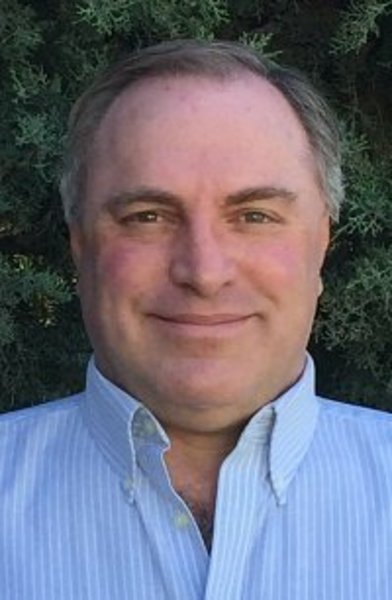
Stephen M. Hubbard
Dr. Stephen Hubbard is a retired MWD GIS project manager whose work focuses on automation job loss, funding infrastructure, sustainability and the anatomy of man-made disasters. Prior to working at MWD, he was an environmental engineer at Montgomery Watson Worldwide and worked in aerospace on classified defense programs.
Did you find this article useful? Please consider supporting our work by donating or subscribing.
Comments

Powered by RoundtableAn AI/DeFi-powered Enterprise Media Operating System. Learn more at Roundtable.io.© Roundtable 2026. By using this site you agree to the Terms of Use and Privacy Policy