


Jul 16, 2020 12:00 PM
Updated Feb 10, 2022 10:40 PM
Walter G. Moss: Don’t “rebel against science and public health,” and say “I’m not going to let my governor curtail my freedom.” Man up! Or be as brave as women are during childbirth.
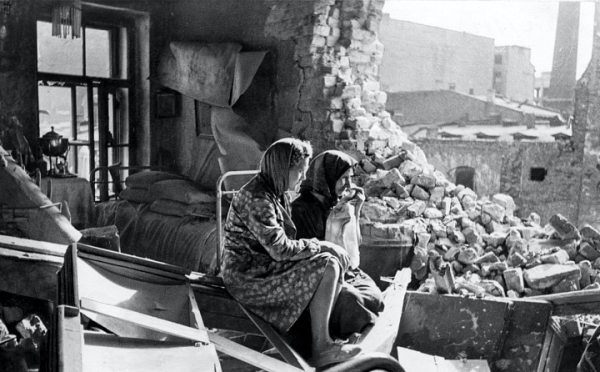
Be Glad You Didn’t Live through Leningrad’s 900-Day Siege
Things could be worse. A lot worse. OK, I know it’s risky to tell anyone else, they don’t have it so bad. And in the midst of our coronavirus pandemic, many people have it worse than I do. (In some ways, however, like being in an age group most likely to die from the virus, I’m not so fortunate.)
Californians just learned on Monday (13 July) that Governor Newsom “announced statewide restrictions…to again halt all indoor dining and close bars, family entertainment, zoos and museums. At the same time, 30 counties [including Los Angeles county] will be forced to shutter gyms, churches, hair salons, malls and other businesses” (Source:Los Angeles Times)
This is no doubt bad news for many. In a recent New York Times op-ed, Charles Blowdescribed our present national situation pretty well. Although not all states face restrictions as tough as California, most of what Blow says rings true about our national situation generally.
Related stories
[The] virus has reshaped world behavior, halted or altered travel, strained the economy and completely reshaped the nature of public spaces and human interaction…
The idea that years of planning for graduations and weddings, home purchases and retirement, might all come to a screeching halt is humbling and disorienting. The confusion over how and when children can safely return to school and adults can safely return to work is frustrating because it leaves people’s lives in the lurch…
People are rebelling against isolation, and against science and public health. They want the old world back, the pre-Covid-19 world back, but it cannot be had. The virus doesn’t feel frustration or react to it. It’s not aware of your children or your job or your vacation plans. It’s not aware of our politics.
Don’t “rebel against science and public health,” and say “I’m not going to let my governor curtail my freedom.” Man up! Or be as brave as women are during childbirth.
Blow then goes on to add,
It is Trump’s politicization of the virus that has resulted in a new surge of cases in this country when many other developed nations have been able to shrink the number of cases among their people.
It is because of Donald Trump that America has now reported 3.2 million cases and has tallied nearly 135,000 deaths.
But, instead of centering on the sick, dying and dead as the true victims of his malfeasance, Trump casts himself as the victim of circumstances. As The Washington Post reported last week, Trump has adopted a woe-is-me attitude with visitors.
My plea to LA Progressive readers is don’t follow Trump’s example, don’t adopt a “woe-is-me attitude.” Don’t “rebel against science and public health,” and say “I’m not going to let my governor curtail my freedom.” Man up! Or be as brave as women are during childbirth.
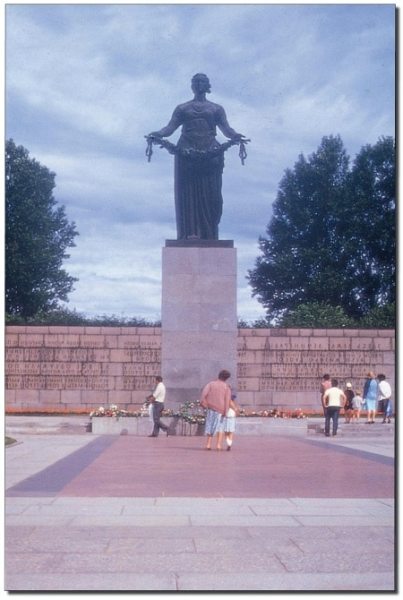
One of the comforts of being a historian, especially one with a global focus, is the realization that compared to most people throughout history and in various parts of the world, we Americans have been incredibly fortunate. And I say this realizing that many Americans—for example the homeless, the institutionalized, the sick, the poor—have not been as fortunate as I. And I say this realizing the Trumpian years have been a national nightmare.
Consider what has happened to other peoples and in other places. Between 1348 and 1354, the Black Death plague killed almost one-third of Europe’s population. On the island of Hispaniola (today shared by Haiti and the Dominican Republic) after Columbus landed there, the Arawak Indians “were tortured, burned, and fed to the dogs by their masters. They died from overwork and from new European diseases. They killed themselves. And they took pains to avoid having children. Life was not fit to live, and they stopped living.” Theydeclined from a population of at least 100,000 in 1492 to about 200 in 1542.” World War Itook the livesof three out of every ten French men between the ages of 18 and 28. As Adam Hochschild’sKing Leopold’s Ghost indicates, the Belgian King Leopold II was responsible for millions of deaths in the Belgian Congo beginning in the late 19th century.
To get a more concrete idea of the tragedies suffered by others, visit theHolocaust Museum in Washington, D.C. Or just observe what goes on around us in today’s world. According to the World Bank,more than 400,000 diedfrom conflicts in Syria between 2011 and 2017 and 5 million sought refuge abroad. And as bad as Americans have it during the current pandemic— in part to Trump’s poor leadership—at least most of us have enough food. According to a new report from the United Nations, the present global pandemic could “push up to 132 million people into hunger by the end of 2020.”
But the tragedy, the horror, I am perhaps most familiar with as a historian is the German 900-day siege of Leningrad from 1941 to 1944. Below is some material I’ve borrowed from myA History of Russia, Vol. 2:
Despite the evacuation of many people, including most of the city’s children, about 2 million inhabitants remained in the besieged city, and there was not enough food. Inadequate planning and German air attacks had deprived the city of any emergency supplies. And the amount of food that could be brought in by the only supply route open—over Lake Ladoga, frozen by the end of November—was insufficient. People ate whatever they could to stay alive, including their pets, birds, rats, carpenter’s glue, and hair oil. Yet it was not enough…
What the courageous Leningraders endured in the winter of 1941–1942—and altogether for about 900 days—is almost unimaginable. Hunger; German shelling and bombing; and severe cold, both inside and outside of dwellings, took their toll. Although matters improved somewhat after the first winter, the siege was not lifted until late January 1944. Altogether about 1 million Leningraders lost their lives during the siege, most of them from hunger and cold.
And here is some material from myreview of Leningrad: State of Siege, quoting from a Leningrad diary entry:
February [1942] has begun—the sixth month of the siege. Everywhere people are dying: cold and hunger are paralyzing the will to live. There are no means of transport or communication and such conveniences as light, water, electricity and gas have passed into the realm of legend. If you stay on the streets for a couple of hours you come across dozens of dead people, lying, solitary in the snow, and cartloads of corpses. The prices for foodstuffs on the black market are astronomical, and people are eating the most appalling filth, from joiner's-glue jelly to cuts from the soft parts of corpses…
…but there were also numerous acts of self-sacrifice and quiet heroism—an old professor, weak and frail from lack of food, giving half his bread ration to a small girl; starving people avoiding the temptation of snatching loaves of bread from an overturned cart because a young girl tells them she is taking the bread to a hospital; a woman weak from hunger dragging her heavy double bass on a sledge through the snow to participate in a concert recital to cheer up hospital patients.
[dc]M[/dc]y takeaway from these historical examples is not to ignore or downplay the millions of coronavirus cases and hundreds of thousands of deaths that are now happening—they are all individual tragedies and we should do all we can to prevent more of them from occurring. Especially getting Trump out of office as soon as possible. No, the lesson to be learned is to avoid Trump’s poor-me complaining and act nobly as some of the Leningraders did. Like the old professor who shared his bread ration with a small girl or the woman weak from hunger dragging her heavy double bass to a concert recital to cheer up hospital patients.
Walter G. Moss
Comments

Powered by RoundtableAn AI/DeFi-powered Enterprise Media Operating System. Learn more at Roundtable.io.© Roundtable 2026. By using this site you agree to the Terms of Use and Privacy Policy