
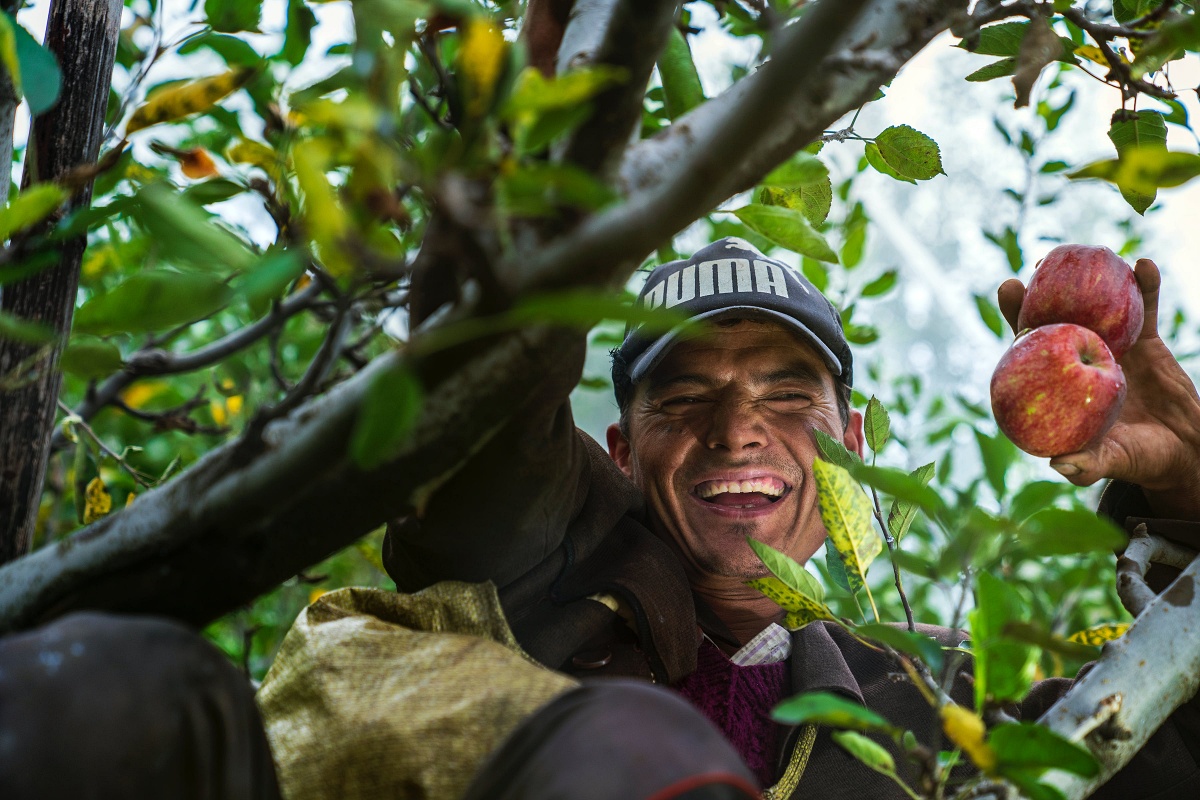
Photo by Nishant Aneja


Farm Bill Delay
Dec 6, 2023 1:00 PM
Family farmer advocates are calling for pricing reform because many producers have been negatively impacted by many of the same world events as consumers.
Consumers, only recently, have been shocked into experiencing something farmers are all too familiar with – price volatility.
Inflation, with causes including grain shortages due to Russia’s invasion of Ukraine, or COVID-19-related supply chain disruptions, has led many to notice upticks in the prices that they pay at the grocery store. Worse still, forces beyond our borders have catalyzed these sudden, unexpected changes.
Such disruptions also caught the eye of members of the United Nations Committee on Food Security (CFS). Created in 1974, the CFS yearly brings together representatives from states, movements, research institutions, as well as others, to develop, endorse, and monitor policies related to food and nutrition. Their most recent meeting took place in late October, with a report officially finalized on November 25th. Representatives from 128 member states, 19 UN agencies, 226 Civil Society organizations, and many others, participated this past year.
Whereas the CFS took up policies concerning gender equality and data collection, also of note was a review of policy recommendations that were made back in 2011 dealing with price volatility. The CFS heard testimonies on how policy recommendations from over ten years ago have been implemented in different countries, as well as about the pressing, remaining need to implement further pricing policy reform to benefit small-scale producers around the world, including in the United States. Particular recommendations include improving price transparency as well as encouraging states to take more active roles in their respective food and farm systems by keeping reserves.
Related stories
Not only should US lawmakers consider the CFS’ recommendations with respect to price volatility, but they have the opportunity to do so, as the ongoing Farm Bill discussions were extended for one additional year. Doing so would not only help current farmers stay on the land, but would also positively impact younger, small-scale operators who struggle to become our country’s next generation of food producers.
That our lawmakers this next year could actually do something meaningful in terms of addressing price volatility is due to how international trade policy has experienced significant disruptions.
That our lawmakers this next year could actually do something meaningful in terms of addressing price volatility is due to how international trade policy has experienced significant disruptions.
When the CFS met back in 2011, free trade orthodoxy was steadfastly embraced by most state leaders. Whereas international movements, such as La Via Campesina, were maligning international trade agreements and institutions, such as the World Trade Organization (WTO), for dismantling domestic safety nets for small-scale food producers, government elites were mainly in support of policies such as lowering tariffs, privatizing public corporations, and eliminating price supports.
Fast forward ten years or so through the global surge in rightwing populism, and the international consensus on free trade has been rattled, to say the least.
Brexit, for starters, saw Great Britain leave the European Union, as Trump made extensive use of tariffs in his trade war with China, as well as refuse to appoint appellate judges to the WTO’s Dispute Settlement Mechanism (DSM). Without judges, the WTO cannot settle conflicts pertaining to trade that may appear between states.
Meanwhile, Biden has chosen to not only embrace Trump’s anti-free trade policy approach, but deepen it. His signature legislative achievements thus far – the Inflation Reduction Act (IRA) and the CHIPs (Creating Helpful Incentives to Produce Semiconductors) and Science Act – take aim at China with the current administration subsidizing domestic industries and picking to trade with certain countries as opposed to others.
Enter the Farm Bill.
Debated and passed every five years, this legislation governs most facets of our food and farm economy. Emerging in the 1930s, during the Great Depression, the bill’s original intent was to address the environmental disaster that became known as the Dust Bowl through incentivizing farmers to simultaneously cut down and improve their production. Over the years, the bill has evolved to include many titles, or sections, featuring food assistance programs, as well as initiatives related to trade, rural development, and commodity pricing.
Along with this legislation, the Commodity Credit Corporation (CCC) was created by President Frankling Delano Roosevelt in 1933. Still in existence, this public corporation is tasked to purchase products off of the market and keep reserves, as well as issue relief payments to farmers when natural disasters strike. While the CCC keeps reserves of crops such as wheat and corn, it does so currently at such a reduced level that its purchases have no effect on markets.
This could change, however, if legislators seriously address pricing in the Farm Bill. Farm groups such as the National Family Farm Coalition (NFFC), a member group of La Via Campesina, are demanding as much by calling for fair prices in their Farm Bill Platform.
Family farmer advocates are calling for pricing reform because many producers have been negatively impacted by many of the same world events as consumers. For instance, the war in Ukraine and COVID-19 supply chain disruptions prompted unexpected increases for what farmers pay for inputs such as fertilizer and seed. Cutting into their margins, many also saw their markets dry up when processors had farmers destroy their produce, including euthanize animals, when bottlenecks emerged. In 2020, upwards of 40% of farmer income came from emergency government payments as incomes plummeted. Meanwhile, according to a USDA study from 2019, approximately 72% of farm households require one person to work off-farm so that they can keep their operation.
Small-scale, young producers have it particularly hard.
According to the USDA, young farmers (those under 40 years old) are more likely to incur debt than their older counterparts, making them particularly prone financial stress. Beginning farmers also tend to be smaller in scale and revenue. Such makes acquiring and retaining land next to impossible for young people, which a 2022 Survey by the National Young Farmers Coalition has noted.
Following CFS recommendations, legislators could empower the CCC to improve government reserves by purchasing dairy products, grain, perhaps even seed, which would stabilize markets and increase prices enough so that farmers can make a decent living. Such practices would give food producers – especially young people – a fighting chance to stay in the industry.
Naysayers may note that purchasing products to raise prices may lead to increases in the grocery store.
The reality is another, as price gouging by financial speculators in our currently unregulated markets is mainly at fault for increasing grocery bills.
Moreover, reserves have two purposes – to create price floors, and ceilings. Put otherwise, in the even that prices rise, releasing government stocks can increase supply, which would then cause prices to fall. With an effective break on how high prices may go, speculators may leave food alone.
In terms of making transformative farm policy, it appears that the stars are in alignment. Free trade orthodoxy has been challenged by our elites, and as dysfunctional as our Congress has been, the current Farm Bill delay provides our politicians with another year to hear from advocates about what good agriculture policy should include. And now, the CFS reminds us of the problem of price volatility – and the place of reserves in facing them. So, let’s hope that our politicians take note, and heed the advice from the global community. Many politicians have questioned free markets broadly speaking recently - why not extend their skepticism by thinking seriously about making reserves work for the sake of our food supply and family farmers?
Comments

Powered by RoundtableAn AI/DeFi-powered Enterprise Media Operating System. Learn more at Roundtable.io.© Roundtable 2026. By using this site you agree to the Terms of Use and Privacy Policy