
Steven Rhodes • Attribution-NoDerivs (CC BY-ND 2.0) • Flickr


Sep 10, 2023 1:00 PM
Abortions are very sad events which no one should undertake lightly. But since murder always involves imposing a sanction, abortion is not murder.
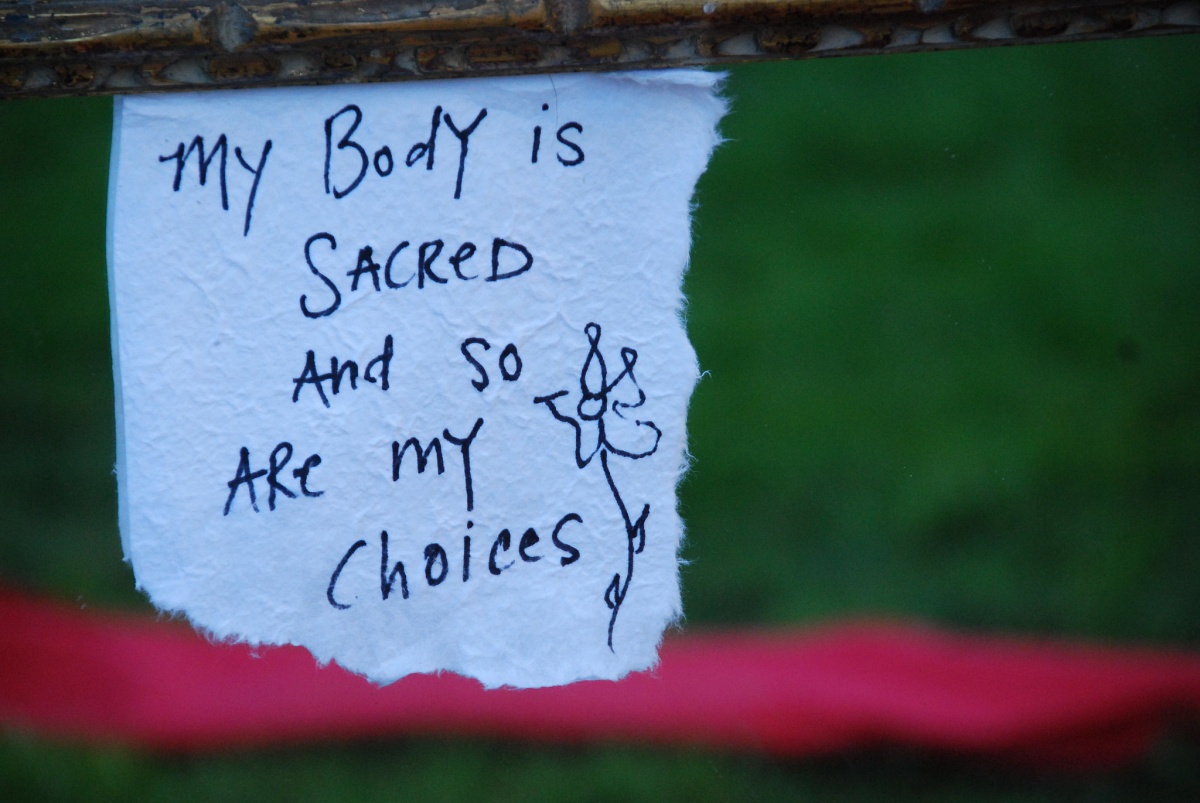
Abortion is a terribly divisive issue. Defenders consider it a right essential to protecting the bodily integrity and equality of women.
Many opponents would outlaw it even when pregnancy resulted from incest or rape. Two wrongs, they say, do not make a right. "Murder is murder."
The Catholic Church does consider abortions sinful. But as a great Catholic theologian, St. Thomas Aquinas (1225-1274), pointed out, the side effects of trying to outlaw all sin may be worse than the benefits.
Abortions are often a response to tragic circumstances. If they are evil, they can be a lesser evil than the alternatives.
Related stories
The arguments in favor of outlawing abortion are therefore not strong. Even if we all agreed that abortions are murder, consideration of the practical consequences of a total ban would cause all but issue monomaniacs to back off.
As it happens, though, we don't need to accept the argument that abortions are murder. This is clear from the perspective of a systematic analysis of human associations I have developed during the last sixty years.
My analysis, by the way, was not developed with the abortion issue in mind, so it is not just spin-doctoring. I have only recently noticed its applicability to abortion.
First, though, let's note two situations where my analysis does not apply. If someone attacks a pregnant woman and causes a miscarriage, I believe this action could properly be considered murder or manslaughter.
And if a driver accidentally collides with a car containing a pregnant woman resulting in the death of her fetus, that driver clearly could be liable for the tort of wrongful death.
These and similar situations have something in common which distinguishes them from abortions. The criminal attacker and the careless driver both create an involuntary association with the fetus (as well as with the pregnant woman).
Voluntary associations are created by mutual consent to exchange or transfer inducements. An inducement is an action by one person increasing another person's satisfaction above what it would be if the first person had not acted.
Involuntary associations are created when one person unilaterally imposes sanctions on another person. A sanction decreases the other person's satisfaction to less than it would have been if the first person had not acted.
The association between a pregnant woman and her fetus is neither voluntary nor involuntary. It is an association in which the woman unilaterally confers inducements—nurture, protection—on the fetus.
It cannot be a voluntary association because the fetus is in no position to consent. It cannot be an involuntary association because no sanctions are involved, only inducements. (In the periodic table of human associations summarizing my concepts this association is classified as a private trust.)
If the woman elects to abort the fetus, assuming the fetus capable of feeling satisfaction, this would obviously reduce its satisfaction. But it only reduces it down to exactly what it would be in the absence of any association with the woman, not to less than this, which would be impossible. Abortion is therefore not a sanction, but a withdrawn or discontinued inducement.
The pregnant woman is therefore the only person who can deprive her fetus of life without imposing a sanction on it.
The fact that the abortion is performed by a doctor or other person does not change this point, since the doctor is acting as an agent for the woman, an agency created by their mutual consent to associate.
Abortions are very sad events which no one should undertake lightly. But since murder always involves imposing a sanction, abortion is not murder.
Current legislation and proposals outlawing abortion generally do not punish a woman who undergoes it. Punishing only the doctor makes for strange law, since without the woman's consent no abortion would take place. But it suggests that my distinction may already be widely felt even though people cannot articulate the reasons for it.
[Author's note: Those interested in fully understanding my periodic table of human associations can contact me for free tutoring, individually or in groups.]
Comments

Powered by RoundtableAn AI/DeFi-powered Enterprise Media Operating System. Learn more at Roundtable.io.© Roundtable 2026. By using this site you agree to the Terms of Use and Privacy Policy