


May 18, 2026 6:56 PM
Updated May 20, 2026 12:27 AM
As dementia, elder poverty, and isolation rise, America’s fragmented elder-care system reveals the human cost of privatization, concentrated wealth, and decades of political disengagement.
What follows is not merely a story about aging. It is a story about political economy — about what happens when a society organizes itself around markets, privatization, individual responsibility, and concentrated wealth, and then grows old.
Twenty years ago, neoliberalism was a term I was just beginning to understand. Fifteen years ago, it stopped being theoretical and became painfully real.
That was when my mother’s Alzheimer’s symptoms became impossible to deny.
When Neoliberalism Became Personal
Suddenly, words like “market solutions,” “privatization,” and “individual responsibility” stopped sounding abstract and began appearing in the most intimate parts of my life as I tried to manage my mother's: food, medicine, memory, fear, exhaustion, and caregiving.
Related stories
Aging in America is not for the faint of heart — by which I mean the economically vulnerable.
Compared to many OECD nations, aging in the United States is more precarious, more privatized, and more frightening, especially once people move beyond healthy retirement into frailty, dementia, mobility loss, or dependency.
The Organisation for Economic Co-operation and Development (OECD) is an international organization made up of mostly high-income, market-based economies. It was founded in 1961 and is headquartered in Paris, France. The United States and 37 other countries are members of the OECD.
The fear many Americans feel about aging is not irrational. It reflects structural realities shaped in large part by neoliberalism.
For decades, Americans were told that markets solve problems better than governments, that public systems are inefficient, and that individuals should be primarily responsible for securing their own futures.
How Social Risk Became Individual and Family Burden
Over time, with neoliberalism in place, social risks became individualized risks.
- Healthcare became a market.
- Retirement became a private investment strategy.
- Housing became an asset class.
- Long-term care became a consumer product.
I remember the moment my sister and I realized we had quietly become administrators of a miniature elder-care system. We were no longer simply daughters. We had become medication managers, transportation coordinators, financial monitors, insurance navigators, meal planners, and emotional stabilizers — all while trying to maintain our own jobs, homes, and mental health.
America simply assumes families — mostly women — will absorb the burden somehow.
The United States now treats aging less like a collective human condition and more like an individual economic management problem.
If your body or mind fails before your finances do, you may still maintain stability. But if your finances fail first, you are in danger.
My sister and I discovered that my mother had begun paying the same utility bill over and over again — sometimes multiple times in the same month. That was when I fully understood how quickly a person with dementia could unravel without someone nearby to intervene.
Many OECD countries operate from a different premise.
Countries like Denmark, Sweden, Norway, and the Netherlands view aging as a predictable stage of life that society must collectively support. They invest heavily in home-based elder care, publicly funded caregivers, transportation, dementia support, and aging-in-place infrastructure.
The OECD regularly reports that old-age poverty rates in the United States are among the highest in the developed world.
But neoliberalism did not simply shrink government. It redefined government’s role.
The Fragmented Maze of Elder Care
Rather than guaranteeing broad social security, the United States increasingly governs through private insurance, employer-based benefits, philanthropy, debt, and means-tested assistance.
The result is fragmentation.
Instead of one coherent elder-care system, Americans confront a maze of disconnected programs, private markets, nonprofits, eligibility rules, and bureaucracies.
This maze dominated my life for years. I spent countless hours on the phone with agencies, insurance representatives, care coordinators, and facilities trying to understand what was covered, what wasn’t, what we could afford, and who was responsible for what.
Meanwhile, my mother’s condition continued to deteriorate.
The bureaucracy moved slowly. Alzheimer’s did not.
I learned quickly that Medicare covers some things but not others, Medicaid often helps only after savings are exhausted, and adult children become unpaid care coordinators while simultaneously trying to emotionally survive and maintain their own livelihoods.
This fragmentation becomes especially dangerous with dementia because cognitively declining people are often incapable of managing the very systems they depend on.
What Other OECD Countries Do Differently
Meanwhile, countries like Japan anticipated demographic aging decades ago and built national long-term care systems around the expectation of mass elder dependency.
The United States saw the same demographic projections. The warnings existed. But neoliberal political culture encouraged Americans to believe market growth itself would solve social vulnerability.
Instead of planning collectively for aging, the United States prioritized wealth accumulation at the top while caregiving burdens shifted downward — onto families, especially women, and particularly unpaid labor.
And because neoliberal ideology prizes productivity, independence, and self-sufficiency, dependency itself became morally stigmatized.
People fear becoming burdens, financially draining, invisible, institutionalized, or abandoned.
Many are right to fear it.
Why Dementia Exposes America’s Structural Weaknesses
America’s elder-care crisis is not simply the result of individuals failing to plan for their futures. It is the result of political choices.
Although the United States is wealthier than nearly every OECD nation, much of that wealth remains privately concentrated rather than socially distributed. To make this more clear, imagine this - with a fortune estimated at more than $800 billion, Elon Musk individually controls wealth exceeding the GDP of most nations on Earth.
Rather than treating aging primarily as a collective social responsibility, the United States increasingly treats elder care as a market opportunity. Much of the country’s senior-care infrastructure — including assisted living, memory care, and nursing facilities — is operated by private, for-profit companies whose financial obligations are tied to revenue growth and profitability.
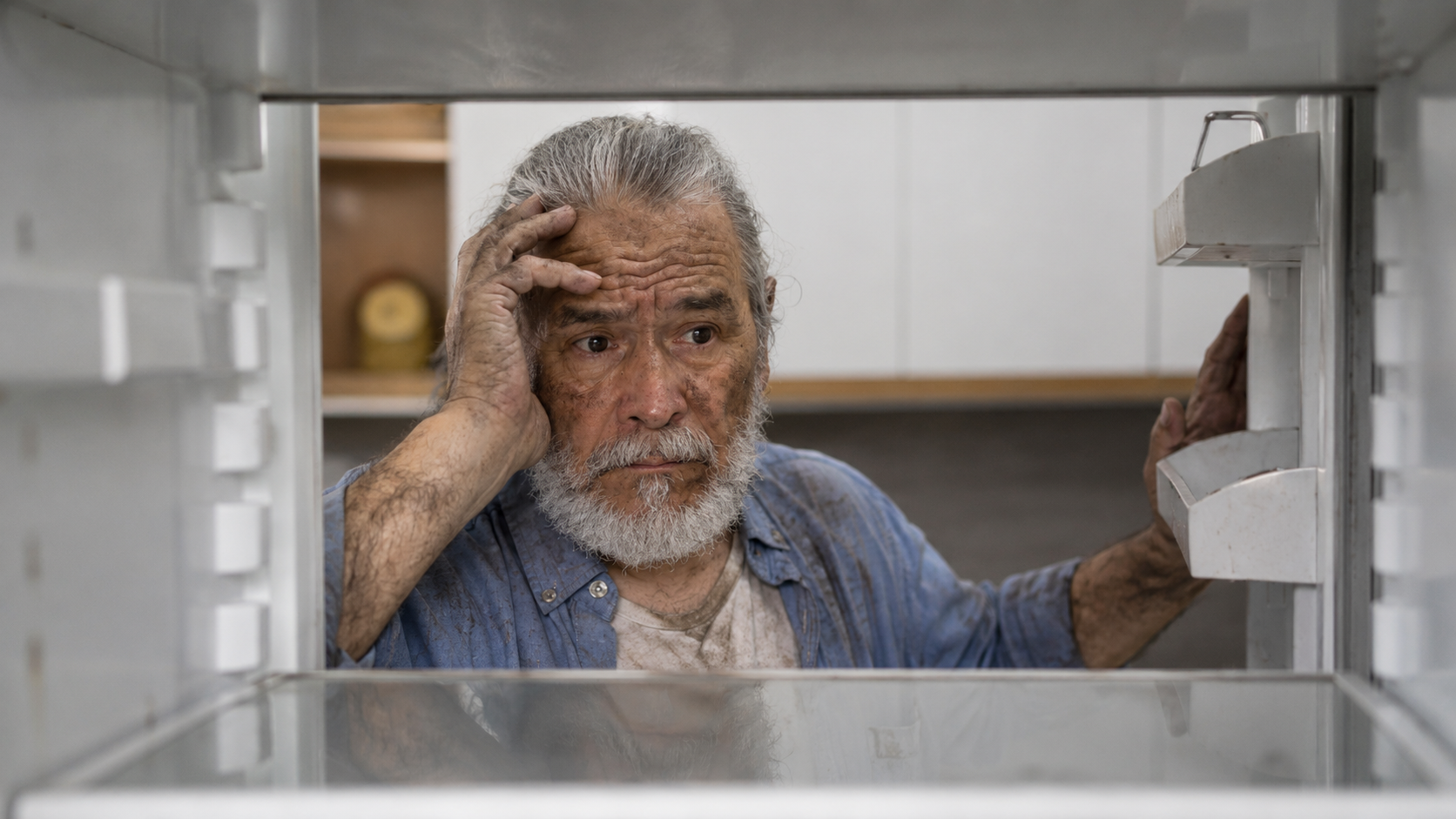
But the old man with dementia cannot eat GDP.
He cannot live inside stock market valuations.
He cannot be comforted by billionaire net worth.
What matters is whether another human being arrives in the morning to help him remember who he is, take his medicine, prepare his meals, and keep him safe through the night.
What I slowly began to understand was that my family’s struggle was not unusual. It was structural.
Political Disengagement and the Normalization of Precarity
Neoliberalism is not merely an economic theory. It is also a political and psychological project.
Over decades, Americans were trained to see themselves less as members of a shared democratic society and more as isolated individuals competing in markets for security, healthcare, housing, retirement, and dignity itself.
We were taught to normalize precarity, distrust collective solutions, and see ourselves primarily as consumers rather than democratic actors responsible for shaping our country in the way we see fit.
When people stop believing they can collectively shape society, concentrated wealth fills the vacuum. Billionaires will happily show up to be the only ones who can "fix" things.
Political disengagement became structurally beneficial to the monied class. A disengaged public is easier to govern through markets, easier to divide into individualized survival struggles, and easier to convince that no alternative systems are realistic.
So Americans increasingly adapted themselves to insecurity rather than organizing collectively to eliminate it.
Some found individualized escape. But individualized escape is not the same thing as collective security.
A society cannot privately insure its way out of mass aging. No stock portfolio can solve social isolation. No market mechanism naturally guarantees dignity to people who are no longer economically productive.
Why America’s Elder-Care Crisis Is a Democratic Crisis
That is why the crisis of aging in America is ultimately not just a healthcare issue or an economic issue.
It is a democratic issue.
Because democracy is supposed to be the mechanism through which ordinary people collectively decide what obligations they owe one another across the lifespan.
Every major expansion of social protection in American history — Social Security, Medicare, labor rights, civil rights protections, voting rights — emerged because ordinary people organized and forced political institutions to respond.
The same remains true now.
What My Mother’s Alzheimer’s Taught Me About America
I began this story by talking about my mother and how her journey with Alzheimer’s gave me a fifteen-year, up-close education in neoliberalism and the realities of aging in America.
For several years, my sister and I moved our mother back and forth between our homes. She had a room at my house and a room at my sister’s house. We did everything we could to surround her with family, familiarity, and love. We tried to preserve her routines, keep her calm, help her maintain fragments of independence, and protect her dignity as the disease slowly took pieces of her away from us.
But Alzheimer’s is relentless.
Eventually, the disease progressed to the point where we could no longer safely care for her ourselves, no matter how much we wanted to. We were forced to confront a painful reality shared by millions of American families: finding appropriate dementia care is emotionally exhausting, financially destabilizing, and extraordinarily difficult.
It took more than two years to find a place that was both affordable and humane.
And like so much of America’s elder-care system, the one we found was a private, for-profit enterprise.
My mother passed away in November 2021.
What I came to understand through that experience is that America’s elder-care crisis is not simply the result of individuals failing to plan for the future or families failing to care enough. Political choices that privatize some of our most basic human needs are a major part of the problem.
In the end, the true measure of a society is not how efficiently it produces wealth. It is whether human beings remain worthy of dignity, care, and protection after they are no longer economically useful to the market.
And once people begin reclaiming the idea that public systems should serve human beings rather than markets alone, the political imagination begins to reopen.
Then the question is no longer:
“Can we afford to care for one another?”
The question becomes:
“Why did we ever allow ourselves to believe that, in the richest nation on Earth, we couldn’t?”
For more information, check the resources below:
Understanding Aging, Dementia, and Elder Care
- Alzheimer’s Association — Dementia education, caregiver support, research, and local services.
- National Council on Aging — Resources on aging, benefits, caregiving, economic security, and elder advocacy.
- Family Caregiver Alliance — Practical support and guidance for family caregivers.
- Eldercare Locator — Federal service connecting seniors and families to local support resources.
Democracy, Inequality, and Political Power
- Justice in Aging — Legal advocacy organization focused on fighting senior poverty and improving elder rights.
Comments

Powered by RoundtableAn AI/DeFi-powered Enterprise Media Operating System. Learn more at Roundtable.io.© Roundtable 2026. By using this site you agree to the Terms of Use and Privacy Policy