


Jul 6, 2026 2:52 AM
Updated Jul 14, 2026 3:01 PM
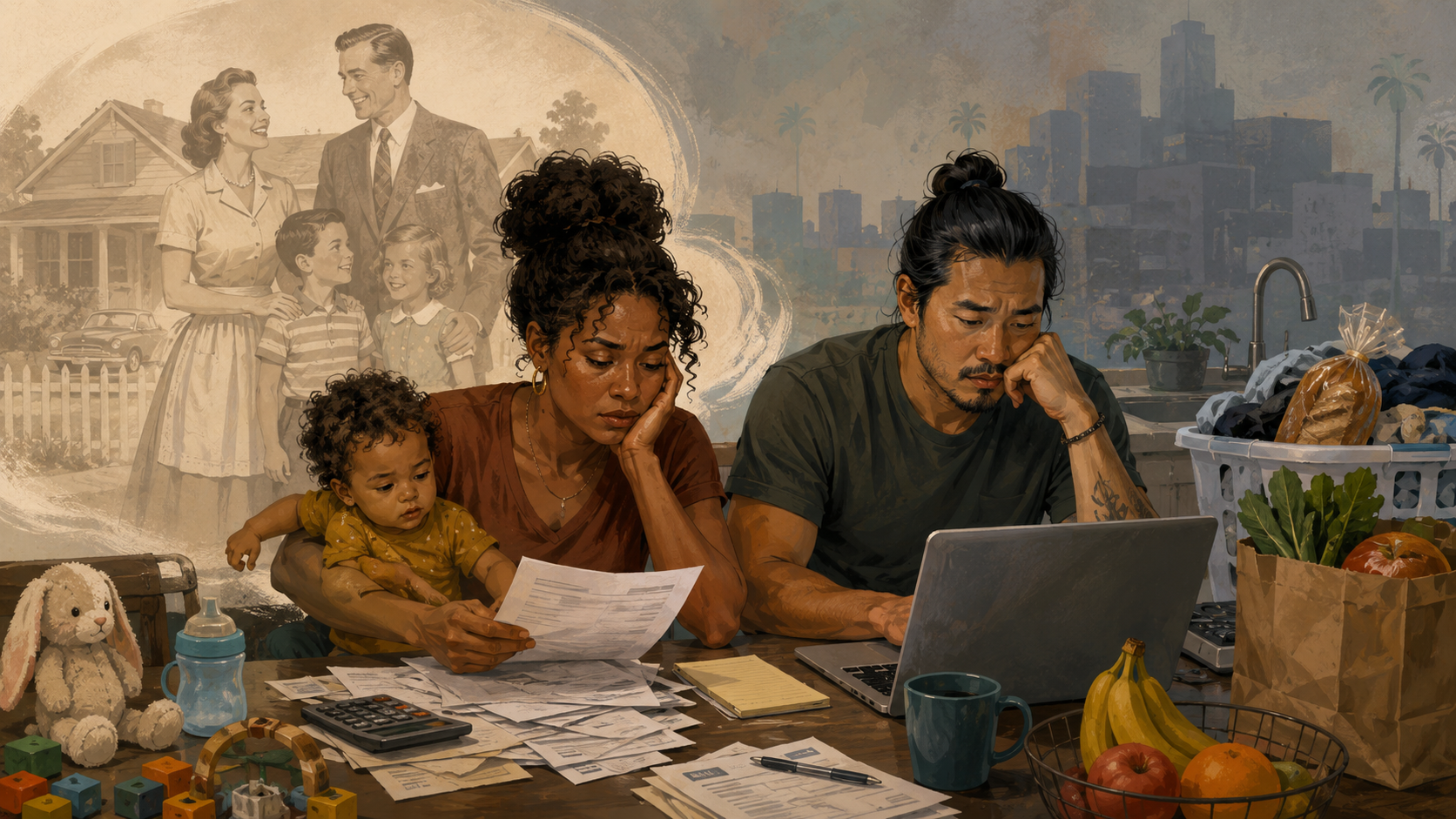
The historian and author of For Better and Worse explains how economic insecurity, racism and inherited gender roles undermine relationships—and why tradwife nostalgia offers the wrong cure.
Stephanie Coontz has spent more than five decades challenging the myths Americans tell about marriage, gender and the so-called traditional family.
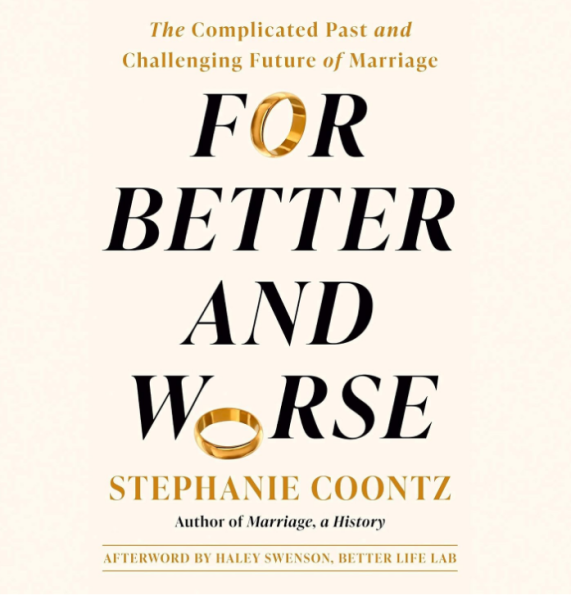
An American social historian, educator and public intellectual, Coontz is director of research and public education for the Council on Contemporary Families and professor emerita of history and family studies at The Evergreen State College. She is the author of six books, including the groundbreaking The Way We Never Were and Marriage, a History. Her newest book, For Better and Worse: The Complicated Past and Challenging Future of Marriage, was published by Viking in May 2026.
In For Better and Worse, Coontz rejects two competing myths. One presents marriage as an inherently stabilizing institution that will make people happier and cure society’s problems. The other treats heterosexual marriage as irredeemably oppressive and destined to fail.
Coontz occupies a more complicated—and more useful—middle ground. Marriage has become more voluntary, intimate and potentially equal, she argues, but it has also become more emotionally demanding. At the same time, growing inequality, weakened public institutions and the absence of meaningful support for caregiving have made sustaining relationships increasingly difficult.
Related stories
In our conversation, Coontz discussed love, no-fault divorce, race, neoliberalism, tradwives, billionaire wealth and the family as a place where gender, class and racial inequality collide.
This interview has been condensed and edited for clarity and length.
Sharon Kyle: Your new book is called For Better and Worse: The Complicated Past and Challenging Future of Marriage. What led you to write it?
Stephanie Coontz: I wrote it partly to combat two opposing ideas that now dominate discussions about marriage and heterosexual relationships.
I have spent much of my career challenging the idea that marriage will make everybody happy, that it is inherently good for people, that society should promote it and that our social problems result from not having enough married people. That argument often treats single-parent families as the problem rather than asking what economic and social conditions make family life difficult.
But during the past eight or ten years, I have also been struck by people going to the opposite extreme—what is sometimes called “heteropessimism.” That is the idea that heterosexual marriage has always been oppressive, that it will never work and that failure is built into the institution.
I wrote this book to examine what is really happening.
Despite the tremendous polarization in this country, people on both the left and the right often agree that there has been a loss of respect for marriage. One of my students once wrote that people no longer respect their marriage vows.
Some people say that is a good thing, and others say it is terrible. But I think both sides misunderstand what is happening.
We actually have higher standards for marriage and intimate relationships than at any previous point in history.
Kyle: What do you mean by higher standards?
Coontz: Think about the supposedly wonderful marriages of the 1950s. Child abuse was more common and much less likely to be reported. Marital rape was legal and widely accepted. Women were subordinate to men and had very limited ways to support themselves outside marriage.
When unilateral or no-fault divorce was introduced—California was the first state to adopt it—we had something resembling a controlled experiment.
Divorce rates initially increased. But over time, female suicide declined significantly, and domestic violence also declined in states that adopted unilateral divorce. Research found a long-term reduction of roughly 20 percent in female suicide and a decline of approximately one-third in domestic violence.
That tells us there were many deeply unhappy and dangerous marriages that people previously could not leave.
Under the old fault-based divorce laws, you could not get a divorce unless you could prove that you were completely innocent and that your spouse was completely at fault. But anyone who has ever been in a relationship knows that marriages do not usually break down that neatly.
In practice, the more miserable and hostile both people became, the harder it could be to prove that only one person was responsible. Those were irrational laws, and changing them was a tremendous improvement.
Kyle: We are constantly told that divorce has become more common because people no longer take marriage seriously. Is that accurate?
Coontz: No. Divorce rates have been declining since around 1980.
They are lower than most people realize, especially when you measure divorce in relation to the number of people who are actually married.
What has fallen dramatically is the marriage rate. Most people still eventually marry, but they marry at much older ages.
At the same time, a huge class and racial divide has opened in who enters marriage and who is able to sustain it.
A great deal of that difference is connected to economic stress.
We now want stronger and more emotionally fulfilling marriages—relationships requiring more patience, communication and negotiation than marriages of the past. Yet we are trying to build those relationships while living increasingly precarious lives.
Most marriages today begin with cohabitation. Many couples move in together intending eventually to marry. But couples facing severe economic stress, discrimination or instability are more likely to break up before reaching marriage.
So one reason divorce rates are falling is not necessarily good news: some of the people most likely to experience instability never make it into marriage in the first place.
When Love Became the Basis of Marriage
Kyle: For most of history, marriage was an economic and political arrangement rather than primarily a love relationship. What did we gain when love became central to marriage, and what new vulnerabilities did that create?
Coontz: For centuries, young people dreamed of being able to marry someone they loved. It was not pleasant to be forced into marriage with someone you did not like, including the older, wealthier men whom many young women were pressured to marry because their families considered the match advantageous.
Marriage was too important economically, socially and politically to leave it to the personal preferences of two young people.
People were told they should marry first and fall in love afterward. Marrying for love was considered dangerous.
The triumph of love as the basis of marriage produced many good things. It allowed people greater freedom to choose their partners. It made intimacy, companionship and mutual satisfaction more important.
But it also raised difficult questions: What is love? What should love provide? How do you keep it alive?
Most of us now want an egalitarian form of love. We want two individuals to support each other’s needs, aspirations and stresses while also creating a common life.
That requires negotiation, patience and emotional skill.
Unfortunately, several powerful forces stand in the way.
One is the economic and social pressure we have been discussing. We live in a society of extraordinary inequality. Many people no longer believe their children will enjoy the kind of future once promised by the American dream.
You do not need to read all the sociological research to understand that economic insecurity makes it harder to remain patient, express gratitude, negotiate fairly and develop strong relationships.
Kyle: You also write about what you call “earworms from the past.” What are they?
Coontz: They are the inherited myths that continue playing in our minds about what women are like, what men are like, what sex should be like and what love should look like.
Even couples who genuinely want equality often carry habits that undermine it.
Take child-rearing and emotional work. Women are frequently told that they are naturally responsible for managing emotions and caring for the home.
But that is not natural or timeless. It was only during the past few centuries that women became defined primarily as the emotional caretakers of the household rather than as active economic co-producers within it.
Women internalized those expectations, and men learned to expect women to perform that work.
At the same time, men were taught that emotional work is unmanly—that they should concern themselves with practical matters and avoid expressing vulnerability.
That was not always true either. Two hundred years ago, men were often expected to engage in forms of emotional expression that would later be condemned as feminine.
We enter relationships wanting equality, but we carry these older scripts with us.
And those tensions are intensified by the lack of work-family support. Women lose opportunities in the outside world because they remain responsible for so much care. Men lose access to the inside world of children, caregiving and emotional intimacy.
Going back to the old system will not solve those problems. But neither will declaring that heterosexual relationships can never work.
We know they can work. The question is what personal practices and social conditions allow them to do so.
Race, Marriage and the Burden of Inequality
Kyle: Before we began recording, we talked about the movements of the 1960s and your involvement in antiwar and civil-rights activism.
I was a little too young to participate fully in those movements. And when I did become politically active, I found myself much more engaged with the Black Freedom Movement than with the women’s movement.
How do race and class shape marriage—and perhaps even the ways different women understand feminism?
Coontz: That is a very important part of my book.
We often hear racist explanations for differences in marriage and divorce rates. Black Americans have lower marriage rates than several other racial and ethnic groups, although Native Americans have experienced similarly severe patterns of family instability.
People then assume the difference reflects Black culture or a lack of respect for marriage.
That is simply wrong. Black Americans place a very high value on marriage and often have extensive and supportive family and community networks.
One of the most revealing studies examined marriage in the military.
The armed forces are one of the few institutions in the United States where Black and white people receive comparatively equal pay, live in integrated housing and send their children to many of the same schools. Although the military is certainly not free of racism, it offers a degree of material and institutional equality rarely found in civilian society.
Researchers found that the Black-white difference in marriage rates largely disappeared in the military. Other research found that Black marriages in the Army were, in some circumstances, more stable than comparable white marriages.
That finding demonstrates how much racial differences in marriage are shaped by material inequality, residential segregation and discrimination—not by some cultural deficiency within Black families.
The daily insults matter as well. People talk about microaggressions, although I have always found that term strange. When something is an aggression, its cumulative impact is not necessarily “micro.”
People need hope in the future to build stable lives. Hope allows people to make sacrifices, take risks and plan for the long term.
When people can see members of their own community being promoted and getting ahead, it changes what they believe is possible.
This is one reason attacks on diversity and equal-opportunity programs are so damaging. Representation and institutional fairness are not symbolic luxuries. They affect whether people believe the future contains a place for them.
Kyle: There is another point I want to raise from my own life.
I have been married twice. My first husband, the father of my children, is a Black man. My current husband, to whom I have been married for more than 20 years, is white.
My husband and I are connected at the hip. We publish LA Progressive together. We share an office. We eat the same meals and get roughly the same amount of exercise.
Yet my blood pressure is consistently much higher than his, even though he is ten years older than I am.
I attribute at least some of that difference to the constant stress of living in this country as a Black person. Researchers call it “weathering.” He is not subject to that same daily erosion.
That kind of stress also enters a marriage. It certainly affected my first marriage.
Coontz: Absolutely.
There is a great deal of medical evidence supporting what you are describing.
Even highly successful Black Americans experience health consequences from constant pressure, vigilance, discrimination and the doubts imposed on them by the larger society.
Those stresses do not remain outside the home. They affect people’s bodies, emotional resources and intimate relationships.
We see something similar when we examine class.
Domestic violence is often higher among low-income couples, and people sometimes attribute that to a lack of education or supposed cultural deficiencies.
But after the housing crash and the Great Recession, domestic violence increased among educated, middle-class white women who had suddenly been exposed to severe financial insecurity.
That should tell us something important.
Education, race or class does not give anyone an automatic moral advantage. Economic insecurity and inequality can erode people’s capacity to build equal relationships.
Tradwives and the Pain Beneath Nostalgia
Kyle: I encountered the term “tradwife” while reading about your book. Soon afterward, I saw a woman on television describe herself that way.
Some tradwives advocate a return to very rigid gender roles. In the most extreme cases, women surrender decision-making authority to their husbands and even allow their husbands to dictate how the family votes.
What is the tradwife movement, and why is it receiving so much attention?
Coontz: First, we should be careful not to exaggerate its size.
For decades, the General Social Survey has asked Americans whether they agree that it is better for everyone when the man earns the living and the woman stays home to care for the family.
In 1977, a majority agreed. Today, only a minority does. Support for strict gender specialization has fallen dramatically, although there have been some recent signs of backsliding.
So why are we hearing so much about tradwives?
Part of the answer lies in nostalgia for the 1950s.
There are things about the postwar period that people have legitimate reasons to miss—but they have very little to do with the family arrangements.
What people may actually be missing are the economic policies associated with the New Deal and, later, the Great Society: stronger unions, rising wages, more affordable housing and a widespread belief in social progress.
Between the late 1940s and early 1970s, incomes rose across many sectors of the population. The wages remained unequal, and racial discrimination was severe, but working people generally shared more fully in the country’s economic growth.
Since then, productivity and wealth have increased dramatically while the compensation of ordinary workers has stagnated.
For years, I criticized nostalgia for the 1950s in my book The Way We Never Were. I still stand by that criticism.
But in writing this new book, I concluded that I had not listened carefully enough to the pain underneath the nostalgia.
Women tried the 1950s family. Their dissatisfaction helped produce the feminist movement. So when people say they want to return to that family, I think they are often responding to something else that they cannot quite identify.
My son is a physician. When I tried to explain this to him, he said, “Mom, we call that referred pain.”
Sometimes the brain cannot identify which internal organ is hurting. It searches for another part of the body that shares some of the same sensory nerves. A problem in one place is experienced as pain somewhere else.
That analogy transformed how I think about nostalgia.
The injury originates in the body politic and in the economic system, but people experience the pain within their families.
They see stress, conflict, exhaustion and insecurity, and they conclude that changing gender roles caused the problem.
A powerful right-wing political campaign encourages that conclusion because it diverts people from demanding social and economic reform.
Kyle: So the tradwife ideal is offering a family solution to what is actually a political and economic problem?
Coontz: Exactly.
Young women who were sold the “girlboss” ideal are discovering that success is not as simple as working harder, developing confidence or building a personal brand.
They are exhausted. They are trying to maintain careers while also performing a disproportionate share of caregiving and emotional work.
The tradwife movement places an answer directly in front of them: Leave the competition, retreat into the home and allow a man to take responsibility.
But that solution leaves the larger economic system untouched.
It also makes a woman extraordinarily vulnerable to her husband’s behavior, earnings, health and continued commitment to the marriage.
My job—and the job of progressives—is not simply to ridicule women who are attracted to that promise. We need to understand what hurts and offer a better explanation and a better answer.
The Unholy Alliance Behind “Family Values”
Kyle: You argue that a political alliance developed between religious opponents of women’s equality and defenders of an uncontrolled market economy.
How did those forces come together?
Coontz: I spend a considerable amount of time in the book tracing that alliance.
On one side were extremely conservative religious forces committed to restoring male authority and limiting women’s independence.
On the other were ideological defenders of financiers, corporations and what they call the “free market”—which often means an economy in which wealthy people are free to do whatever they want while everyone else lives with the consequences.
These two groups discovered that they could support each other.
Economic elites gained a moral language about family, discipline and personal responsibility. Religious conservatives gained money, institutions and political influence.
Together, they encouraged people to blame social problems on changing families rather than on declining wages, union busting, unaffordable housing, inadequate healthcare and concentrated wealth.
That alliance helped create the avalanche of nostalgia we are seeing today.
Why Should Basic Security Depend on Marriage?
Kyle: Marriage carries an enormous number of legal and economic privileges.
When I was researching this issue in California, I learned that hundreds of rights and benefits are connected to marital status—inheritance, healthcare, taxation, property ownership, caregiving leave and many others.
At the time, my mother was not yet 65 and had no health insurance. I had excellent insurance through my employer and could extend benefits to a husband.
I remember thinking: Why should I be able to give those benefits to a spouse but not to my mother?
Coontz: That is completely unfair.
It was an improvement when some benefits were extended to domestic partners. But we should take the argument further.
Why should healthcare depend on your spouse or partner at all?
Why do we not have a national healthcare system that serves everyone?
Kyle: Exactly. We need healthcare that serves everybody, and we need a more democratic society in which ordinary people have a real hand in making these decisions.
Instead, particularly since the rise of neoliberalism, we increasingly allow the market to decide who receives essential goods.
More accurately, we allow billionaires—and perhaps soon trillionaires—to exercise enormous power over those decisions.
Coontz: And we should be skeptical when people say these individuals “earned” all that wealth.
When we say somebody earned something, we usually mean it resulted from that person’s labor.
But extreme fortunes are made possible by policy choices, changes in taxation, financial arrangements and the appropriation of wealth created through other people’s labor.
The idea that we cannot tax billionaires is absurd.
Some wealthy individuals take little of their compensation as taxable salary. They borrow against appreciated assets and use a tax system designed to protect accumulated wealth.
Those are laws that people created. They can be changed.
We need people willing to dig into those policies, expose how they work and throw them away.
From the Movement to the Study of Family
Kyle: I want to return to your emergence from the antiwar and civil-rights movements of the 1960s.
How did that activism shape the questions you later asked as a historian?
Coontz: It was fundamental.
My father was a union organizer who later returned to school and became an economist. I grew up around community organizers.
My mother served as executive secretary of the NAACP in Salt Lake City.
A concern with race, labor and social inequality was part of my upbringing and socialization.
It took me somewhat longer to understand the distinctive ways women were oppressed.
There were, of course, upper-class women who oppressed other women and many men, both Black and white. That sometimes made it harder for me to understand women as a subordinated group.
But I gradually recognized that women were also being held down—although not all in the same way.
I initially began studying families because I wanted to integrate the histories of Black, Native American, Mexican American and Chicano families into the larger American story.
Then, as I continued that work, I realized women were still being left out.
In the early 1970s, the Feminist Press asked me to write a book about the history of women. But I became dissatisfied with the available approaches.
Many books were either about what had been done to women through the ages or about the exceptional things a small number of women had accomplished.
I wanted to understand where women and men interacted with one another.
In the early 1970s, there were not many places historians were looking for that interaction except within the family.
So I began studying the family almost accidentally.
It turned out to be the perfect place to bring together my longstanding interests in race and class with my newer interest in gender.
That is what I have been doing ever since.
Kyle: And we are fortunate that you have.
Your work helps us understand that families are not isolated private units. What happens within them is shaped by labor markets, public policy, racism, gender ideology and the distribution of power throughout society.
Stephanie Coontz, thank you for joining me and for speaking with the LA Progressive community.
I look forward to seeing you when you come to Los Angeles.
Coontz: Thank you. It was a real pleasure for me, too.
Stephanie Coontz will be in Los Angeles on July 19, 2026 for a book party. To learn more, contact [email protected]
Comments

Powered by RoundtableAn AI/DeFi-powered Enterprise Media Operating System. Learn more at Roundtable.io.© Roundtable 2026. By using this site you agree to the Terms of Use and Privacy Policy