


Sep 22, 2025 6:43 PM
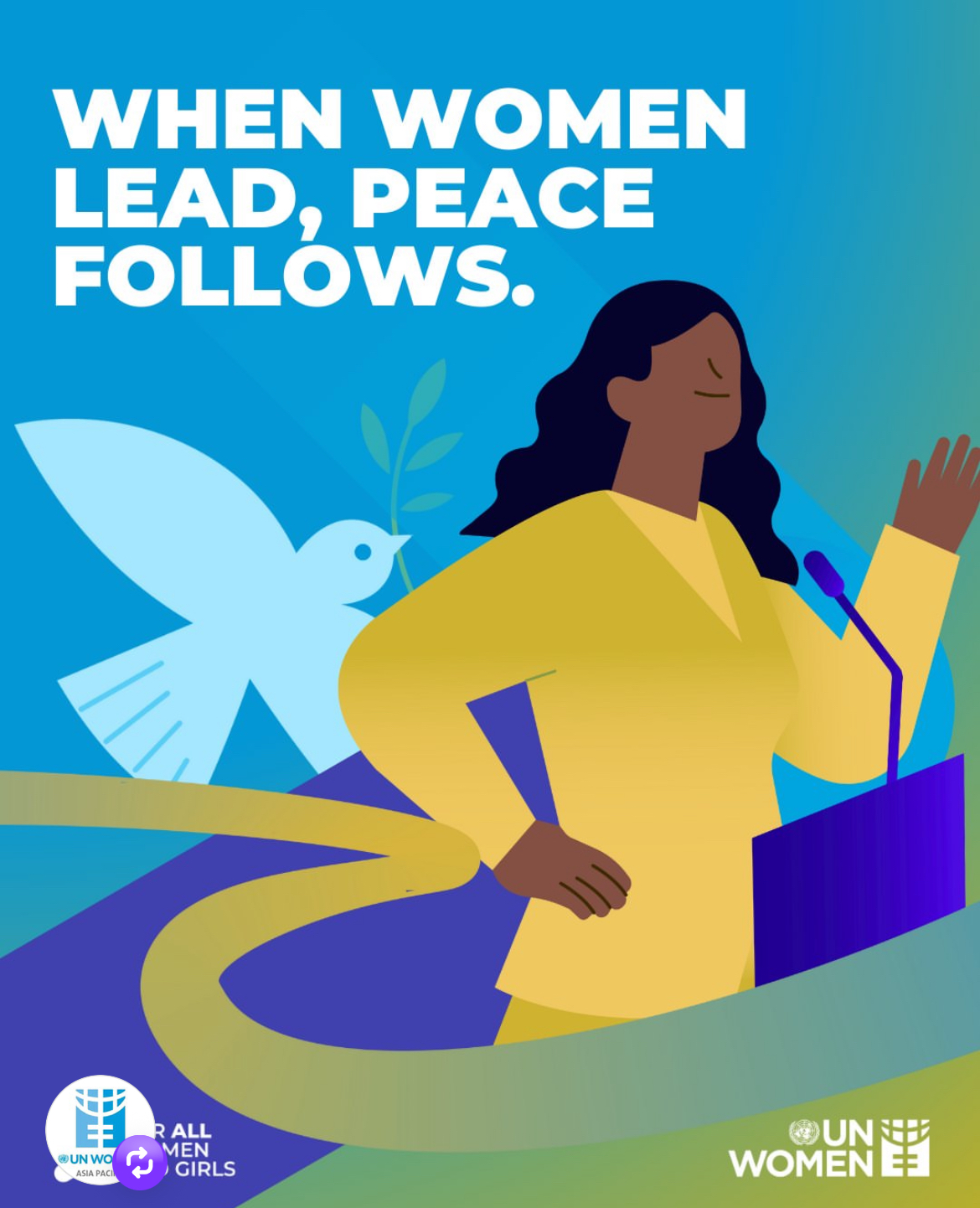
Central to advancing such peace is the recognition of women as indispensable agents of change.
Since 1981, the International Day of Peace — observed annually on September 21st — has served as a global reminder of the need to build societies free from violence, conflict, and oppression. Established by the United Nations General Assembly, the day calls on nations, communities, and individuals to commit to ceasefires, dialogue, and reconciliation. In an era marked by authoritarian resurgence, democratic backsliding, and political polarization, this day is more urgent than ever. Peace must be understood not only as the absence of armed conflict but also as the presence of justice, equality, and civic participation.
Women as Agents of Peace
Central to advancing such peace is the recognition of women as indispensable agents of change. Across the globe, women have taken leadership roles in mediation, grassroots activism, reconciliation, and peace negotiations. Their participation ensures that peace processes are more inclusive, equitable, and responsive to community needs.The adoption of UN Security Council Resolution 1325 (2000) formalized what women’s movements had long asserted: women’s engagement is essential for lasting peace, and safeguarding women’s rights is inseparable from long-term security. The 2026 UN Commission on the Status of Women (CSW), themed “Ensuring and strengthening access to justice for all women and girls”, provides a timely lens for considering how gender equality, justice, and peace are deeply interlinked. As feminist scholars argue, the absence of war does not constitute true peace if women still live under inequality, exclusion, or violence. Johan Galtung’s concept of positive peace captures this principle, reminding us that peace requires justice, equity, and dignity for all people (Galtung 1996).
Global Case Studies of Women in Peacebuilding
Women’s leadership in peace and justice is evident not only in conflict zones abroad but also in democratic societies confronting authoritarian regression. In Liberia, the Women of Liberia Mass Action for Peace, led by Leymah Gbowee, organized mass protests that forced warring parties into peace talks and played a key role in ending the country’s devastating civil war, paving the way for the historic election of Ellen Johnson Sirleaf, Africa’s first elected female head of state (Gbowee 2011). Similarly, in Colombia, women negotiators and civil society organizations shaped the Havana Peace Talks between 2012 and 2016, introducing groundbreaking provisions on rural women’s rights, reintegration of female ex-combatants, and a gender sub-commission that set a global precedent (O’Reilly, Ó Súilleabháin, and Paffenholz 2015).
Northern Ireland provides another enduring example, where the Northern Ireland Women’s Coalition participated directly in the peace negotiations leading to the Good Friday Agreement in 1998, prioritizing community development, education, and victims’ rights — issues often neglected by the dominant parties (Fearon 1999). In Rwanda, women helped drive post-genocide recovery by leading inclusive reforms in land inheritance, social equity, and gender-based violence, supported by unprecedented female representation in parliament (Burnet 2012). In Afghanistan, women’s movements fought for representation during and after international interventions, linking peace negotiations to education and rights despite the Taliban’s return to power in 2021, which forced many gains into fragile retreat (UN Women 2023). In Ukraine, women emerged as key actors after the 2014 conflict and especially during the 2022 invasion, orchestrating humanitarian aid, documenting war crimes, and negotiating civilian protections while amplifying their advocacy before international bodies (OSCE 2023).
Related stories
At the same time, new forms of authoritarian retrenchment in both democratic states and authoritarian regimes underline the universality of women’s struggles for peace and justice. In the United States, restrictions on reproductive rights following the 2022 overturn of Roe v. Wade illustrated how authoritarian-leaning policies can roll back fundamental rights even in established democracies. Women across the country responded with mass mobilization, litigation, and grassroots advocacy, situating reproductive justice within the broader fight for democracy and inclusive governance. This demonstrates that peacebuilding is not confined to post-conflict contexts but also involves resisting authoritarian encroachments within democratic societies.
In Iran, women have been at the forefront of mass uprisings and civil society resistance, particularly during the nationwide protests sparked by the killing of Jina Mahsa Amini in 2022. Women removed headscarves, organized demonstrations, and defied violent repression at significant personal risk, transforming the protests into a globally recognized struggle for justice, dignity, and political change (Human Rights Watch 2025). Iranian women’s defiance has resonated worldwide as an example of how gendered resistance to authoritarianism redefines peace not merely as an end to conflict but as the creation of social and political spaces rooted in freedom, equality, and justice.
Taken together, these global examples — from Liberia to Colombia, Northern Ireland to Afghanistan, Rwanda to Ukraine, and now the United States and Iran — underscore a vital truth: women are indispensable peacebuilders who resist authoritarianism and violence in both war-torn societies and within democratic systems under threat. Their activism demonstrates that building peace requires resisting authoritarian efforts to silence or exclude women while simultaneously advancing justice that sustains inclusive societies.
Authoritarianism as a Threat to Peace and Gender Equality
The rise of authoritarian movements poses a dual threat: the erosion of democracy and the rollback of gender equality. Such regimes weaken institutional checks and balances, restrict civic freedoms, spread disinformation, and normalize political aggression. Women are often the first targets, as authoritarian systems frequently reinforce patriarchal controls over family law, reproductive rights, and political freedoms.
Afghanistan’s recent history illustrates how authoritarianism dismantles women’s progress. Since 2021, the Taliban regime has barred women from education, public employment, and political life, erasing decades of hard-won advances (UN Women 2023). In Europe, Poland’s judicial reforms and abortion restrictions reveal how authoritarian approaches intersect with the suppression of women’s rights and democratic accountability, producing deeper polarization (Amnesty International 2024). Authoritarian regimes consistently weaponize gender to entrench their power, destabilizing not only women’s freedoms but also the broader prospects of peace.
Global Frameworks Linking Justice, Gender Equality, and Peace
International frameworks clearly affirm the essential link between justice, women’s rights, and sustainable peace. The Convention on the Elimination of All Forms of Discrimination Against Women (CEDAW, 1979) - the United State, Iran, Somalia, Sudan, Palau, and Tonga have not ratified CEDAW - obliges states to dismantle both formal and structural discrimination and to ensure women’s full participation in public and civic life (UN Treaty Collection). The landmark Security Council Resolution 1325 (2000) affirms that women’s inclusion in all levels of peace processes is indispensable and highlights the gender-specific harms of conflict and authoritarianism (UN Security Council 2000). The Sustainable Development Goals adopted in 2015 further bind states to measurable commitments: Goal 5 calls for gender equality and empowerment of women, while Goal 16 seeks the establishment of peaceful, just, and inclusive societies with accountable governance (United Nations 2015).Research also demonstrates that inclusive peace agreements are more likely to endure. Studies show that peace accords featuring women signatories address more comprehensive social needs — including healthcare, education, and economic recovery — making those agreements more sustainable over time (UN Women 2019).
Women’s Contributions Across Levels
At the community level, women are often mediators and caregivers who negotiate truces between local factions, provide psychosocial support to survivors, and establish reconciliation programs (Paffenholz et al. 2016). At the national level, women’s presence in legislative bodies and transitional justice mechanisms strengthens accountability, advances gender-sensitive laws, and promotes equity in resource distribution, all of which consolidate peace (Tripp 2015). At the international level, women influence peacekeeping operations, diplomacy, and major peace negotiations, where evidence shows their participation leads to longer-lasting outcomes and broader post-conflict recovery (UN Women 2019).
A Call to Action – Peace as access Justice for Women
Commemorating Peace Day on Sept 21st, 2025 ahead of CSW 2026 underlines a critical truth: peace cannot exist without justice for women, and justice for women cannot be secured under authoritarian governance. Gender equality rollbacks are not accidental but deliberate mechanisms that authoritarian leaders deploy to entrench exclusion and concentrate power.Justice for women is therefore both a moral and strategic imperative. Defending women’s rights strengthens the foundations of democracy and sustains peaceful societies, while undermining those rights destabilizes entire communities. The message for Peace Day 2025 and at CSW 2026 should be unequivocal: a just peace is only possible when women’s rights are secured.
References
- Burnet, Jennie. Genocide Lives in Us: Women, Memory, and Silence in Rwanda. University of Wisconsin Press, 2012.
- Fearon, Kate. Women’s Work: The Story of the Northern Ireland Women’s Coalition. Blackstaff Press, 1999.
- Galtung, Johan. Peace by Peaceful Means: Peace and Conflict, Development and Civilization. Sage Publications, 1996.
- Gbowee, Leymah. Mighty Be Our Powers. Beast Books, 2011.
- O’Reilly, Marie, Andrea Ó Súilleabháin, and Thania Paffenholz. Reimagining Peacemaking: Women’s Roles in Peace Processes. International Peace Institute, 2015.
- OSCE. “Women and Peacebuilding in Ukraine.” 2023.
- Paffenholz, Thania et al. Making Women Count: Assessing the Impact of Women in Peace Processes. UN Women, 2016.
- Tripp, Aili Mari. Women and Power in Post-Conflict Africa. Cambridge University Press, 2015.UN Security Council. Resolution 1325. 2000.
- UN Treaty Collection. “Convention on the Elimination of All Forms of Discrimination against Women (CEDAW).” 1979.
- UN Women. Women’s Participation in Peace Processes: Evidence, Lessons, and Policy Recommendations. 2019.
- UN Women. “Afghanistan: Women, Peace, and Security.” 2023.
- United Nations. “Sustainable Development Goals: Goal 5 & Goal 16.” 2015.
- Amnesty International. “Poland: Restricting Women’s Rights and the Rule of Law.” 2024.Human Rights Watch. “Iran: Women’s Rights Crackdown.” 2025.
Comments

Powered by RoundtableAn AI/DeFi-powered Enterprise Media Operating System. Learn more at Roundtable.io.© Roundtable 2026. By using this site you agree to the Terms of Use and Privacy Policy