


Sep 16, 2019 10:51 AM
Updated Feb 10, 2022 10:39 PM
Tom Hall: Are the Yemenis using drones to attack the financial base of the nations that are attacking them any different from our own Founding revolutionaries?
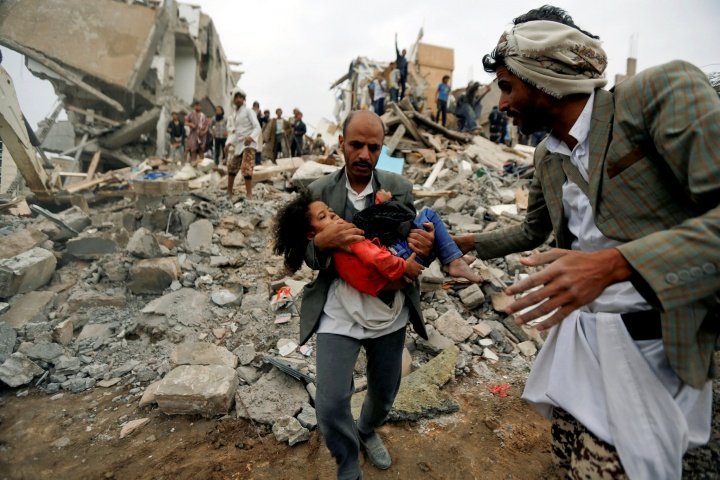
Yemeni forces have attacked Saudi oil facilities with drones. And U.S. forces have tracked down and killed one of Osama bin Laden's sons. Can we be surprised?
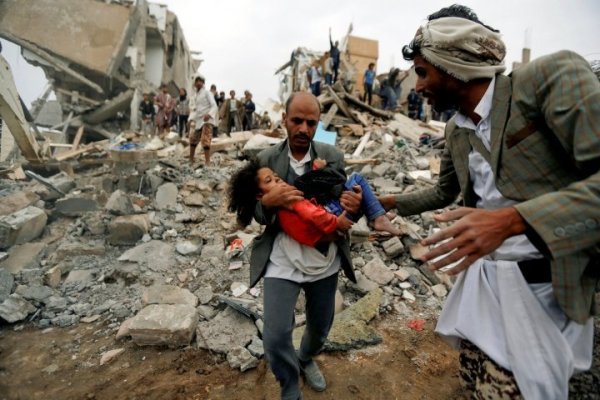
We need to draw some distinctions here. The Yemeni attacks on the noble, Wahabi Saudis, who funded and staffed the 9/11 attacks, are terrorism, pure and simple. Not in any way comparable to our use of drones to attack birthday and wedding parties all over the Middle East. Our attacks are civilized, run from posh computer facilities outside Las Vegas (around the world from where the drones strike) by men sipping Snapple while they diddle their joysticks to target women and children.
The Yemeni attacks are not on worthless, subhuman, ragheaded Moslems. Rather the monstrous, ragtag freedom fighters attacked PROPERTY, the oil fields which help keep our SUVs and 'rolling coal' pickups tearing down the road with 400 horsepower to move one fat driver. It simply doesn't matter that the Saudis are daily attacking Yemeni families and villages, using U.S. bombs and mercenaries rented from the Pentagon. Attacking oil PROPERTY is simply uncivilized to our capitalist eyes.
Once upon a time, men loyal to their feudal lords knew how to fight. Armies faced each other across broad fields and lobbed arrows, flaming balls of tar, stones, and eventually swords at each other until one side's casualties were too large. The winners took territory from the losers, and both sides benefited from the reduction in excess population that had no other jobs to fill.
Related stories
As Europe started to wield its power over new colonies on new continents, a king could hire a bunch of mercenaries, send them to a colony and march them around in battle formations. This intimidated colonial subjects until other pressures on those subjects got to be more onerous than the mercenaries were threatening.
In some colonial places, the natives didn't have the benefit of European cultural development. They didn't understand the gentlemanly art of war by open battlefield displays. Think of Calcutta and Khartoum. Indigenous forces, ignoring the gentlemanly arts of war massacred troops who had been massacring colonized civilians. In North America, native populations more interested in survival than flamboyant displays of power, fought without formations and open confrontations.
When American colonists, with all their genteel European manners and education, decided to throw off colonial rule and the mercenaries sent to enforce it, they adopted the native's approach to battle. They fought to win, rather than fighting for their king's sacred honor.
Now it is the U.S. that is renting military mercenaries to foreign governments intent on cracking down on restive colonies. They don't wear Hessian red coats, but in their olive drab or desert cammo outfits, they are mercenaries trying to use their superior military training and equipment to subdue villages and villagers.
It is any wonder that the villagers, wanting freedom more than they want "glorious" death after dramatic open-field battles, choose to look to the example of the U.S. effort to throw off rule by King George? The America revolutionaries didn't abandon their own modern weaponry when they took up native fighting styles. They kept their guns and supplies, and simply adopted more effective tactics.
Are the Yemenis using drones to attack the financial base of the nations that are attacking them any different from our own Founding revolutionaries?
With modern weaponry, we launch drone strikes around the Middle East. We target civilians with computer-controlled munitions, from hidden control sites, thousands of miles away, trying to strike fear into civilian populations. Are the Yemenis using drones to attack the financial base of the nations that are attacking them any different from our own Founding revolutionaries?
We condemn them for sneak attacks on oil fields that we claim are not any part of the colonial war in Yemen. But are attacks on Saudi oil fields any different in character than our attacks on the East India Company's tea shipments in Boston Harbor? U.S. revolutionaries struck at the economic heart of their oppressors. Now Yemeni revolutionaries are striking at the economic heart of their oppressors.
Like their American revolutionary forbearers, the Yemenis are using the most modern weapons technology available to them. And like George III, and Louis XVI, the U.S. is using the most powerful weapons technology available to it. And as with George III, Louis XVI, Czar Nicholas, and the Qing dynasty, the U.S. is finding that as it tries to tighten its grip, colonial resisters slip between its fingers.
Since World War II, indigenous people around the world have shown colonial powers that superior might does not make right, and does not provide lasting control. But during most of this time, rebelling colonized people kept their fights local. Irish freedom fighters took their war to the island of England after English forced ravaged Irish towns and people. South African fighters took the fight to South African cities after the native black majority was isolated into "territories."
And now Yemeni fighters have taken their colonial resistance to the Saudis. With our love of weapons and the constantly falling price of drone technology, what is there to keep the Yemenis from next taking their rebellion to the heart of the empire that funds and arms the Saudis? Why would anyone be surprised if Yemeni freedom fighters took up the task of defending their nation by attacking the source of the bombs and bullets that ravage their nation?
Secretary of State Mike Pompeo responded to the Yemeni drone attacks by saying, 'we don't care about Yemen. This gives us an excuse to attack Iran.' Such a stance could embolden the Yemenis, seeing that the U.S. doesn't care, and simply wants to use the attacks the way Dick Cheney used the 9/11 attacks—to go to war against a third country. One can only wonder how Iran might respond to a U.S. attack.
The other news story, about U.S. forces tracking down and killing Osama bin Laden's son reminds us of the murder of Saddaam Hussein's sons. The U.S. did not want Saddaam's sons to go on trial, where they could have raised all sorts of questions about international law, colonial adventurism, and war profiteering. So they were trapped in a building and systematically murdered. Similarly, the Donald's administration didn't want a legal team defending Osama's son with all sorts of unwanted questions.
But this is an important policy statement—the children of our enemies are legitimate targets. What then should Yemeni, or Iranian, or any other fighters resisting U.S. colonialism, think about Don Jr., or Jared, who are not merely in the Donald's family, but rather are explicitly involved in colonial policy and profiteering? Has the Donald given a green light to them being legitimate targets for victims of his colonial exploitation policies?
Historians tell us that the physical isolation of the U.S. has protected us from foreign attacks in the past. But now that we brag about our ability and "right" to sit at computer consoles in Las Vegas and destroy people on the other side of the world, can we really be safe from people on the other side of the world returning the favor? If we brag about our ability and "right" to kill the children of leaders we hate, anywhere in the world, can we be surprised if any of those people we hate decide to target the children of our leaders who order death strikes? Can we deny their equal "right" to do to us what we do to them?
I ask about "their equal right." But not about their equal abilities. In the name of protecting the profits of U.S. high tech companies, the Donald has worked hard to limit modern high tech computer and other technology from being imported. He has given the Wahabi Saudi extremists access to our nuclear and other weapons technology. And he ordered that much more potent, much cheaper, Chinese synthetic fentanyl be made available to U.S. opioid users.
There is no longer any question the ability of foreign victims of U.S. imperial colonialism bringing their grievances back to our doorsteps.
Tom Hall
Comments

Powered by RoundtableAn AI/DeFi-powered Enterprise Media Operating System. Learn more at Roundtable.io.© Roundtable 2026. By using this site you agree to the Terms of Use and Privacy Policy