


Jun 13, 2017 2:05 AM
Updated Feb 10, 2022 10:54 PM
John Peeler: Like every previous Venezuelan government, neither Chávez nor Maduro took steps to break the country’s dependence on petroleum. Rather, they used oil revenues to subsidize their base.
History repeats itself, first as tragedy, second as farce. Karl Marx
Fifty years ago, Venezuela was the richest country in Latin America, and was nearing the end of the first decade of what would become one of the region’s longest-lived democratic regimes. It was blessed by massive reserves of oil and gas, and seemed well on the way to banishing a heritage of dictatorships punctuated by intervals of turmoil. Life was good. Save for a few big buildings in Caracas, Venezuela today bears scant resemblance to its former self. The economy has virtually ceased to function: few goods are produced and there are shortages of almost everything. There is no money to pay for imports. The polity is the scene of a tense standoff between a government with dwindling popular support but with control of the army and police, versus an opposition that controls Congress but little else, able to mobilize supporters in the street but unable to force the president to resign. This is the story of two successive waves of folly.
Success Breeds Failure: Venezuela’s Liberal Democracy
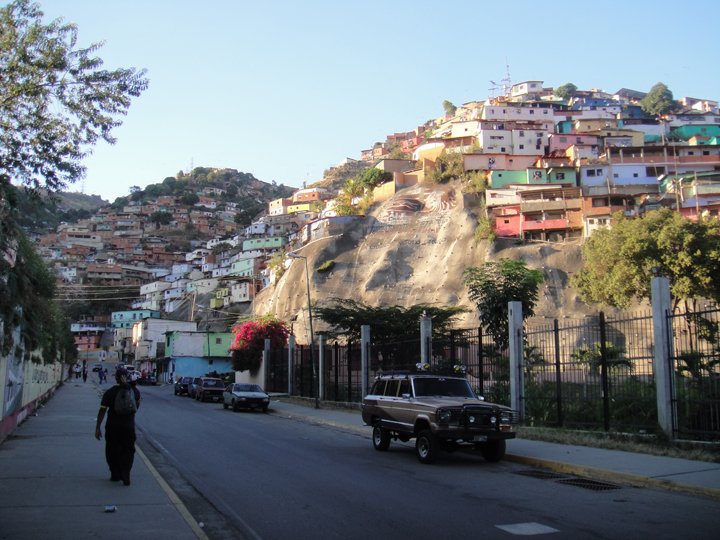
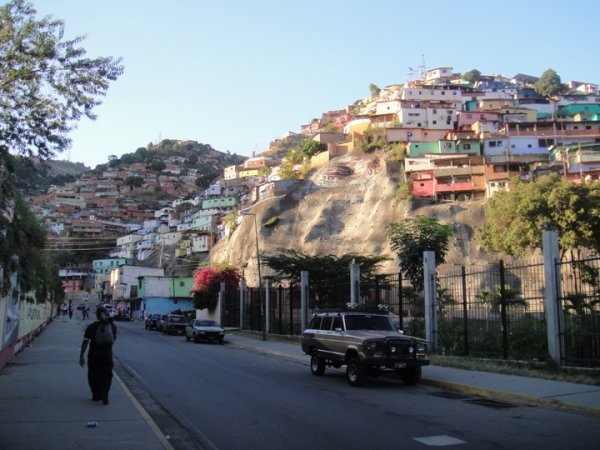
Venezuela’s last military dictator, Marcos Pérez Jiménez, was overthrown by a popular uprising, supported by the armed forces, in 1958. A transitional, pacted democracy was set up, essentially a sharing of power between the center-left Acción Democrática and the Christian Democratic, center-right COPEI. The pact was formally ended in 1973, but those two parties continued to dominate elections through the 1980s, mostly alternating control of the presidency and holding the vast majority of seats in both houses of the legislature. Elections were (as election monitors like the Carter Center say) free and fair, with high turnout. Most people seemed content with being citizens of one of Latin America’s leading democracies. Those who weren’t seemed like cranks and malcontents. But trouble was brewing beneath the surface. Venezuela’s dependence on petroleum, dating to the 1920s, had effectively dried up every other sector of the economy. Neither agriculture nor consumer goods industries could produce returns that competed with oil, so they increasingly stopped producing at all. Previously a leading exporter of sugar and coffee, the country ceased to export anything but oil. A massive steel and aluminum complex on the Orinoco River failed to take off. Everything had to be imported, but as long as the oil flowed and prices were high, there was no sense of crisis. Every government since the 1920s had talked about “sowing the petroleum” to build a sustainable and humane society, but none of them did much to that end. Prosperity reached only a minority of the population, chiefly the urban upper and middle classes, while the great mass of the rural population had the choice of starving in the countryside or moving to huge shantytowns in and near the cities (especially Caracas). Most took the latter option, and made a precarious living on the “informal” (off-the-books, cash only) economy of street vending and casual work. They did get a trickle of benefits from oil revenues (e.g., food and transportation subsidies), but they could look down from their densely-packed, precarious hillside barrios to witness the sweet life of the prosperous. When oil prices dropped in the 1980s, the state could no longer sustain the subsidies to the middle class and the poor majority without taking on massive debt. Government finances were increasingly precarious, even as control of the state became the only path to prosperity. Corruption became increasingly obvious, so that in 1989, when newly elected president Carlos Andrés Pérez announced a severe austerity program that he had said nothing about in the campaign, massive riots ensued which had to be put down by the armed forces with hundreds of deaths. The façade of democracy was ripped away. In 1992, two military coups were attempted, but both were suppressed. The regime tottered on, but Lieutenant Colonel Hugo Chávez, leader of the first coup, built a political movement after his release from prison. He easily won the presidential election of 1998, thus marking the ignominious end of a liberal democratic experiment that had begun with great hopes forty years before.
Success Breeds Failure: Venezuela’s Popular Democracy
Chávez came to power with overwhelming support from the poor majority who had been left out by the previous regime. By mobilizing that support he was able to win congressional and state elections, consolidate control of the armed forces, and seize control of the state oil company, PEDEVISA. Ruling either by decree or through a compliant congress, he presided over a massive transfer of resources to the poor through expanded food pantries, subsidized housing and cheap public transportation. Rejecting the liberal democratic notion of checks and balances, of limits on the power of the majority, Chávez tapped into a more radical vision of democracy that gave the majority virtually unchecked power. This amounted to rejection of John Locke and John Stuart Mill, in favor of Jean-Jacques Rousseau, the French Jacobins, and Karl Marx. It was a popular democracy that would build what he called Twenty-First Century Socialism.
Related stories
Like every previous Venezuelan government, neither Chávez nor Maduro took steps to break the country’s dependence on petroleum. Rather, they used oil revenues to subsidize their base.
Exactly what that would entail was never fully spelled out, but the implication was that it would challenge capitalist hegemony without fully replacing capitalism. The old Soviet, Maoist and Fidelista versions of Marxism-Leninism were obsolete, but socialism in a new form was still possible. It remained unclear just how such socialism could be established in the context of a capitalist world economy upon which Venezuela depended, and in a hemisphere where the United States remains hegemonic, if distracted. There was a great deal of emphasis on grassroots organization in the poor barrios—the so-called Missions—that would take charge of meeting various popular needs by mobilizing the people themselves. But there was always direction and control from above: the Missions were in the final analysis instruments of the regime. Chávez won almost every election he contested without need for stuffing the ballot boxes. He confronted an opposition fragmented by tactics and doctrine, in which the parties of the old regime were virtually extinct, but new organizations were slow to consolidate. The mass of the poor saw only upper classes wanting to restore the status quo ante, and they thus backed Chávez to the hilt, right up to his death from cancer in 2013. During his final illness, Chávez designated his loyal supporter, Nicolás Maduro, as his successor, and Maduro was narrowly elected as Chávez’ successor. But lacking charismatic ties to his base, and lacking Chávez’ political and oratorical skills, Maduro has floundered from the beginning. The opposition actually won control of congress in elections of December 2015. With oil prices in a persistent slump, Maduro’s room for maneuver has been steadily reduced, while popular demonstrations demanding his removal from office have become weekly, if not daily events. Like every previous Venezuelan government, neither Chávez nor Maduro took steps to break the country’s dependence on petroleum. Rather, they used oil revenues to subsidize their base. At the same time, Maduro in particular has so weakened the production capacity of PEDEVISA that it is unable to produce enough even for domestic consumption. [dc]C[/dc]hávez’ radical popular democracy, like its liberal democratic predecessor, has found that its early successes have created the conditions for a terminal crisis. A regime change is coming, sooner rather than later. What the new regime will look like is hard to say, but one thing is for sure: the poor will not again be ignored. John Peeler
Comments

Powered by RoundtableAn AI/DeFi-powered Enterprise Media Operating System. Learn more at Roundtable.io.© Roundtable 2026. By using this site you agree to the Terms of Use and Privacy Policy