
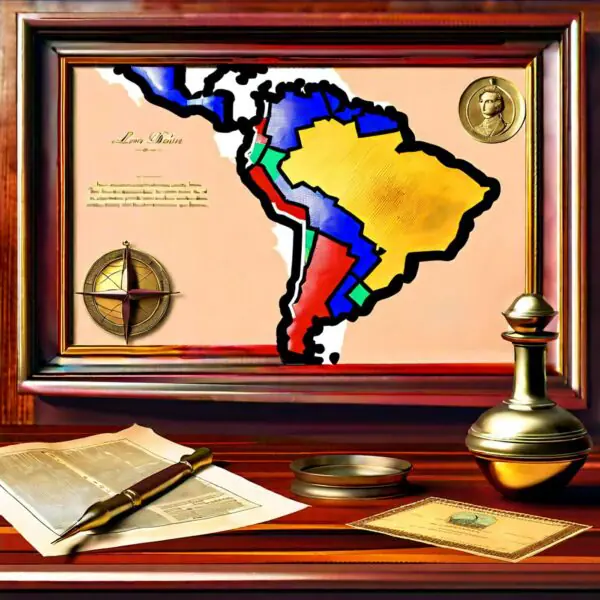


US Imperialism in Latin America
Sep 24, 2024 6:50 PM
Updated Sep 24, 2024 7:41 PM
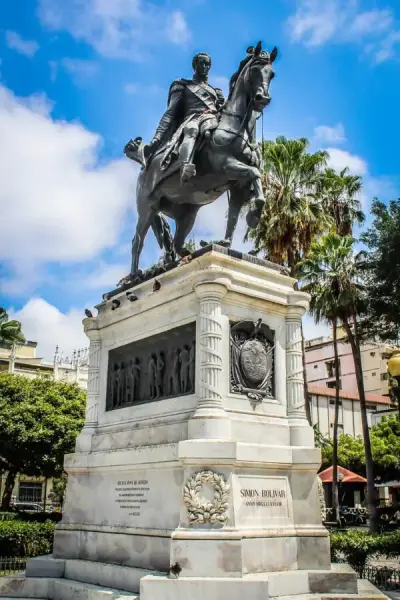
We begin our journey with Simón Bolívar, the Venezuelan statesman and military leader who played a pivotal role in liberating six Latin American countries from Spanish rule.
In this episode, we delve into the historical and contemporary implications of the Monroe Doctrine and U.S. intervention in Latin America. Host Jack Eidt mixes excerpts from Rubén Darío’s poetry (Nicaragua) and Gabriel García Márquez’s fiction (Colombia) with an interview of Yale historian Greg Grandin by journalist Michael Fox.
They explore how Simón Bolívar’s legacy and the Monroe Doctrine have shaped U.S. imperialism in Central and South America. They trace the origins of Bolivar’s fight for independence, the creation and evolution of the Monroe Doctrine, and its lasting effects on U.S. foreign policy. The interview originates from Michael Fox’s podcast series “Under the Shadow,” [https://therealnews.com/under-the-shadow] produced in collaboration with the Real News Network and NACLA, the North American Congress on Latin America [https://nacla.org/].
We begin our journey with Simón Bolívar, the Venezuelan statesman and military leader who played a pivotal role in liberating six Latin American countries from Spanish rule. Bolivar’s vision of a united Latin America and his relentless pursuit of independence earned him the title “El Liberador.” His story sets the stage for understanding the broader context of U.S. involvement in Latin America.
The America of Moctezuma and Atahualpa, the aromatic America of Columbus, Catholic America, Spanish America, the America where noble Cuauhtémoc said: “I am not on a bed of roses”–our America, trembling with hurricanes, trembling with Love: O men with Saxon eyes and barbarous souls, our America lives. And dreams. And loves. And it is the daughter of the Sun. Be careful.--Rubén Darío, Nicaraguan poet
Related stories
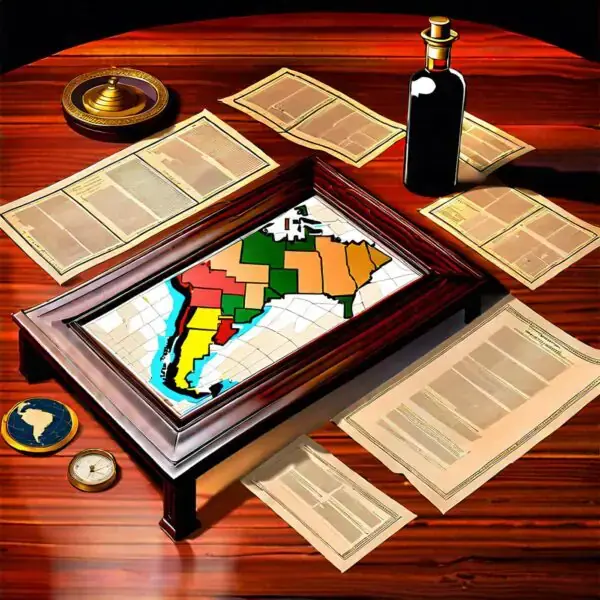
The Monroe Doctrine
In December 1823, US president James Monroe delivered his State of the Union address in which he coined what would become known as the Monroe Doctrine. It was a framework that would later be used to legitimize US intervention up and down the hemisphere. But in those early days, Monroe’s statements were applauded by Latin American leaders as supporting their independence struggles. They were even embraced at Simón Bolívar’s Panama Congress of 1826.
The Monroe Doctrine declared that the Americas were off-limits to further European colonization. Unfortunately, the doctrine’s interpretation evolved over time. Grandin explains how the doctrine’s foundational vagueness allowed it to be adapted to various political agendas, from isolationism to aggressive interventionism.
Consider this from ‘The General in his Labyrinth’ a 1989 historical novel by Colombian author and Nobel Prize winner Gabriel Garcia Marquez. The novel tells the story of the last seven months of the life of South American military and political leader Simón Bolívar
America is ungovernable, the one that serves a revolution pitching at sea, this country will fall hopelessly into the hands of the rampant crowd and then go to almost imperceptible tyrants of all colors and races, and many other gloomy thoughts that already circulated scattered in letters to different friends.
– Gabriel García Márquez.
Manifest Destiny Imperialism
One of the most intriguing aspects of the episode is the discussion of how the Monroe Doctrine was perceived by Latin American leaders. This perspective shifted dramatically with the Roosevelt Corollary, which redefined the doctrine as a justification for U.S. intervention in the Western Hemisphere.
The episode also delves into the concept of Manifest Destiny, the 19th-century belief that the United States was destined to expand across the North American continent. This ideology further complicated U.S.-Latin American relations, intertwining with the principles of the Monroe Doctrine to justify territorial expansion and intervention.
Fast forward to the 20th century, and the Monroe Doctrine’s legacy is evident in U.S. actions during the Cold War. Grandin and Fox discuss the United States’ support for death squads and paramilitary forces in Latin America as part of its broader counterinsurgency strategy. These actions, often justified under the guise of fighting communism, had devastating effects on the region’s political and social fabric.
As we explore these historical events, the episode raises critical questions about the Monroe Doctrine’s relevance today. Grandin argues that the doctrine has served as a “gateway legal principle,” enabling the U.S. to oscillate between isolationism and internationalism. This duality continues to influence U.S. foreign policy, making it essential to understand the doctrine’s historical context.
For an extended interview and other benefits, become an EcoJustice Radio patron at https://www.patreon.com/ecojusticeradio
In conclusion, this episode offers a comprehensive look at the Monroe Doctrine and its long-lasting impact on Latin America. By examining the doctrine through the lens of history and contemporary politics, we gain valuable insights into the complexities of U.S.-Latin American relations. Whether you’re a history buff or simply curious about the forces shaping our world, this episode is a must-listen.
Resources/Articles:
Under the Shadow Podcast Episode: https://therealnews.com/he-legacy-of-monroe-under-the-shadow-bonus-episode-4
Simón Bolívar History From NBC News https://youtu.be/wxuxFg_8nkI?si=eZAH6W3FmCT6ZGYD
Chilean folk music group, Inti Illimani doing the song Simón Bolívar from 1973
https://youtu.be/AObTf9yOdoQ?si=7iRpeA3u8BQqQLt-
- Podcast Website: http://ecojusticeradio.org/
- Podcast Blog: https://www.wilderutopia.com/category/ecojustice-radio/
- Support the Podcast: Patreon https://www.patreon.com/ecojusticeradio
- PayPal https://www.paypal.com/donate/?hosted_button_id=LBGXTRM292TFC&source=url
Wilderutopia
Comments

Powered by RoundtableAn AI/DeFi-powered Enterprise Media Operating System. Learn more at Roundtable.io.© Roundtable 2026. By using this site you agree to the Terms of Use and Privacy Policy