


Sep 14, 2025 3:02 PM
The essential coalition that brought down the government then was the left and the far-right, many of whose rural constituents would have been themselves victims of the budget cuts.
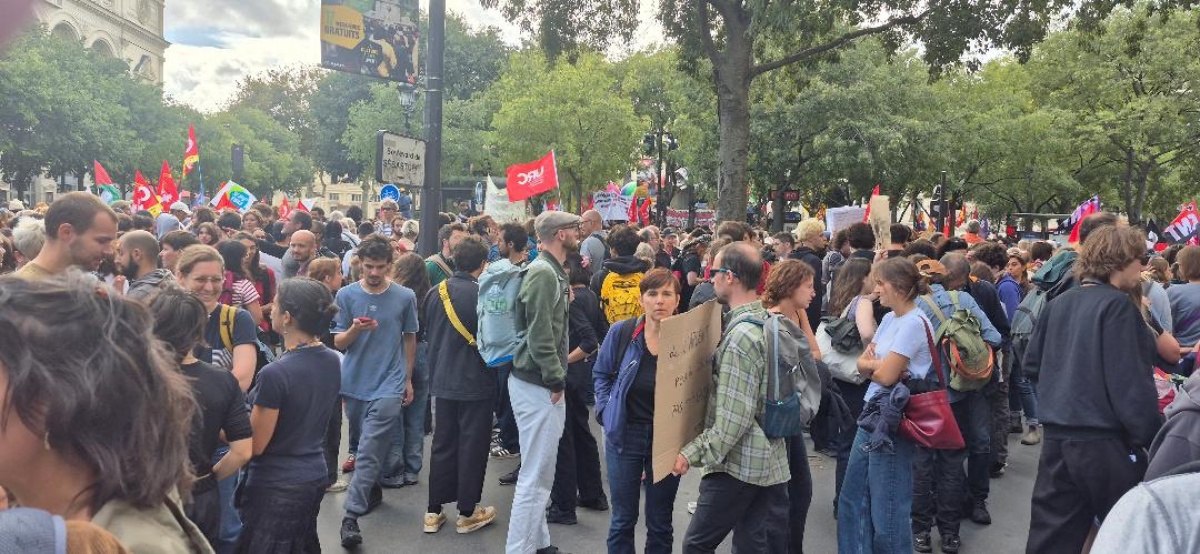
The week began with the downfall Monday of yet another Macron government, the second in as many years and continued on Wednesday with a mass demonstration in the streets a “Bloquons Tout” or “Let’s Block Everything” moment which attempted to shut the country down and which pitted elements of the left and right against Macron’s police and his center-right coalition.
The anger that sparked the “Gilets Jaunes” movement was a tax on drivers, read as a direct attack on working people trying to get to work. The anger here is much wider and deeper.
The Bayrou government, named for the now-former Prime Minister François Bayrou, proposed a budget that had something to offend everyone except the wealthiest, who were licking their lips over it. The 2026 budget would have eliminated two holidays—many of which were won 90 years ago in the Popular Front government and which the French regard as sacred. The budget, an answer to a fiscal deficit, also would have made drastic cuts in unemployment insurance, increase taxes on the middle class and retirees, along with increasing costs for medical benefits. Only one group is largely unaffected by the center-right budget and that is the richest individuals and corporations.
This budget proposal was defeated, and the government fell when the majority of those in the General Assembly, by a wider margin than predicted, voted “No Confidence” in Bayrou after he himself had called for the vote. A moment eerily reminiscent of Macron’s dissolving of a legislative body he was peeved at and then calling an election that further divided the body with the far-right National Rally (RN) party now the largest single party. Joining the four left parties in the “No” vote was the following: the far-right RN; a breakaway party to the right of the Republicans, the traditional right; a group of legislators representing what essentially still amount to French colonies; and even some Republicans, able to read the writing on the wall.
Related stories
A left grouping of France Unbowed (LFI), the Socialists, The Greens, The Communists and several smaller parties together constituted the largest block in the Assembly. However, that block was shattered by the Socialists—whose right wing is akin in the U.S. to Center-Right Democrats—in their attempt to be incorporated into the government.
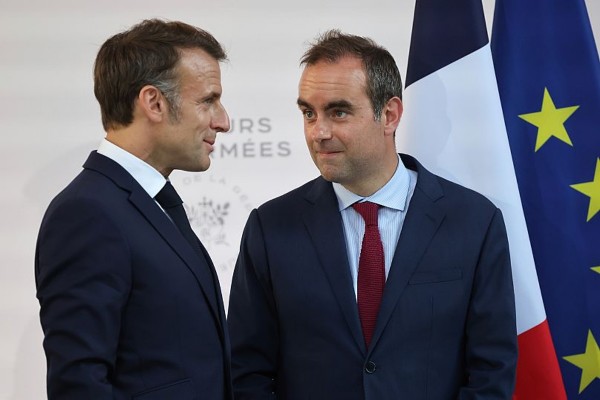
The essential coalition that brought down the government then was the left and the far-right, many of whose rural constituents would have been themselves victims of the budget cuts.
Macron promptly proved that he was tone deaf to any cry from the people and instead of appointing a minister from the left, named his Defense Secretary, Sebastien LeCornu who oversees the police and the armed forces. Macron has announced his intention to have 3.5% of the French GDP used for armaments—with the military the only area not to suffer budget cuts—and the former armaments secretary will now be in charge of pushing this through.
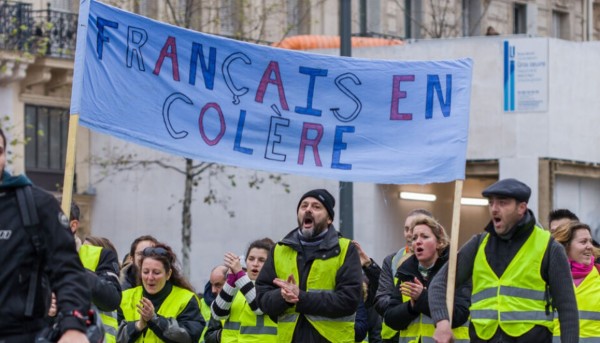
Two days later with, depending on the estimate, 200,000 to 300,000 French workers in the street, the former Defense Secretary, charged also with “internal security,” met their protest with 80,000 police shooting tear gas into crowds as soon as they formed and arresting over 500 protestors.
The government claimed success because the protest, which is now being called “The September 10th Movement,” had not attained its stated end of shutting the country down. What it had accomplished was a crossing of the unpermitted boundary between the left and the right against the center and the center-right. The movement originated online from two of the more vocal members of the “Gilets Jaunes” and then was picked up and amplified by Jean-Luc Mélenchon’s LFI party and given additional weight by the endorsement of several unions, including France’s second largest and most activist union, the CGT.
The next protest, on September 18, will be all the unions out in the streets in a show of solidarity that may also draw the “Bloquons Tout” supporters. The unions are particularly angry at Macron for his lengthening of the retirement age from 62 to 64. Even more grievous was the fact that after weeks of protests in the street, the measure was passed using article 49.3 which allows the government to bypass a vote. One of the main union demands, which even LeCornu has acknowledged, is to restore the earlier pension age.
A further demand from the left, and now even being talked about on the right, is a modest two percent tax on the wealthiest individuals. The right claims such a tax would prompt these wealthy billionaires to flee the country, but a French study group concluded that only 0.02 percent of these individuals would leave.
The LFI demanded that Macron resign and call new elections but was not supported in this demand by the Socialists or the far-right. However, what is likely now to happen could be more tumultuous. If, after a period of negotiation, LeCornu refuses to take into account the demands of both factions, and passes the budget using the 49.3 clause, the remedy is another vote of no confidence which this time would result in new elections.
Macron’s strategy is to refuse to take into account the left’s demands and instead negotiate with the far right. Indeed, LeCornu may have been partially appointed because he is famous, or infamous, for a series of secret meetings he held with the RN.
However, while the legislature is divided, the mood on the street is one of coming together as evidenced by a Gilets-Jaunes demonstrator, who said, in terms of differences between the (more urban) left and the (more rural) far-right, “We’re not here to talk about nuclear power or meat…We just want to get rid of Macron.” Another added, in suggesting how Macron’s stubbornness and refusal to negotiate has brought people together, that, in the end, “the enemies of my enemy are my friends.
Comments

Powered by RoundtableAn AI/DeFi-powered Enterprise Media Operating System. Learn more at Roundtable.io.© Roundtable 2026. By using this site you agree to the Terms of Use and Privacy Policy