
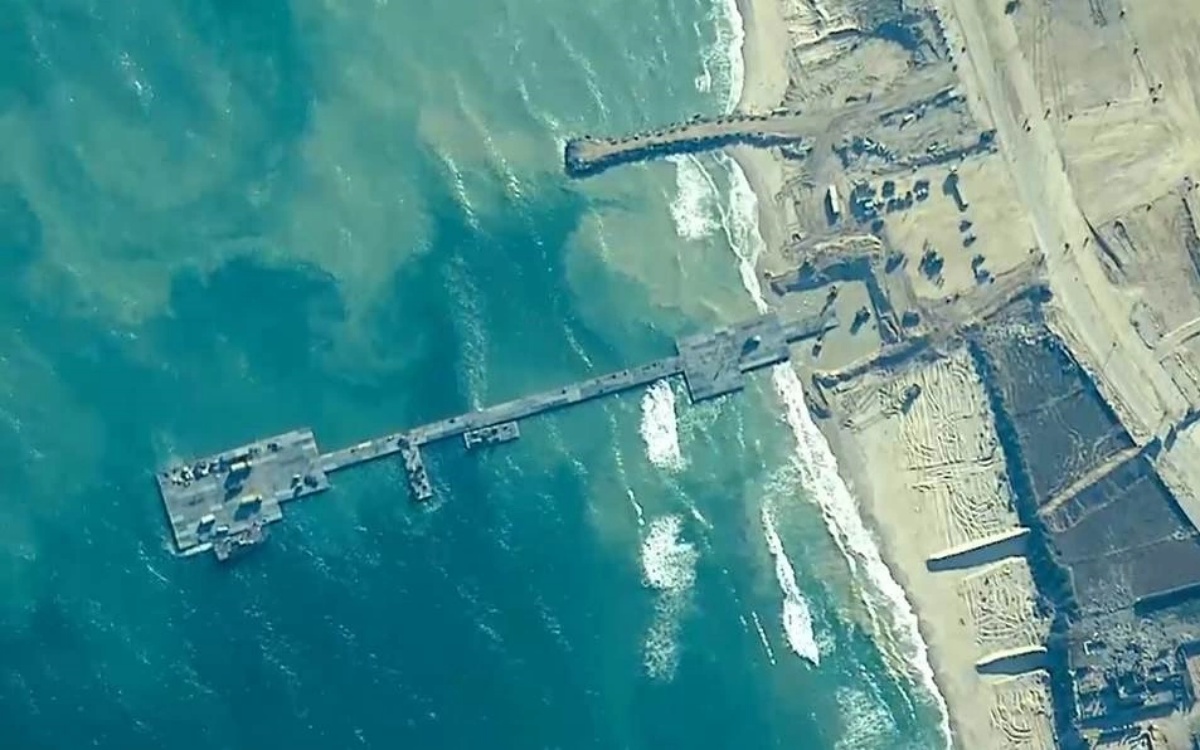


The Gaza Pier
Jun 3, 2024 5:18 AM
Updated Jun 3, 2024 1:56 PM
This seemingly benevolent endeavor masks an aggressive push to control Gaza’s offshore natural gas reserves, poised to enrich Israel and its allies at the expense of Palestinian sovereignty and welfare.
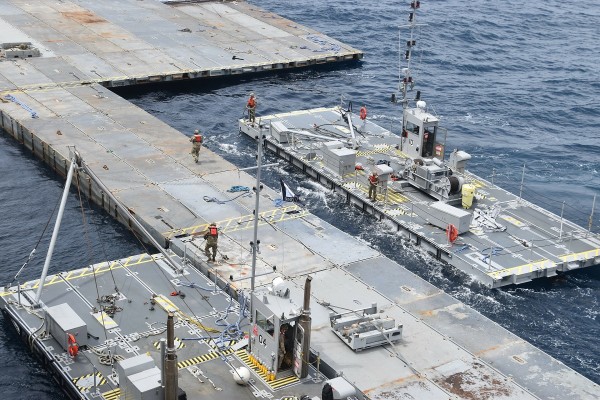
The temporary Gaza pier, a U.S.-built aid transfer point, faces setbacks as waves swept away supporting vessels, raising concerns about the humanitarian aid delivery process. The temporary Gaza pier, a U.S.-built aid transfer point, faces setbacks as waves swept away supporting vessels, raising concerns about the humanitarian aid delivery process. The project cost as much as $300 million with some reports as much as $320 million.
The pier collapse incident, reported by the U.S. Central Command (CENTCOM), occurred during the transportation of aid when the floating dock disconnected from its tugboat, causing vessels to break free from their moorings and become anchored on the nearby beach. Despite the challenges, CENTCOM personnel said that they are continuing to collaborate with USAID and the United Nations to ensure the delivery of aid to the people of Gaza through a temporary pier attached to the beach.
The pier not only puts American troops unnecessarily in harm’s way, but also damages the delicate marine ecosystem, potentially violating a host of international environmental laws and even the Administrative Procedure Act (ACA).
As the Biden administration touts the construction of a temporary port along Gaza’s coastline as a lifeline for delivering much-needed humanitarian aid, a darker motive lurks beneath the surface. This seemingly benevolent endeavor masks an aggressive push to control Gaza’s offshore natural gas reserves, poised to enrich Israel and its allies at the expense of Palestinian sovereignty and welfare.
Related stories
In early 2024, the Israeli government granted a gas exploration license to a multinational energy company for lucrative fields located squarely within maritime areas claimed by Palestinians. This transfer followed years of quiet Israeli maneuvering to assert sovereignty over these zones holding billions of dollars’ worth of untapped gas resources.
Senator Chris Van Hollen called for UNWRA funding to be reinstated in March 2024 and to allow UNRWA to assist with aid efforts through the temporary port. Such an humanitarian effort while well-intended is simply a delay tactic for the real push of oil and land grabs behind the current crisis.
The Goal of Transitioning to Commercial Operations
Under the thin veil of delivering aid more efficiently, the U.S. military has built a temporary pier infrastructure that can be transitioned to commercial operations. Conveniently, this new pier would give the United States, Israel, and their transnational oil and gas companies a physical foothold right at the epicenter of the contested gas fields, strengthening their hand over any future extraction plans. I would know as I worked in the extractive industries, precisely for Noble Energy, the oil and gas company that started offshore development in Israel and is now owned by Chevron. Most people have not heard of Noble Energy. It was a multi-billion operation with major plays in the United States, the Eastern Mediterranean (Cyrus and Israel), offshore West Africa, and some plays in China. The technology of oil and gas extraction is closely guarded so as not to let China get its hands on it.
Noble Energy was an independent energy company that played a major role in the early exploration and production of natural gas in Israel. The speed at which the work was done was astonishing. The approval needed for exploration and construction of offshore platforms would take weeks and months without the clunky guardrails of regulations that can delay projects for years and decades.
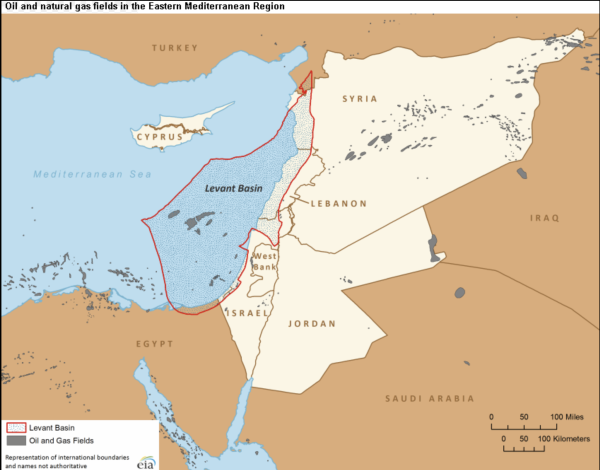
In December 2010, the company announced the discovery of the Leviathan gas field, a major offshore natural gas field located in the Mediterranean Sea. This discovery was a game-changer for Israel’s energy industry as it marked the country’s transition from being an energy importer to having the potential for energy self-sufficiency and even exports.
The Leviathan gas field is one of the largest natural gas discoveries in the world in the last decade and is estimated to hold approximately 22 trillion cubic feet of recoverable natural gas reserves. The discovery of this field has significantly increased Israel’s energy resources and has allowed the country to reduce its dependence on energy imports. Prior to the discovery of the Leviathan field, Israel’s oil and gas exploration efforts were relatively limited. The success of Noble Energy’s exploration activities spurred further interest and investment in the sector, including in Palestine. The last major violence in 2014 corresponded to the oil and gas discoveries.
In addition to its exploration activities, Noble Energy has demonstrated a commitment to industry standards and safety. In February 2011, the company received the first deepwater drilling permit in the Gulf of Mexico issued by the United States Department of the Interior after the moratorium following the Deepwater Horizon Spill, highlighting its adherence to safety protocols. More so, in October 2014, Noble Energy announced plans to establish a center to train technicians in the energy industry at Ruppin Academic Center in Israel, with a donation of NIS 12 million. This initiative showcased the company’s dedication to developing local talent and contributing to the growth of Israel’s energy sector. In all things, oil and gas, greed is insatiable.
The current episode of war on Gaza mirrors a long pattern of Israel exploiting its military occupation to confiscate and control valuable natural resources in Palestinian lands from the West Bank’s fertile grounds and aquifers to crude oil reserves. In each case, the rationalization is security concerns used as pretext to deny Palestinians autonomy over their own sovereign territories and riches.
For over 15 years, Israel has imposed an inhumane siege on the Strip, inflicting calamitous deprivation on the civilian population as overt collective punishment. Now, this humanitarian crisis of Israel’s own making is being exploited to establish military infrastructure well-suited for siphoning off Gaza’s future energy wealth while the population remains trapped in destitution. The plan is brazen as it is cruel.
The Gridlock on Food and Aid Trucks
At any point, Israel could allow in miles and miles of food and aid trucks. They would merely have to cross the border. Instead because Palestinians in Gaza cannot die fast enough from missile strikes and aerial bombing, Netanyahu’s government has engaged in a systematic effort to brand humanitarian assistance agencies as terrorist organizations.
The Leviathan gas fields are among the largest discoveries this century and are just offshore from Gaza, presenting a potentially transformative economic opportunity for the enclave were it allowed to benefit from its own resources. Instead, the prospect of this boon falling under Palestinian control appears to be precisely what Israel and its American benefactor aim to prevent through the port power play.
The injustice and naked profiteering are staggering. Rather than use the shared natural resources of the Mediterranean as a bridge to resolve the Israeli-Palestinian conflict, powerful forces seem bent on perpetuating Gaza's subjugation to plunder these assets for themselves alone.
The international community and U.S. lawmakers must see through this ruse. President Biden has shown himself to be incapable of handling this war on Gaza. True humanitarian concern would lift the draconian blockade on Gaza immediately, without strings attached. True respect for Palestinian sovereignty would involve good-faith partnership on any offshore resource development instead of unilateral steps that preempt and undermine it.
International Environmental Law Violations
The construction and subsequent collapse of the temporary Gaza pier, coupled with its underlying motives, potentially violate several international treaties and principles. The United Nations Convention on the Law of the Sea (UNCLOS) mandates the protection of the marine environment and respect for sovereign rights, both of which are compromised by the environmental damage from the pier’s construction, use, and collapse and the gas exploration licenses granted in Palestinian maritime areas. The Geneva Conventions and Additional Protocols emphasize the protection of civilian infrastructure, which is undermined by using the pier as a façade for resource extraction. The Convention on Biological Diversity (CBD) stresses the need to protect marine biodiversity, which is threatened by the pier’s environmental impact. Additionally, the International Covenant on Economic, Social and Cultural Rights (ICESCR) upholds the right to self-determination, violated by seeking to exploit Gaza’s natural gas reserves without Palestinian consent. Various international agreements require Environmental Impact Assessments (EIA) for significant activities, and the lack of proper assessment for the pier project breaches these obligations.
International Humanitarian Law (IHL) prohibits the misuse of humanitarian aid infrastructure, which is violated by the dual use of the pier for aid and commercial operations. These potential violations highlight the complex interplay between humanitarian efforts, environmental protection, and resource exploitation in conflict zones.
Free, Prior, and Informed Consent for Palestinian Natural Resources?
In the context of offshore oil reserves in Palestinian territories, the principle of free, prior, and informed consent (FPIC) is of paramount importance. This international human rights standard, recognized in the United Nations Declaration on the Rights of Indigenous Peoples (UNDRIP) and the International Labour Organization's Indigenous and Tribal Peoples Convention (ILO Convention 169), ensures that indigenous communities have the right to participate in decision-making processes concerning projects that affect their lands, resources, and way of life. FPIC mandates that consent from these communities must be given voluntarily, without coercion or pressure from external parties such as governments or corporations (free); sought sufficiently in advance of any authorization or commencement of activities (prior); based on all relevant information about the proposed project, provided in a language and format easily understandable to the affected communities (informed); and inclusive of the right to give or withhold consent, with the decision respected (consent). As the Palestinian people consider plans for offshore oil exploration and potential extraction, adherence to FPIC will be critical in protecting their rights to self-determination, cultural integrity, and control over their marine resources.
If this temporary port gambit advances unchallenged, it will prolong the suffering of Gaza’s civilians and to destabilize the region further by inflaming grievances over energy equity and national rights. Multinationals eyeing the gas reserves must recognize the blatant seizure of other people’s resources.
Humanitarianism is a noble veil, but it cannot hide the greed and domination driving Gaza’s genocide. The world is watching. Imagine if $320 million was spent to save the planet instead of destroy the ocean.
Comments

Powered by RoundtableAn AI/DeFi-powered Enterprise Media Operating System. Learn more at Roundtable.io.© Roundtable 2026. By using this site you agree to the Terms of Use and Privacy Policy