
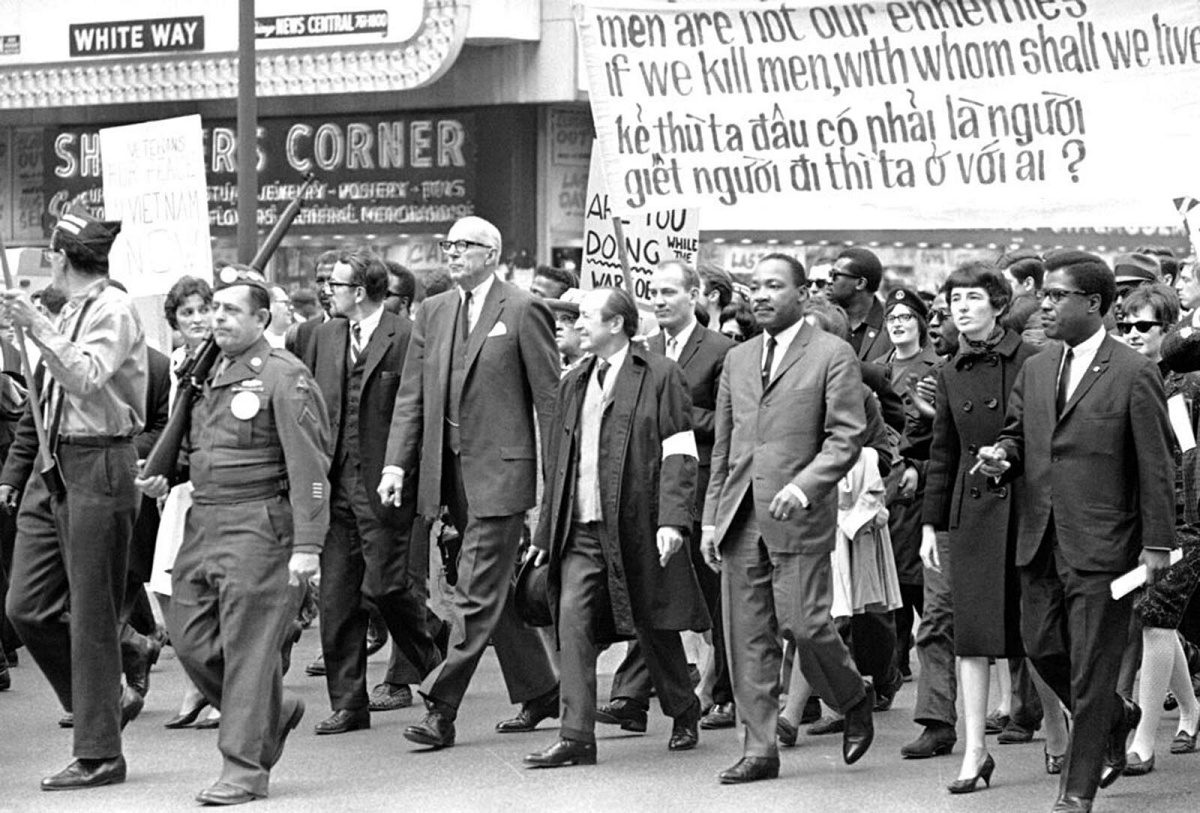
manhhai • Attribution (CC BY 2.0) • Wikimedia Commons


Ten-Step Guide for Peace in the Middle East
Jan 2, 2024 5:25 PM
For 2024, we need to build a broad critical mass to convince the U.S. Senate Foreign Relations Committee to support international calls for a ceasefire – as in this moment, right now.
In January, as we celebrate Martin Luther King Jr. Day, we need to know if our elected officials will be hiding in their offices on the Hill, participating in sanctimonious MLK celebrations, or out in the streets calling for peace. In March 1965, King openly expressed his opposition to the war for the first time, stating that while millions of dollars were being spent daily to keep troops in South Vietnam, our government was failing to protect the rights of African Americans in Selma. During an interview on Face the Nation, King stated that as a minister, he had a “prophetic function” and felt a strong concern for global peace and the survival of humanity.
Amid the missiles, bombs, and warships in the Middle East, 2024 brings an unexpected opportunity for peace. The congressional ceasefire resolution, far from being just another political maneuver, offers a shimmer of hope amid the prevailing gloom. Here is the Herculean task of transmuting cold reality into optimism. This resolution is the Democrats’ Hail Mary to rescue their party from impending doom, especially as their current nominee, President Joe Biden, faces a looming threat from an emboldened, insurrectionist Donald Trump.
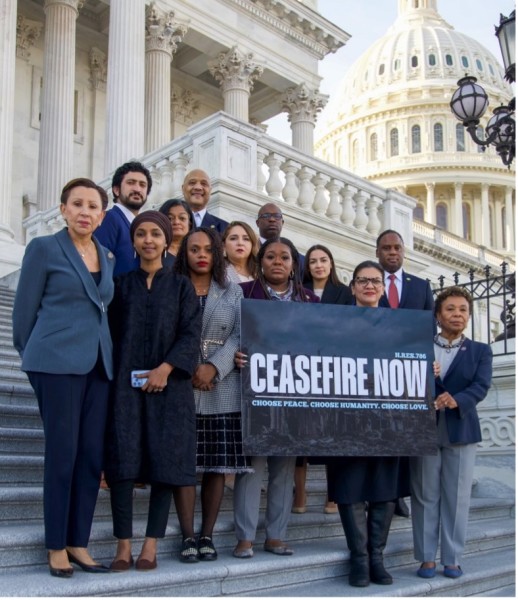
For 2024, we need to build a broad critical mass to convince the U.S. Senate Foreign Relations Committee to support international calls for a ceasefire – as in this moment, right now. President Joe Biden’s insolence toward the children of Gaza ruined America’s international standing worse than anything in my lifetime. So, if President Biden does not care about the children of Gaza, he should care at a bare minimum about his reputation abroad as it impacts us in the United States due to international business and trade.
Israel’s own state officials fear that the International Court of Justice could charge Israel with Genocide in Gaza, according to Haartz. The International Court of Justice shapes the development of international law, and its acceptance of South Africa’s claim could solidify the perception that Israel is committing genocide in Gaza, says international law expert Dr. Shelly Aviv Yeini.
Related stories
Denialism is what the “D” stands for in the Democratic Party.
Meanwhile, a coalition of predominantly male Muslim leaders kickstarted the #AbandonBiden campaign. Garnering coverage from CNBC, USA Today, Politico, The Guardian, Reuters, Daily Kos, Al-Jazeera, etc. This campaign stirred Democratic party insiders but failed to have them re-evaluate their strategy of putting up President Biden as a nominee. The breaking news is that the Democrats’ polling denialism does not fix the party’s minority voter problems and no amount of MLK quotes can resuscitate their war-mongering in the face of mounting political pressure.
A better strategy would be for #AbandonMen as leaders in the realm of politics, business, health, education, and climate, because they have brought us to this current state of affairs with war, economic turmoil, the pandemic, student debt, and environmental injustice. In fact, this brand of leadership has steered us into the shipwreck that is now world affairs.
Women and minorities must swoop in to clean up the mess. Journalist Rebecca Traister in her book, Good and Mad: The Revolutionary Power of Women’s Anger traces the historical use of women’s anger as a political catalyst, from suffragettes storming the White House to office workers vacating their buildings following the confirmation of Clarence Thomas to the Supreme Court. Traister examines women’s anger towards men and other women, animosity between ideological allies and adversaries, the diverse interpretations of anger depending on its source, the historical process of delegitimizing and caricaturing women’s anger, and how the collective rage of women has become politically transformative—as is undoubtedly the case today.
The Squad to the Rescue
Enter Congressmembers Bush (MO-01) and Rashida Tlaib (MI-12), leading a brigade that includes André Carson (IN-07), Summer Lee (PA-12), and Delia C. Ramirez (IL-03). They introduced H. Res. 786, the Ceasefire Now Resolution, sparked a political wildfire, reawakening activists across the world. This resolution, urging the Biden Administration for an immediate ceasefire in Israel and occupied Palestine, went from 13 co-sponsors to a cool 18 in a month.
Now, a coalition of 62 Congress members across 23 states, including U.S. Senators Dick Durban (IL), Jeff Merkley (OR), Elizabeth Warren (MA), and Peter Welch (VT), have jumped on this peace train, according to the ceasefire tracker of the Working Families Party created and updated in collaboration with Jewish Voices for Peace. These numbers are increasing, and this spring will reach a tipping point, but each day the deaths pile up. A ceasefire is inevitable, but the issue is when.
Let us not forget hundreds of thousands of calls to Congress and the White House, proving that when constituents hold, leaders must listen. Another bigger threat for the Democratic Party is that primary challengers are coming out of the woodwork.
For example, several Democratic primary challengers have emerged in House races across the country from Ahmed Mostafa in California, Mahnoor Ahmad in Illinois, Derek Marshall in California, Pervez Agwan in Texas, and Zarqa Abid in Ohio. Nasser Beydoun has jumped into the U.S. Senate Race in Michigan. These candidates have the chance to disrupt systems and bring about meaningful change.
Ahmed Mostafa: (ahmedforcongressca.com) • Mahnoor Ahmad. (X: @ahmadforhouse) • Derek Marshall. (derekmarshallca.com).
Pervez Agwan. (agwanforus.com). • Zerqa Abid. (zerqaabid.com) • Nasser Beydoun. (nasserformi.com).
Ten steps to achieve a ceasefire in 2024
These Ten Steps to Achieve a Ceasefire in 2024 outlines a strategic approach to conflict resolution, emphasizing the need for broad public support, effective communication, and the involvement of influential figures. International backing and grassroots organization are essentials for credibility and local relevance. Clear objectives, effective monitoring, addressing root causes, fostering dialogue, and resilience are other key components. This comprehensive plan aims to unite various stakeholders from community to global levels, advocating for a concerted effort towards sustainable peace.
- Broad Support: The Cornerstone of Change: For a ceasefire to succeed, it must be rooted in the collective will of the people. This requires gaining the support of a wide spectrum of society - from community leaders and activists to those directly affected by the conflict. Their voices must not only be heard, but also echoed in the corridors of power.
- Effective Communication: The Bridge to Understanding: Awareness is the first step towards action. The goals and benefits of a ceasefire need to be clearly communicated through media, social media, and community outreach, creating a narrative that resonates with people's aspirations for peace.
- Involvement of Influential Figures: Amplifying the Message: The endorsements of religious leaders, celebrities, and political figures can significantly influence public opinion. These figures can act as catalysts, bringing credibility and attention to cause.
- International Support: Solidarity Beyond Borders: The backing of international entities, including governments, NGOs, and the United Nations, is imperative. Such support not only adds credibility, but also places a ceasefire within a global framework of peace initiatives.
- Grassroots Organization: The Power of the People: The mobilization of local communities ensures that the campaign is grounded in the realities of those most affected. This grassroots approach ensures that the ceasefire is not just a top-down directive but a reflection of people's will.
- Clear Goals: Charting the Path Forward: A successful ceasefire campaign requires clear, realistic, and achievable objectives. The terms, duration, and aims of a ceasefire must be unambiguous, offering a roadmap for future peace efforts.
- Monitoring and Enforcement: Safeguarding the Agreement: The establishment of mechanisms to oversee the ceasefire and address violations is crucial. This ensures accountability and builds trust among all parties involved.
- Addressing Root Causes: Healing the Wounds of Conflict: To ensure lasting peace, the underlying issues that fuel this conflict must be addressed. This involves tackling the political, economic, and social injustices that have long plagued the region.
- Negotiation and Dialogue: The Foundation of Lasting Peace: Encouraging discussions between conflicting parties with the assistance of neutral mediators is essential. The dialogue opens doors to understanding and reconciliation, paving the way for a peaceful future.
- Resilience: Staying the Course: The path to peace is often fraught with challenges. It is essential to maintain momentum, adapt to change, and remain steady in the pursuit of peace.
The Ceasefire Resolution is a movement. From the halls of Congress to the streets of cities worldwide, the call for peace has become the drumbeats of hope, resilience, and action. If history has taught us anything, when the world unites in a chorus for change, even the most entrenched conflicts can find a melody of peace.
Comments

Powered by RoundtableAn AI/DeFi-powered Enterprise Media Operating System. Learn more at Roundtable.io.© Roundtable 2026. By using this site you agree to the Terms of Use and Privacy Policy