


Sep 4, 2025 11:29 PM
Updated Sep 5, 2025 4:43 AM
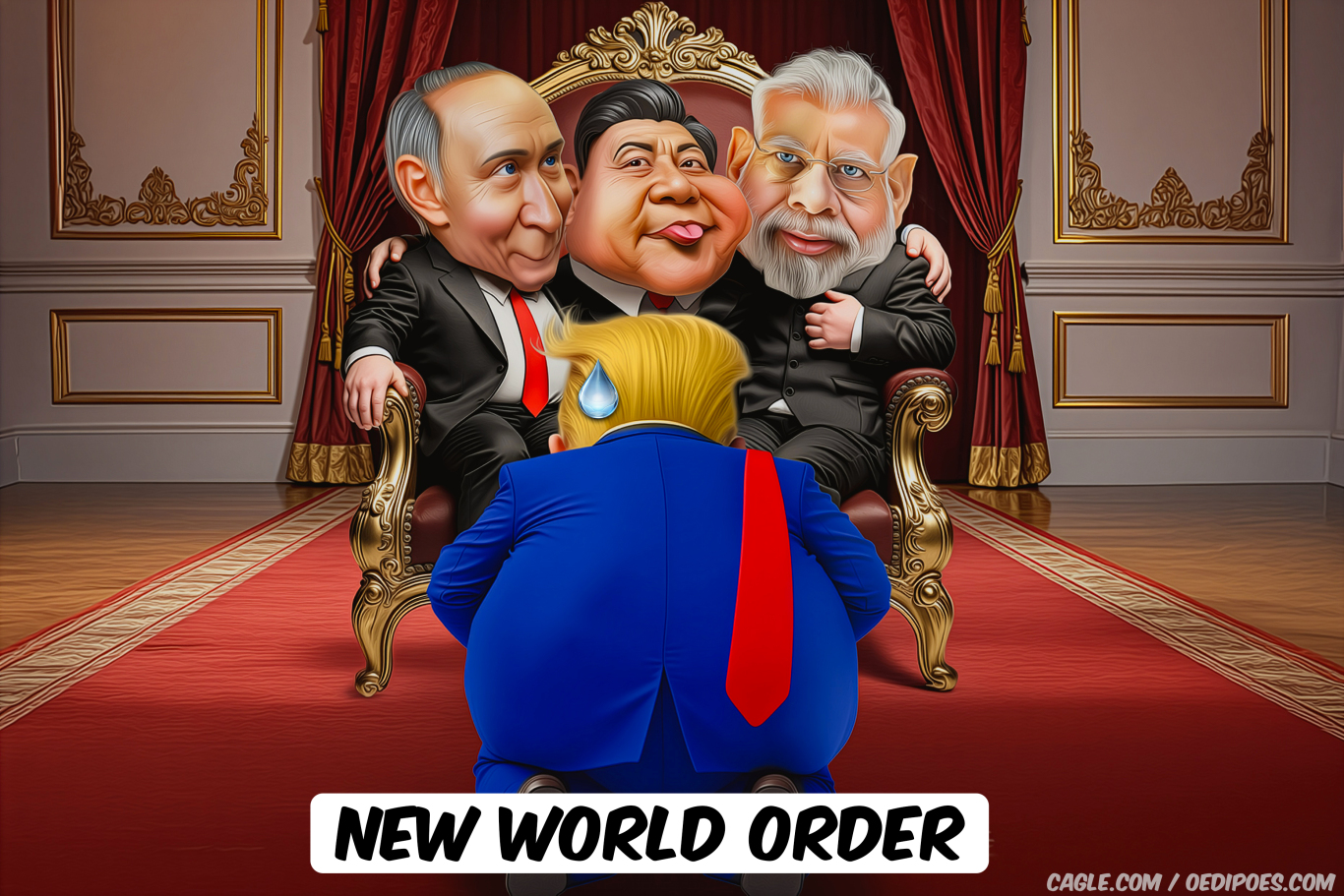
At China’s historic gathering, military might and political theater converged—showcasing Beijing’s role at the center of a multipolar world while Trump doubles down on tariffs at home.
On September 3–4, 2025, China staged a massive military parade in Beijing—and the guest list told the story. Xi Jinping seated Vladimir Putin and Kim Jong Un beside him, a choreographed tableau of defiance to the U.S.-led order as the SCO summit rolled through Tianjin and the capital’s ceremonies. Kim used the occasion to pledge “full support” to Russia and then held bilateral talks with Xi; Putin basked in the optics of great-power camaraderie. India’s Narendra Modi worked the same stage, signaling hedging and leverage as U.S.-India ties strain under new tariffs. This isn’t atmospherics—it’s realignment.
Meanwhile, in Washington, the tariff lever that defined Donald Trump’s economic statecraft is wobbling. The administration is pressing the U.S. Supreme Court to rescue its sweeping tariff regime after a federal appellate decision undercut its legal basis. Trump warns of catastrophe if the tariffs fall; critics warn of lawlessness and economic whiplash if they stand. Either way, the fight exposes how much U.S. strategy has been reduced to a single instrument—tariffs—while rivals are building coalitions.
The Beijing Message: Multipolarity With Teeth
The parade’s script was clear. Xi cast this historical moment as a fork in the road—“peace or war”—and showcased China's cutting-edge weapons systems as Putin and Kim looked on. It was less about past victory than present leverage: China can convene. It can choreograph. And, increasingly, it can center non-Western politics around itself. Western leaders mostly stayed away; the photo that mattered was Xi-Putin-Kim on the same viewing stand.
Kim then amplified the signal. In Beijing meetings, he promised to do “everything I can” to aid Russia—language aligned with reports of North Korean support to Moscow’s war effort. He and Xi publicly pledged deeper coordination, even as Beijing keeps a careful distance from Pyongyang’s recklessness to protect its global image. That, too, is power: China tightening the net when it chooses, loosening it when it must.
Related stories
Modi’s presence—and warmth—had its own subtext. India isn’t flipping to Beijing. It’s hedging hard, extracting concessions from all sides. But the optics of Modi smiling alongside Xi and Putin just days after the U.S. slapped India with harsh trade penalties are not subtle: Washington’s tariff broadside is pushing key swing states of the Global South to keep their options open. The Guardian
Tariffs as Strategy: A Hammer in a World of Locks
Trump’s second-term economic nationalism formalized a 10% universal tariff, with higher rates targeting major partners and China—collected at the border since April. In May, U.S. trade officials doubled down: the universal levy will remain. This is the core doctrine: pressure first, deals later. But as courts scrutinize the legal foundation, the tariff state starts to look less like strategy and more like improvisation.
We’ve seen the collateral before. The 2018–2019 trade war left U.S. agriculture with heavy losses and forced Washington to shovel out tens of billions in emergency aid to farmers to staunch the bleeding—not exactly a sustainable industrial policy. Today’s tariff round is bigger, angrier, and colliding with synchronized moves abroad. If the old trade war bent supply chains, this one may re-route them—permanently.
What Beijing, Moscow, New Delhi, and Pyongyang Just Told Us
1) China is operationalizing convening power.
According to many reports, the parade and SCO agenda weren’t primarily about soldiers and missiles. They were about center of gravity. Xi can assemble a room of leaders (and cameras) on 48 hours’ notice and make the West react. That shapes expectations in Asia, Africa, and Latin America about who brokers what, where, and when.
2) Russia is laundering isolation through pageantry.
For Putin, a Beijing spotlight offsets Western isolation. Kim’s lavish pledge of support is propaganda gold for Moscow—and a headache for Washington and Seoul.
3) North Korea is transactional—and bold.
Kim’s message was maximalist by design. He extracted face time with both Xi and Putin, signaled relevance, and leveraged the moment to deepen ties—all while China calibrates its distance to avoid reputational blowback.
4) India will not be dragooned.
Modi’s choreography says “yes, and”: yes to QUAD naval drills when it suits New Delhi; yes to SCO optics when it boosts leverage. Tariffs from Washington don’t corral India; they catalyze its bargaining position.
The U.S. Blind Spot: When Everything Is a Tariff
Tariffs can inflict pain; they rarely solve structural gaps: capital formation, worker power, technology, logistics, and standards. A universal tariff is a megaphone; it’s not a supply-chain strategy. And now it’s tied up in court—with the administration urgently asking the Supreme Court to rescue the policy before the holidays. That’s not leverage; that’s roulette.
If the U.S. wants real bargaining power in a world where Xi can stage a Putin–Kim–Modi tableau on a weekday, it needs more than customs duties. It needs a package that allies can join, rivals must respect, and domestic constituencies actually feel.
Here's the skinny on the SCO Summit
The Organization: The Shanghai Cooperation Organisation (SCO) began in 2001, rooted in the earlier Shanghai Five alliance of China and Central Asian neighbors. Its main purpose: boost regional security, economic ties, and political cooperation across Eurasia.
Today, the SCO is the world’s largest regional grouping by land size and population, encompassing:
- Ten member states, including heavyweights like China, Russia, India, Pakistan, Iran, and Belarus. Wikipedia
- A significant economic and demographic footprint—covering about 24% of global land area and 42% of the world’s population, with roughly 36% of global GDP by PPP.
The Summit: The SCO Summit is an annual gathering of heads of state from member countries. It’s the organization’s top decision-making event, where leaders hash out policy directions.
- 2025 Tianjin Summit: The 25th edition, held August 31–September 1 in Tianjin, China. It’s the largest summit in SCO history. Wikipedia
- The summit included side events—foreign ministers meetings, economic forums, media roundtables, and symbolic cultural engagements—all building up to the leaders’ meeting.
Why The SCO Summit Matters
The SCO promotes regional peace, development, and security cooperation. It lacks binding military or economic compacts like NATO’s Article 5 but politically, it functions as a forum for non-Western powers—notably China and Russia—to push back on U.S.-dominated norms.
2025 Highlights: From Talk to Action
At this year’s summit held alongside China’s massive WWII victory parade:
- Xi Jinping denounced ‘bullying’ and the Cold War mindset, offered SCO states funding and infrastructure proposals, and urged economic integration—proposing a SCO development bank.
- Putin blamed the West for Ukraine’s conflict, called for a new Eurasian security framework, and portrayed the SCO as an alternative to Washington-aligned institutions.
- The summit also deployed strong symbolism—Putin, Modi, and Kim Jong Un arriving together onstage under Xi’s watch, sending a message of solidarity.
Bottom Line
- The SCO Summit is no mere talking shop. It’s a stage where China signals leadership, where members nudge Asia—and indirectly Africa, Latin America—toward multipolar governance.
- It’s not yet a military or economic counterweight to NATO, more a political posture and a future infrastructure-in-the-making.
- 2025’s summit escalated contrasts: while U.S. leans on tariffs, the SCO offers grants, infrastructure, and a narrative shift. For policymakers—and critical thinkers—this is a reminder: global arrangements are in flux, and if you’re not willing to build alliances, others will build them—with or without you.
Beijing just showed the world that it can gather the cameras and the leaders and set the mood music. Moscow used the stage to launder isolation. Pyongyang grabbed relevance. New Delhi pocketed leverage. And Washington? It’s still arguing with itself about a tariff doctrine that’s in court.
This moment doesn’t just test U.S. power—it tests true measures of power. If the answer to a reorganizing world is to “add 10% at the port,” we will lose the plot to those writing it elsewhere. If the answer is coalitions, standards, real investment, and lawful tools, let's hope the U.S. begins to see the light. We must begin to see that increasingly, we are living in a world where others insist on dancing to their own music and they are developing powerful coalitions that will make that possible.
Comments

Powered by RoundtableAn AI/DeFi-powered Enterprise Media Operating System. Learn more at Roundtable.io.© Roundtable 2026. By using this site you agree to the Terms of Use and Privacy Policy