
Puerto Rico’s Independence Movement


Path to Prosperity
Jun 3, 2024 2:30 PM
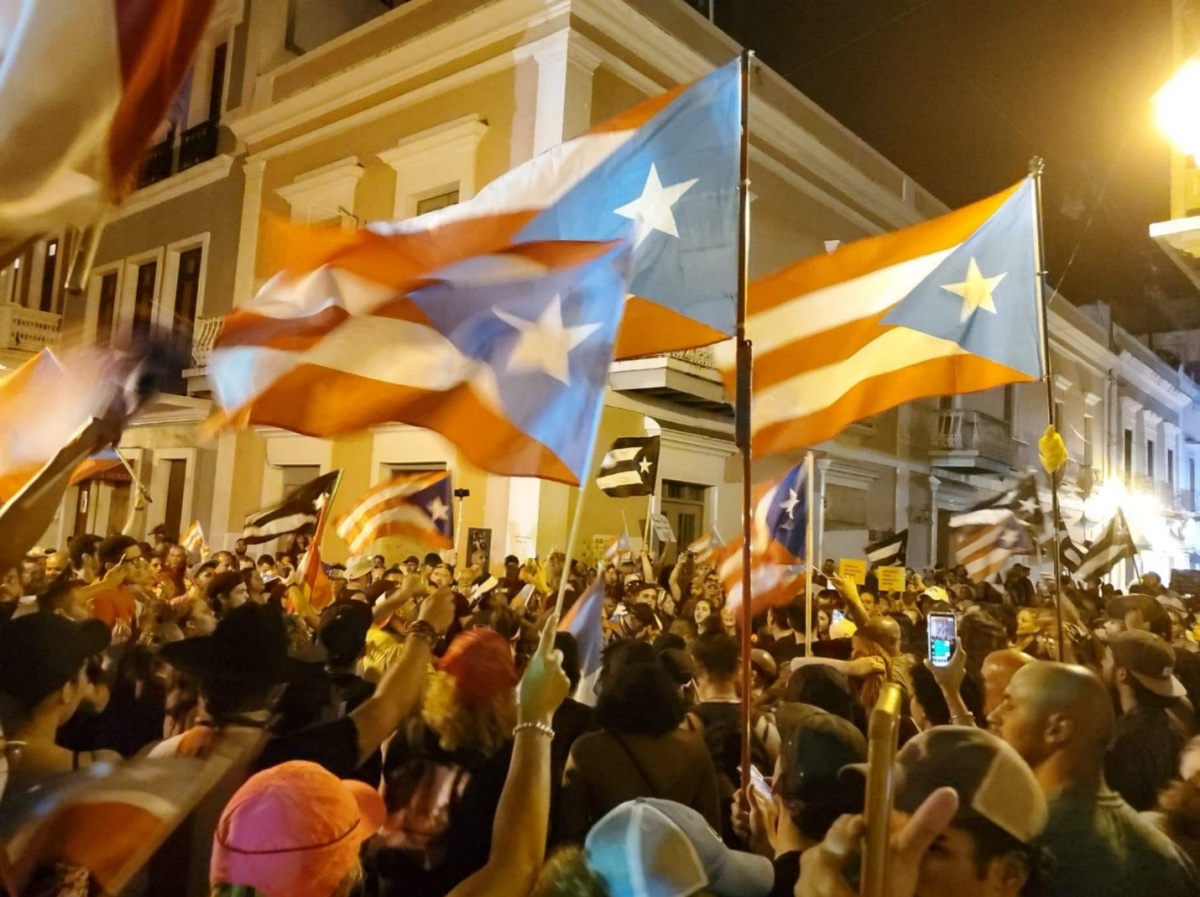
As support for statehood decreases, support for sovereignty, either independence or free association, continues to grow in Puerto Rico and among the Puerto Rican diaspora in the United States.
Puerto Rico's current status as a U.S. territory encapsulates a complex blend of challenges and opportunities. Puerto Rico's unique position and territorial status have sparked ongoing debates about decolonization and its future, with national sovereignty via a Compact of Free Association emerging as a compelling alternative that promises self-governance, democracy, enhanced self-determination, and economic revitalization.
Considering the U.S. Congress’ historical 125-year rejection of annexation (statehood) and the recent surge of pro-sovereignty support and sentiment at the polls and the street (led by youths and professionals) across the political spectrum in Puerto Rico, this context and positive experience provide an opportunity and a robust framework for considering a similar arrangement for Puerto Rico, the world’s oldest colony. As support for statehood decreases, support for sovereignty, either independence or free association, continues to grow in Puerto Rico and among the Puerto Rican diaspora in the United States. Many are realizing that a COFA aligns with the strategic interests of both Puerto Rico and the United States, paving the way for an empowered Puerto Rican economy and democratic governance structure.
Historical Precedents & Operational Insights
The concept of a COFA has been successfully implemented between the United States and several Pacific nations, notably the Federated States of Micronesia, the Republic of the Marshall Islands, and the Republic of Palau. These agreements have facilitated a transition to sovereignty and democratic self-governance, while maintaining beneficial and strategic ties with the U.S., particularly in defense, security, and economic development.
Benefits of a COFA for Puerto Rico
- Economic Empowerment & Development: National sovereignty under a COFA would allow Puerto Rico to control, develop, and implement its own national economic policies, negotiate its trade agreements (with the United States and other nations), control its maritime borders and ports of entry, and attract foreign investments under favorable terms, thus stimulating growth in key sectors such as education, manufacturing, tourism, energy, technology, agriculture, and financial services.
- Political & Democratic Advantages: A COFA would grant Puerto Rico legislative and administrative sovereignty, allowing for more effective democratic governance and representation. A COFA would establish and secure Puerto Rico’s international presence and diplomatic engagements, as it could finally join regional and international bodies (such as the United Nations, the Association of Caribbean States, and the Organization of Eastern Caribbean States, among others) as a sovereign entity and member state. As a sovereign nation with a COFA, Puerto Rico would be a strong regional U.S. ally and strategic partner in the Caribbean and Latin America.
- Cultural & Social Progress: With national sovereignty, Puerto Rico could better preserve and promote its cultural identity and heritage; protect and promote the Spanish language while promoting multilingualism; and address social needs tailored to its unique demographic and historical context.
- Defense & Security: Puerto Rico would likely retain a U.S. military presence, ensuring security guarantees and access similar to other COFA states, while also gaining the ability to manage its internal security strategies more effectively via the establishment of a national defense force, a national security infrastructure, and reformed national police.
Related stories
Economic & Legislative Framework for Transition
Transitioning to a COFA would involve reprogramming U.S. appropriations into a more flexible block grant system, allowing Puerto Rico to prioritize its economic developmental needs. This would entail a negotiation process with the U.S. government to establish the terms of the block grant, including oversight mechanisms and duration. Under the terms of a COFA, Puerto Rico would also be able to benefit from a free transit policy (between the United States and Puerto Rico) and various federal programs and services, which are currently administered by the U.S. Department of the Interior.
Legal Steps & Challenges
Implementing a COFA for Puerto Rico requires drafting a detailed agreement that outlines the economic relations, defense arrangements, and citizenship status, among various other factors. The U.S. Congress and Puerto Rico must ensure that Puerto Ricans are informed about all aspects of the COFA, the transition plan, and the economic potential of a sovereign Puerto Rico. This decolonization process would also involve amending local laws and governmental structures and institutions to align with the new status and obtaining approval from the U.S. Congress. Once approved by the U.S. Congress, the Puerto Rican people would be able to vote for the COFA. Once supported by the Puerto Rican people, a Constitutional Convention would be established to plan and ratify a new national constitution and a democratic political system for a sovereign Republic of Puerto Rico under the negotiated terms of the COFA.
The potential establishment of a Compact of Free Association represents a forward-thinking consensus solution that aligns with both Puerto Rican aspirations (national sovereignty, democracy, and self-governance, yet maintaining ties to the United States) and U.S. strategic interests in the 21st century. The U.S. cannot and should not continue to hold onto Puerto Rico as a colony that, due to these very colonial limitations, has been fleeced by decades of corruption, dependency, public debt, poverty, and incompetent colonial administrations. It is time for the U.S., as the administrating power, to finally dispose of the territory and transition Puerto Rico toward national sovereignty, democracy, and economic prosperity. For the United States, having a strong and prosperous regional ally in the Caribbean is better (morally, politically, and economically) than continuing to maintain and prop up a corrupt, shameful, poor, dependent, expensive, and bankrupt colonial territory.
A COFA promises stability, economic revival and development, social advancement, and democratic political empowerment, actively facilitated by a new sovereign political order and structure designed to foster Puerto Rican identity and self-governance. As such, Puerto Rican and American stakeholders (both in Puerto Rico and in the United States) are encouraged to engage in robust dialogue and collaborative planning to realize this vision, paving the way for a stable, prosperous, and thriving Puerto Rico.
For Puerto Rico and the United States, the only viable and acceptable path for Puerto Rican decolonization is national sovereignty: Puerto Ricans just need to decide whether that sovereignty will be under independence (and a Treaty of Friendship & Cooperation with the U.S.) or via free association and a COFA arrangement with the United States. Both sovereignty options are dignified and non-territorial status options that would be supported by the U.S. Congress and the Puerto Rican people, particularly if the U.S. Congress publicly supported decolonization and the transition to sovereignty.
This comprehensive exploration aims to engage and inform policymakers, community leaders, and citizens, encouraging a consensus around the benefits and feasibility of a COFA for Puerto Rico. Through informed discussions and strategic planning, a COFA could very well be the consensus option that ushers in a new era of prosperity and autonomy for Puerto Rico.
Comments

Powered by RoundtableAn AI/DeFi-powered Enterprise Media Operating System. Learn more at Roundtable.io.© Roundtable 2026. By using this site you agree to the Terms of Use and Privacy Policy