
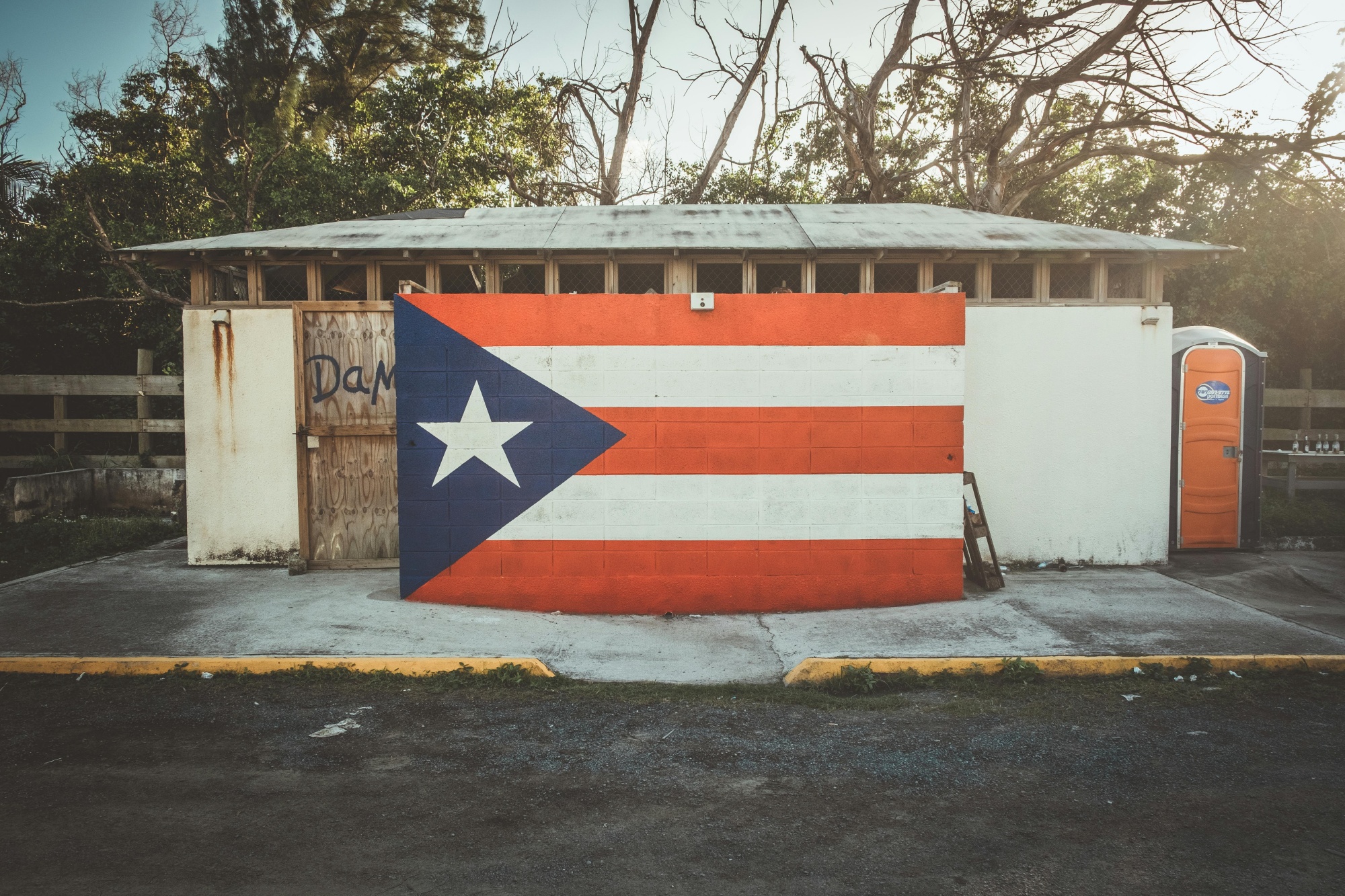
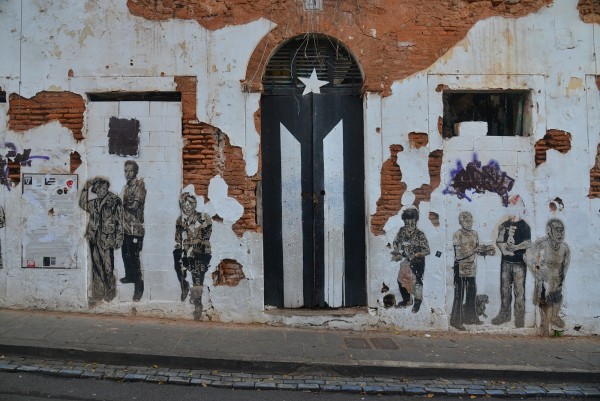
Photo by Jo Kassis


The lessons from our Caribbean neighbors offer a compelling blueprint and inspiration for Puerto Rico's potential future as a sovereign, thriving nation.
Aug 25, 2024 8:30 PM
Updated Sep 10, 2024 2:01 PM
The lessons from our Caribbean neighbors offer a compelling blueprint and inspiration for Puerto Rico's potential future as a sovereign, thriving nation.
The Caribbean region is a rich tapestry of nations and territories, each with its own unique history, culture, and economic journey. This vibrant and diverse region has seen many of its countries decolonize and transition from colonial rule to independence, a shift that has often catalyzed substantial economic growth and development.
The path to independence has allowed these nations to take control of their economic policies, harness their natural resources, and foster industries tailored to their strengths, such as tourism, agriculture, and manufacturing. These transformations have boosted their GDP and improved living standards, infrastructure, and social indicators like education and healthcare.
Most importantly, the autonomy gained through independence has empowered these countries to negotiate trade agreements, attract foreign investment, and integrate more fully into the global economy, a potential that Puerto Rico could also realize.
This article delves into the economic trajectories of key Caribbean nations that achieved independence after 1952, providing a robust basis for comparison with the current economic situation in Puerto Rico, which remains a U.S. colonial territory. The article underscores the significant progress these countries have made by analyzing the post-independence growth of nations such as:
Related stories
- Jamaica
- Trinidad
- Tobago
- Barbados
- The Bahamas
- Grenada
- Dominica
- Saint Vincent
- the Grenadines
The evidence shows that independence has been a turning point, leading to diverse and resilient economies.
In contrast, Puerto Rico (under continued U.S. colonial rule) continues to face economic stagnation, high dependency on federal aid, and numerous social, political, and economic challenges. This comparison makes a compelling case for Puerto Rico's potential to achieve similar or even greater economic success as a sovereign nation, leveraging its strategic location, rich natural resources, capable human capital, and the ability to form its own trade and economic policies.
Ironically, in Puerto Rican politics and society, the pro-statehood (annexation) and colonialist parties have historically used the notion of "Caribbean poverty" as a rationale to oppose independence for Puerto Rico. These groups believe that U.S. colonial rule has been beneficial to Puerto Rico, while the independent Caribbean nations struggle to grow their economies.
Many believe the colonial narrative, despite evidence to the contrary, that Puerto Rico's colonial and subordinate relationship with the United States has afforded it better economic conditions than "those little Caribbean islands."
However, as the data reveals, the independent nations of the Caribbean not only enjoy the dignity of freedom, but they have also achieved higher average GDP growth rates and greater overall GDP increases compared to Puerto Rico. As one can imagine, colonialist leaders in Puerto Rico do not want the Puerto Rican people to realize this since it would help destroy the myth of “colonial prosperity and development” in the world’s oldest colony.
Understanding Puerto Rico’s Colonial & Distorted GDP
The federal and local tax laws that treat Puerto Rico as a tax haven have significantly distorted Puerto Rico's Gross Domestic Product (GDP), masking its true economic condition. The practice of companies like Microsoft shifting massive profits—at least $39 billion in this case—to Puerto Rico at nearly 0% tax rates has artificially inflated the territory's GDP.
These profits, while recorded in Puerto Rico, do not represent actual economic activity that benefits the Puerto Rican economy; instead, they are essentially paper transactions designed to take advantage of favorable tax laws. This disconnect is evident in the sharp 2.5% GDP decline in 2022, largely attributed to a 24.7% drop in investments in intellectual property products, a sector that does not genuinely reflect Puerto Rico's economic reality.
The inflated GDP figures give the false impression of a thriving economy, when in reality, the Gross National Income (GNI) per capita—reflecting the actual income of Puerto Rican residents—is much lower, highlighting a significant disparity between the wealth generated on paper and the wealth that remains in the hands of Puerto Ricans.
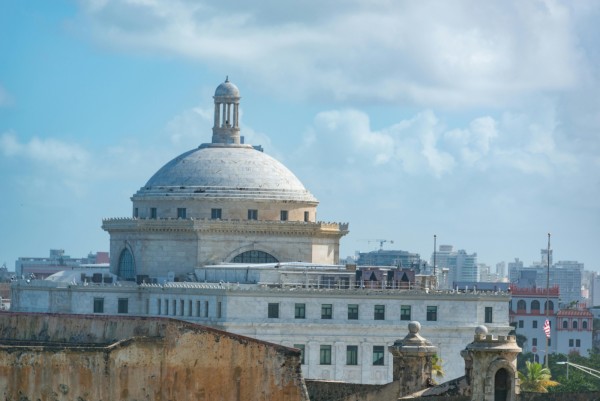
Microsoft's tax avoidance strategies, exemplified by the sale of its intellectual property to a small factory in Puerto Rico, illustrate the exploitation of colonial tax structures to evade billions in U.S. taxes. Despite the factory's negligible operational capacity, the tax deal was made to seem legitimate through meticulous but questionable accounting practices.
This scenario, currently dubbed "leprechaun economics," echoes W.E.B. Du Bois's historical critique of colonial economies in his 1945 book, "Color and Democracy: Colonies and Peace," where the wealth generated by U.S. corporations in Puerto Rico is siphoned off without benefiting the Puerto Rican population. These colonial economic policies, still in practice today, have extracted billions of dollars and wealth from the Puerto Rican economy.
This practice not only skews economic indicators like GDP but also perpetuates economic dependence, control, and underdevelopment in Puerto Rico (policies promoted by the pro-statehood and colonialist parties), while U.S. and foreign corporations reap massive financial benefits at the expense of both the U.S. Treasury and Puerto Rican residents.
Economic Growth in Post-Independence Caribbean Nations
Once one understands how Puerto Rico’s colonial GDP is artificially inflated by exploitative tax laws and evasion schemes and thus does not reflect reality in the local economy, one can begin to embrace the idea and possibility of Puerto Rico taking a different path toward economic growth and development, a path already taken by many of its Caribbean neighbors.
Below is a detailed chart showing the year of independence, the average GDP growth rate (using the Higher Growth Rate Calculation) from the specific year of independence to 2022, the total percent increase of GDP since independence, and the key growth drivers for several independent Caribbean nations:
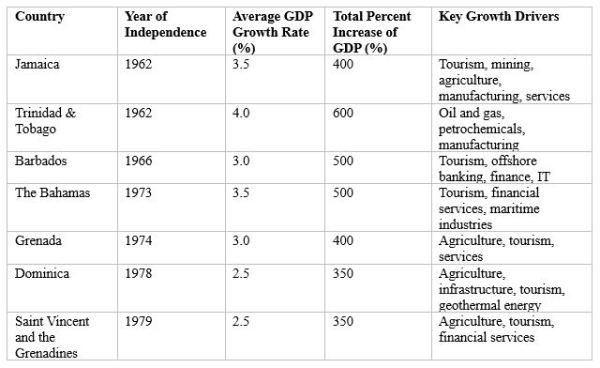
These data points illustrate how these Caribbean nations have utilized their independence to foster economic growth through various key sectors. In contrast, Puerto Rico, as a U.S. colonial territory with no power over its economic policies, has faced severe economic challenges, crises, debt, and stagnation, highlighting the potential benefits of sovereignty for economic growth and development.
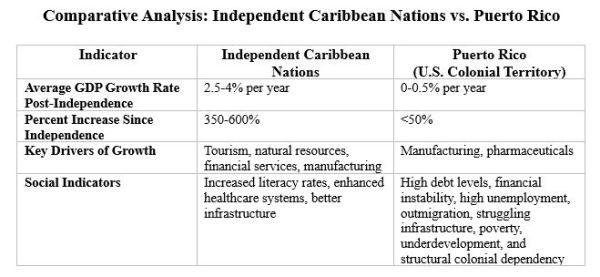
Comparative Analysis: Independent Caribbean Nations vs. Puerto Rico
The comparative analysis highlights the stark differences between the economic trajectories of independent Caribbean nations and Puerto Rico. Independent Caribbean nations (most of whom are smaller than Puerto Rico) have experienced substantial economic growth and development since gaining independence, driven by diversified economies and strategic investments in key sectors. These nations have also achieved significant improvements in social indicators such as education, healthcare, and infrastructure.
In contrast, Puerto Rico, as a mere U.S. colonial territory, has struggled with economic stagnation, high debt levels, and a lack of diversified growth due to colonial design and policies. Colonies solely exist to be exploited and their wealth extracted, not developed.
Over the last 30 years, Puerto Rico has faced numerous economic challenges, including recession, high unemployment rates, energy crises, and significant outmigration. The heavy reliance on federal funds and the lack of economic self-rule and decision-making have exacerbated these issues, leading to a lower average GDP growth rate and a much smaller total percent increase in GDP than its independent Caribbean counterparts.
The Pillars of Colonial Economic Dependence
Puerto Rico heavily relies on federal transfers from the U.S. government, which constitutes a significant portion of its economic framework. In the fiscal year 2020, these federal transfers accounted for approximately 25% of Puerto Rico's GDP, highlighting the territory's chronic colonial dependence on external financial support.
This structural and institutionalized dependency on federal funds underscores the limitations imposed by Puerto Rico’s current political status, which restricts its ability to generate independent revenue streams and implement autonomous and national economic policies. Colonialism limits and shackles Puerto Rico promotes poverty and ensures its dependence on U.S. federal funds.
The influx of federal funds supports various public services and social programs, yet this colonial dependency also exposes Puerto Rico to potential vulnerabilities and uncertainties linked to changes in U.S. federal policies and budget allocations.
The economic challenges of Puerto Rico are exacerbated by its substantial public colonial debt, which stood at approximately $74 billion. This staggering level of debt led to a bankruptcy filing under Title III of the Puerto Rico Oversight, Management, and Economic Stability Act (PROMESA) in 2016, marking the largest municipal bankruptcy in U.S. history.
The debt crisis has strained Puerto Rico's financial resources, limiting its ability to invest in critical infrastructure, healthcare, and education. Additionally, the fiscal constraints imposed by the anti-democratic and unelected Fiscal Control Board (known as “La Junta”), have demanded severe austerity measures and budget cuts, further impacting Puerto Rico's economic stability and the well-being of its residents.
The ongoing debt restructuring efforts under PROMESA aim to provide some relief for bondholders, but the long-term economic implications and negative impact remain a significant concern for the Puerto Rican people.
Unemployment is another critical issue facing Puerto Rico, with the unemployment rate recorded at 6.2% as of 2023. This rate is significantly higher than the U.S. national average, reflecting the economic struggles and lack of job opportunities. High unemployment contributes to widespread economic insecurity and exacerbates social challenges, including poverty and crime.
The lack of employment opportunities also drives many Puerto Ricans, particularly youth and professionals, to seek better prospects in the United States and other countries, further depleting Puerto Rico's human capital and exacerbating the cycle of economic stagnation.
Over the past decade, Puerto Rico experienced an outmigration - population decline of about 11.8%, primarily due to economic hardship and lack of opportunities. This significant outmigration has led to a "brain drain," where young, skilled, and educated individuals leave Puerto Rico in search of better employment and living conditions elsewhere.
The exodus of working-age residents has critical implications for Puerto Rico's labor market, economic productivity, and demographic structure. The loss of a significant portion of the population also places additional strain on Puerto Rico’s social services and economic base, making recovery and growth more challenging.
As if that was not enough, nearly 43% of Puerto Rico's population lives below the poverty line, compared to the U.S. national average of 12.6%. This high poverty rate highlights the severe economic disparities and the challenges faced by a large segment of the population in meeting basic needs due to U.S. colonial policies.
The prevalence of poverty is linked to various factors, including high unemployment, low wages, and limited economic opportunities. Poverty also contributes to a range of social issues, including poor health outcomes, inadequate education, and increased crime rates. Poverty also promotes and consolidates dependency and the colonial mentality among many Puerto Ricans. Addressing poverty is critical to improving overall economic conditions and ensuring a more equitable and sustainable future for Puerto Rico.
Puerto Rico’s Colonial Economic Structure
Puerto Rico’s economy is heavily dependent on manufacturing, with pharmaceuticals playing a dominant role. This sector contributes nearly 50% of the island's GDP, highlighting its critical importance. Major pharmaceutical companies have established operations in Puerto Rico, attracted by favorable tax incentives and a skilled workforce.
However, this heavy reliance on pharmaceuticals makes the economy highly vulnerable to changes in U.S. tax policies and global market dynamics. For instance, modifications to Section 936 of the U.S. Internal Revenue Code, which provided tax exemptions to U.S. companies operating in Puerto Rico, significantly impacted Puerto Rico’s economy when it was unilaterally phased out in the 1990s without any concern by the U.S. Congress as to how this would impact the Puerto Rican economy. Additionally, fluctuations in global demand for pharmaceuticals and competition from other manufacturing hubs pose ongoing risks to Puerto Rico’s economic stability.
Beyond manufacturing and pharmaceuticals, Puerto Rico’s colonial economy lacks significant diversification, which limits its resilience to external shocks. Puerto Rico’s focus on these sectors has resulted in underdevelopment in other potential growth areas such as agriculture, renewable energy, and technology.
This narrow colonial economic base means that downturns in the manufacturing sector can have disproportionately large impacts on the overall economy. For instance, natural disasters or economic recessions that affect global pharmaceutical supply chains can lead to severe economic disruptions in Puerto Rico. Diversification into other sectors could provide a more balanced and robust economic structure, enhancing Puerto Rico's ability to withstand and recover from economic adversities.
The Jones Act of 1920 has long been a contentious issue for Puerto Rico's economy, imposing significant colonialist burdens on trade and commerce. Similar to the despised Navigation Acts that the British imposed on the Thirteen Colonies, the act requires that all goods shipped between U.S. ports be transported on U.S.-built, U.S.-owned, and U.S.-crewed vessels.
This restriction increases the cost of imports (up to $1.4 billion), as shipping expenses are substantially higher compared to foreign-flagged vessels. Consequently, Puerto Rican consumers face higher prices for goods, and businesses incur increased operational costs.
Additionally, the Jones Act stifles the development of Puerto Rico's maritime industry, as Puerto Rico cannot benefit from competitive shipping options available to other global markets nor establish its own shipping and maritime industry. This U.S. colonial constraint limits Puerto Rico's ability to engage in more efficient and cost-effective trade, further exacerbating its economic challenges.
Puerto Rico’s status as a U.S. colonial territory makes it a captive market, heavily dependent on importing a large volume of goods and services from the United States. This colonial relationship restricts Puerto Rico's economic sovereignty and hampers its ability to develop local and national industries.
The high level of imports contributes to a persistent trade deficit, draining wealth from the Puerto Rican economy and limiting domestic economic growth. Furthermore, this dependency stifles Puerto Rican entrepreneurship and innovation, as businesses struggle to compete with established U.S. companies that benefit from economies of scale, low taxes, tax incentives, and preferential trade terms.
The reliance on U.S. imports also makes Puerto Rico vulnerable to supply chain disruptions and price fluctuations dictated by U.S. market conditions, undermining economic stability and growth prospects.
Economic Potential of a Sovereign Puerto Rico
A sovereign Puerto Rico (either as an independent nation or a sovereign nation in free association with the United States) has significant potential to achieve substantial economic growth and development, leveraging its strategic geographical position, natural resources, and the ability to establish independent trade policies. Puerto Rico's transition to national sovereignty could unlock numerous opportunities for economic diversification, internationalization, increased investment, and enhanced global partnerships, creating a robust, strong, and resilient economy.
Trade Relations
Puerto Rico’s strategic location in the Caribbean makes it a natural hub for trade between the Americas, Europe, Africa, and Asia. This advantageous position allows for shorter shipping routes and reduced transportation costs, making Puerto Rico an attractive international trade and maritime transshipment center.
Sovereignty would empower Puerto Rico to negotiate its own trade agreements, fostering economic ties with the United States and other major global economies. By establishing free trade agreements and preferential trade partnerships, Puerto Rico could increase exports, attract foreign investment, and create new markets for its goods and services.
This strategic positioning would also facilitate the development of logistics and distribution centers, further enhancing Puerto Rico's role in regional and global trade networks.

With control over its maritime assets (coastal and oceanic), Puerto Rico can develop its ports and shipping industries, becoming a key player in regional and global maritime trade. Sovereignty would enable Puerto Rico to modernize and expand its port facilities, improving capacity and efficiency.
By investing in state-of-the-art infrastructure and adopting advanced technologies, Puerto Rico can attract major shipping lines, increase cargo throughput, and establish its own cargo and shipping lines. Additionally, the development of a robust maritime industry, including shipbuilding, repair services, and maritime logistics, could create thousands of jobs and stimulate economic growth.
Puerto Rico's massive Exclusive Economic Zone (EEZ) offers vast potential for fisheries, offshore energy exploration, and maritime tourism, further contributing to economic diversification and sustainability.
Economic Diversification
Puerto Rico can significantly expand its tourism industry, tapping into the growing cultural, ecological, and luxury tourism market. Puerto Rico’s rich history, vibrant culture, and stunning natural landscapes make it an ideal destination for diverse tourist segments.
Sovereignty would allow for targeted marketing and investment in tourism infrastructure, such as hotels, resorts, and eco-friendly attractions. By promoting Puerto Rico as a premier travel destination, the Puerto Rican archipelago could attract millions of international visitors annually, boosting revenue and creating jobs.
The development of niche tourism markets, including adventure tourism, wellness retreats, and heritage tours, would further enhance the sector's growth and resilience.
With abundant sunlight, currents, and wind, Puerto Rico has the potential to become a leader in renewable energy, attracting investments in solar, wind, maritime, and hydroelectric power. Sovereignty would provide the flexibility to implement policies and incentives that encourage renewable energy development.
By investing in large-scale renewable energy projects, Puerto Rico can reduce its dependence on imported fossil fuels, lower energy costs, and decrease greenhouse gas emissions. The growth of the renewable energy sector would create high-paying jobs, stimulate innovation, and position Puerto Rico as a sustainable energy leader in the Caribbean. Additionally, the export of renewable energy technologies and expertise could open new economic opportunities and partnerships.
Sovereignty would also enable Puerto Rico to revitalize its agricultural and fisheries sectors, promoting local food production and reducing dependency on imports. Puerto Rico can enhance agricultural productivity and competitiveness by investing in modern farming techniques, vertical farming, sustainable practices, and value-added processing.
The development of agro-industrial complexes and food processing facilities would create jobs and stimulate rural economies. Additionally, sustainable fisheries management and the expansion of aquaculture can increase seafood production and support local communities. Puerto Rico can enhance food security and create a more robust and diversified agricultural economy by promoting local food systems and reducing import reliance.
Political & Diplomatic Relationships
As a sovereign nation, Puerto Rico can establish diplomatic relationships and join international organizations, increasing its influence and securing economic aid and development assistance. Membership in entities such as the United Nations, the World Trade Organization, and regional bodies like the Caribbean Community (CARICOM), and the Organization of Eastern Caribbean States (OECS) would enhance Puerto Rico's global presence and provide platforms for international cooperation.
By participating in global forums, Puerto Rico can advocate for its interests, attract foreign aid, and engage in collaborative projects that promote sustainable development and regional stability. Diplomatic relationships would also facilitate the negotiation of bilateral and multilateral agreements, fostering economic partnerships and cultural exchanges.
Sovereignty would provide a stable and predictable environment for foreign direct investment (FDI), attracting multinational companies to set up operations in Puerto Rico. Puerto Rico can attract diverse investments in technology, finance, healthcare, and manufacturing sectors by creating a favorable investment climate, including clear regulations, tax incentives, and investor protections.
Foreign investments would bring capital, expertise, and technology, driving economic growth and innovation. Additionally, partnerships with international firms can enhance local capabilities, create jobs, and integrate Puerto Rico into regional and global supply chains. The establishment of special economic zones and business incubators would further stimulate entrepreneurship and economic diversification.
Potential Economic Growth
Based on the experiences of other Caribbean nations, Puerto Rico could achieve an average GDP growth rate of 2.5-4% per year post-independence. Sovereignty would enable Puerto Rico to implement policies tailored to its unique economic conditions, fostering sustainable growth and development.
Diversification into new industries, increased trade, and investment in infrastructure would drive economic expansion and resilience. By harnessing its strategic assets and building on the successes of its Caribbean neighbors, Puerto Rico has the potential to achieve significant and sustained economic growth, improving the well-being of its citizens.
Diversification and new investments in key sectors could create tens of thousands of new jobs, reducing unemployment and driving economic prosperity. The expansion of industries such as tourism, renewable energy, agriculture, and manufacturing would generate employment opportunities across various skill levels, enhancing workforce participation and income levels.
Job creation would also stimulate local economies, increase consumer spending, and reduce poverty. By developing targeted training and education programs, Puerto Rico can ensure that its workforce and human capital are equipped with the skills needed to thrive in emerging industries, fostering long-term economic stability and growth.
Enhanced economic growth would lead to improvements in education, healthcare, and infrastructure, raising the standard of living for all Puerto Ricans. Increased revenue from diversified industries would enable the government to invest in public services and social programs, addressing critical needs and reducing inequalities.
Improved healthcare services, better educational outcomes, and upgraded infrastructure would contribute to a higher quality of life and increased social cohesion. Puerto Rico can create a more equitable and prosperous society by prioritizing inclusive and sustainable development, ensuring that all citizens benefit from economic progress.
Going Down the Path of Economic Growth & Development
The economic experiences of Caribbean nations that achieved independence after 1952 demonstrate the significant benefits of freedom and sovereignty. While many of our Caribbean neighbors embraced freedom, economic growth, and development, Puerto Rico has been imprisoned in a gilded colonial cage where we suffer in poverty and are ignored by the United States.
These countries have shown that independence can lead to substantial economic growth, diversification, and improvements in social indicators. In contrast, Puerto Rico has faced economic stagnation, high dependency on federal aid, and numerous social and economic challenges as a U.S. colonial territory.
A sovereign Puerto Rico, with strategic trade relations with the U.S., Europe, Asia, Latin America, and the Caribbean region, can leverage its geographical and maritime assets and political and diplomatic relationships to achieve similar or even better economic growth and development rates. By fostering a diversified economy, investing in key industries, and promoting national sovereignty, Puerto Rico can chart a path toward sustainable economic development, prosperity, and improved quality of life for its people.
Luckily, the people of Puerto Rico, after 126 years of repression, terror, and persecution of the independence movement, are finally tearing down the colonial cobwebs and waking up to the fact that national sovereignty is the only viable path forward for Puerto Rico. With sovereignty, Puerto Rico can finally establish diplomatic, trade, and economic relationships with our Caribbean and Latin American neighbors, the United States, and the world.
The lessons from our Caribbean neighbors offer a compelling blueprint and inspiration for Puerto Rico's potential future as a sovereign, thriving nation. By embracing the lessons of neighboring Caribbean nations (not to mention other successful examples around the world), Puerto Rico has the potential to not only match but surpass the economic growth rates and development successes of its peers. Sovereignty (Independence or Free Association) offers us a path to a brighter, more prosperous, and dignified future for Puerto Rico and its people.
Comments

Powered by RoundtableAn AI/DeFi-powered Enterprise Media Operating System. Learn more at Roundtable.io.© Roundtable 2026. By using this site you agree to the Terms of Use and Privacy Policy