


Jul 29, 2024 6:00 PM
How American officials and the U.S. Congress have failed to resolve Puerto Rico's status problem.
For over a century, Puerto Rico’s political status has been a contentious issue with significant implications for its 3.2 million inhabitants and over 6 million Puerto Ricans residing overseas. Despite numerous plebiscites and growing dissatisfaction among Puerto Ricans, American officials and the U.S. Congress have persistently failed to resolve this problem, largely due to ignorance, colonialist attitudes, and an unwillingness to consider independence as a viable option.
Historical Context & Colonial Persecution
Puerto Rico has been under U.S. occupation and control since 1898, following the Spanish-American War. Puerto Rico’s status has been labeled as a “territory” or “commonwealth,” euphemistic and softened terms that obscure the reality of its humiliating colonial condition. For decades, the U.S. has perpetuated a narrative that denies Puerto Rico’s colonial status, ignoring a brutal history of oppression and persecution of the Puerto Rican independence movement. From the Ponce Massacre of 1937, where police killed unarmed independence activists, to the imprisonment and torture of leaders like Pedro Albizu Campos and the Nationalist Revolt of 1950, U.S. colonial rule has systematically suppressed calls for sovereignty.
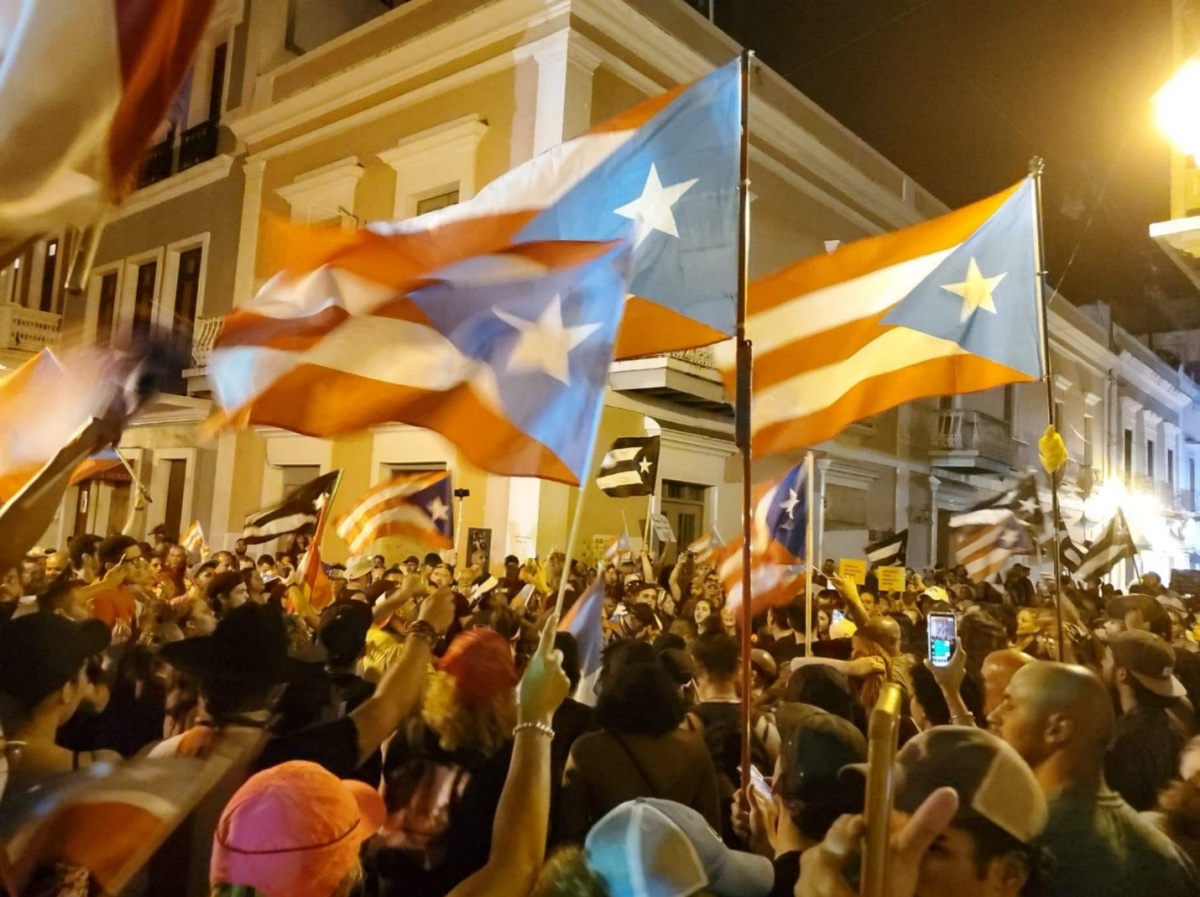
One of the most egregious examples of this suppression was the Gag Law of 1948, also known as Law 53, which made it illegal to own or display a Puerto Rican flag, sing a patriotic tune, talk of independence, or meet with others to discuss such topics. The law was used to arrest and incarcerate many nationalists and independence advocates, including members of the Nationalist Party and other pro-independence organizations. This law, which was not repealed until 1957, severely restricted free speech and assembly, further demonstrating the oppressive nature of U.S. colonial rule. The persecution of the independence movement extended beyond legal constraints; it included surveillance, harassment, discrimination, assassinations, disappearances, and violence against those who dared to advocate for Puerto Rican sovereignty.
After the fallout from the Cerro Maravilla Massacre on July 25, 1978, pro-statehood governor Carlos Romero Barceló further fueled the dehumanization and repression of Puerto Rican patriots by stating that “the independentistas are not human.” This systematic repression (conveniently ignored by American officials and pundits) by colonial police and federal authorities has had long-lasting effects on the political landscape of Puerto Rico, stifling the independence movement and reinforcing the colonial status quo.
Related stories
The Impact of American Ignorance & Racism
American ignorance about Puerto Rico’s status and history has perpetuated a cycle of inaction and misrepresentation. Many Americans, including policymakers, view Puerto Rico not as a nation, but as a territory without acknowledging Puerto Rican national identity and the historical and ongoing colonial dynamics that have shaped its current condition. This narrow perspective fails to recognize the deep-seated issues of colonialism that continue to impact Puerto Rico's political, social, and economic life. The lack of understanding extends beyond mere ignorance; it is compounded by deeply rooted racism, exceptionalism, and white supremacy. These attitudes not only undermine the legitimacy of the pro-sovereignty movement but also dismiss the brutal history of oppression faced by those advocating for independence. For instance, the systematic repression of Puerto Rican nationalists and the violent crackdowns on independence activists are often overlooked, ignored, or misunderstood by the broader American public and its leaders. To talk about these events makes many Americans feel uncomfortable, thus it is better to ignore and invisibilize them.
The imposition of Americanization and assimilation programs, such as English-Only laws, colonial flag regulations, and mandatory U.S. civics classes, are clear examples of how these attitudes have manifested. These programs were designed to erode Puerto Rican cultural identity and replace it with American norms, reflecting a belief in the superiority of American culture and symbols over Puerto Rican culture, identity, and traditions. For example, in the colonial flag code, the U.S. flag is always hoisted first and taken down last, thus creating the situation where the once-banned Puerto Rican flag is never hoisted and flying by itself. American and colonial officials work to avoid all possible cases of Puerto Rican flags flying on government buildings and events without the U.S. flag next to them. The lack of education and awareness about Puerto Rico’s colonial status and its implications has led to a skewed perception that favors the status quo or statehood without considering the full spectrum of viable options.
Many Americans—who merely see Puerto Rico as a tourist destination and playground—fail to recognize that the current political status is a direct result of brutal colonialism and continues to perpetuate inequality, occupation, and dependency. This skewed perception is reinforced by a racist and colonialist narrative that portrays Puerto Ricans as incapable of self-governance, thus justifying continued American control. As a result, genuine discussions about independence or other forms of sovereignty are often sidelined, and the colonial status quo is maintained.
Failure to Consider Independence
Despite congressional attempts in 1936 (such as the Tydings Bill) and 1989-1990 (S.712—Puerto Rico Status Referendum Act), American officials have largely failed to consider independence as a viable alternative for Puerto Rico. This oversight stems from a deeply entrenched colonialist belief that Puerto Ricans are mere wards, incapable of self-governance and undeserving of independence. Thus, Americans are not against the concept of independence (which they adore, cherish, and defend for themselves) but believe that, according to congressional and other federal records, Puerto Ricans—as inferior and uncivilized Spanish-speaking Latin Americans who rejected Americanization—are incapable of ruling themselves and need to be ruled from afar by civilized Americans.
This paternalistic colonialist attitude that Puerto Ricans are unable to govern themselves within a U.S. colonial framework has historical roots, dating back to the early days of American colonial rule, and continues to shape policy decisions to this day. In 2016, despite Puerto Rican attempts to restructure its debt via legislation (which was later struck down by the U.S. federal court), the U.S. Congress passed, and President Obama signed into law, the Puerto Rico Oversight, Management, and Economic Stability Act (PROMESA), which established an unelected and appointed oversight board to govern Puerto Rico’s finances. This board of unelected Americans or colonial loyalists, often referred to as the "junta," was granted extensive powers to manage Puerto Rico's budget, restructure its debt, and oversee its fiscal policies, effectively overriding the authority of Puerto Rico’s elected government. This unelected junta of Americans has the power (from Congress) to not only impose its will over Puerto Rico’s elected government but also force Puerto Rico to pay their outlandish and exorbitant salaries. The implementation of PROMESA has led to significant austerity measures, deep cuts to public services, and widespread protests, as many Puerto Ricans view the board's control as a direct colonial imposition and assault on their “democracy” and limited autonomy.
By underestimating the capacity and potential of Puerto Ricans to manage their own affairs, American policymakers perpetuate a narrative that independence is impractical, undesired, or even dangerous for Puerto Ricans. Ironically, the United States, which prides itself on exporting freedom and liberty globally, seems to find such principles inconvenient and hazardous when it comes to its own colonial territories like Puerto Rico. Freedom for the world, except for U.S. colonies. It appears that the cherished ideals of democracy and self-governance are selectively applied, deemed unsuitable for those living under the American flag in its colonial holdings. This colonialist belief system not only undermines the aspirations of those Puerto Rican patriots who seek full sovereignty but also stifles meaningful debate on the subject, effectively silencing a significant and growing portion of the Puerto Rican population.
As a result, U.S. officials primarily entertain the options of continued colonial rule or statehood, disregarding the economic and political decline that has accompanied Puerto Rico’s current colonial status under the U.S. flag. This narrow perspective fails to address the underlying issues caused by over a century of colonial administration, exploitation, corruption, and mismanagement. For many Americans, it is easier to blame Puerto Ricans for the gross political and economic failures of U.S. colonialism in Puerto Rico, not themselves (the people who actually control Puerto Rico). The persistent focus on maintaining the status quo or pushing for statehood (which makes some Americans feel nice that others wish to join their union) ignores the growing support for sovereignty among Puerto Ricans, as evidenced by recent polls and plebiscites.
These democratic and patriotic expressions of the will of the Puerto Rican people are often dismissed, ignored, or downplayed by American officials, further entrenching the colonial dynamics that have long plagued Puerto Rico. By not considering independence as a legitimate and viable option, U.S. policymakers are not only denying Puerto Ricans the right to self-determination but also missing an opportunity to rectify historical injustices and foster a more equitable and just relationship between Puerto Rico and the United States.
The Role of Corrupt Local Leadership
The U.S. has a history of engaging with the leadership of pro-statehood and colonial parties in Puerto Rico, namely the New Progressive Party (NPP) and the Popular Democratic Party (PDP), often overlooking the corruption within these groups that support and advocate continued U.S. occupation. These groups, as one can imagine, are viewed as colonial loyalists and collaborationists by pro-sovereignty and patriotic Puerto Ricans. The pro-statehood party, in particular, has a notorious reputation for its involvement in corrupt and criminal activities. Leaders, mayors, legislators, and cronies within these parties have been repeatedly investigated, arrested, and convicted of fraud, corruption, and other illegal activities by the U.S. federal government. This rampant corruption undermines the democratic process and erodes public trust in the political system.
In 2020, the pro-statehood NPP, imitating the most anti-democratic authoritarian regimes, unilaterally amended the Electoral Law, seizing control over Puerto Rico’s Electoral Commission. This move was widely perceived as a strategy not only to facilitate various electoral fraud schemes but also to suppress the political opposition, particularly the PIP/MVC Alliance, through lawfare and by prohibiting electoral coalitions. Additionally, violent mobs known as "turbas," affiliated with the pro-statehood faction, have aggressively attacked pro-independence leaders and groups, creating a hostile and dangerous environment for those advocating for sovereignty. These violent actions are a direct attempt to silence opposition and maintain the status quo, ensuring that the pro-statehood agenda remains dominant.
This engagement with corrupt and violent pro-statehood leaders further entrenches the status quo, as these colonial parties (and their patronage networks) have a vested interest in maintaining their power, profits, and influence under the current system. The pro-statehood and pro-colonial parties also promote a culture of fear, using intimidation and threats to terrify people against supporting independence. This culture of fear stifles open discussion and discourages individuals from expressing their true political beliefs, effectively suppressing the pro-sovereignty movement. By failing to meet with pro-sovereignty leaders and consider their perspectives, American officials miss opportunities to explore alternative solutions that could address the root causes of Puerto Rico’s issues. Engaging only with corrupt and violent parties that support the current colonial arrangement prevents the development of a comprehensive and just approach to resolving Puerto Rico’s status problem. This selective engagement perpetuates the cycle of colonialism and ignores the voices of those who seek genuine change and self-determination for Puerto Rico.
Plebiscite Results & Colonial Influence
American officials and colonialists frequently cite plebiscite results showing support for statehood or the current commonwealth status without acknowledging the context of 126 years of colonialism. These plebiscites are often conducted under the heavy influence of colonial rule, which significantly impacts Puerto Rican politics and the outcomes of these votes. The framing of options, the political climate, and the lack of neutral, comprehensive education on the implications of each status option all contribute to results that do not fully reflect the genuine will of the people. By ignoring the pervasive influence of colonialism, American officials perpetuate a narrative that skews the interpretation of these plebiscite results, favoring continued U.S. control and disregarding the legitimate aspirations for self-determination and sovereignty.
It is no surprise that the U.S. only permitted the first status plebiscite in 1967, a full 69 years after the invasion, occupation, and colonization of Puerto Rico. During those 69 years, the U.S. had ample time to carefully and artificially create the political and electoral conditions, through fear, terror, and violence, that would support the current Commonwealth colonial regime. Once the U.S. was confident that Puerto Ricans were sufficiently conditioned to accept and validate their own colonization and subordination, it allowed a status plebiscite. These non-binding plebiscites were used to give U.S. rule in Puerto Rico a democratic veneer and to demonstrate that only a minority wanted independence, despite decades of repression and persecution.
The pro-statehood NPP uses plebiscites to demonstrate support for statehood in Puerto Rico. However, recent plebiscites, including the 2020 vote where only 27% of all registered voters supported statehood, indicate declining support for this option and increasing support for sovereignty. These plebiscites are seen as glorified polls that do not compel Congress to take action toward decolonizing Puerto Rico.
Since the 2012 plebiscite (where sovereignty options garnered almost 40%), and particularly following the 2020 vote, there has been growing support for sovereignty among Puerto Ricans. This shift is especially notable among the youth and professionals, both in Puerto Rico and in the diaspora, who increasingly advocate for independence and free association. This change signifies a profound transformation in Puerto Rico's political landscape. Despite this, the U.S. continues to overlook these emerging voices, adhering to a biased narrative that ignores the rising support for national sovereignty. By failing to recognize and engage with this trend, American officials miss critical opportunities to address the root causes of Puerto Rico’s political and economic challenges.
The growing support for independence and free association reflects a desire for genuine freedom, self-governance, and development, free from the constraints of colonial rule. Recognizing this trend is essential for developing a fair and effective resolution to Puerto Rico’s status problem, one that honors the right to self-determination and respects the evolving political will of its people.
Colonial Mentality & Assimilation
The colonial mentality—believing oneself as inferior to the colonizer and thus unable to aspire to self-governance and sovereignty—has been a pervasive issue in Puerto Rican society. This mindset has been deeply embedded through decades of American rule, where the U.S. imposed its cultural, educational, and political norms in Puerto Rico, despite fierce opposition and resistance. American officials have historically preferred and respected assimilated, English-speaking Puerto Ricans who align with American values and policies, often appointing these colonial loyalists to positions of power and influence. In contrast, they have consistently ignored, persecuted, and disrespected pro-independence groups and leaders, marginalizing their voices and undermining their efforts. This selective recognition has perpetuated the belief that assimilation into American culture is the only path to success within the colonial framework, reinforcing a sense of inferiority and dependency among certain Puerto Ricans.
For many Americans, all Puerto Ricans, as U.S. subjects and citizens, should be happy, grateful, and appreciative of being a colonial property of the U.S. For these Americans (imbued with exceptionalism and supremacy), being invaded, occupied, and colonized by the U.S. was the best thing to have ever happened to Puerto Rico. This nefarious perspective has led to a significant misconception: many Americans misconstrue Puerto Rican nationalism, pride, resistance, and patriotic sentiment as anti-American, though it is really anti-colonial. Many Americans cannot understand how most Puerto Ricans refuse to assimilate and become American, resisting assimilation policies and rejecting American culture in favor of their own Puerto Rican national identity and culture. This lack of understanding fosters a dismissive attitude towards genuine expressions of Puerto Rican nationalism, viewing them as threats rather than legitimate calls for self-determination. These perceptions continue to be applied today in modern U.S.-Puerto Rico politics and in the struggle to decolonize, where pro-sovereignty movements are often marginalized and misrepresented.
However, there has been a recent shift in attitudes among some American officials and members of Congress (both Republicans and Democrats), who are now more willing to engage with pro-independence and sovereignty leaders. This is exemplified by figures like Juan Dalmau Ramirez, the current gubernatorial candidate for the PIP/MVC Alliance, who has gained recognition and respect from certain U.S. lawmakers. These officials have started to meet with and discuss decolonization strategies with leaders like Dalmau, acknowledging the legitimacy of the sovereignty movement and the need for a more nuanced and respectful dialogue regarding Puerto Rico’s decolonization. This engagement marks a significant departure from the traditional dismissive stance and opens up new avenues for addressing Puerto Rico’s status issue.
This evolving dialogue indicates a growing recognition of the complexities surrounding Puerto Rico’s colonial status and the diverse perspectives within its society. By engaging with pro-independence leaders, American officials are beginning to understand the profound desire for self-governance and cultural preservation among Puerto Ricans. This shift could potentially pave the way for more inclusive and effective policy-making that genuinely addresses the aspirations of the Puerto Rican people, moving beyond the outdated and oppressive colonial mentality towards a more equitable and just relationship between Puerto Rico and the United States.
Political Parties & Puerto Rico’s Status
Recent polls and plebiscites indicate a growing support for sovereignty among Puerto Ricans, with a notable decline in support for statehood and commonwealth status. American officials must acknowledge this shift and begin to listen to other voices advocating for national sovereignty, whether through independence or free association. Engaging with these perspectives is not only crucial for respecting the democratic will of the Puerto Rican people but also strategically beneficial for the United States. Sovereignty for Puerto Rico could align with U.S. national interests by fostering a stable, self-governing neighbor, thereby enhancing regional stability and cooperation.
The perspectives of American political parties also play a significant role in the status debate. Many Republicans are against statehood, while some Democrats support it (solely for partisan reasons) because they believe Puerto Rico would vote for Democrats. Consequently, both parties view Puerto Rico as a political pawn, shamelessly refusing to decolonize it. This political manipulation underscores the necessity of a Status Assembly—not more useless and ignored non-binding plebiscites—to confront the U.S. Congress with a democratic mechanism to solve this status problem once and for all. American officials must engage with pro-sovereignty Puerto Rican leaders and strategists to establish better lines of communication, dialogue, and understanding. This engagement is crucial for developing a comprehensive and informed approach to resolving Puerto Rico’s status problem. Recognizing the viability of national sovereignty and addressing the historical and ongoing impacts of colonialism are essential steps toward a just and sustainable solution.
The U.S. Congress and American officials have a moral and political obligation to resolve Puerto Rico’s status problem. This requires overcoming ignorance, acknowledging Puerto Rico’s colonial history, and considering all viable options, including independence and free association. Only through genuine engagement with all stakeholders and a willingness to embrace policy change can a just resolution be achieved for Puerto Rico. The need for a Status Assembly to present a democratic solution to the U.S. Congress is paramount, ensuring that the voices of all Puerto Ricans are heard and respected.
Comments

Powered by RoundtableAn AI/DeFi-powered Enterprise Media Operating System. Learn more at Roundtable.io.© Roundtable 2026. By using this site you agree to the Terms of Use and Privacy Policy