


May 25, 2026 5:54 PM
Updated May 26, 2026 5:49 PM
Colonialism entails both subtle and overt dehumanization of the colonized for it to take root and consolidate itself.
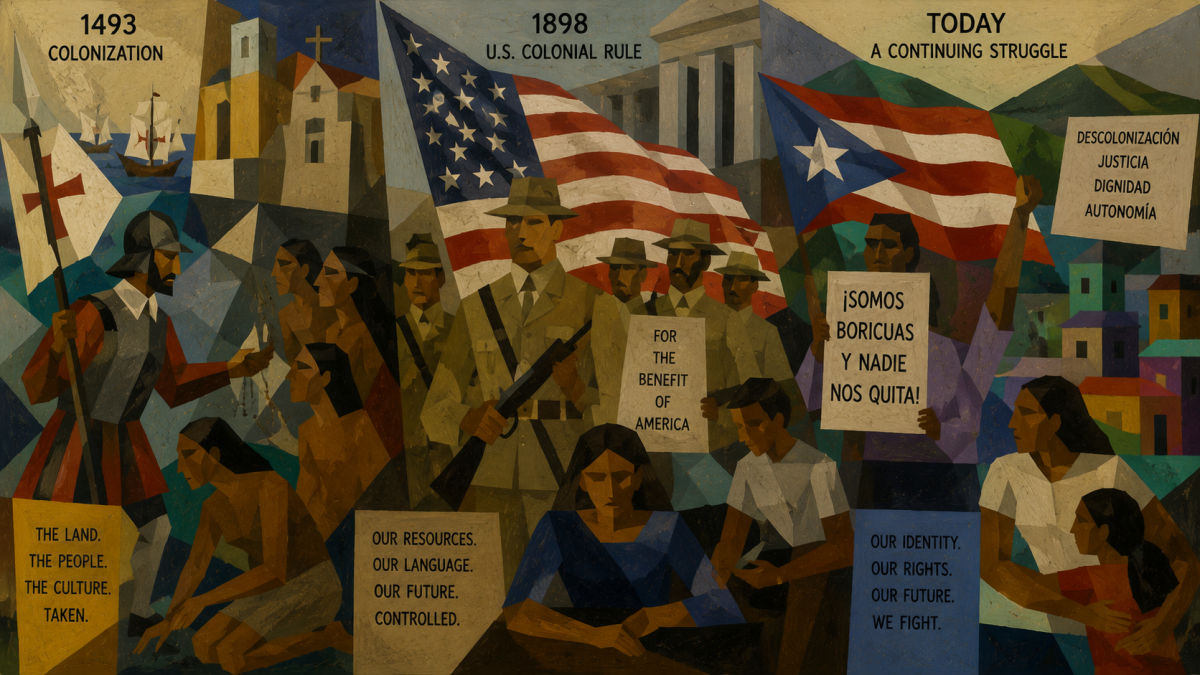
Colonialism has never been maintained solely through force. While armies can seize land, it is ideology that ensures lasting control. Fundamentally, colonialism relies on a carefully crafted hierarchy of human worth - placing the colonizer above the colonized. This hierarchy is intentional, developed, and reinforced over generations to legitimize domination, resource extraction, and control. In the context of U.S. colonial rule in Puerto Rico, this system has long been based on racial and cultural assumptions that depict Puerto Ricans as inferior, incapable, and in need of governance by a supposedly more “advanced” power. This narrative is, sadly, still used today to justify U.S. colonial rule in Puerto Rico.
To understand Puerto Rico’s political situation, it's essential to confront this uncomfortable reality: colonialism entails both subtle and overt dehumanization of the colonized for it to take root and consolidate itself.
Since the beginning of U.S. rule after 1898, Puerto Rico has never been treated as an equal part of the American political system (nor will it ever be considered one). Instead, it has been classified as an “unincorporated territory,” an invented and euphemistic legal status that allows the United States to maintain colonial rule and control without providing full constitutional rights to faraway colonial subjects whom many Americans consider inferior. This wasn’t merely an administrative decision but a reflection of underlying beliefs. It demonstrated a view (codified in law and policy) that Puerto Ricans were culturally and racially different in ways that rendered them unqualified not only to govern themselves, but also for full participation in American democracy and society.
This principle was formalized in a series of early 20th-century Supreme Court rulings called the Insular Cases. In these decisions, the Court characterized the residents of newly acquired colonial territories as “alien races” who might not grasp “Anglo-Saxon principles.” This language was deliberate - it created the intellectual, cultural, and legal basis for controlling millions without their consent under a regime that subjugated entire nations. It enabled American policymakers to present colonial governance not as conquest but as benign and generous guardianship. This same narrative was used against Native Americans and other non-whites under the jurisdiction of the United States, at home and abroad. It's like a kidnapper who abuses and confines you in a dungeon, but occasionally offers you nice food while you're chained, expecting you to feel happy and grateful.
Related stories
This paradox lies at the core of colonial ideology: domination is disguised as benevolence.
Within this colonial framework, Puerto Ricans were frequently depicted as beneficiaries of American benevolence - individuals with an inferior culture and language being elevated from backwardness to modernity. Their Spanish language, Caribbean roots, and mixed racial background were viewed as shortcomings to be fixed rather than assets to honor. Americanization efforts in education, governance, and cultural spheres aimed to transform Puerto Rican identity to align with Anglo-American standards, emphasizing that the island-nation’s Puerto Rican and Latin American culture was inadequate for progress under American rule. Any Puerto Rican who complained about their colonial chains or rejected Americanization policies was seen as unappreciative of the blessings of American civilization. C’mon, who in their right mind would not want to be American? U.S. policy aimed to assimilate Puerto Ricans by force – claiming it was for their own good – but it failed due to resistance from Puerto Rican nationalists, intellectuals, and patriots from all social classes. Such was and continues to be the thinking of many Americans regarding Puerto Ricans and their rejection of American identity and culture.
These narratives play a vital role. When a group is depicted as unable to govern itself, its subjugation appears both acceptable and essential. Control then seems like protection, and exploitation is viewed as progress. Thus, colonial systems turn moral conflicts into perceived duties.
The most lasting impact of this ideology is internal rather than external. Over time, colonial stories and narratives can become part of the colonized people’s own awareness. The “we can’t survive without the USA” narrative is a major pillar of the colonial mentality in Puerto Rico, and every time a Puerto Rican proves and demonstrates that we can survive and thrive without US colonial rule, the colonialist monolith cracks. Thus, Puerto Rican successes, achievements, and pride are seen as threats to US colonial rule in Puerto Rico because you simply cannot control Puerto Rico if Puerto Ricans finally realize their worth and embrace their power and potential.
This process, commonly discussed in postcolonial theory, shows how systems of control can psychologically sustain themselves. When people are constantly told - by institutions, the media, and politics - that they are dependent, inadequate, or inferior, and cannot survive without colonial rule, some start to believe these assertions as truths.
In Puerto Rico, this internalization can appear in subtle yet impactful ways. Doubts about the island-nation’s capacity to operate independently, fears of economic collapse without U.S. supervision and control, and skepticism toward local colonial institutions are frequently presented as practical concerns. However, they also reflect the core idea of colonial dominance: that Puerto Ricans are incapable of self-governance. This idea is another major pillar of the colonial mentality that currently holds Puerto Rico back from attaining its freedom.
This does not mean that all political positions supporting ongoing U.S. relations are solely based on such beliefs. Economic interests, strategic concerns, and personal motives also play important roles in shaping public opinion. However, it is essential to recognize how historical narratives and the legacy of political persecution, repression, and terror against pro-independence advocates influence current views. When the idea of self-determination is dismissed outright (considered entirely unfeasible), it indicates that colonial ideas and narratives are still affecting Puerto Rican society.
For American audiences, this raises an important question: how can a democratic nation align its core principles with the governance of a colonial territory whose inhabitants lack full political representation?
The United States upholds principles of liberty, equality, and self-governance. However, Puerto Rico stays in a state of political limbo. This issue is not just legal but also moral. It is partly upheld by stories that minimize or defend the island’s subordinate position.
Understanding this dynamic doesn't mean attributing intent to each person or institution. Instead, it involves recognizing patterns - how language, policy, and perception work together to sustain unequal relationships based on violence, fear, and subjugation. Modern colonialism is seldom overt; it functions through assumptions, inertia, and the subtle normalization of inequality and the chains that keep a nation under foreign rule.
For Puerto Ricans, addressing these issues means more than just political efforts; it also requires intellectual and cultural reaffirmation. Education is key. Gaining a deeper knowledge of Puerto Rican history, identity, and its place in the world can counteract traditional narratives of dependence. Cultural pride, seen in language, arts, and community, strengthens a sense of agency, nationalism, patriotism, and resilience that colonial systems aim to diminish or eliminate.
In fact, my latest book, “The Patriotic History of Puerto Rico for Young Readers,” which aims to educate Puerto Rican students about their national history from a patriotic, Puerto Rican perspective, received significant criticism from statehood supporters and colonialists in Puerto Rico. They were angry and worried about the possibility that young Puerto Ricans would read a history where they are the subject, not just an object, of another country’s history. As one can imagine, in a colony, a national and patriotic history of the colonized can threaten the colonial regime and its narratives.
Equally essential is a thoughtful engagement with the present. What does self-governance mean in the 21st century? Which economic models, institutional reforms, and international partnerships might help foster a more autonomous, democratic, and prosperous future? These are intricate questions that require thorough debate. However, they should be addressed with an outlook of possibility rather than assuming inevitable failure.
For Americans, the responsibility differs but remains equally important. It entails listening – and seeing Puerto Ricans not just as policy subjects but as active participants in a common political dialogue. It requires challenging traditional views on culture, ability, and governance. Additionally, it involves ensuring that national actions align with core national principles.
Colonial systems persist when regarded as natural, inevitable, or advantageous. They become vulnerable once their fundamental assumptions are scrutinized and challenged. The future of Puerto Rico should be shaped by informed, democratic debate rather than outdated hierarchies and narratives or inherited fears.
This issue isn't only Puerto Rican; it challenges modern democracies to confront their historical legacies and uphold their values. The key question is: How can the United States claim to stand for freedom, liberty, justice, and democracy when it continues to govern Puerto Rico (and four other colonies) through direct colonial rule and exploitation - something even George Washington would have opposed if it affected Americans? Today, despite 128 years of U.S. colonial rule, more than 95 percent of Puerto Ricans still speak Spanish at home, identify as Puerto Ricans, and over 43 percent (and growing) now support Puerto Rican national sovereignty.
The time has come to do what is right: Free Puerto Rico.
Comments

Powered by RoundtableAn AI/DeFi-powered Enterprise Media Operating System. Learn more at Roundtable.io.© Roundtable 2026. By using this site you agree to the Terms of Use and Privacy Policy