
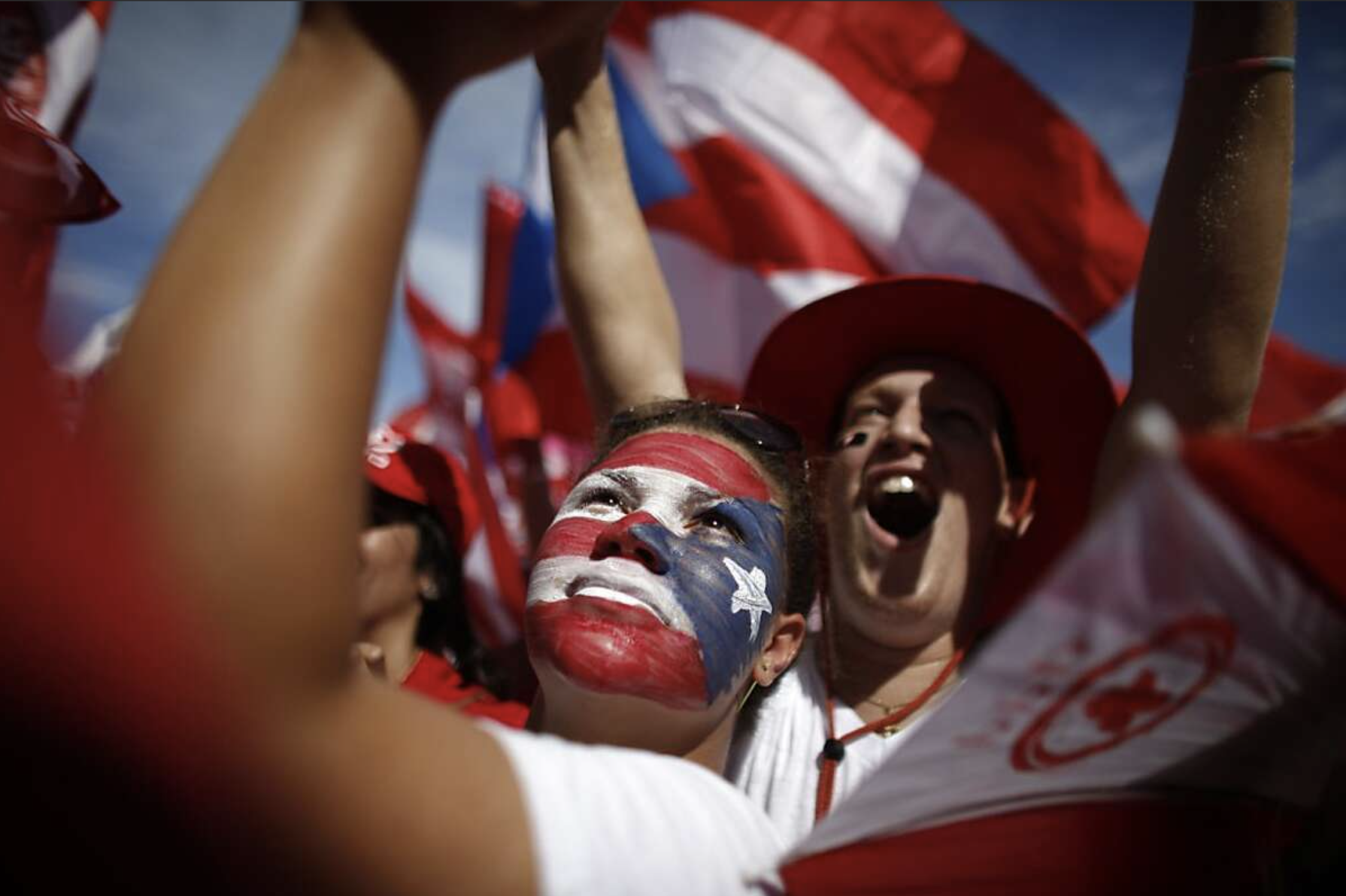
AP/Ricardo Arnuengo


Popular Democratic Party
Oct 2, 2024 3:42 PM
As the PPD’s relevance and influence wanes, there is an opportunity for a new political movement to rise—one that embraces the sovereignty and justice that so many Puerto Ricans desire.
The Popular Democratic Party (PPD) of Puerto Rico, once the dominant political force on the island, stands at a critical crossroads. Its trajectory, marked by early ambitions of independence, social justice, and a complex relationship with colonialism, has evolved into a party struggling to redefine its identity in a rapidly changing political landscape. As Puerto Rico looks toward the future, questions arise about the fate of the PPD: Will it continue to slide into irrelevance, or will it transform once more, creating space for pro-sovereignty voices and social justice advocates?
The Origins of the PPD: From Social Justice to Pro-Commonwealth
Founded in 1938 by Luis Muñoz Marín, the PPD was initially a movement grounded in social justice, economic reform, and a push for greater autonomy for Puerto Rico. In its early years, the party championed the cause of the island's impoverished rural workers, with Muñoz Marín famously espousing the idea of a "land without men for men without land." Its platform was radical for the time, and many of its leaders and supporters harbored pro-independence views, aiming to free Puerto Rico from the grip of U.S. colonial rule.
The party’s pivot to supporting "Commonwealth" status, or "Estado Libre Asociado" (ELA), came in the mid-20th century, when Luis Muñoz Marín believed a middle ground between statehood and independence would best suit Puerto Rico’s needs. This new status, granted by the U.S. in 1952, allowed Puerto Rico a degree of self-governance while retaining U.S. citizenship and certain federal programs. The transformation of the PPD into a pro-Commonwealth party marked a decisive shift, but it also alienated some of its early supporters who sought full independence.
Cultural Nationalism and the Gag Law: Building Legitimacy Amid Repression
While the PPD distanced itself from the pro-independence movement, it sought to maintain its credibility as the party of Puerto Rican cultural nationalism and identity. The party adeptly used cultural nationalism, promoting Puerto Rican identity, language, and symbols as central to its political project, such as establishing the Institute of Puerto Rican Culture and other agencies. However, this embrace of Puerto Rican culture stood in stark contrast to the party’s complicity in the repression of the independence movement, most notably through the infamous Gag Law (Ley de la Mordaza) of 1948.
Related stories
This law made it illegal to display the Puerto Rican flag, sing patriotic songs, or even speak of independence. It was a direct attack on Puerto Rico’s sovereignty movement, leading to the imprisonment and persecution of many pro-independence advocates, including members of the Puerto Rican Nationalist Party. While the PPD built and consolidated its political power, it simultaneously marginalized the very voices that had once shaped its identity. The irony was clear: a party that celebrated Puerto Rican identity was complicit in the repression of those fighting for true Puerto Rican sovereignty.
The Economic Rise and Fall of the PPD: The Myth of Success
For decades, the PPD’s narrative was one of economic development and progress. From the 1950s to the 1970s, under the banner of "Operation Bootstrap," Puerto Rico saw significant industrialization, job creation, and infrastructural improvements. Puerto Rico's economy flourished, supported by U.S. federal tax incentives such as Section 936, and the PPD maintained a near-monopoly on political power. The promise of "autonomy within a mutually beneficial partnership with the U.S." appeared to be a winning formula.
However, the economic successes of the PPD masked deeper structural issues. When Section 936 was phased out in the 1990s, the economy faltered. Puerto Rico's dependence on U.S. tax incentives and external capital became painfully clear. The result was an economic crisis that culminated in the government’s declaration of bankruptcy in 2016, a crippling public debt, and widespread austerity measures imposed by the unelected and anti-democratic Fiscal Control Board, known as “La Junta” in Puerto Rico. The PPD’s economic model, once touted as a success story, had failed to create a self-sustaining economy. Today, under the watch of both PNP and PPD administrations, Puerto Rico has become an economic colonial backwater mired in corruption, dependence on federal funds, and extreme poverty.
The Crumbling of the "Bilateral Pact" Myth: Referendums and Supreme Court Rulings
By the early 2000s, the PPD’s imaginative narrative of the Commonwealth as a "bilateral pact" between Puerto Rico and the U.S. began to unravel. The 2012 referendum was a turning point, where Puerto Ricans rejected the current Commonwealth status for the first time. In that same vote, "ELA Soberano" (a proposal for sovereign free association) received significant support, indicating a growing desire for greater autonomy or outright sovereignty.
Further discrediting the PPD’s narrative was the U.S. Supreme Court’s ruling in Sánchez Valle v. Puerto Rico (2016), which confirmed that Puerto Rico was still a colonial territory, subject to the plenary powers of Congress and held no sovereignty of its own. This court ruling destroyed the illusion of the Commonwealth as a bilateral agreement and exposed the harsh reality of Puerto Rico’s colonial status under U.S. rule. The PPD’s long-held argument that Puerto Rico enjoyed a unique, mutually beneficial relationship with the U.S. was revealed to be a myth.
The Decline of the PPD: Pro-Sovereignty Voices Silenced
Throughout the 2000s, as Puerto Rico grappled with economic crises, debt, and political uncertainty, the PPD faced an internal struggle between its pro-sovereignty factions and the colonial autonomists whose egotistical leaders were more concerned about their nostalgic 1950s heyday than the modern era. Unfortunately, the latter gained control of the party, slowly pushing out pro-sovereignty leaders and advocates. The PPD’s leadership shamelessly clings to the idea of an "Enhanced Commonwealth” under the Territorial Clause of the U.S. Constitution, a proposal repeatedly rejected by Congress and held little practical promise for Puerto Rico’s future.
Today, the PPD is a derelict, corrupt, and fossilized political party that has not only forgotten its roots but has no vision for Puerto Rico outside of pleading with Congress for additional American taxpayer funds and shreds of fake autonomy.
As a result, many pro-sovereignty PPD supporters and leaders (called soberanistas) began to drift away from the party, finding new homes in movements such as the Movimiento Victoria Ciudadana (MVC), Proyecto Dignidad, or even becoming independents (with no party affiliation). The PPD, which once embodied the aspirations of Puerto Rican sovereignty and social justice, had become stagnant, offering no straightforward political project beyond the failed and ridiculed notion of an enhanced Commonwealth.
The PPD’s 2024 Election Prospects: A Party on the Brink of Collapse
In 2024, the PPD faces the prospect of yet another electoral defeat as it struggles to maintain relevance in a political landscape where its core message no longer resonates. With the decline of the pro-statehood New Progressive Party (PNP), the growth of pro-sovereignty and progressive movements like the PIP-MVC alliance, and the appeal of new political forces, the PPD’s traditional base has eroded. For the first time, the PPD is poised to fall to third place in Puerto Rican politics, marking a historic low for a party that once dominated Puerto Rico’s political arena.
A New Future: The Rise of a Sovereign Political Party?
As the PPD continues its downward spiral, the question remains: Will the PPD die out, or will a new political force rise from its ashes? Thousands of pro-sovereignty advocates disillusioned or pushed out of the PPD over the years now find themselves without a political home. Once the lifeblood of the PPD, these voters could rally behind a new movement that embraces sovereignty, social justice, and a more progressive vision for Puerto Rico.
A new party, perhaps called the "Partido Nacional Democrático" (PND), could emerge as a successor to the PPD, building on its early ideals of national sovereignty and social justice while learning from its failures. The PND could unite the fragmented pro-sovereignty and centrist base, offering a clear path toward free association, sovereignty, and a new economic model prioritizing sustainability, growth, development, production, exports, and equity. Together with the PIP-MVC alliance, this new party could help reshape Puerto Rican politics, leading Puerto Rico toward true decolonization.
A Time for Renewal and Hope
Puerto Rico stands at a critical juncture. As the PPD’s relevance and influence wanes, there is an opportunity for a new political movement to rise—one that embraces the sovereignty and justice that so many Puerto Ricans desire. Whether this future takes shape through a reformed PPD or a new party like the PND, the time is ripe for a transformation. If united and organized, the pro-sovereignty movement could become the dominant force in Puerto Rican politics, leading Puerto Rico toward a new chapter of self-determination, prosperity, and freedom from colonial rule. The future is unwritten, but the possibility for renewal and hope is undeniable.
Comments

Powered by RoundtableAn AI/DeFi-powered Enterprise Media Operating System. Learn more at Roundtable.io.© Roundtable 2026. By using this site you agree to the Terms of Use and Privacy Policy