
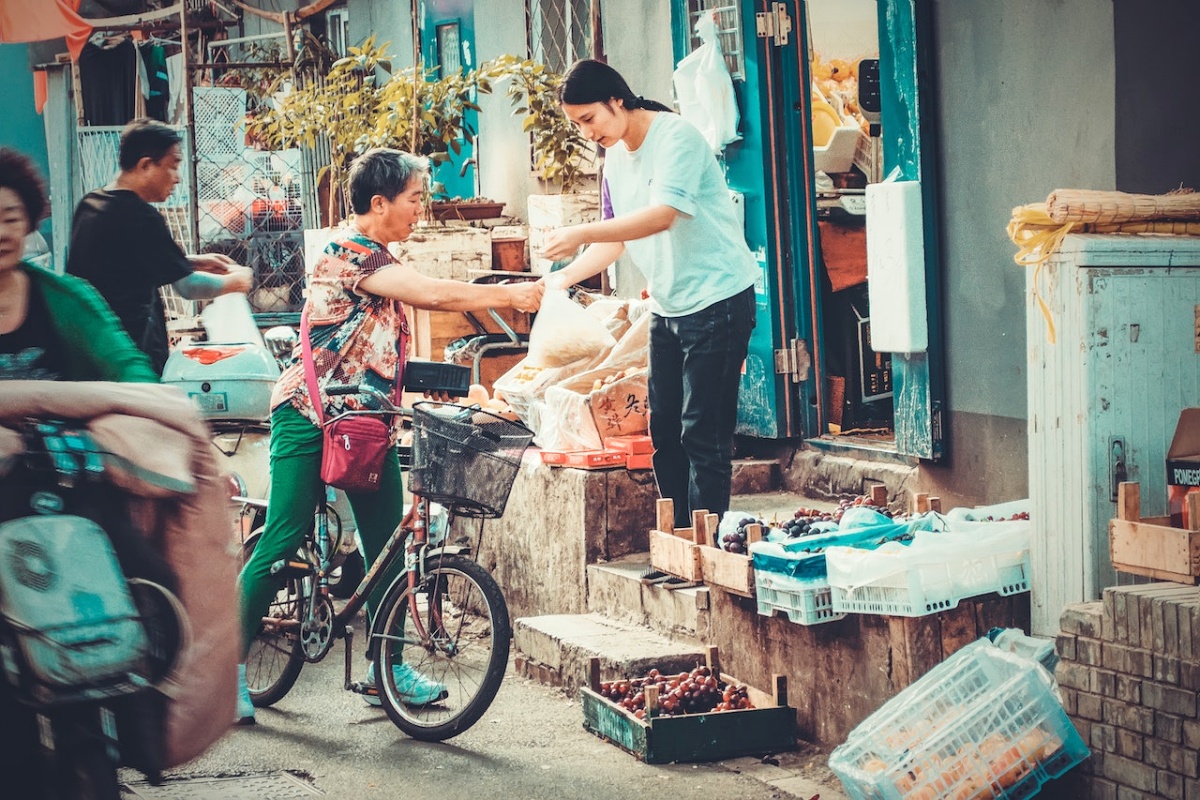


People-to-People Tourism
Dec 2, 2024 5:26 PM
People-to-people relations can be the key to changing the official Western “hate fest” into something positive, that can blunt the sharp arrows of fear and hatred emanating from Washington.
It has always been possible for “foreigners” to visit China, but now it’s getting easier. People from more than sixty countries can now enter without a visa; foreign affairs departments at national and provincial levels are opening the doors wide for visitors. (US visitors must still get a visa, which can be obtained from any Chinese consulate.)
A China-US People’s Dialogue event took place in mid-November in Beijing, organized by the Committee on US-China Relations and Tsinghua University’s Center for International Security and Strategy. Stephen Orlins, of the Committee on US-China Relations, recalled the “ping pong diplomacy” of 1972, which stimulated a change in US anti-China hostility that ultimately led to a “one China” treaty, and to People’s China’s entry to the United Nations. “What we need to think about,” he told the China Daily, “is how do we strengthen that, how do we make sure that in difficult times we’re able to continue this, because policies will change, and ultimately it’s the people who determine what the policy will be.”
At least 60 youth exchange events between China and the US were held in 20 provincial-level regions in China in the first half of 2024, the Beijing-based Center for China and Globalization reported. The Chinese government has announced that it would host 50,000 US students for study and exchange programs in the country over the next five years, as part of an effort to “boost people-to-people exchanges, especially among young people,” the China Daily reported.
A Flood of Visitors
I was invited to be part of a delegation of “international media and think tanks” to attend a “China in Sight Global Insight” forum in Guiyang (pronounced Gway YANG), the capital of the picturesque province of Guizhou (pronounced Gway JOE), in southwest China. The provincial foreign affairs department staff called us “VIPs” and treated us royally. The unspoken message was that we were the precursors of a flood of visitors from across the globe, destined to get to know – and then fall in love – with China.
Related stories
People-to-people relations can be the key to changing the official Western “hate fest” into something positive, that can blunt the sharp arrows of fear and hatred emanating from Washington. Guiyang was a good starting point. It’s a “small city” of six million residents in a province of about 40 million, nestled in green mountains roughly midway between the southern megacities of Guangzhou, Shenzhen and Hongkong, and the huge megalopolises of Chongqing and Chengdu in west-central China.
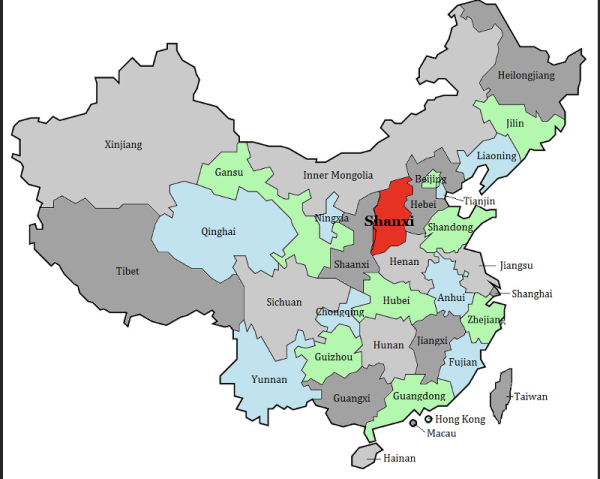
Our host, Ms. Du Xinlei, Deputy Chief of European and American Affairs for the Guizhou Provincial Foreign Affairs Office, told me she had worked as a volunteer in China’s massive poverty alleviation campaign in her province, which has a large share of China’s extremely poor population. Guizhou is home to 17 ethnic minorities, including the Miao, Bouyei and Dong peoples. Ms. Du worked to help develop a marketing system for the local people’s elaborate and beautiful crafts, as part of the province’s rapidly growing tourism industry. A main goal was to re-unite families who have been separated due to the need for the men to travel to work in the factories of Guangzhou, only returning home for national holidays. (Several Chinese movies have dramatized this painful experience.)
For the people of Guizhou, “Opening Up” has meant massive infrastructure projects – building dozens of bridges and high-speed highways, and making Guiyang a hub for bullet trains running north to south and southeast to northwest, criss-crossing in Guiyang. China has been living by the slogan “if you want to get rich, build a road.” The China-Europe Railway Express, the China-Laos Railway, and a new International Land-Sea Trade Corridor, all converge in Guiyang. This surge of development has been the hallmark of the policy of Common Prosperity – a way of “leveling” the country’s new-found wealth generated by four decades of “Reform and Opening Up.”
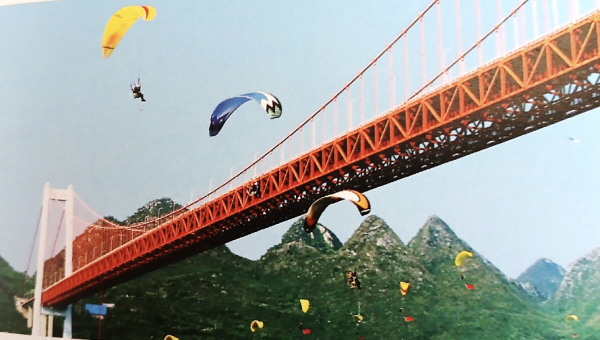
For visitors the result is access to Guizhou’s stunningly beautiful landscape, where “para gliders” can dive off dizzyingly high bridges into the land and water scapes below. Guizhou claims nearly half of the top 100 highest bridges in the world. We visited the provincial Bridge Museum, showing photos of the proud and happy faces of the workers who built these masterpieces.
Those who prefer jumping up instead of down can enjoy the Village Basketball Competition (known as “CunBA”) which has become famous across China, attracting former NBA stars like the NY Knicks’ Stephon Marbury and the Philadelphia Sixers’ Allen Iverson, who both now reside in China. Other winter sports attractions include hot springs and skiing. For warm weather tourists, Guiyang is known as the “Summer Resort Capital of China,” thanks to its cool summer climate.
Guizhou has four world natural heritage sites: Libo Karst, the Red Cliffs of Chishui, Yuntai and Fanjing Mountains; and 18 national scenic areas, including spectacular waterfalls and caves. Over ninety percent of the province is composed of mountains and hills, nearly all covered with lush vegetation. It has abundant mineral and traditional medicinal resources. There is a saying that “there is no idle grass in Guizhou, and magic medicine can be found everywhere since ancient times.”
For “red tourists,” Guizhou is a must-see “holy land of red culture.” The Long March, led by Mao Zedong and Zhu Deh, had its pivotal and longest lasting moments here. The “Red Banderole” museum in Guiyang is a “digital technology experience center” and show place of the Long March National Cultural Park. The park’s theme is “high soaring banners, endless successors,” devoted to telling the story of the Long March to the world, and passing on the traditions of the Chinese revolution. Nearly all Chinese school children know by heart the story of “The Foolish Old Man Who Dared to Move Mountains.” (The old man is understood to be the Communist Party, and the mountains were feudalism, bureaucrat-capitalism, and imperialism.)
From South to North: Guizhou to Shanxi
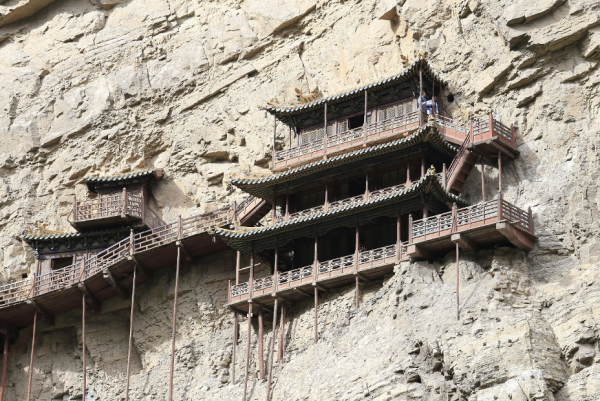
After several days of dazzling tourism in Guizhou, our hosts transported us by air to Shanxi province, which lies due west of Beijing, and stretches to the banks of the Yellow River. “Shanxi” literally means “western mountains,” and includes the spectacular Great Wall of China at its northeastern extreme. On an earlier visit I tried, but couldn’t make it to the top of the majestic Great Wall. This time I joined my delegation climbing up the side of a sheer mountain side to visit the historic Xuankong Hanging Temple – one of thousands of ancient Buddhist temples and grottoes in northern Shanxi.
The Shanxi capital, Taiyuan (not to be confused with its “cousin” island of Taiwan), has a population of about six million, of a provincial population of 35 million. It boasts 2,500 years of history as a city, but about twice that time as a civilized location. It is a major producer of steel and coal, and is now innovating production of “clean coal.” It is also a primary manufacturing center for solar cells and wind turbines.
Shanxi was a cradle of human evolution dating back eons. (I theorized that the area may have been the source of the migration from Asia to the Americas via the Bering Strait.) From the earliest times it has been the main developed region of northern China. It is bordered on the south and west by the Yellow River – the Yellow River Basin is considered by many to be the “heart of China.” We visited the Shanxi Radio and TV Station, which is part of the CCTV empire, and enjoyed being interviewed while learning of Chinese media’s evolution over the past 75 years.
The province is at the center of China’s wheat and grain country. (That made it easy for me to like since I grew up in Oregon’s wheat country on the edges of the Blue and Wallawa mountains, the home of the Nez Perce people.) Our delegation was treated to sumptuous noodle dishes while we stayed at fancy hotels in Taiyuan and the northern city of Datong.
Datong itself is a center of ancient Buddhist religious practice. Our delegation visited dozens of enormous reverential Buddhist statues, highlighting the fact that at least 15 percent of Chinese people are practicing Buddhists. (So much for intolerance of religion in China!) The reverential bow, with hands joined prayerfully, is a common way to say hello or goodbye in Shanxi. We visited the magnificent Huayan Temple, dating back 1,400 years, where ornate storage cabinets hold the earliest Chinese Buddhist scriptures – a “unique piece in the country,” as our guides commented.
The harmonious interlacing of distant traditions and breathtaking modernization is a common feature here. Skyscrapers, fancy hotels and excellent highways coexist comfortably with temples, Buddha statues and even a monastery dating back millenia.
We also enjoyed the delicious food. Bordering the grasslands of Inner Mongolia, Datong is located in a transition zone between farming culture and nomadic culture. Unique foods are everywhere in China, but there is a richness of variety here. Noodles, made of the local grains, are at the center, making Datong the “hometown of China’s sliced noodles.”
“Red tourism” is also attractive in Shanxi, which was the home of Mao’s Eighth Route Army during China’s War of Resistance Against Japanese Aggression, from 1931 to 1945.
Common Prosperity as a driving force
In both our touring activities and in the “China in Sight Global Insight” forum, we could observe the policy of Common Prosperity. It’s a defining characteristic and driving force of China’s current path of development, both internally and internationally. Our visit took place in the wake of the historic summit of the expanding BRICS international coalition, and also coincided with the 2024 G20 summit in Brazil. At both events, Chinese leader Xi Jinping set the tone, highlighting initiatives designed to make the world’s prosperity more common, and overcome the strangling inequality that has been the hallmark of the “neoliberal” era.
Our hosts in every location we visited personified the charm of a people delighted and determined to make their guests happy. There is a serene and comfortable spirit of confidence and conviviality among our Chinese hosts. It reflects the fact that more than 90 percent of Chinese approve of their country’s leadership and direction – a finding of a years-long study conducted by Harvard University researchers. The people of China clearly are at peace with themselves, and want to share that peace with the rest of the world. Anyone who visits China can feel it. If you haven’t felt it yet, now would be a good time to reach for it.
There is one caution, and challenge. Most street signs and store fronts have English language equivalents alongside the beautiful and mysterious Chinese characters. And hotel staff can nearly always understand and speak a somewhat limited form of English. But a translation app on your cell phone is a big help. And a bilingual guide is even better. Group travel is a really good idea – especially if the group includes one or more Chinese speakers. The best news is that the Chinese people we met make it easy to believe that people-to-people tourism is a wonderful experience for everyone involved.
Comments

Powered by RoundtableAn AI/DeFi-powered Enterprise Media Operating System. Learn more at Roundtable.io.© Roundtable 2026. By using this site you agree to the Terms of Use and Privacy Policy